Months after Opposition leader Maria Machado ‘thanked’ Trump for her Nobel Peace Prize, the US attacked Venezuela to topple the Maduro regime
In what appears to be a typical regime change operation masquerading as moral action against “narcotic terrorism,” the United States carried out multiple strikes in Venezuela in the wee hours of January 3, 2026. The capital city of Caracas was jolted out of sleep as its skies were echoed by the sounds of strafing fighter jets around 2 am. The strikes were confirmed by none other than US President Donald Trump through a post on Truth Social. Trump also confirmed that the US forces captured Venezuelan President Nicolas Maduro and his wife, Cilia Flores, and flew them out of the country to the U.S. Attorney General Pamela Bondi said that Nicolas Maduro and his wife, Cilia Flores, have been indicted in the Southern District of New York, adding that the president has been charged with Narco-Terrorism Conspiracy, Cocaine Importation Conspiracy, Possession of Machineguns and Destructive Devices, and Conspiracy to Possess Machineguns and Destructive Devices against the United States. The US attack on Venezuela is not a sudden event, but a predictable outcome for a country or regime that falls out of US favour. The developments, conspicuously, come months after Venezuelan opposition leader Maria Machado dedicated her Nobel Peace Prize to the US President and thanked him for what he had been doing “around the world for peace”. She described her Nobel win as a “recognition of the struggle of all Venezuelans” and a boost to conclude the task, which was “to conquer freedom.” Machado openly called for US intervention in Venezuela in the name of achieving Freedom and democracy. “We are on the threshold of victory and today, more than ever, we count on President Trump, the people of the United States, the peoples of Latin America, and the democratic nations of the world as our principal allies to achieve Freedom and democracy,” Machado wrote on X after winning the Nobel Peace Prize in October 2025. Screenshot Responding to Machado’s Nobel victory, President Trump had said he talked to her over a phone call, wherein she told him that she accepted the Nobel Peace Prize in his honour and she believed that he deserved it. The mutual appreciation displayed by the two leaders leaves little room for doubt as to the past and the future trajectory of events unfolding in Venezuela. In December 2025, Machado endorsed the US pressure on President Maduro and made a global appeal to cut the flow of money from drugs, arms and human trafficking, which she attributed to what she described as the authoritarian regime in Venezuela. She had remarked that she was “very hopeful” that Venezuela would be free and that “It’s going to be soon.” Trump accused the Maduro regime of narcotic terrorism The US-Venezuela conflict arises mainly from the US dual allegations of the Maduro regime pushing thousands of migrant workers to the southern border of the US and smuggling narcotics into the US territory. President Trump accused President Maduro of “emptying his prisons and insane asylums” and “forcing” inmates to migrate to the United States. Trump has also accused Maduro of drug trafficking and working with groups designated as terrorist organisations. The US President alleged that Venezuela acted as a major transit route for cocaine and thus contributed to the US drug crisis. He claimed that Venezuelan boats have been engaged in smuggling narcotics through the Caribbean and eastern Pacific. Deviating from the traditional US practice of dealing with drug cartels through law enforcement, the Trump administration launched a military campaign against the Venezuelan drug cartels in September 2025. The US carried out strikes on suspected drug-smuggling boats in the past months, an act described by Trump as a “war on drugs”. The US strikes on Venezuela look like a typical regime change op In 2020, Maduro was indicted on “narco-terrorism” conspiracy charges in the Southern District of New York. The US says that it is engaged in an armed conflict with drug cartels, which it has been accusing Maduro of harbouring and leading. However, the Venezuelan President has been categorically denying the US allegations and has termed the accusations as a US ploy to remove him from power to gain access to Venezuelan oil. Notably, days before the US strikes, Maduro had offered to cooperate with the US on the issues of drug trafficking and migration. It is speculated that President Maduro might face charges in the US, considering his 2020 indictment. Meanwhile, President Trump might also face questions at home as the US strike in Venezuela was carried out without Congress’s approval. What is transpiring in Venezuela is a familiar script that the world has seen come into action multiple times in the past in countries, including Vietnam, Iraq, Afghanistan, and Syria. Toppling existing unfavourable regimes and planting a favourable rule in countries has been an old US tactic around the world.
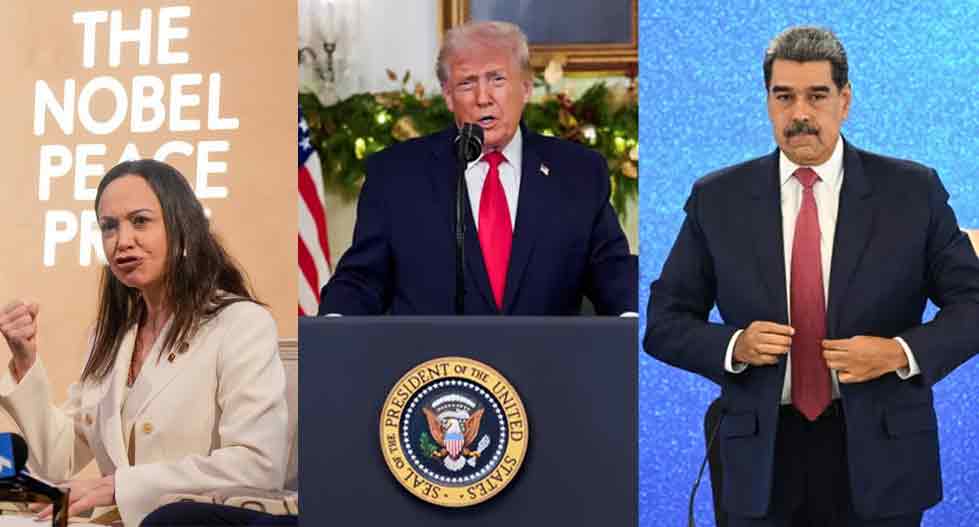

The US attack on Venezuela is not a sudden event, but a predictable outcome for a country or regime that falls out of US favour. The developments, conspicuously, come months after Venezuelan opposition leader Maria Machado dedicated her Nobel Peace Prize to the US President and thanked him for what he had been doing “around the world for peace”. She described her Nobel win as a “recognition of the struggle of all Venezuelans” and a boost to conclude the task, which was “to conquer freedom.”
Machado openly called for US intervention in Venezuela in the name of achieving Freedom and democracy. “We are on the threshold of victory and today, more than ever, we count on President Trump, the people of the United States, the peoples of Latin America, and the democratic nations of the world as our principal allies to achieve Freedom and democracy,” Machado wrote on X after winning the Nobel Peace Prize in October 2025.

Responding to Machado’s Nobel victory, President Trump had said he talked to her over a phone call, wherein she told him that she accepted the Nobel Peace Prize in his honour and she believed that he deserved it. The mutual appreciation displayed by the two leaders leaves little room for doubt as to the past and the future trajectory of events unfolding in Venezuela.
In December 2025, Machado endorsed the US pressure on President Maduro and made a global appeal to cut the flow of money from drugs, arms and human trafficking, which she attributed to what she described as the authoritarian regime in Venezuela. She had remarked that she was “very hopeful” that Venezuela would be free and that “It’s going to be soon.”
Trump accused the Maduro regime of narcotic terrorism
The US-Venezuela conflict arises mainly from the US dual allegations of the Maduro regime pushing thousands of migrant workers to the southern border of the US and smuggling narcotics into the US territory. President Trump accused President Maduro of “emptying his prisons and insane asylums” and “forcing” inmates to migrate to the United States. Trump has also accused Maduro of drug trafficking and working with groups designated as terrorist organisations.
The US President alleged that Venezuela acted as a major transit route for cocaine and thus contributed to the US drug crisis. He claimed that Venezuelan boats have been engaged in smuggling narcotics through the Caribbean and eastern Pacific. Deviating from the traditional US practice of dealing with drug cartels through law enforcement, the Trump administration launched a military campaign against the Venezuelan drug cartels in September 2025. The US carried out strikes on suspected drug-smuggling boats in the past months, an act described by Trump as a “war on drugs”.
The US strikes on Venezuela look like a typical regime change op
In 2020, Maduro was indicted on “narco-terrorism” conspiracy charges in the Southern District of New York. The US says that it is engaged in an armed conflict with drug cartels, which it has been accusing Maduro of harbouring and leading. However, the Venezuelan President has been categorically denying the US allegations and has termed the accusations as a US ploy to remove him from power to gain access to Venezuelan oil. Notably, days before the US strikes, Maduro had offered to cooperate with the US on the issues of drug trafficking and migration. It is speculated that President Maduro might face charges in the US, considering his 2020 indictment. Meanwhile, President Trump might also face questions at home as the US strike in Venezuela was carried out without Congress’s approval.
What is transpiring in Venezuela is a familiar script that the world has seen come into action multiple times in the past in countries, including Vietnam, Iraq, Afghanistan, and Syria. Toppling existing unfavourable regimes and planting a favourable rule in countries has been an old US tactic around the world.