European leaders support Denmark over Trump’s Greenland claim, say NATO allies need to be respected
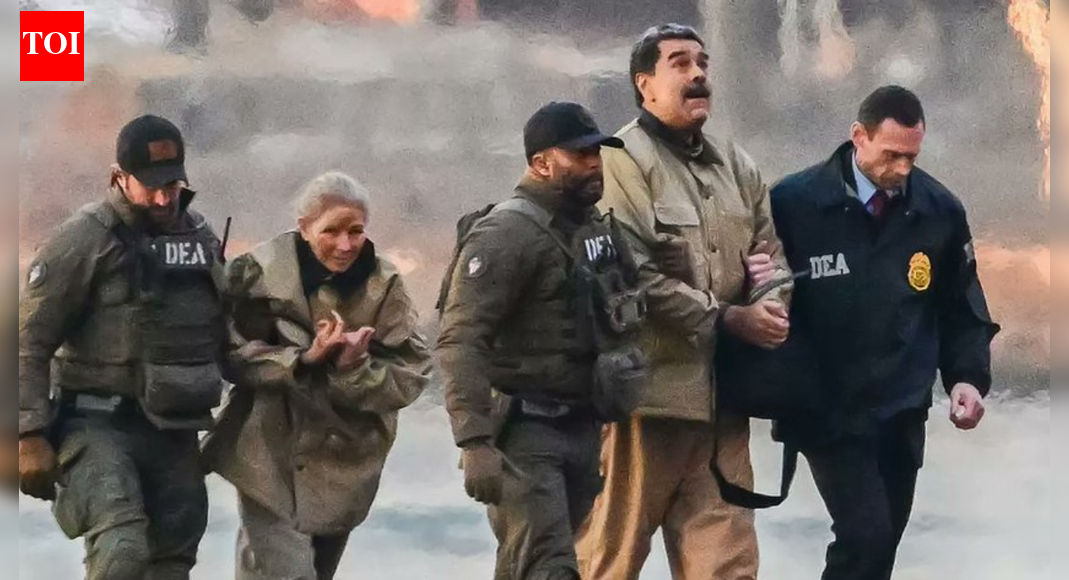
Just two days ago, Washington claimed the dramatic capture of the President of Venezuela, Nicolas Maduro. Today, on 5th January local time, the President of the United States, Donald Trump, shifted his discourse to confrontation. The short-lived celebrations of the Maduro episode ended with threats pointed towards multiple countries across continents. In the past few hours, Trump has openly threatened Cuba, Iran, Mexico, Colombia, Greenland, Denmark, and India. Each confrontation was framed through the familiar lenses of national security, economic pressure, and US pre-eminence. The timing of the confrontation is striking. The Maduro episode is heavily linked to oil politics and regime change narratives. However, in the latest threats, the focus has shifted to energy, strategic geography, and dominance at the centre of US foreign policy. Trump’s remarks have suggested a broader posture where allies and adversaries alike are spoken to in similar terms. The US has replaced persuasion with pressure and threats have substituted diplomacy. For someone who was seeking Noble Peace Prize just a few months ago, this shift has raised serious concerns. It is within this pattern that Trump has renewed claims over Greenland must be understood. It is not an isolated outburst but part of a wider worldview where geography, resources, and security interests are being used to justify unilateral unrealistic demands. From Venezuela to the Arctic, a familiar doctrine returns The rhetoric Trump has presented following the Venezuela operation has echoed an older American strategic instinct which is often described as a modern revival of the Monroe Doctrine. The Monroe Doctrine was articulated in 1823. It asserted that the Western Hemisphere was the United States’ sphere of influence. It warned European powers against interference. In modern form, it is often invoked to justify US intervention or pressure abroad framing it as national security rather than expansionism. Whether it is Latin America, the Middle East, or now the Arctic, the message given by the US President is consistent. Regions deemed strategically vital to US security must remain under the influence of the US. In fact, US appears to be not in mood to show patience for multilateral processes or sovereign sensitivities. For the US, oil has remained a recurring theme. Venezuela, Iran, Russia-linked energy trade with India, and now Greenland’s untapped mineral wealth and Arctic routes all intersect in Trump’s public statements. While the targets seem disparate, there is one thing that binds them together and that is leverage, not ideology. In Trump’s view, economic pressure, tariffs, and security threats are legitimate tools to compel compliance. Greenland, however, triggered something rare in recent transatlantic politics, which is a swift, coordinated, and unusually blunt pushback from Europe. Trump revives Greenland claim citing national security Speaking to reporters abroad Air Force One, Trump declared that the United States “needs Greenland for national security reasons”. He claimed that Russian and Chinese vessels were operating around the island in large numbers. He went further and asserted that Denmark would not be able to handle the situation on its own and that even the European Union required American involvement. President Trump, in his latest gaggle with the media on Air Force One, said the United States needs Greenland for national security reasons. “It's so strategic. Right now, Greenland is covered with Russian and Chinese ships all over the place.”This echoes the Trump Corollary to… pic.twitter.com/JIrPQD0lW5— Ofentse Donald Davhie (@DonaldDavhie) January 5, 2026 The statement given by the US President is like his earlier remarks during both his first and second terms. He has repeatedly described Greenland as an “absolute necessity” for US security. However, this time the tone has gone sharper. It might be because of the “successful” operation in Venezuela that he is not holding back from issuing threats to anyone and everyone. The implication of his remarks was not a purchase offer or diplomatic negotiation, but a suggestion that Denmark’s sovereignty over Greenland was secondary to American strategic needs. His remarks have also leaned heavily on fear narratives. He invoked Russia and China as looking threats in the Arctic, despite Greenland already hosting a long-standing US military presence as the Pituffik Space Base under agreements with Denmark. Europe closes ranks around Denmark Following Trump’s remarks unusually rapid and unified response came from the European leaders, particularly from the Nordic and Baltic regions. Within hours, senior political figures across Europe issued statements and defended Denmark’s sovereignty while rejecting any suggestion that Greenland’s future could be decided externally. The message given by the leaders was consistent that Greenland is an integral part

Just two days ago, Washington claimed the dramatic capture of the President of Venezuela, Nicolas Maduro. Today, on 5th January local time, the President of the United States, Donald Trump, shifted his discourse to confrontation. The short-lived celebrations of the Maduro episode ended with threats pointed towards multiple countries across continents.
In the past few hours, Trump has openly threatened Cuba, Iran, Mexico, Colombia, Greenland, Denmark, and India. Each confrontation was framed through the familiar lenses of national security, economic pressure, and US pre-eminence.
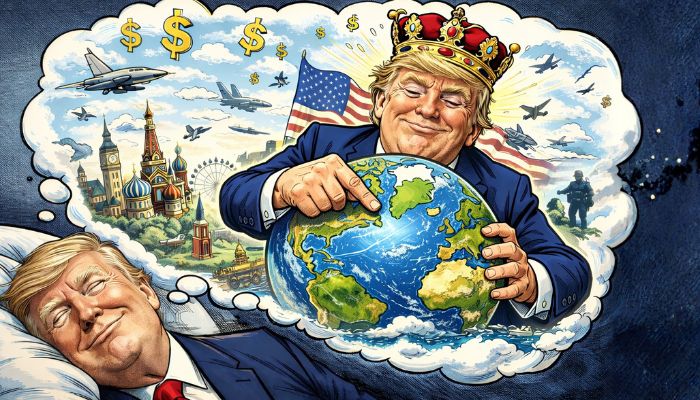
The timing of the confrontation is striking. The Maduro episode is heavily linked to oil politics and regime change narratives. However, in the latest threats, the focus has shifted to energy, strategic geography, and dominance at the centre of US foreign policy. Trump’s remarks have suggested a broader posture where allies and adversaries alike are spoken to in similar terms. The US has replaced persuasion with pressure and threats have substituted diplomacy. For someone who was seeking Noble Peace Prize just a few months ago, this shift has raised serious concerns.
It is within this pattern that Trump has renewed claims over Greenland must be understood. It is not an isolated outburst but part of a wider worldview where geography, resources, and security interests are being used to justify unilateral unrealistic demands.
From Venezuela to the Arctic, a familiar doctrine returns
The rhetoric Trump has presented following the Venezuela operation has echoed an older American strategic instinct which is often described as a modern revival of the Monroe Doctrine.
The Monroe Doctrine was articulated in 1823. It asserted that the Western Hemisphere was the United States’ sphere of influence. It warned European powers against interference. In modern form, it is often invoked to justify US intervention or pressure abroad framing it as national security rather than expansionism.
Whether it is Latin America, the Middle East, or now the Arctic, the message given by the US President is consistent. Regions deemed strategically vital to US security must remain under the influence of the US. In fact, US appears to be not in mood to show patience for multilateral processes or sovereign sensitivities.
For the US, oil has remained a recurring theme. Venezuela, Iran, Russia-linked energy trade with India, and now Greenland’s untapped mineral wealth and Arctic routes all intersect in Trump’s public statements. While the targets seem disparate, there is one thing that binds them together and that is leverage, not ideology. In Trump’s view, economic pressure, tariffs, and security threats are legitimate tools to compel compliance.
Greenland, however, triggered something rare in recent transatlantic politics, which is a swift, coordinated, and unusually blunt pushback from Europe.
Trump revives Greenland claim citing national security
Speaking to reporters abroad Air Force One, Trump declared that the United States “needs Greenland for national security reasons”. He claimed that Russian and Chinese vessels were operating around the island in large numbers. He went further and asserted that Denmark would not be able to handle the situation on its own and that even the European Union required American involvement.
President Trump, in his latest gaggle with the media on Air Force One, said the United States needs Greenland for national security reasons. “It's so strategic. Right now, Greenland is covered with Russian and Chinese ships all over the place.”
— Ofentse Donald Davhie (@DonaldDavhie) January 5, 2026
This echoes the Trump Corollary to… pic.twitter.com/JIrPQD0lW5
The statement given by the US President is like his earlier remarks during both his first and second terms. He has repeatedly described Greenland as an “absolute necessity” for US security. However, this time the tone has gone sharper. It might be because of the “successful” operation in Venezuela that he is not holding back from issuing threats to anyone and everyone.
The implication of his remarks was not a purchase offer or diplomatic negotiation, but a suggestion that Denmark’s sovereignty over Greenland was secondary to American strategic needs.
His remarks have also leaned heavily on fear narratives. He invoked Russia and China as looking threats in the Arctic, despite Greenland already hosting a long-standing US military presence as the Pituffik Space Base under agreements with Denmark.
Europe closes ranks around Denmark
Following Trump’s remarks unusually rapid and unified response came from the European leaders, particularly from the Nordic and Baltic regions. Within hours, senior political figures across Europe issued statements and defended Denmark’s sovereignty while rejecting any suggestion that Greenland’s future could be decided externally.
The message given by the leaders was consistent that Greenland is an integral part of the Kingdom of Denmark. Furthermore, decisions concerning its future rest solely with Greenland and Denmark.
What European leaders said
Edgars Rinkēvičs, President of Latvia, framed the issue squarely within NATO norms. He stated that Denmark is a strong democracy and a trusted NATO ally, adding that while legitimate security concerns exist, they must be addressed through direct dialogue and within collective defence frameworks, not through unilateral pressure.
Denmark is a strong democracy and trusted NATO ally. Greenland is an integral part of Kingdom of Denmark. Understanding legitimate security needs of US I believe those can be addressed in a direct dialogue between Denmark and US, and within the collective defence framework.
— Edgars Rinkēvičs (@edgarsrinkevics) January 5, 2026
Foreign Minister of Estonia Margus Tsahkna emphasised process and sovereignty. He said that Greenland is an integral part of the Kingdom of Denmark and that no decisions concerning Greenland can be made without the involvement of both Greenland and Denmark, underlining Estonia’s full solidarity with its Nordic-Baltic ally.
Greenland is an integral part of the Kingdom of Denmark, and no decisions concerning Greenland can be made without the involvement of both Greenland and Denmark.
— Margus Tsahkna (@Tsahkna) January 5, 2026
Estonia stands in full solidarity with our Nordic-Baltic ally.
Prime Minister of Estonia Kristen Michal stated that decisions about Greenland belong to Greenland and Denmark alone, leaving no ambiguity about Tallinn’s stance.
Greenland is an integral part of the Kingdom of Denmark. Decisions about Greenland belong to Greenland and Denmark alone.
— Kristen Michal (@KristenMichalPM) January 5, 2026
Estonia stands in full solidarity with our Nordic-Baltic Ally.
Finland’s President, Alexander Stubb, was even more direct. He said that no one decides for Greenland and Denmark except Greenland and Denmark themselves, adding that Denmark and its government have Finland’s full support.
No one decides for Greenland and Denmark but Greenland and Denmark themselves.
— Alexander Stubb (@alexstubb) January 4, 2026
Our Nordic friend Denmark and @Statsmin have our full support.https://t.co/J4iVOSpn1J
Jonas Gahr Støre, Prime Minister of Norway, reiterated that Greenland is an integral part of the Kingdom of Denmark and that Norway stands in full solidarity with Copenhagen.
Greenland is an integral part of the Kingdom of Denmark. Norway stands in full solidarity with the Kingdom of Denmark.
— Jonas Gahr Støre (@jonasgahrstore) January 4, 2026
From Sweden, PM Ulf Kristersson made it clear that only Denmark and Greenland have the right to decide on matters concerning Greenland, stating that Sweden stands firmly with its neighbour.
Det är bara Danmark och Grönland som har rätt att bestämma i frågor som handlar om Danmark och Grönland.
— Ulf Kristersson (@SwedishPM) January 4, 2026
Sverige står fullt ut upp för vårt grannland.
Iceland’s Prime Minister, Kristrún Frostadóttir, echoed the now-familiar refrain, nothing about Greenland without Greenland. She added that Iceland stands fully behind its friends, signalling regional unity across the North Atlantic.
Greenland is a part of the Kingdom of Denmark. Nothing about Greenland without Greenland. Iceland stands in full solidarity behind our friends.
— Kristrún Frostadóttir (@KristrunFrosta) January 4, 2026
Grænland er hluti af danska konungsríkinu. Ekkert um Grænland án Grænlands. Ísland stendur þétt með vinum sínum.
Lithuania’s Foreign Minister, Kęstutis Budrys, framed the matter in broader international terms. He described Denmark as a strong democracy and trusted NATO ally, stressed respect for territorial integrity and sovereignty, and said all decisions regarding Greenland or Denmark are for them alone to make.
Greenland is an integral part of the Kingdom of Denmark, which is a strong democracy and a trusted #NATO ally. All arising issues are the matter of transatlantic security.
— Kęstutis Budrys (@BudrysKestutis) January 5, 2026
Respect for territorial integrity and sovereignty is fundamental to global stability. All decisions…
Not an isolated statement, but a pattern
Notably, European leaders were careful not to personalise their responses and the subtext was unmistakeable. Trump’s Greenland remarks have been seen as part of a broader pattern where allies are increasingly spoken to in a transactional term. Their sovereignty is being treated as negotiable if it conflicts with US strategic interests.
This pattern of US policies has played out repeatedly. US has threatened India with tariffs over Russian oil purchases. Mexico and Colombia have faced economic pressure over migration and security cooperation. Cuba and Iran remain under constant sanction threats. Greenland has now once again joined this list, despite being part of a NATO ally.
The common thread is leverage. Trump’s approach relies on the assumption that economic and security dependence will override political resistance.
Why Greenland matters so much to Trump
The importance of Greenland for the US is not symbolic but deeply strategic. Greenland is the world’s third largest Island. It sits between the Atlantic and Arctic oceans, along key maritime and aerial routes that link North America and Europe. It lies at the heart of the Greenland-Iceland-UK gap which is a crucial chokepoint for monitoring naval movement between the North Atlantic and the Arctic.
From a military perspective, Greenland offers unparalleled advantages for missile defence, space surveillance, and early warning systems. The existing US base at Pituffik already plays a significant role in these domains.
Greenland’s importance for the US is not limited to military perspective. Its vast natural resources have become more accessible due to melting ice. Rare earth elements including neodymium and dysprosium, along with uranium, oil and gas reserves have made the island highly economically attractive. US is looking for sources from where it can get rare earth elements to reduce its dependency on China.
Europe’s dilemma, dependence versus dignity
The unified response that has come from Europe shows that there is a deeper discomfort. While European states rely heavily on the US for security through NATO, the rhetoric presented by Trump has exposed the fragility of that relationship. The Greenland episode has highlighted growing concern in European capitals. They are concerned what would happen when the guarantor of security begins to question the sovereignty of those it claims to protect.
The swift show of solidarity with Denmark suggests that, at least rhetorically, Europe is willing to draw red lines. Whether this unity translates into long-term strategic autonomy remains uncertain.
A red line drawn, for now
As of now, the message from Europe is clear. Greenland has become more than an Arctic territory and its sovereignty is not negotiable. Alliances do not grant ownership and security concerns do not justify coercion. Whether Washington is listen to the message and registers it properly is another question altogether. What is certain is that post-Maduro episode, Trump has reshaped the conversation from dialogue to pressure where he asserts everyone should fall in line with his demands.