Bharuch Jama Masjid dispute: Saints go on a hunger strike, call it a site of a pre-existing Jain temple; allege ASI norm violations
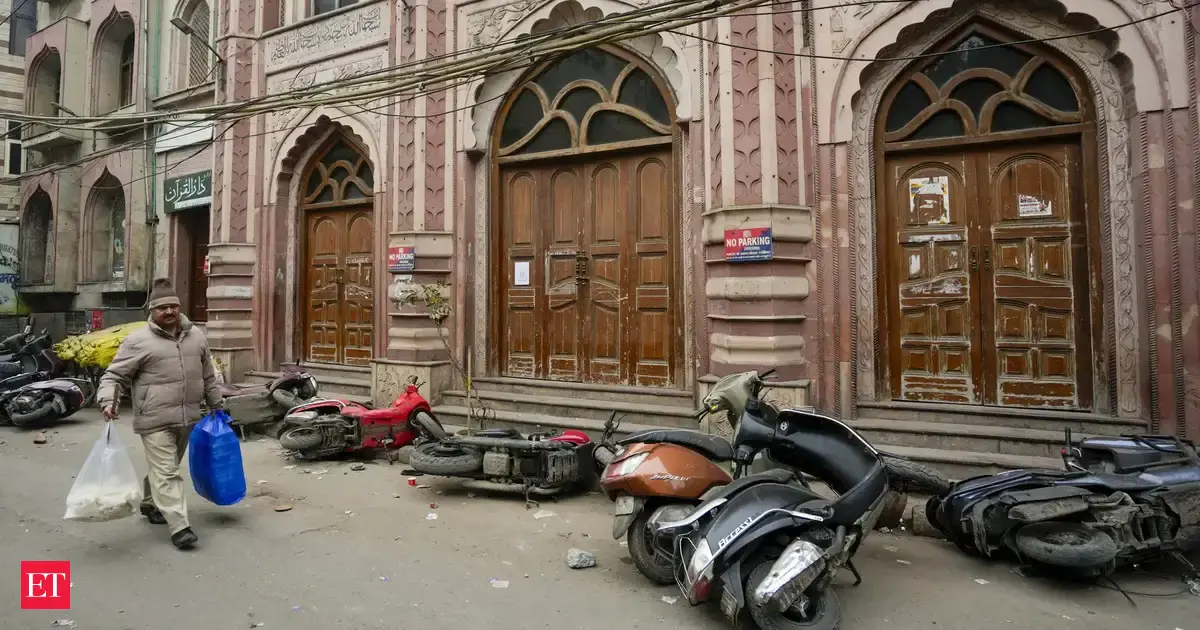
The Jama Masjid, located opposite Pioneer School in Bharuch, has become the centre of a controversy. Sanyasis of the Akhil Bharatiya Sant Samiti have launched a protest against the mosque, stating that the site is actually an ancient Jain temple and the birthplace of Chakradhar Swami. The Sant Samiti has also alleged that illegal construction has been carried out at the mosque, despite it being under the protection of the Archaeological Department. In view of the situation, the Bharuch Superintendent of Police visited the site and held discussions with officials of the Archaeological Survey of India (ASI) and the sanyasis of the Sant Samiti, assuring them that a survey would be conducted. On Monday (5 January), the Akhil Bharatiya Sant Samiti staged a sit-in protest at Shaktinath Maidan and announced that they would abstain from food and water until the ASI takes firm action. Earlier as well, the Sant Samiti had identified the Jama Masjid as the Samli Vihar Jain temple and the birthplace of Shri Chakradhar Swami. At present, five times namaz is offered at the Jama Masjid, and madrasa children are also taught there. Around 1905, the Archaeological Department took over this mosque and declared the entire site a protected monument. Despite this, the Sant Samiti has alleged that construction has been carried out in violation of rules. According to the saints, even though it is a protected national monument, members of the Muslim community are engaging in illegal activities at the site and are attempting to alter its original identity. To register their protest, the saints gathered and demanded that the site be restored to its original form and that all illegal activities be stopped. Akhil Bharatiya Sant Samiti president Sant Avichal Devacharya stated that there are no symbols of any other culture at this heritage site. Since the Archaeological Department has taken it under its control, the department bears full responsibility for it. If any activities are taking place there, they must be stopped immediately. Any new construction that did not exist earlier and was added later should be removed without delay. The demand of all saints and the Hindu community is that the site should be preserved solely as an archaeological monument. What did the saints say? Speaking to OpIndia, Swami Muktanand, a sanyasi of the Akhil Bharatiya Sant Samaj who is leading the protest, said that the Jama Masjid located near the Head Post Office in Bharuch was originally known as the Samli Vihar Jain temple, where Shri Chakradhar Swami was born. This historic site belongs to the Government of India and is a living national monument protected by the Archaeological Department. Any alteration to it is legally a criminal offence. However, he alleged that the rules are not being followed. He stated that there are around 3,800 monuments under ASI protection in India, of which about 820 are considered living monuments. Citing the examples of the Bhojshala’s Maa Saraswati temple and the Gyanvapi temple in Kashi, he said that both fall under the category of protected living monuments, and similarly, this site should also be treated as a living monument. According to the law, no changes are permitted in a living monument. No such changes have been allowed at Bhojshala or in Kashi. He added that even driving a single nail into a living monument is a violation of the law. Despite this, a wuzu-khana has been constructed at the Bharuch Jama Masjid, and fans, lights, boards, and other items have been installed. Madrasa-related materials have also been placed there. He further said that if a monument is classified as a living monument, namaz is allowed only on one day a week, Friday, just as in the case of the Taj Mahal. When some Muslims attempted to offer namaz five times a day at the Taj Mahal, the ASI approached the court and stopped them. At Bhojshala, too, worship is allowed only on Tuesdays. In short, only one day a week is allotted. However, these rules are being continuously violated at the Jama Masjid. He also stated that at such monuments, worship or namaz may be permitted for a limited time, but no religious symbols can be brought in, and no religious identity can be established. There can be prayer or namaz, but no construction or permanent structure can be erected. At the Bharuch Jama Masjid, all these rules have been completely ignored. The interior of this protected site has been converted to resemble a mosque, which is not the norm for protected monuments. He further pointed out that no construction is allowed within a 100-metre radius around a protected monument, and if it happens, the ASI is required to take action. However, several houses have been built adjoining the Bharuch Jama Masjid. Buildings have been constructed right against the monument’s wall, which is clearly visible. What are the saints’ demands? The Sant Samiti told OpIndia that it is a fact that a Hindu-Jain temple existed at the
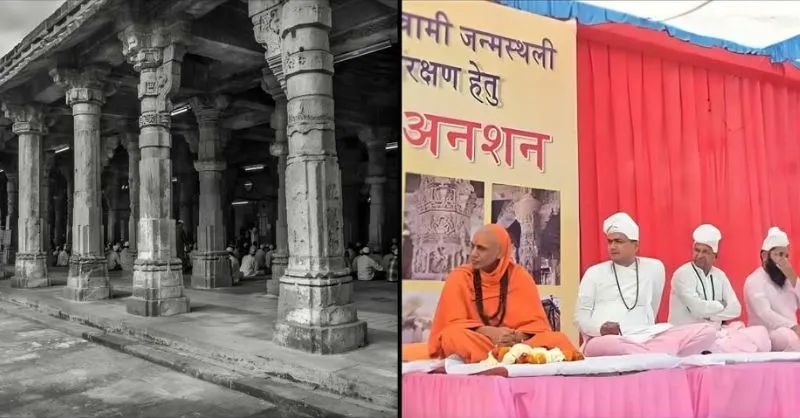

The Jama Masjid, located opposite Pioneer School in Bharuch, has become the centre of a controversy. Sanyasis of the Akhil Bharatiya Sant Samiti have launched a protest against the mosque, stating that the site is actually an ancient Jain temple and the birthplace of Chakradhar Swami.
The Sant Samiti has also alleged that illegal construction has been carried out at the mosque, despite it being under the protection of the Archaeological Department. In view of the situation, the Bharuch Superintendent of Police visited the site and held discussions with officials of the Archaeological Survey of India (ASI) and the sanyasis of the Sant Samiti, assuring them that a survey would be conducted.
On Monday (5 January), the Akhil Bharatiya Sant Samiti staged a sit-in protest at Shaktinath Maidan and announced that they would abstain from food and water until the ASI takes firm action. Earlier as well, the Sant Samiti had identified the Jama Masjid as the Samli Vihar Jain temple and the birthplace of Shri Chakradhar Swami. At present, five times namaz is offered at the Jama Masjid, and madrasa children are also taught there.
Around 1905, the Archaeological Department took over this mosque and declared the entire site a protected monument. Despite this, the Sant Samiti has alleged that construction has been carried out in violation of rules. According to the saints, even though it is a protected national monument, members of the Muslim community are engaging in illegal activities at the site and are attempting to alter its original identity.
To register their protest, the saints gathered and demanded that the site be restored to its original form and that all illegal activities be stopped. Akhil Bharatiya Sant Samiti president Sant Avichal Devacharya stated that there are no symbols of any other culture at this heritage site. Since the Archaeological Department has taken it under its control, the department bears full responsibility for it. If any activities are taking place there, they must be stopped immediately. Any new construction that did not exist earlier and was added later should be removed without delay. The demand of all saints and the Hindu community is that the site should be preserved solely as an archaeological monument.
What did the saints say?
Speaking to OpIndia, Swami Muktanand, a sanyasi of the Akhil Bharatiya Sant Samaj who is leading the protest, said that the Jama Masjid located near the Head Post Office in Bharuch was originally known as the Samli Vihar Jain temple, where Shri Chakradhar Swami was born. This historic site belongs to the Government of India and is a living national monument protected by the Archaeological Department. Any alteration to it is legally a criminal offence. However, he alleged that the rules are not being followed.
He stated that there are around 3,800 monuments under ASI protection in India, of which about 820 are considered living monuments. Citing the examples of the Bhojshala’s Maa Saraswati temple and the Gyanvapi temple in Kashi, he said that both fall under the category of protected living monuments, and similarly, this site should also be treated as a living monument. According to the law, no changes are permitted in a living monument. No such changes have been allowed at Bhojshala or in Kashi. He added that even driving a single nail into a living monument is a violation of the law. Despite this, a wuzu-khana has been constructed at the Bharuch Jama Masjid, and fans, lights, boards, and other items have been installed. Madrasa-related materials have also been placed there.
He further said that if a monument is classified as a living monument, namaz is allowed only on one day a week, Friday, just as in the case of the Taj Mahal. When some Muslims attempted to offer namaz five times a day at the Taj Mahal, the ASI approached the court and stopped them. At Bhojshala, too, worship is allowed only on Tuesdays. In short, only one day a week is allotted. However, these rules are being continuously violated at the Jama Masjid.
He also stated that at such monuments, worship or namaz may be permitted for a limited time, but no religious symbols can be brought in, and no religious identity can be established. There can be prayer or namaz, but no construction or permanent structure can be erected. At the Bharuch Jama Masjid, all these rules have been completely ignored. The interior of this protected site has been converted to resemble a mosque, which is not the norm for protected monuments.
He further pointed out that no construction is allowed within a 100-metre radius around a protected monument, and if it happens, the ASI is required to take action. However, several houses have been built adjoining the Bharuch Jama Masjid. Buildings have been constructed right against the monument’s wall, which is clearly visible.
What are the saints’ demands?
The Sant Samiti told OpIndia that it is a fact that a Hindu-Jain temple existed at the site of the present Jama Masjid in Bharuch. The architectural style and nature of the monument make this evident at first glance. However, the current protest by the saints is focused on stopping the violations of rules taking place at the monument and on conducting a fresh ASI survey. The saints said their sole demand at present is that the management of the monument should be carried out strictly by the ASI and that all ongoing violations of rules must be completely stopped.
The demands of the Sant Samiti are as follows:
- To make public the map, gazette notification, and the agreement showing how and from whom the site was taken over, when it was brought under ASI protection under the Archaeological Act of 1904.
- To fix visiting hours for the protected monument as per the Archaeological Act of 1958, and to ensure that opening and closing arrangements remain under ASI control and are conducted according to the rules.
- To stop all activities that are being carried out in violation of rules under the Archaeological Act of 1958.
- To immediately remove all constructions that have altered the original form of the protected monument, as per the Archaeological Act of 1958.
- To immediately remove illegal permanent constructions made using sand, cement, and bricks, even though the use of cement is prohibited in the original structure and premises of protected monuments under the Archaeological Act of 1958.
- To remove, as per rules, the many houses and permanent constructions built in violation of the prohibited (100 metres) and regulated (200 metres) zones defined under Sections 20A(1) and 20B of the 2010 amendment to the Archaeological Act, and to ensure proper protection of the conserved area.
- To restore the main entrance of the monument to its original form, as illegal permanent constructions at the main gate have narrowed the access route.
- To initiate legal action against concerned officials and employees of the department for misuse of authority and serious criminal negligence in performing their duties, as the rules framed for the protection and management of this ASI-protected site have not been followed for many years, and to arrange police deployment at the site.
‘Survey to begin in two days’: Sant Samaj
Speaking further to OpIndia, Swami Muktanand said that since no action was taken even after submitting applications, the sanyasis of the Akhil Bharatiya Sant Samiti began an indefinite hunger strike from 5 January. However, the administration took cognisance of the matter soon thereafter. He said that, under the mediation of SP Akshay Rajni, a meeting was held between ASI officials and the Sant Samaj, during which assurances were given that action would be taken on all issues.
According to him, the temporary arrangements at the site will be removed within 8–10 days, while permanent structures will be removed within the next two months. Additionally, the survey will begin within the next two to three days, and some members of the Sant Samaj will also be included in the survey process.