DW News, Dhruv Rathee and KAS: Germany’s ideological battle against India through NGOs and activism — Why Rahul Gandhi went to the Hertie School
In 2023, an Indian court convicted Congress leader Rahul Gandhi in a criminal defamation case. He was sentenced, and his membership of the Lok Sabha was temporarily disqualified. This was an entirely domestic Indian matter, from the complainant to the court and the law, everything was Indian. Yet the first international reaction to the verdict did not come from any of India’s neighbours or strategic rivals, but from Germany. The German Foreign Ministry said it was “monitoring the situation” and hoped that judicial independence would not be compromised. This immediately raises a larger question. The issue is not that a statement was made, but why Germany felt compelled to comment on an internal judicial matter of India. That question forms part of a larger puzzle that has largely gone unnoticed. DW News and Germany’s presence in the Hindi–Urdu space When foreign interference, regime change, or narrative warfare in India is discussed, fingers usually point straight at the United States. Terms like CIA, USAID, and “deep state” have become commonplace. In this noise, however, one country often escapes attention: Germany. Beyond the CIA playbook, is Germany scripting the anti-India narrative war?Germany didn’t disappear after its Nazi past; it changed its strategy. No tanks, no armies. just institutions, ideas, and influence. From DW News to Dhruv Rathee, and now Rahul Gandhi’s speech at… pic.twitter.com/TDSVm5yOoH— OpIndia.com (@OpIndia_com) December 28, 2025 After the BBC and Voice of America, if any foreign power has strategically cultivated India’s Hindi–Urdu media space, it has not been Russia or France, but Germany. Deutsche Welle (DW) News is the clearest example. In 2024, DW’s Hindi–Urdu platform completed 60 years in India. This taxpayer-funded, state-supported media outlet shows a clear pattern in its India coverage: sustained attacks on Prime Minister Narendra Modi, Indian media, and the majority community; narratives such as “out of control India” during COVID; describing security forces in Kashmir as an “occupying force”; and providing platforms to separatist voices. The BBC’s deep roots in India can be understood through colonial and Commonwealth history. DW’s long, organised presence, however, cannot be dismissed as coincidence. It is part of Germany’s newer soft-power strategy, low noise, deep penetration, and consistent narrative-setting. Post–World War II Germany: A return through ideas, not tanks After World War II, the world assumed Germany would remain merely a commercial partner. In reality, after the initial shock, Germany never truly receded. Its return did not come with tanks and missiles, but through institutions, moral language, and the vocabulary of democracy. Post-war Germany adopted the policy of Wandel durch Handel (“change through trade”), low politics, limited moral lecturing, and strong economic soft power. That was phase one. Today, Germany seeks to project itself not just as an economic power, but as a “moral superpower” that defines what democracy should look like, what human rights mean, and how freedom ought to be understood. This is where the problem begins. When a country appoints itself as a moral arbiter, the sovereignty of others starts to feel like an obstacle. India, which does not seek certificates of democratic legitimacy from Western capitals, naturally becomes a focal point of this friction. From guilt to moral bullying Modern German foreign policy is deeply shaped by guilt over its Nazi past and the Holocaust. To move beyond this guilt, Germany chose “moral rebranding”, positioning itself as a global moral teacher. Over time, atonement turned into interference. That interference now manifests as an urge to “fix” the democracies of countries like India. Where the United States often uses overt military interventions, coups, and wars, Germany’s approach is quieter and institutional, through NGOs, academic networks, media, and foundations. This is why Germany is less visible, yet often more deeply embedded at the grassroots level. Germany’s fronts in India Germany’s influence in India appears through multiple faces: civil society, academic networks, media, digital influencers, and frameworks such as “democratic backsliding.” The faces differ; the direction is the same. This has not gone entirely unnoticed. When OpIndia researched CSDS, it highlighted how deeply German involvement runs behind such institutions. Our research paper documents how Germany funds organisations to operate in countries it has designated as places where “democracy is under threat.” This is why the German Foreign Ministry does not hesitate to comment on the arrest of Arvind Kejriwal, the Manipur violence, or other internal Indian matters. These are not mere diplomatic reactions, but expressions of a new German foreign policy in which “human rights protection” is placed above national sovereignty. Rahul Gandhi, the Hertie Foundation,

In 2023, an Indian court convicted Congress leader Rahul Gandhi in a criminal defamation case. He was sentenced, and his membership of the Lok Sabha was temporarily disqualified. This was an entirely domestic Indian matter, from the complainant to the court and the law, everything was Indian. Yet the first international reaction to the verdict did not come from any of India’s neighbours or strategic rivals, but from Germany. The German Foreign Ministry said it was “monitoring the situation” and hoped that judicial independence would not be compromised.
This immediately raises a larger question. The issue is not that a statement was made, but why Germany felt compelled to comment on an internal judicial matter of India. That question forms part of a larger puzzle that has largely gone unnoticed.
DW News and Germany’s presence in the Hindi–Urdu space
When foreign interference, regime change, or narrative warfare in India is discussed, fingers usually point straight at the United States. Terms like CIA, USAID, and “deep state” have become commonplace. In this noise, however, one country often escapes attention: Germany.
Beyond the CIA playbook, is Germany scripting the anti-India narrative war?
— OpIndia.com (@OpIndia_com) December 28, 2025
Germany didn’t disappear after its Nazi past; it changed its strategy. No tanks, no armies. just institutions, ideas, and influence. From DW News to Dhruv Rathee, and now Rahul Gandhi’s speech at… pic.twitter.com/TDSVm5yOoH
After the BBC and Voice of America, if any foreign power has strategically cultivated India’s Hindi–Urdu media space, it has not been Russia or France, but Germany. Deutsche Welle (DW) News is the clearest example. In 2024, DW’s Hindi–Urdu platform completed 60 years in India. This taxpayer-funded, state-supported media outlet shows a clear pattern in its India coverage: sustained attacks on Prime Minister Narendra Modi, Indian media, and the majority community; narratives such as “out of control India” during COVID; describing security forces in Kashmir as an “occupying force”; and providing platforms to separatist voices.
The BBC’s deep roots in India can be understood through colonial and Commonwealth history. DW’s long, organised presence, however, cannot be dismissed as coincidence. It is part of Germany’s newer soft-power strategy, low noise, deep penetration, and consistent narrative-setting.
Post–World War II Germany: A return through ideas, not tanks
After World War II, the world assumed Germany would remain merely a commercial partner. In reality, after the initial shock, Germany never truly receded. Its return did not come with tanks and missiles, but through institutions, moral language, and the vocabulary of democracy.
Post-war Germany adopted the policy of Wandel durch Handel (“change through trade”), low politics, limited moral lecturing, and strong economic soft power. That was phase one. Today, Germany seeks to project itself not just as an economic power, but as a “moral superpower” that defines what democracy should look like, what human rights mean, and how freedom ought to be understood.
This is where the problem begins. When a country appoints itself as a moral arbiter, the sovereignty of others starts to feel like an obstacle. India, which does not seek certificates of democratic legitimacy from Western capitals, naturally becomes a focal point of this friction.
From guilt to moral bullying
Modern German foreign policy is deeply shaped by guilt over its Nazi past and the Holocaust. To move beyond this guilt, Germany chose “moral rebranding”, positioning itself as a global moral teacher. Over time, atonement turned into interference. That interference now manifests as an urge to “fix” the democracies of countries like India.
Where the United States often uses overt military interventions, coups, and wars, Germany’s approach is quieter and institutional, through NGOs, academic networks, media, and foundations. This is why Germany is less visible, yet often more deeply embedded at the grassroots level.
Germany’s fronts in India
Germany’s influence in India appears through multiple faces: civil society, academic networks, media, digital influencers, and frameworks such as “democratic backsliding.” The faces differ; the direction is the same.
This has not gone entirely unnoticed. When OpIndia researched CSDS, it highlighted how deeply German involvement runs behind such institutions. Our research paper documents how Germany funds organisations to operate in countries it has designated as places where “democracy is under threat.”
This is why the German Foreign Ministry does not hesitate to comment on the arrest of Arvind Kejriwal, the Manipur violence, or other internal Indian matters. These are not mere diplomatic reactions, but expressions of a new German foreign policy in which “human rights protection” is placed above national sovereignty.
Rahul Gandhi, the Hertie Foundation, and narrative export
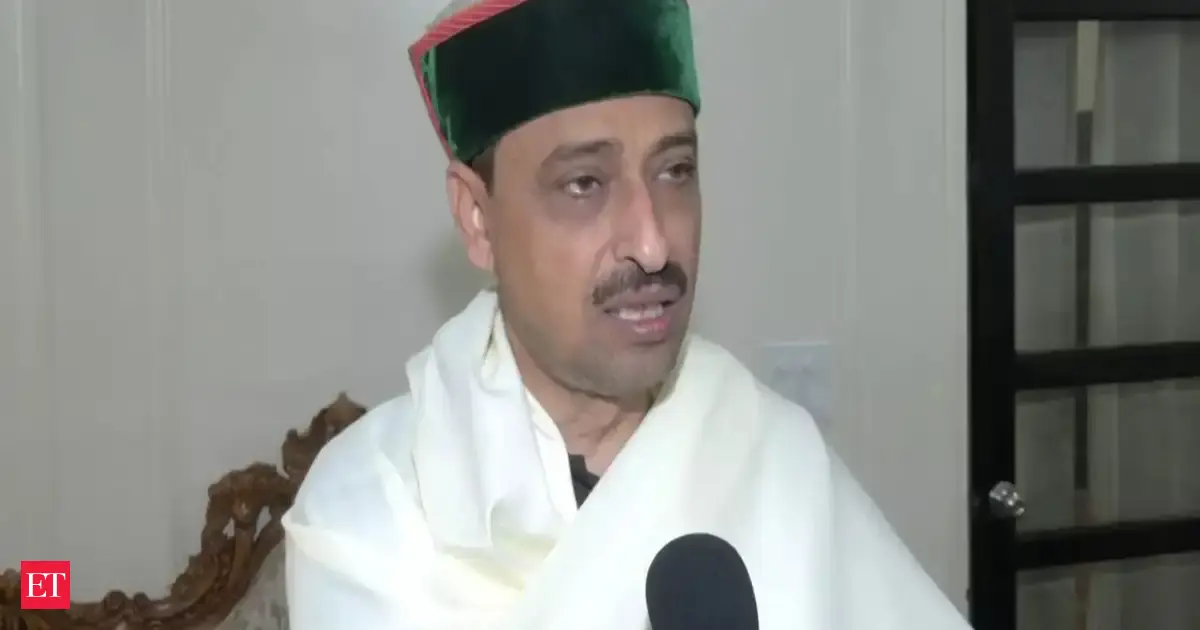
Rahul Gandhi’s visits to Germany must be viewed in this context. Recently, he delivered a lecture at the Hertie School of Governance. This institution itself is linked to Germany’s post-Nazi “atonement” ecosystem. The Hertie Foundation, which established the school, traces its origins to a 19th-century department store (Tietz). During the Nazi era, the Jewish Tietz family’s assets were expropriated under “Aryanisation,” from which the foundation benefited. Today, under the banner of atonement, the foundation invests heavily in “strengthening democracy.”
This so-called atonement has become a pretext for intervention in other countries’ democracies, including attempts to shape politics in India. When Rahul Gandhi speaks on such platforms about “institutional capture” or warns that “people will fight each other,” these are not just speeches; they are exported narratives. The real engine behind this export is KAS.
KAS: an ideological engine
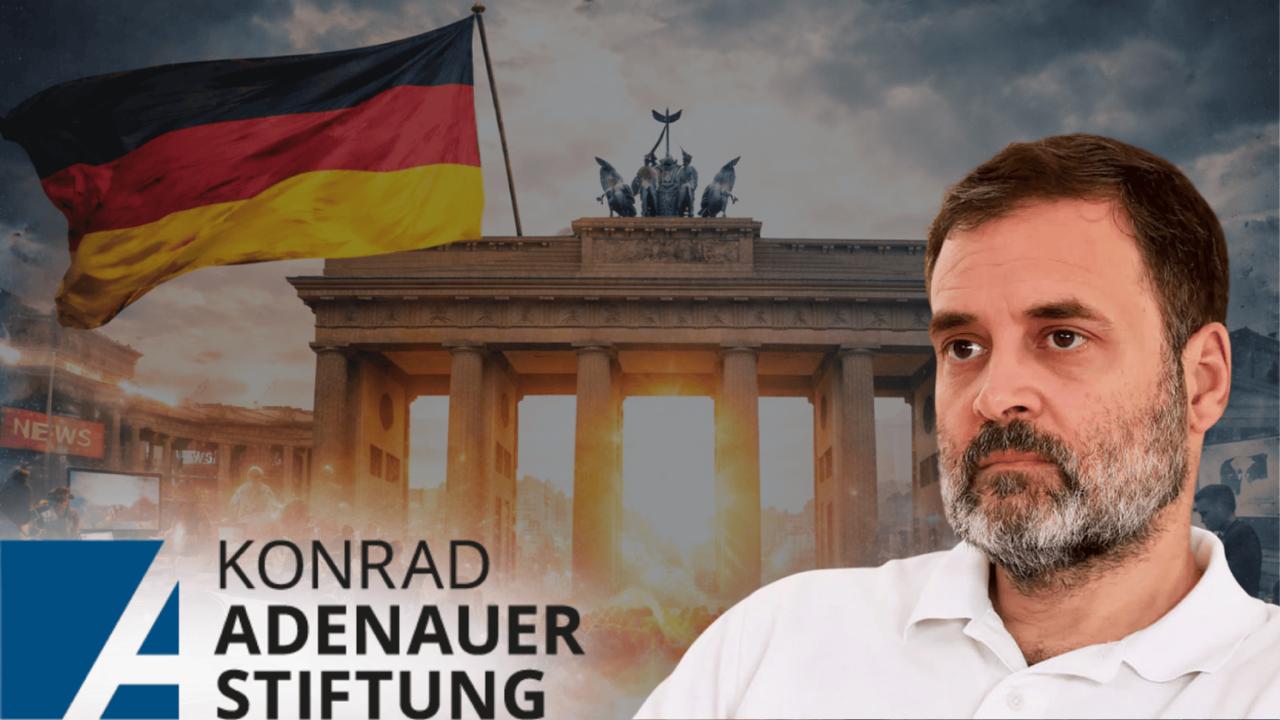
The Konrad Adenauer Stiftung (KAS) is the most important actor in this story. It is not a neutral NGO or a generic think tank. KAS is the ideological machine of Germany’s ruling political tradition, directly rooted in the Christian Democratic Union (CDU). KAS openly acknowledges on its official website that it is politically affiliated with the CDU.
This should not surprise anyone. Both the CDU and KAS share the same ideological soul: Konrad Adenauer. Understanding him is key to understanding modern German politics, and why Germany today appears restless and aggressive on multiple fronts.
Konrad Adenauer: The first chancellor of post-war Germany
Konrad Adenauer was no ordinary leader. He became the first Chancellor of West Germany after World War II, rebuilding a country reduced to rubble by Nazi devastation and reintegrating it into the Western world. He aligned Germany with the United States and Western Europe, joined NATO, and laid the foundations of European integration beginning with the European Coal and Steel Community.
This was not merely strategic politics; it was ideological. Adenauer was a devout Roman Catholic who believed politics could not be separated from Christian morality. For him, Europe was not just a geographical entity but a Christian civilisation. Remove Christian values, he believed, and Europe would become hollow.
In Adenauer’s view, the real post-war global conflict was Christianity versus Marxism. He saw communism as just as dangerous as Nazism and regarded the Soviet Union as the greatest threat to freedom. This worldview led him to NATO and a close partnership with the United States.
On this ideological foundation, the Christian Democratic Union (CDU) was created, designed to unite Catholics and Protestants on a single platform rooted in Christian principles. Adenauer believed politics must be guided by Christian ethics.
A lawyer by training, Adenauer became Mayor of Cologne in 1917 but was removed in 1933 when the Nazis came to power. He was imprisoned under the Nazi regime and arrested again by the Gestapo after the failed attempt on Hitler’s life in 1944. After the war, he rose through the CDU, becoming President of the Parliamentary Council and eventually Chancellor of West Germany.
On 20 December 1955, CDU leaders founded the Society for Christian Democratic Educational Work to spread Christian democratic ideology through education, research, and international networks. In 1964, it was renamed the Konrad Adenauer Stiftung, making KAS the institutional extension of Adenauer’s ideology.
KAS in India and the ideological battlefield
Today, KAS operates actively in India. It funds institutions such as CSDS, through which India’s democratic processes are questioned, the majority community is targeted, and sovereignty-weakening narratives are constructed. Reportedly, since 2016, KAS has provided over ₹2.6 crore in funding to CSDS.
On paper, KAS speaks of education, research, and scholarships. On the ground, it trains youth, shapes policy narratives, and builds media and academic networks. Governments may not fall overnight, but societies are reshaped. Today, regimes are destabilised not by tanks, but by ideas and digital narratives.
German statements on India, whether on Kejriwal’s arrest, Manipur, or “human rights versus sovereignty”, emerge from this ideological framework. Organisations like KAS do not send tanks; they send narratives, networks, and ideas.
This model resembles USAID’s approach. The difference is that USAID promotes the American model, while KAS promotes a European—specifically German, path, often aligned with EU norms. This also explains occasional friction between the two.
Historically, Germany’s stance toward India has followed similar logic: criticism of India during the 1961 Goa liberation because Portugal was a NATO member; initial criticism during the 1971 Bangladesh war; suspension of assistance and pressure to join the NPT after India’s nuclear tests in 1974 and 1998.
Germany’s Stiftung model
Germany’s political system features a unique element: Stiftungen, political foundations affiliated with parties, funded by the state, and active worldwide to “teach democracy.” Because of their patterns in India, the Ministry of Home Affairs has often taken a strict stance. In this process, organisations such as CPR and Oxfam India have seen their FCRA licences cancelled.
Three major German foundations stand out:
- Friedrich Ebert Stiftung (FES), linked to the Social Democratic Party (SPD), accused of funding NGOs that promote industrial unrest under the banner of labour rights. In 2022, an FES report controversially compared India to authoritarian regimes.
- Heinrich Böll Stiftung (HBS), linked to the Green Party, considered the most aggressive toward India—opposing coal projects, nuclear energy, large infrastructure initiatives, and even the Aarogya Setu app. Investigations into money trails in some cases reportedly led back to such foundations.
- Konrad Adenauer Stiftung (KAS), linked to the CDU, focusing on youth, policymakers, and academia. Through surveys, fellowships, and programmes, it is said to ideologically shape opposition narratives across media, research, and training.
Feminist Foreign Policy: morality or interference?
Germany has recently promoted the concept of “Feminist Foreign Policy,” championed by Foreign Minister Annalena Baerbock. In India’s context, this has raised concerns. German statements on Kashmir echoing Pakistan’s line, framing Manipur violence as “Hindu versus Christian,” and commenting publicly on Kejriwal’s arrest are seen as crossing India’s red lines.
Experts argue that Germany is not limited to diplomatic statements but has prepared digital and information-war fronts in India. International media and social platforms play a key role here, with DW frequently cited in these debates.
Some Indian digital platforms and media outlets are also discussed in connection with German networks. Publications like The Caravan are linked to KAS’s Media Programme Asia. Germany is said to adapt its information-war strategies with changing times.
Questions have also been raised about digital influencers whose reach surged ahead of the 2019 general elections, for example, Dhruv Rathee, who later appeared prominently on platforms like the BBC and NDTV on sensitive issues such as caste, reservations, elections, and EVMs.
Germany has effectively become a safe haven for India-critical digital influencers, aided by its strict privacy and free-speech laws that shield them from Indian legal action.
Germany’s normative power
Analysts describe all this as part of Germany’s strategy of “normative power.” In a multipolar world, Germany seeks influence not through military strength but through narratives, institutions, and ideology, positioning itself as the arbiter of who is “democratic” and who is not.
India is a key economic partner for Germany, but Germany’s political and intellectual elite appears uncomfortable with India’s rise as a civilisational state, especially as India advances toward the global top three economies, potentially pushing Germany back.
The question is whether we recognise that today’s battles are no longer fought at borders, but within institutions, ideas, and narratives. OpIndia continues to monitor these developments and will soon publish further in-depth research, similar to our CSDS investigation, into Germany’s other fronts, so readers can better understand the nuances and modus operandi of this entire nexus.