Nepal holds elections months after regime change ‘Gen-Z protests’ with the same parties: The uprising, the chaos, and the meaninglessness of the agitation
Months after a Gen-Z protest in Nepal toppled the corruption-accused communist government, the country held elections for the House of Representatives (HoR) on the 5th of March. These are the first general elections since youth-led protests brought down the Prime Minister K.P. Sharma Oli-led communist government in September 2025. Nepal Gen-Z protests that toppled the Oli government In September 2025, Nepal witnessed an unprecedented street protest by the country’s youth. The Nepali Gen-Z hit the streets after the Oli government banned 26 social media apps, including Facebook, WhatsApp and X. While the government argued that the move was aimed at controlling misinformation and hate speech, the issue was not as simple as they wanted it to seem. The Nepali Gen-Z mobilised via social media against systemic issues, including elite corruption, youth unemployment, and inequality. As social media played a key role in the exchange of anti-government ideas and information, an abrupt ban was seen as the Oli government’s move to stifle dissenting voices. The Nepali youth were outraged, and the initial peaceful demonstrations took a violent turn due to police brutality. It was reported that on the first day of the protest, 5th September 2025 alone, 19 protesters were killed by the police. It also emerged that non-Gen-Z elements had infiltrated the protests with agendas of their own, hijacking the Gen-Z protests and turning them into violent chaos. It was only after the Nepal Army stepped in to enforce curfews and restore order that violence could be brought under control. Meanwhile, the Nepali Gen-Z picked the country’s interim Prime Minister in a first-of-its-kind Discord poll, wherein former Chief Justice Sushila Karki emerged as the most popular choice. Karki was not only recommended by Gen-Z but also backed by the Army. Karki was mandated to investigate the protest violence, implement reforms, and organise fresh elections. Thus, the Parliament was dissolved, and fresh elections were scheduled for 5th March 2026. How is Nepal’s economy, political stability and law and order faring Nepal recorded an overall economic loss of around $586 million to Nepal’s $42 billion economy in the aftermath of the September 2025 protests. For the fiscal year 2026, Nepal’s real GDP growth is expected to slow to between 2.1% and 3.0% following a stronger estimated 4.3%–4.6% growth in FY2025. The slump is triggered by public unrest, political instability and weak consumption post-Gen-Z revolution. Although remittances and tourism revival give hope, protest damage costs, youth unemployment at 20%, low Foreign Direct Investment, and depleting investor confidence exacerbate the economic situation in Nepal. In February this year, Nepal’s Interim Industry Minister Anil Kumar Sinha had highlighted the economic impact of the September 2025 protests, stating that the unrest on 23rd and 24th September 2025 inflicted about NPR 81 billion in indirect economic losses on businesses, in addition to the immediate NPR 34 billion in physical damage. On the political stability front, Nepal has not been a stranger to political instability since 1990, although the September 2025 Gen-Z uprising was relatively unique. The country has seen 32 changes in political leadership in 35 years. The March 5 elections are expected to usher Nepal into an era of political stability and economic healing, even as the ‘traditional’ political challenges persist. Gen-Z wanted to bring a revolutionary change in Nepal’s political leadership, ends up getting a confined choice of traditional parties One of the biggest areas of discontent among the Gen-Z protestors in Nepal was the alleged corruption, surging unemployment, and nepotism. Fed up with corrupt conventional choices, the Nepali youth wanted to not only oust the communist government from power but also pick a fresh face with a clean background. As the interim Prime Minister of Nepal, Sushila Karki, filled the power vacuum, she also began facing pressure from all political parties and youth groups to resign. Eight months after the streets of Nepal saw the country’s youth outrage, the election dynamics indicate that the entire Gen-Z protests turned out to be as meaningless as it gets. Even before the election results are officially declared, it appears that the Gen Z revolution’s demands for accountability and generational change in Nepal will not translate into a new political order but only a repackaged reversion to the status quo. Corruption, unemployment and economic slowdown were among the major concerns raised by Nepali Gen-Z before, during and after the September uprising. These remain the core issues of the ongoing general elections as well. However, given the presence, prevalence and popularity of the traditional political parties, a dramatic change in how these parties, if voted to power, will effect the dramatic change Gen-Z yearns for. Driven by circumstantial compu
Months after a Gen-Z protest in Nepal toppled the corruption-accused communist government, the country held elections for the House of Representatives (HoR) on the 5th of March. These are the first general elections since youth-led protests brought down the Prime Minister K.P. Sharma Oli-led communist government in September 2025.
Nepal Gen-Z protests that toppled the Oli government
In September 2025, Nepal witnessed an unprecedented street protest by the country’s youth. The Nepali Gen-Z hit the streets after the Oli government banned 26 social media apps, including Facebook, WhatsApp and X. While the government argued that the move was aimed at controlling misinformation and hate speech, the issue was not as simple as they wanted it to seem. The Nepali Gen-Z mobilised via social media against systemic issues, including elite corruption, youth unemployment, and inequality.
As social media played a key role in the exchange of anti-government ideas and information, an abrupt ban was seen as the Oli government’s move to stifle dissenting voices. The Nepali youth were outraged, and the initial peaceful demonstrations took a violent turn due to police brutality. It was reported that on the first day of the protest, 5th September 2025 alone, 19 protesters were killed by the police. It also emerged that non-Gen-Z elements had infiltrated the protests with agendas of their own, hijacking the Gen-Z protests and turning them into violent chaos.
It was only after the Nepal Army stepped in to enforce curfews and restore order that violence could be brought under control.
Meanwhile, the Nepali Gen-Z picked the country’s interim Prime Minister in a first-of-its-kind Discord poll, wherein former Chief Justice Sushila Karki emerged as the most popular choice. Karki was not only recommended by Gen-Z but also backed by the Army.
Karki was mandated to investigate the protest violence, implement reforms, and organise fresh elections. Thus, the Parliament was dissolved, and fresh elections were scheduled for 5th March 2026.
How is Nepal’s economy, political stability and law and order faring
Nepal recorded an overall economic loss of around $586 million to Nepal’s $42 billion economy in the aftermath of the September 2025 protests. For the fiscal year 2026, Nepal’s real GDP growth is expected to slow to between 2.1% and 3.0% following a stronger estimated 4.3%–4.6% growth in FY2025. The slump is triggered by public unrest, political instability and weak consumption post-Gen-Z revolution. Although remittances and tourism revival give hope, protest damage costs, youth unemployment at 20%, low Foreign Direct Investment, and depleting investor confidence exacerbate the economic situation in Nepal.
In February this year, Nepal’s Interim Industry Minister Anil Kumar Sinha had highlighted the economic impact of the September 2025 protests, stating that the unrest on 23rd and 24th September 2025 inflicted about NPR 81 billion in indirect economic losses on businesses, in addition to the immediate NPR 34 billion in physical damage.
On the political stability front, Nepal has not been a stranger to political instability since 1990, although the September 2025 Gen-Z uprising was relatively unique. The country has seen 32 changes in political leadership in 35 years. The March 5 elections are expected to usher Nepal into an era of political stability and economic healing, even as the ‘traditional’ political challenges persist.
Gen-Z wanted to bring a revolutionary change in Nepal’s political leadership, ends up getting a confined choice of traditional parties
One of the biggest areas of discontent among the Gen-Z protestors in Nepal was the alleged corruption, surging unemployment, and nepotism. Fed up with corrupt conventional choices, the Nepali youth wanted to not only oust the communist government from power but also pick a fresh face with a clean background. As the interim Prime Minister of Nepal, Sushila Karki, filled the power vacuum, she also began facing pressure from all political parties and youth groups to resign.
Eight months after the streets of Nepal saw the country’s youth outrage, the election dynamics indicate that the entire Gen-Z protests turned out to be as meaningless as it gets. Even before the election results are officially declared, it appears that the Gen Z revolution’s demands for accountability and generational change in Nepal will not translate into a new political order but only a repackaged reversion to the status quo.
Corruption, unemployment and economic slowdown were among the major concerns raised by Nepali Gen-Z before, during and after the September uprising. These remain the core issues of the ongoing general elections as well. However, given the presence, prevalence and popularity of the traditional political parties, a dramatic change in how these parties, if voted to power, will effect the dramatic change Gen-Z yearns for.
Driven by circumstantial compulsions, these political parties will definitely promise change in approach; however, scepticism persists over their ability to rebuild trust between the people and the political parties.
Ironically, while the entire Gen-Z movement centred on ousting the corrupt Communist government from power, the Communist Party of Nepal (UML), led by former Prime Minister KP Sharma Oli, remains a strong force.
Another conventional political outfit, the Nepali Congress, is also a major contender for power. The party nominated its new leader, Gagan Thapa, in place of former Prime Minister Sher Bahadur Deuba, although Deuba remains powerful within the party.
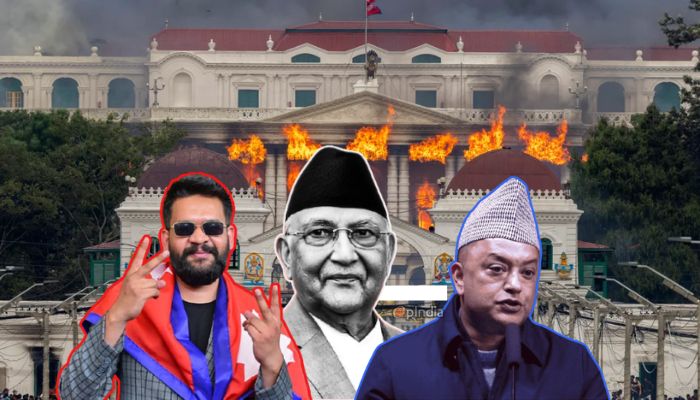
Meanwhile, the Rashtriya Swatantra Party (RSP) led by 35-year-old Balendra Shah, popularly known as Balen, is also gaining traction. In fact, Balen was touted as a popular prime ministerial choice when an interim leader was to be picked in September 2025. The former Kathmandu mayor is contesting from Jhapa 5, which has traditionally been Oli’s stronghold. Shah is seen as the RSP’s prime ministerial face and represents a younger leadership style.
It must be recalled that Balen Shah, a rapper-turned-politician and Kathmandu mayor, was accused of inciting Nepal’s youth and mobilising them against the government. From speeches to social media posts, Shah remained a vociferous player in the mobilisation of Gen-Z against the Oli government. Other than Balen Shah, 36-year-old Sudan Gurung, founder of Hami Nepal, also played a prominent role in organising the GenZ protests, rallying under-28 youth nationwide. On Instagram, he posted “How to Protest” videos, advocating “peaceful” resistance while also suggesting aggression if necessary. OpIndia had highlighted Hami Nepal’s foreign funding last year.
The Nepali Communist Party, under the leadership of former Maoist leader Prachanda, is also in the contest and continues to hold influence.
More than 915,000 new young voters registered post-protests, indicating the excitement and yearning among the Nepali youth to not only partake in the democratic process but also bring a change in the country’s polity. However, the popularity of conventional political parties does not seemingly promise a youth-savvy change.
The intention here is not to discredit the Nepali Gen-Z revolution nor to dismiss their cause. The September 2025 uprising was essentially a rejection of Nepal’s entrenched elite, unemployment, corruption and deliberate neglect of the youth’s mounting disappointment over the government’s failure to address these issues.
Yet, the elections appear to be rendering the September uprising hollow, as traditional parties, Nepali Congress, Maoist Centre, and even ex-PM Oli’s CPN-UML, long accused of the very nepotism and corruption that sparked the protests, are contesting and remain favourites in many polls. These parties to continue to have established networks and rural strongholds.
When demands for Sushila Karki’s resignation intensified in January this year, Karki said that Nepal would not become another Bangladesh. Although her remarks were in the context of not letting Bangladesh-like political chaos devour Nepal, the country’s poll trajectory shows that Nepal has unintentionally pulled a Bangladesh.
In Bangladesh, the youth protested against Prime Minister Sheikh Hasina, accusing her government of election rigging, corruption and brutalising protestors; however, after ousting Hasina, a new leadership did not emerge.
The Islamist interim government led by Muhammad Yunus, unbanned Jamaat-e-Islami, meanwhile, the Bangladesh Nationalist Party, a top rival of Hasina’s Awami League, became the favourite choice. Elections were held in Bangladesh earlier this year, wherein the BNP, despite its own corruption baggage, emerged victorious. This was essentially the dilution of the supposed Gen-Z revolution’s core agenda of political transformation.
Despite many similarities, there is a core difference between post-protest regime change in Nepal and Bangladesh. Unlike Bangladesh, wherein the ousted leader’s political party, Awami League, was banned from contesting elections, the interim government in Nepal did not ban the ousted PM Oli’s political party. This is when there was such anger against Oli that Oli’s private residence in the Balkot area of Bhaktapur was set on fire by protestors on 9th September 2025.
It is being said that RSP’s Balen Shah is emerging as popular; if the votes splinter and the situation comes down to forming coalitions, old parties will regain influence. If none of the parties gain clear majority for the 275-member legislature, Oli’s party has a chance at regaining power through alliances. If somehow the Oli-led CPN-UML regains power, the Gen-Z uprising in Nepal will officially be rendered meaningless and prove that street veto does not guarantee lasting systemic change in democracies with well-established and thick-skinned traditional political giants.
It will be painful for the Nepali youth, particularly those who participated in the 2025 protests, when the same elements they fought hard to remove from power make a comeback. The September 2025 uprising and its mishandling by the government caused economic damage, deaths, chaos, and a political vacuum that would eventually be filled, most likely by traditional political parties, fully or via alliances. Nepal’s case serves as a cautionary tale for India, wherein the opposition parties, particularly the Congress party, have consistently been trying to instigate the Gen-Z here to pull off a Bangladesh and Nepal-like ‘revolution’ against the Modi government. The Indian youth, however, must stay away from such cataclysmic tactics that serve only the interests of opportunistic forces within the country and the foreign adversaries.
From ‘Vote Chori’ bogey to ‘PM is Compromised’ drama, the opposition has been trying win over the Indian Gen-Z and incite a violent regime change; however, the eventual outcomes in Nepal and Bangladesh demonstrate that such actions only bring chaos, deaths, undermine national security, and disrupt the growth trajectory.