‘I have a plan for my country’- Khaleda Zia’s son Tarique Rahman launches bid for PM post in his first speech on returning to Bangladesh after 17 years
On December 25, 2025, Tarique Rahman, the acting chairman of the Bangladesh Nationalist Party (BNP) and son of former Prime Minister Khaleda Zia, returned to Dhaka after 17 years in self-imposed exile in London. His arrival at Hazrat Shahjalal International Airport was greeted by massive crowds of jubilant supporters, underscoring the immense enthusiasm surrounding his homecoming just weeks ahead of parliamentary elections scheduled for February 12, 2026. Rahman, widely regarded as the BNP’s prime ministerial candidate, delivered a powerful 17-minute speech at a rally on the 300 Feet Road in Purbachal, addressing hundreds of thousands of supporters. Echoing Martin Luther King Jr.’s famous “I Have a Dream” address, he declared, “Today, I want to say that I have a plan for my country… I have a plan for the people of my country and for my country.” He said he has plans to build the country and that he needs the cooperation of every individual. He continued, “To implement the plan, I need the support of all the people of the country. If you stand beside us, God willing, we will be able to implement my plan.” Tarique Rahman said, “Together we will work, together we will build our Bangladesh.” In a call for unity and peace, Rahman emphasised inclusivity, “This is a land of hills and plains, home to Muslims, Hindus, Buddhists, and Christians alike. Dhaka belongs to people of the hills and the plains, Muslims, Hindus, Buddhists and Christians.” Rahman outlined his vision for a secure nation, stating, “We want to build a safe Bangladesh—a country where any woman, man, or child can leave their home safely and return safely.” Paying tribute to recent sacrifices, he added, “We liberated Bangladesh in 1971. We liberated it again in 2024,” referring to the student-led uprising that ousted Sheikh Hasina. He also said, “The people of Bangladesh want to reclaim their democratic rights and freedom of expression,” while urging an end to violence amid unrest following the killing of student leader Sharif Osman Hadi. Rahman’s return follows his acquittal in several corruption and political charges under the interim government led by Nobel laureate Muhammad Yunus, which assumed power after the 2024 uprising. With Hasina’s Awami League barred from the upcoming elections, the BNP has emerged as the clear frontrunner, as indicated by a recent International Republican Institute survey. Tarique Rahman and his wife while returning from UK to Bangladesh Speech Signals Rahman’s Bid for Prime Minister Rahman’s speech subtly but firmly positioned him as the BNP’s leader, launching a prime ministerial campaign ahead of the polls. By personally declaring “I have a plan for my country” and tying its implementation to public support for “us”, the BNP, he presented himself as the architect of Bangladesh’s future governance. This phrasing, delivered in his first public address on home soil after 17 years, effectively served as an informal announcement of his candidacy. He is already being described by the media as the “top contender” and “frontrunner” for prime minister, reflecting widespread recognition that Rahman, at 60, is set to succeed his ailing mother as the party’s face in the elections. His emphasis on a personal vision for rebuilding institutions, restoring democracy, and ensuring safety further underscored his readiness to lead the nation as its next premier. Khaleda Zia with Tarique Rahman and other family members Rahman’s physical return after remotely guiding the BNP from London marks a major shift in Bangladesh’s political dynamics. Bangladesh politics has been dominated by two major political families since its liberation from Pakistan, the Zia family of BNP and the Sheikh Mujibur Rahman-Sheikh Hasina family of Awami League. With Hasina in exile in India, most party leaders in jail and her party not allowed to contest the elections, the BNP is the most dominant political party in the country, facing several outfits contesting polls with no electoral experience. And with ailing Khaleda Zia in hospital with no possibility of returning to active politics, Rahmand becomes the tallest BNP leader, and perhaps the tallest politician in the country. Surveys suggest the BNP is on track for a strong result, possibly a majority, with Rahman expected to be nominated as prime minister, bringing fresh energy to a party long associated with his 80-year-old mother. Emerging forces like the student-led National Citizen Party and Islamist Jamaat-e-Islami may split votes but are unlikely to overtake the BNP’s momentum. NCP is a new party, and Jamaat was not allowed to contest polls for several years. Amid ongoing unrest in the country, including the recent assassination of student leader Sharif Osman Hadi, Rahman’s focus on stability, religious harmony, anti-violent measures, and inclusive policies in his speech may resonate with a population fatigued by turmoil. His “plan” hints at ambitious reforms i
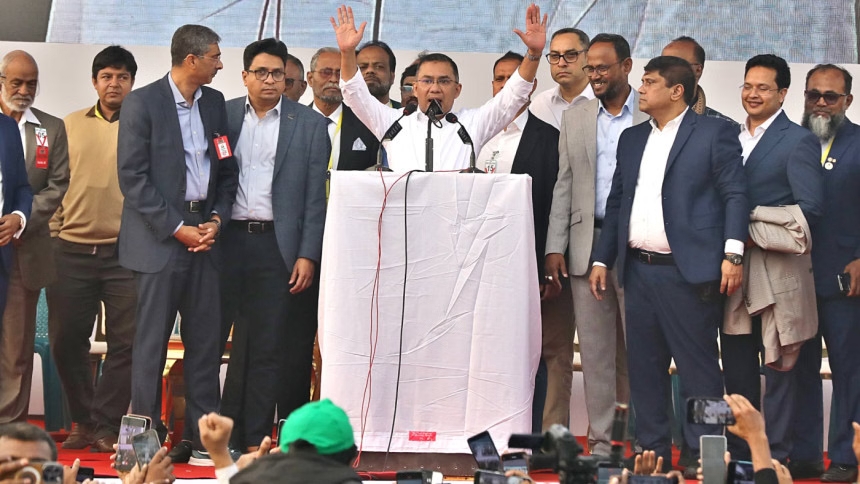

On December 25, 2025, Tarique Rahman, the acting chairman of the Bangladesh Nationalist Party (BNP) and son of former Prime Minister Khaleda Zia, returned to Dhaka after 17 years in self-imposed exile in London. His arrival at Hazrat Shahjalal International Airport was greeted by massive crowds of jubilant supporters, underscoring the immense enthusiasm surrounding his homecoming just weeks ahead of parliamentary elections scheduled for February 12, 2026.
Rahman, widely regarded as the BNP’s prime ministerial candidate, delivered a powerful 17-minute speech at a rally on the 300 Feet Road in Purbachal, addressing hundreds of thousands of supporters. Echoing Martin Luther King Jr.’s famous “I Have a Dream” address, he declared, “Today, I want to say that I have a plan for my country… I have a plan for the people of my country and for my country.” He said he has plans to build the country and that he needs the cooperation of every individual.
He continued, “To implement the plan, I need the support of all the people of the country. If you stand beside us, God willing, we will be able to implement my plan.” Tarique Rahman said, “Together we will work, together we will build our Bangladesh.”
In a call for unity and peace, Rahman emphasised inclusivity, “This is a land of hills and plains, home to Muslims, Hindus, Buddhists, and Christians alike. Dhaka belongs to people of the hills and the plains, Muslims, Hindus, Buddhists and Christians.” Rahman outlined his vision for a secure nation, stating, “We want to build a safe Bangladesh—a country where any woman, man, or child can leave their home safely and return safely.”
Paying tribute to recent sacrifices, he added, “We liberated Bangladesh in 1971. We liberated it again in 2024,” referring to the student-led uprising that ousted Sheikh Hasina. He also said, “The people of Bangladesh want to reclaim their democratic rights and freedom of expression,” while urging an end to violence amid unrest following the killing of student leader Sharif Osman Hadi.
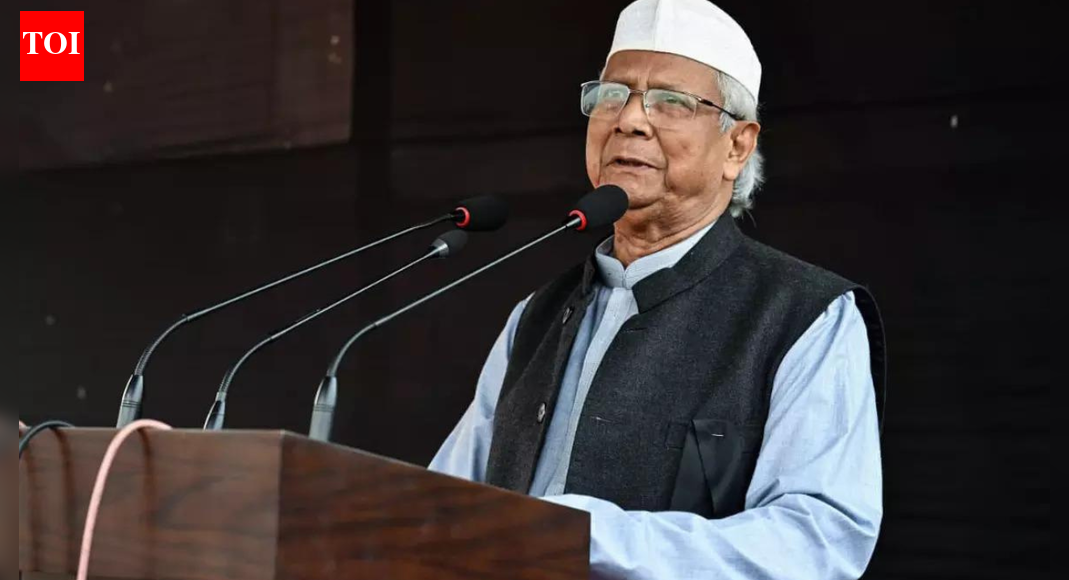
Rahman’s return follows his acquittal in several corruption and political charges under the interim government led by Nobel laureate Muhammad Yunus, which assumed power after the 2024 uprising. With Hasina’s Awami League barred from the upcoming elections, the BNP has emerged as the clear frontrunner, as indicated by a recent International Republican Institute survey.

Speech Signals Rahman’s Bid for Prime Minister
Rahman’s speech subtly but firmly positioned him as the BNP’s leader, launching a prime ministerial campaign ahead of the polls. By personally declaring “I have a plan for my country” and tying its implementation to public support for “us”, the BNP, he presented himself as the architect of Bangladesh’s future governance. This phrasing, delivered in his first public address on home soil after 17 years, effectively served as an informal announcement of his candidacy.
He is already being described by the media as the “top contender” and “frontrunner” for prime minister, reflecting widespread recognition that Rahman, at 60, is set to succeed his ailing mother as the party’s face in the elections. His emphasis on a personal vision for rebuilding institutions, restoring democracy, and ensuring safety further underscored his readiness to lead the nation as its next premier.

Rahman’s physical return after remotely guiding the BNP from London marks a major shift in Bangladesh’s political dynamics. Bangladesh politics has been dominated by two major political families since its liberation from Pakistan, the Zia family of BNP and the Sheikh Mujibur Rahman-Sheikh Hasina family of Awami League. With Hasina in exile in India, most party leaders in jail and her party not allowed to contest the elections, the BNP is the most dominant political party in the country, facing several outfits contesting polls with no electoral experience. And with ailing Khaleda Zia in hospital with no possibility of returning to active politics, Rahmand becomes the tallest BNP leader, and perhaps the tallest politician in the country.
Surveys suggest the BNP is on track for a strong result, possibly a majority, with Rahman expected to be nominated as prime minister, bringing fresh energy to a party long associated with his 80-year-old mother. Emerging forces like the student-led National Citizen Party and Islamist Jamaat-e-Islami may split votes but are unlikely to overtake the BNP’s momentum. NCP is a new party, and Jamaat was not allowed to contest polls for several years.
Amid ongoing unrest in the country, including the recent assassination of student leader Sharif Osman Hadi, Rahman’s focus on stability, religious harmony, anti-violent measures, and inclusive policies in his speech may resonate with a population fatigued by turmoil. His “plan” hints at ambitious reforms in the country.
Bangladesh now has strong anti-India sentiments, and the new regime is unlikely to go against that. With the Awami League out of the scene, India has to prepare for a Bangladesh ruled by an anti-India government, as the BNP is known for its stand against India. But compared to radical Islamist Jamaat and the completely anti-India NCP, the BNP might prove to be a better option for India.
While there are allegations that the Yunus interim administration is trying to delay the elections using the unrest over Hadi’s murder, the election commission in the country is moving ahead with preparations for the polls. And now with a rejuvenated BNP with Rahman in the country, it will probably be difficult for the interim govt to postpone the polls.
Tarique Rahman’s return and his speech that ‘he has a plan for Bangladesh,’ signal a potential close to the post-2024 power vacuum and a step toward the establishment of a democratically elected government, even though the country is set to turn more radical Islamist with the emergence of forces like Jamaat and the ‘student activists’.