Google launches Android’s Emergency Location Services in Uttar Pradesh by integrating with the state’s 112 service: Read how it will improve access to emergency services
About a decade after the introduction of Android’s Emergency Location Services (ELS) in other parts of the world, the services have finally been launched in India. Tech giant Google launched its Emergency Location Service feature for Android phones on Tuesday (24th December) in India. The services will be introduced in Uttar Pradesh, which will be the first state in India to fully operationalise the feature by integrating it with the state’s 112 emergency response system. This comes after the successful testing of the feature’s pilot program in the state. The pilot program was tested in the state over the course of 20 million calls and messages. The ELS reportedly managed to send crucial details even from calls that dropped after a few seconds. The technology was developed by Google in collaboration with Uttar Pradesh Police and Pert Telecom Solutions (PertSol). It is intended to improve emergency response by fixing the challenge faced in tracing the location of the caller due to a weak network. The Emergency Location Services will help first responders locate a person in distress in time, which can make a huge difference in emergencies. ELS uses a multi-layered system to track the caller’s location Unlike the conventional method that relies entirely on cell tower triangulation, Google’s ELS uses a multi-layered system. It uses a “Fused Location Provider” which combines data from GPS, Wi-Fi, and cellular networks to pinpoint a caller’s location. This provides the ELS with a higher accuracy with a precision level of within 50 metres. The Automatic Activation in the ELS gets instantly triggered on getting a call or SMS on 112. The service is free of cost, and no separate app or hardware is needed for the service. During the pilot test that went on for a few months, ELS supported over 20 million emergency calls and SMS messages. The service was able to identify the caller locations, even when the calls dropped due to various reasons. The service is available on all Android devices running version 6.0 and up. ELS is powered by the machine-learning based Android Fused Location Provider to provide precise locations to emergency services, regardless of where callers are when they ask for help. The service protects user privacy, offers multilingual support Another specification of the ELS is its multilingual support. It can transmit additional data from the caller’s device, such as the device’s language settings, which can help dispatchers communicate more effectively. According to Google, the service ensures user privacy. The feature is strictly “Emergency-Only”, and precise location data of the caller is sent directly from the handset to the emergency service provider (UP112). Google said that it does not collect, store or see any location data shared during distress calls. It added that the service remains dormant and does not track the user until an emergency number is dialled. The 112 emergency service is an initiative of the central government, which is available across the country. However, its operation is subject to the policies of individual states and union territories. It is not clear whether other states will implement Google’s ELS. Google and Apple have been offering ELS in several countries in over 69 regions, including the 911 SOS calls in the US. Google’s Emergency Location Service on Android was introduced in 2016 as a means of sharing users’ crucial details about location with emergency services instantly. It extended the feature to the US in 2018.
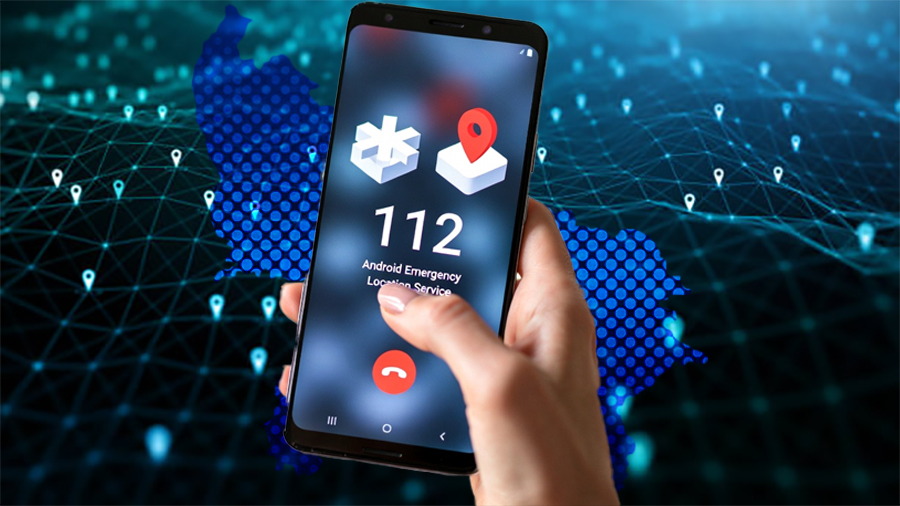

About a decade after the introduction of Android’s Emergency Location Services (ELS) in other parts of the world, the services have finally been launched in India. Tech giant Google launched its Emergency Location Service feature for Android phones on Tuesday (24th December) in India. The services will be introduced in Uttar Pradesh, which will be the first state in India to fully operationalise the feature by integrating it with the state’s 112 emergency response system.
This comes after the successful testing of the feature’s pilot program in the state. The pilot program was tested in the state over the course of 20 million calls and messages. The ELS reportedly managed to send crucial details even from calls that dropped after a few seconds.
The technology was developed by Google in collaboration with Uttar Pradesh Police and Pert Telecom Solutions (PertSol). It is intended to improve emergency response by fixing the challenge faced in tracing the location of the caller due to a weak network. The Emergency Location Services will help first responders locate a person in distress in time, which can make a huge difference in emergencies.
ELS uses a multi-layered system to track the caller’s location
Unlike the conventional method that relies entirely on cell tower triangulation, Google’s ELS uses a multi-layered system. It uses a “Fused Location Provider” which combines data from GPS, Wi-Fi, and cellular networks to pinpoint a caller’s location. This provides the ELS with a higher accuracy with a precision level of within 50 metres. The Automatic Activation in the ELS gets instantly triggered on getting a call or SMS on 112. The service is free of cost, and no separate app or hardware is needed for the service.
During the pilot test that went on for a few months, ELS supported over 20 million emergency calls and SMS messages. The service was able to identify the caller locations, even when the calls dropped due to various reasons.
The service is available on all Android devices running version 6.0 and up. ELS is powered by the machine-learning based Android Fused Location Provider to provide precise locations to emergency services, regardless of where callers are when they ask for help.
The service protects user privacy, offers multilingual support
Another specification of the ELS is its multilingual support. It can transmit additional data from the caller’s device, such as the device’s language settings, which can help dispatchers communicate more effectively. According to Google, the service ensures user privacy. The feature is strictly “Emergency-Only”, and precise location data of the caller is sent directly from the handset to the emergency service provider (UP112).
Google said that it does not collect, store or see any location data shared during distress calls. It added that the service remains dormant and does not track the user until an emergency number is dialled. The 112 emergency service is an initiative of the central government, which is available across the country. However, its operation is subject to the policies of individual states and union territories. It is not clear whether other states will implement Google’s ELS.
Google and Apple have been offering ELS in several countries in over 69 regions, including the 911 SOS calls in the US. Google’s Emergency Location Service on Android was introduced in 2016 as a means of sharing users’ crucial details about location with emergency services instantly. It extended the feature to the US in 2018.