What the India-Indonesia Sabang port project is and why a complementary maritime hub with Great Nicobar serves India’s interests
Prime Minister Narendra Modi reached Indonesia for a 3-day visit on 6th July 2026. It was part of his 5-day visit to Indonesia, Australia and New Zealand. His visit to Jakarta came at a moment when the two countries are trying to widen cooperation in defence, trade, food security, health and digital systems. It is the best time to revisit a quieter but potentially more transformative piece of the bilateral agenda, that is, Sabang Port. According to sources, Sabang Port’s development is one of the top items on the agenda of the India-Indonesia talks. In his press statement, PM Modi said, “As two close maritime nations, we have also decided to deepen our cooperation in the blue economy, port development, and maritime trade.” Sabang was conceived as a connectivity project The India-Indonesia Sabang initiative was never framed as a zero-sum strategic outpost in official documents. In the 2018 Shared Vision on Maritime Cooperation in the Indo-Pacific, the two governments committed themselves to deeper connectivity between India’s Andaman and Nicobar Islands and Indonesia’s Sumatra provinces, which include Aceh. The main goal was to promote trade, tourism and people-to-people links. The same document also called for building Andaman Sea tourism links between Sabang, Port Blair and Havelock for sail tourism, cruise traffic, diving and wellness travel. In 2018, when PM Modi visited Jakarta, a Joint Task Force on Andaman and Nicobar Islands-Aceh connectivity was set up. Its first meeting was held in Banda Aceh in 2019 and the second in Port Blair in 2022. According to the official India-Indonesia bilateral brief of the Consulate General of India in Bali, that second meeting reviewed trade and investment, tourism, marine resources, academic cooperation, cultural ties and, crucially, the development of port infrastructure around Sabang. In other words, Sabang Port was part of a broader connectivity vision linking Aceh and the Andamans, and not just a port-only template. Sabang Port is not merely a berth, but is meant to be a multi-sector connector, that is, maritime infrastructure, fisheries, tourism, local commerce and island-to-island integration. Any serious discussion revolving around Sabang Port will include all these features, which are economic, civil and regional in character. Great Nicobar changes the equation Since 2018, things have changed in terms of India’s own maritime ambition. The Great Nicobar project is designed to turn the island into a major maritime and economic hub close to the East-West shipping route. The Government of India’s official explainer says the project includes a 14.2 million TEU international container transhipment terminal, a greenfield international airport, a 450 MVA gas-solar power plant and a township. All this will be developed in proximity to the shipping lane that is intended to reduce India’s dependence on foreign transhipment ports such as Colombo, Singapore and Klang. The locations of The Great Nicobar Project and Sabang Port Notably, the Great Nicobar Project is far ahead of being just a concept on paper. In March 2026, India’s Public-Private Partnership Appraisal Committee gave final approval to the Galathea Bay international container transhipment port component at Great Nicobar. The appraised project cost is around ₹48,862 crore for the PPP port package. It means Great Nicobar has moved from strategic aspiration into implementation mode. With the Great Nicobar Project, the commercial geography around Sabang Port has become harder to ignore. According to Malaysia’s Marine Department, more than 1,02,500 vessels transited the Malacca Strait in 2025. It shows the scale of maritime demand in the wider neighbourhood. Great Nicobar is being built to capture a slice of that traffic through container transhipment. However, that does not exhaust the commercial opportunities around the chokepoint. A high-volume transhipment terminal mainly moves containers from one ship to another. It attracts large vessels, sorts cargo and feeds it into onward routes. But the wider maritime economy still needs bunkering, ship repair, marine services, cruise handling, warehousing, shorebase support and value-added logistics. This is why Great Nicobar is not a threat to Indonesia’s Sabang port but a market signal. The creation of a successful large maritime node at Great Nicobar will make the wider Andaman Sea more commercially active, not less. For Sabang, that can mean demand spillover. Why complementarity suits Indonesia Recent official messaging from Sabang itself points in exactly that direction. In June 2026, BPKS, the Sabang Free Trade Zone and Free Port Authority, said Sabang’s next development phase would focus on building a “marine hub” ecosystem comprising shorebase functions, a logistics centre, bunkering services, maritime industry and tourism. The same statement said Indian interest in a Sabang transhipment port remained one of the
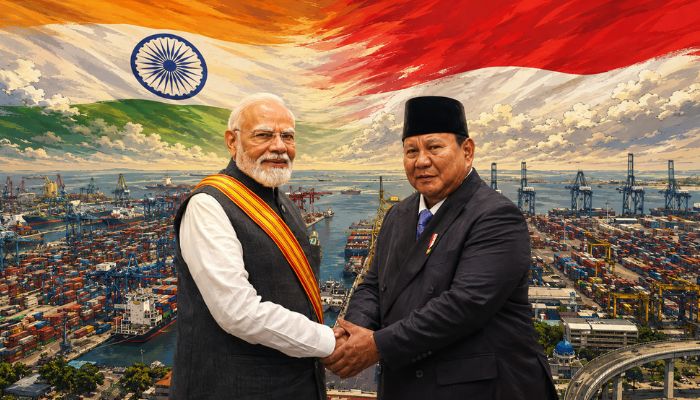
Prime Minister Narendra Modi reached Indonesia for a 3-day visit on 6th July 2026. It was part of his 5-day visit to Indonesia, Australia and New Zealand. His visit to Jakarta came at a moment when the two countries are trying to widen cooperation in defence, trade, food security, health and digital systems.
It is the best time to revisit a quieter but potentially more transformative piece of the bilateral agenda, that is, Sabang Port. According to sources, Sabang Port’s development is one of the top items on the agenda of the India-Indonesia talks. In his press statement, PM Modi said, “As two close maritime nations, we have also decided to deepen our cooperation in the blue economy, port development, and maritime trade.”
Sabang was conceived as a connectivity project
The India-Indonesia Sabang initiative was never framed as a zero-sum strategic outpost in official documents. In the 2018 Shared Vision on Maritime Cooperation in the Indo-Pacific, the two governments committed themselves to deeper connectivity between India’s Andaman and Nicobar Islands and Indonesia’s Sumatra provinces, which include Aceh.
The main goal was to promote trade, tourism and people-to-people links. The same document also called for building Andaman Sea tourism links between Sabang, Port Blair and Havelock for sail tourism, cruise traffic, diving and wellness travel.
In 2018, when PM Modi visited Jakarta, a Joint Task Force on Andaman and Nicobar Islands-Aceh connectivity was set up. Its first meeting was held in Banda Aceh in 2019 and the second in Port Blair in 2022.
According to the official India-Indonesia bilateral brief of the Consulate General of India in Bali, that second meeting reviewed trade and investment, tourism, marine resources, academic cooperation, cultural ties and, crucially, the development of port infrastructure around Sabang. In other words, Sabang Port was part of a broader connectivity vision linking Aceh and the Andamans, and not just a port-only template.
Sabang Port is not merely a berth, but is meant to be a multi-sector connector, that is, maritime infrastructure, fisheries, tourism, local commerce and island-to-island integration. Any serious discussion revolving around Sabang Port will include all these features, which are economic, civil and regional in character.
Great Nicobar changes the equation
Since 2018, things have changed in terms of India’s own maritime ambition. The Great Nicobar project is designed to turn the island into a major maritime and economic hub close to the East-West shipping route. The Government of India’s official explainer says the project includes a 14.2 million TEU international container transhipment terminal, a greenfield international airport, a 450 MVA gas-solar power plant and a township. All this will be developed in proximity to the shipping lane that is intended to reduce India’s dependence on foreign transhipment ports such as Colombo, Singapore and Klang.
The locations of The Great Nicobar Project and Sabang Port
Notably, the Great Nicobar Project is far ahead of being just a concept on paper. In March 2026, India’s Public-Private Partnership Appraisal Committee gave final approval to the Galathea Bay international container transhipment port component at Great Nicobar. The appraised project cost is around ₹48,862 crore for the PPP port package. It means Great Nicobar has moved from strategic aspiration into implementation mode.
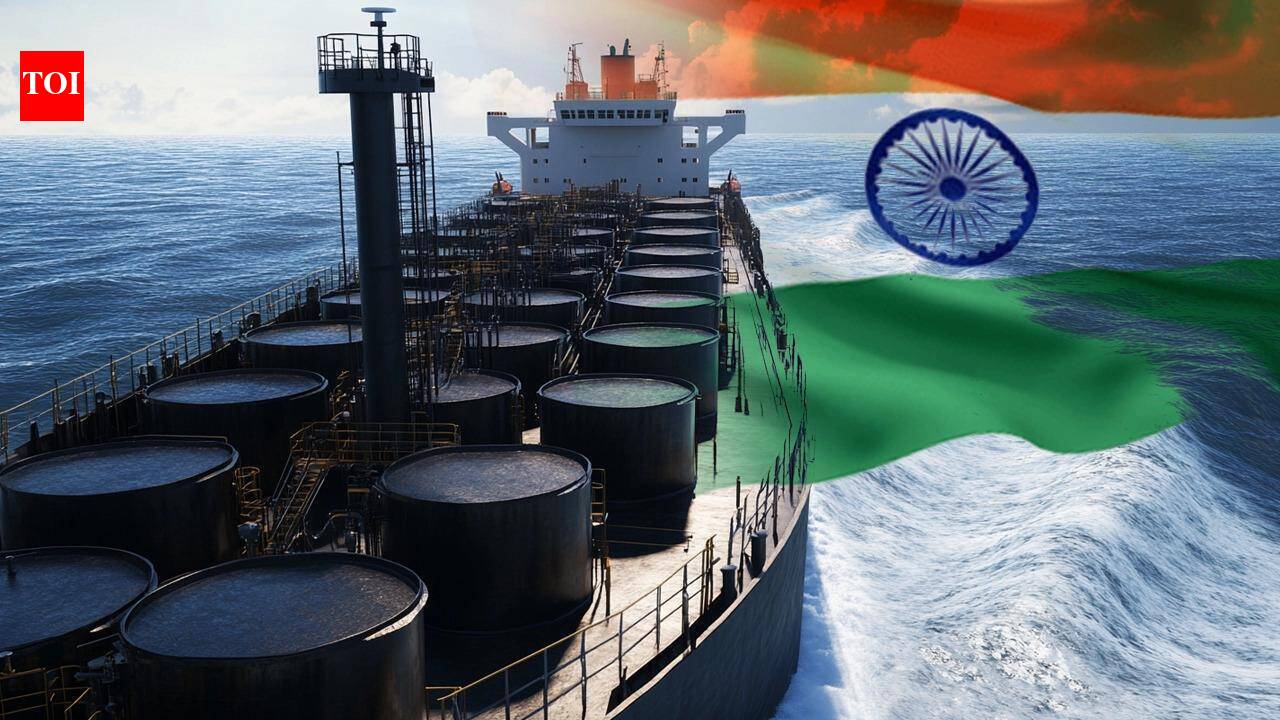
With the Great Nicobar Project, the commercial geography around Sabang Port has become harder to ignore. According to Malaysia’s Marine Department, more than 1,02,500 vessels transited the Malacca Strait in 2025. It shows the scale of maritime demand in the wider neighbourhood.
Great Nicobar is being built to capture a slice of that traffic through container transhipment. However, that does not exhaust the commercial opportunities around the chokepoint. A high-volume transhipment terminal mainly moves containers from one ship to another. It attracts large vessels, sorts cargo and feeds it into onward routes. But the wider maritime economy still needs bunkering, ship repair, marine services, cruise handling, warehousing, shorebase support and value-added logistics.
This is why Great Nicobar is not a threat to Indonesia’s Sabang port but a market signal. The creation of a successful large maritime node at Great Nicobar will make the wider Andaman Sea more commercially active, not less. For Sabang, that can mean demand spillover.
Why complementarity suits Indonesia
Recent official messaging from Sabang itself points in exactly that direction. In June 2026, BPKS, the Sabang Free Trade Zone and Free Port Authority, said Sabang’s next development phase would focus on building a “marine hub” ecosystem comprising shorebase functions, a logistics centre, bunkering services, maritime industry and tourism.
The same statement said Indian interest in a Sabang transhipment port remained one of the strategic opportunities under discussion and described Sabang as Indonesia’s maritime gateway to the Indian Ocean and the Malacca Strait.
It means that Indonesia does not need to imitate Great Nicobar to benefit from it. In fact, Sabang’s smarter path is differentiation. Great Nicobar is being built first and foremost around container transhipment, large-scale logistics and supporting infrastructure.
In contrast, Sabang’s own institutional vision is broader and more service-oriented, that is, transhipment where viable, but also cruise, marine logistics, bunkering, fisheries and tourism. BPKS has repeatedly described its mission in those terms, including its ambition to develop port transhipment and cruise services and to position Sabang as an international trade and tourism centre.
This is why “complementarity” works for Indonesia. A port that tries to replicate Great Nicobar’s full role risks becoming a weaker copy. A port that specialises in the functions Great Nicobar cannot fully absorb becomes indispensable. Sabang’s free port status, its maritime location and the policy push now coming from BPKS and Aceh give Jakarta a practical basis for that strategy.
China’s economic presence in Indonesia and BRI
China has a large economic presence in Indonesia. However, Sabang is not part of that story. Beijing’s major BRI-linked projects in Indonesia have been elsewhere, especially the Jakarta-Bandung high-speed railway and industrial projects linked to minerals and manufacturing. The geography of these projects is different and they serve different purposes with no direct link to Sabang in Aceh.
There were reports in the past that China had shown interest in Sabang, but that interest did not turn into a visible project. A National Maritime Foundation paper notes that Chinese interest in Sabang was discussed at one stage. A high-level Indonesian naval official reportedly said the Chinese side had offered to develop Sabang infrastructure in 2015, but Indonesia did not show interest due to security reasons. The proposal did not move forward and Sabang never entered the Indonesia-China BRI framework.
Sabang’s current relevance comes from the India-Indonesia maritime track that began in 2018, when both sides started looking at connectivity between the Andaman and Nicobar Islands and Aceh.
Why India gains from a dual-hub approach
From India’s perspective, a complementary Sabang is better than a competitive Sabang for three main reasons.
First of all, it gives New Delhi a wider maritime ecosystem near the western entrance of the Malacca Strait. Great Nicobar can anchor transhipment. Sabang can support the surrounding service economy. When they work together, they will create network effects that a single port cannot.
Second, it makes the 2018 India-Indonesia maritime vision real in commercial terms. The original framework was about connectivity between the Andamans and Aceh, not merely port access. If Sabang and Great Nicobar evolve as complementary nodes, India gains a friendlier, more functional maritime neighbourhood across the Andaman Sea, with concrete links in tourism, trade, logistics, fisheries and local businesses. It is far more durable than a relationship defined only by security headlines.
Third, it improves the political sustainability of India’s maritime presence. Indonesia has consistently emphasised economic value in Sabang, and BPKS’s own recent messaging is overwhelmingly commercial, that is, tourism, logistics, bunkering, marine industry and job creation.
A complementary model therefore aligns better with Indonesian preferences than an overtly strategic frame would. That does not mean it is a constraint for India. It is in fact an advantage. Maritime partnerships last longer when they are profitable, locally visible and politically unthreatening.
What Jakarta should do with Sabang now
Indonesia should treat Great Nicobar as the catalyst for Sabang’s overdue commercial take-off. The first step is strategic clarity. Sabang should market itself not as another Galathea Bay, but as the Andaman Sea’s maritime-services, cruise, logistics and shorebase counterpart to Great Nicobar’s container hub.
The second is institutional momentum. New Delhi and Jakarta should reactivate the Sabang-Andaman tourism circuits, academic links and business-to-business corridors.
Third comes the branding. BPKS is already floating the idea of sister-port relationships involving Sabang, Chennai and Port Blair, and that should now be pushed from concept to implementation. These recommendations are policy inferences, but they are grounded in the official bilateral framework and the current BPKS economic roadmap.
When seen this way, the India-Indonesia joint Sabang project is a connectivity and maritime-economy initiative born out of the 2018 shared vision for the Indo-Pacific and carried forward through the Aceh-Andaman task force.
Great Nicobar does not diminish that logic but strengthens it. If Jakarta moves early, Sabang can become the commercial partner port that makes India’s Great Nicobar gamble more valuable to both countries. And that is precisely why a complementary maritime hub in Sabang is in India’s interests too.