What hides inside Pickaxe Mountain in Iran that Trump has vowed to bomb: Read details
As military hostilities between the US and Iran are escalating, US President Donald Trump warned the Middle Eastern country that US Central Command would bomb Iran’s nuclear site, Pickaxe Mountain, “very heavily”. “We’ll be hitting that area pretty soon, and very heavily,” Trump told reporters during a White House meeting with Lebanese President Joseph Aoun. He added that he would not normally announce targets but “there’s not a thing they can do about it”. Trump’s warning has brought the nuclear site into the spotlight and sparked curiosity about it. Locally known as Kuh-e Kolang Gaz La, Pickaxe Mountain is said to be a highly fortified underground site situated close to Iran’s primary nuclear enrichment facilities. It is located 220km (140 miles) south of Tehran and 2km (1.2 miles) from the Natanz nuclear facility. The Natanz nuclear facility, which houses Iran’s two uranium enrichment plants, was struck earlier during the US-Israel-Iran war. Map via Guardian As per reports, Pickaxe Mountain contains two tunnel complexes buried deep underground, which make it difficult to totally penetrate. According to US intelligence reports, the site has been dug deep inside the mountain, under hundreds of metres of solid granite rock, which provides it with natural protection from bombs designed to penetrate bunkers. The insides of the mountain remain concealed, but experts believe that it is buried about 100 metres inside the mountain and is still being developed. Historical background of the site According to reports, citing an ISIS think tank, construction of the facility at Pickaxe Mountain started in 2020, following what the Iranian authorities described as an explosion caused by an act of sabotage at the Natanz facility. The sabotage caused massive damage, leading to the construction of the facility at Pickaxe Mountain. The plan was to develop the site as a future facility to assemble the centrifuges that make nuclear fuel. In September 2020, Iran’s then nuclear chief, Ali Akbar Salehi, said the country had started building a “modern, larger and more comprehensive hall in all dimensions in the heart of the mountain near Natanz” for making advanced centrifuges. This was corroborated by the statement of the Chief of the International Atomic Energy Agency (IAEA), Rafael Grossi, who said earlier in March that Iran had previously announced its intention to have nuclear activity at Pickaxe Mountain. The construction at the Pickaxe Mountain site accelerated after the US site three Iranian nuclear sites, including Natanz, Fordow and Isfahan, in June 2025. The ISIS think tank reportedly analysed the satellite imagery of the Pickaxe Mountain site and said that it features two pairs of entrances. A security wall around the facility was recently completed. The eastern tunnel portal entrances have been hardened and partially backfilled to obstruct ground vehicle access post the US and Israel strikes. However, they have not been fully sealed. The report of the thinktank claims “that the facility is not yet operational, but construction continues” and that it is not certain when the facility will become functional. What stands at the site Reports citing Israeli intelligence claim that Iran moved part of its enriched uranium stockpile and advanced enrichment centrifuges to Pickaxe Mountain following June 2025 attacks. The Pickaxe Mountain facility has remained untouched in the 2025 and 2026 attacks by the US and Israeli forces on Iran’s nuclear sites. Even though Iran has maintained that the facility is intended solely for assembling and manufacturing advanced centrifuges, the new facility was reportedly supposed to replace the destroyed nuclear facility at Natanz. This is the reason that the US wants to bomb the site, i.e. to thwart Iran’s nuclear program. Both the US and Israeli forces intend to make Iran dispose of its nearly 1,000-pound stockpile of highly enriched uranium, or to take it from the country. Image source: Arab Times Trump previously claimed those attacks had “obliterated” Iran’s nuclear capabilities, but later assessments by US and international intelligence agencies suggested parts of Iran’s nuclear programme survived. Experts believe that Iran is using the Pickaxe Mountain site for production or storage of advanced centrifuges, relocation of operations from damaged nuclear facilities, and development of a concealed uranium enrichment capability. The Centre for Strategic and International Studies (CSIS) has said Iran could be using the site to preserve parts of its nuclear programme following attacks on other facilities.
As military hostilities between the US and Iran are escalating, US President Donald Trump warned the Middle Eastern country that US Central Command would bomb Iran’s nuclear site, Pickaxe Mountain, “very heavily”.
“We’ll be hitting that area pretty soon, and very heavily,” Trump told reporters during a White House meeting with Lebanese President Joseph Aoun. He added that he would not normally announce targets but “there’s not a thing they can do about it”. Trump’s warning has brought the nuclear site into the spotlight and sparked curiosity about it.
Locally known as Kuh-e Kolang Gaz La, Pickaxe Mountain is said to be a highly fortified underground site situated close to Iran’s primary nuclear enrichment facilities. It is located 220km (140 miles) south of Tehran and 2km (1.2 miles) from the Natanz nuclear facility. The Natanz nuclear facility, which houses Iran’s two uranium enrichment plants, was struck earlier during the US-Israel-Iran war.
Map via Guardian
As per reports, Pickaxe Mountain contains two tunnel complexes buried deep underground, which make it difficult to totally penetrate. According to US intelligence reports, the site has been dug deep inside the mountain, under hundreds of metres of solid granite rock, which provides it with natural protection from bombs designed to penetrate bunkers. The insides of the mountain remain concealed, but experts believe that it is buried about 100 metres inside the mountain and is still being developed.
Historical background of the site
According to reports, citing an ISIS think tank, construction of the facility at Pickaxe Mountain started in 2020, following what the Iranian authorities described as an explosion caused by an act of sabotage at the Natanz facility. The sabotage caused massive damage, leading to the construction of the facility at Pickaxe Mountain.
The plan was to develop the site as a future facility to assemble the centrifuges that make nuclear fuel. In September 2020, Iran’s then nuclear chief, Ali Akbar Salehi, said the country had started building a “modern, larger and more comprehensive hall in all dimensions in the heart of the mountain near Natanz” for making advanced centrifuges.
This was corroborated by the statement of the Chief of the International Atomic Energy Agency (IAEA), Rafael Grossi, who said earlier in March that Iran had previously announced its intention to have nuclear activity at Pickaxe Mountain. The construction at the Pickaxe Mountain site accelerated after the US site three Iranian nuclear sites, including Natanz, Fordow and Isfahan, in June 2025.
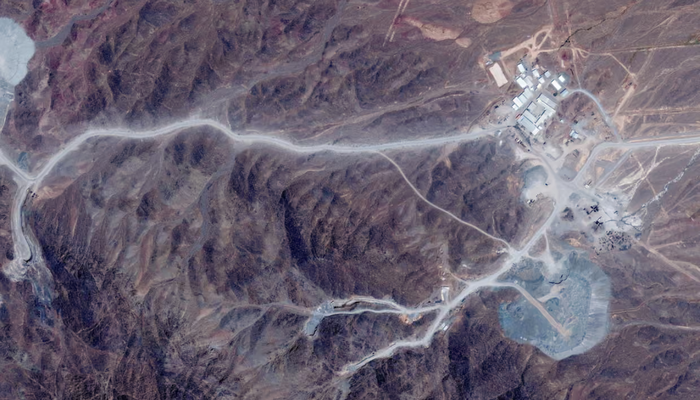
The ISIS think tank reportedly analysed the satellite imagery of the Pickaxe Mountain site and said that it features two pairs of entrances. A security wall around the facility was recently completed. The eastern tunnel portal entrances have been hardened and partially backfilled to obstruct ground vehicle access post the US and Israel strikes. However, they have not been fully sealed. The report of the thinktank claims “that the facility is not yet operational, but construction continues” and that it is not certain when the facility will become functional.
What stands at the site
Reports citing Israeli intelligence claim that Iran moved part of its enriched uranium stockpile and advanced enrichment centrifuges to Pickaxe Mountain following June 2025 attacks. The Pickaxe Mountain facility has remained untouched in the 2025 and 2026 attacks by the US and Israeli forces on Iran’s nuclear sites.
Even though Iran has maintained that the facility is intended solely for assembling and manufacturing advanced centrifuges, the new facility was reportedly supposed to replace the destroyed nuclear facility at Natanz. This is the reason that the US wants to bomb the site, i.e. to thwart Iran’s nuclear program. Both the US and Israeli forces intend to make Iran dispose of its nearly 1,000-pound stockpile of highly enriched uranium, or to take it from the country.
Image source: Arab Times
Trump previously claimed those attacks had “obliterated” Iran’s nuclear capabilities, but later assessments by US and international intelligence agencies suggested parts of Iran’s nuclear programme survived. Experts believe that Iran is using the Pickaxe Mountain site for production or storage of advanced centrifuges, relocation of operations from damaged nuclear facilities, and development of a concealed uranium enrichment capability.
The Centre for Strategic and International Studies (CSIS) has said Iran could be using the site to preserve parts of its nuclear programme following attacks on other facilities.