UP Police attach assets worth ₹28.5 crore belonging to Bhola Prasad Jaiswal, the main accused in the codeine cough syrup smuggling case
On Friday (23rd January), the Uttar Pradesh Police initiated the process of attaching assets worth Rs 28 crores, belonging to Bhola Prasad Jaiswal, the main accused in the codeine-based cough syrup smuggling case. The police action follows the court order. The attachment proceedings were conducted at three locations in Varanasi. Currently, Bhola Prasad is lodged in Sonbhadra district jail. Giving details of the attachment proceedings, Sonbhadra Superintendent of Police (SP) Abhishek Verma said that the Special Investigation Team found during its probe that Bhola Prasad was running an organised syndicate. Prasad had amassed assets worth about Rs 28.50 crore through the illegal business. सोनभद्र –कोडीन कफ सिरप का मामला –सोनभद्र पुलिस आरोपियों द्वारा अवैध रूप से अर्जित 28 करोड़ पचास लाख की संपत्ति कुर्क कर रही है,कार्रवाई जारी !! pic.twitter.com/dVE8tjH3UF— Gaurav Singh Sengar (@sengarlive) January 23, 2026 The police then identified the properties and submitted their report before the court to seek attachment under Section 107 (attachment, forfeiture, or restoration of property derived from criminal activity) of the Bharatiya Nagarik Suraksha Sanhita (BNSS). Taking note of the evidence furnished, the court issued attachment orders on Thursday (22nd January). Consequently, a police team was deployed to Varanasi, and the assets attachment process was initiated. Among the assets attached, there were two fixed deposit receipts worth Rs 1,13,93,276 in Indian Bank’s Sampurnanand Sanskrit University branch in Varanasi. In addition, two other bank accounts with a balance of Rs 6,89,607 were debit-frozen. Moreover, the authorities also attached a Mercedes-Benz car worth approximately Rs 1.22 crore and two residential houses in Varanasi bought in February 2023 for Rs 3.03 crore in the name of Bhola Prasad’s wife, Sharda Jaiswal. Besides, a building worth Rs 23 crore bought by Prasad in his wife’s name was also attached. This building is in Varanasi’s Bhelpur area. Uttar Pradesh codeine cough syrup case The case revolves around an organised criminal racket involved in the illegal stocking, sale, and trafficking of prescription-only cough syrups containing codeine, an opioid drug. Notably, Codeine is a derivative of opium. It is commonly used in cough syrups and can cause mind-numbing effects if taken in excessive amounts. Long-term use of codeine has the potential to cause addiction, similar to heroin or opium. In recent years, its use as a soft drug has increased. These medicines, which cannot be sold without a doctor’s prescription, were being illegally sold using fake documents and forged records to justify massive overstocking. The syrups were then routed through shell companies and smuggled across states. Investigations revealed that the network extended beyond Uttar Pradesh to Kashmir and West Bengal, and even across the border into Bangladesh. Acting on intelligence inputs, the Uttar Pradesh STF conducted a raid in Lucknow, which exposed the entire operation. While selling Codeine is not illegal, it is an opioid that is legally sold only in prescribed quantities via regulated sellers. The syndicate, the UP Police, is cracking down on stockpiled codeine and smuggling it illegally to be used as an addiction-inducing drug. The probe against this network began in 2024, and by 2025, over 128 FIRs were filed, 280 drug licenses were cancelled, over 3.5 lakh vials were seized, and more than 32 arrests were made. This illegal codeine drug smuggling syndicate is worth Rs 428 crore, extending from 28 districts of Uttar Pradesh to Nepal, Bangladesh, Dubai, and Pakistan. The probe into the syndicate intensified in October 2025, after a truck was seized in Sonbhadra district carrying cartons of chips (snacks), which, upon checking, turned out to be a huge cache of bottles of cough syrup containing codeine. The estimated cost of the drugs seized was Rs 3 crore. The police arrested three smugglers, Hemant Pal, Brijmohan Shivhare, and Ramgopal Dhakad, from Madhya Pradesh. During the investigation, the name of one Shubham Jaiswal emerged, who is originally from Varanasi but resides in Dubai. In November 2025, the UP Special Task Force (STF) arrested a Lucknow resident, Amit Kumar Sing,h from Gomti Nagar’s Vibhuti Khand. During questioning, Singh revealed that he was operating the codeine drug smuggling syndicate at Shubham Jaiswal’s behest. Further investigation revealed that Shubham Jaiswal is the son of Bhola Prasad, whose assets worth Rs 28 crore have now been attached by the authorities. Prasad was arrested at Kolkata airport while trying to flee to Thailand, fearing action by the UP STF. Alcohol is haram, codeine is not: Muslims bought codeine-containing cough syrup at an inflated price as an alternative intoxicant A question that stunned everyone was why a Rs 120 cough syrup is being sold at Rs 1500. This question has a ‘Halal’ answer. In Muslim-majority countries li
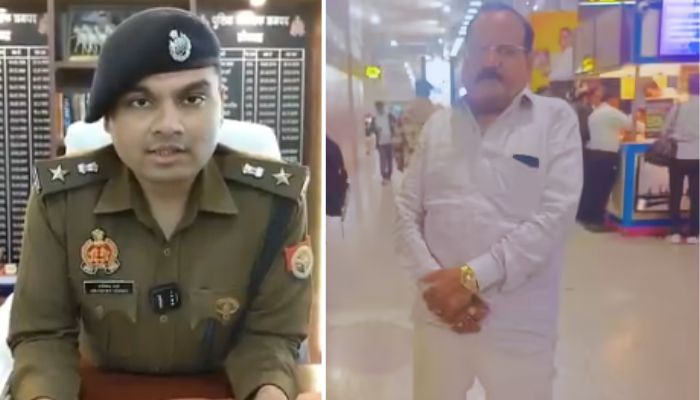

On Friday (23rd January), the Uttar Pradesh Police initiated the process of attaching assets worth Rs 28 crores, belonging to Bhola Prasad Jaiswal, the main accused in the codeine-based cough syrup smuggling case. The police action follows the court order.
The attachment proceedings were conducted at three locations in Varanasi. Currently, Bhola Prasad is lodged in Sonbhadra district jail.
Giving details of the attachment proceedings, Sonbhadra Superintendent of Police (SP) Abhishek Verma said that the Special Investigation Team found during its probe that Bhola Prasad was running an organised syndicate. Prasad had amassed assets worth about Rs 28.50 crore through the illegal business.
सोनभद्र –
— Gaurav Singh Sengar (@sengarlive) January 23, 2026
कोडीन कफ सिरप का मामला –
सोनभद्र पुलिस आरोपियों द्वारा अवैध रूप से अर्जित 28 करोड़ पचास लाख की संपत्ति कुर्क कर रही है,कार्रवाई जारी !! pic.twitter.com/dVE8tjH3UF
The police then identified the properties and submitted their report before the court to seek attachment under Section 107 (attachment, forfeiture, or restoration of property derived from criminal activity) of the Bharatiya Nagarik Suraksha Sanhita (BNSS).
Taking note of the evidence furnished, the court issued attachment orders on Thursday (22nd January). Consequently, a police team was deployed to Varanasi, and the assets attachment process was initiated.
Among the assets attached, there were two fixed deposit receipts worth Rs 1,13,93,276 in Indian Bank’s Sampurnanand Sanskrit University branch in Varanasi. In addition, two other bank accounts with a balance of Rs 6,89,607 were debit-frozen.
Moreover, the authorities also attached a Mercedes-Benz car worth approximately Rs 1.22 crore and two residential houses in Varanasi bought in February 2023 for Rs 3.03 crore in the name of Bhola Prasad’s wife, Sharda Jaiswal. Besides, a building worth Rs 23 crore bought by Prasad in his wife’s name was also attached. This building is in Varanasi’s Bhelpur area.
Uttar Pradesh codeine cough syrup case
The case revolves around an organised criminal racket involved in the illegal stocking, sale, and trafficking of prescription-only cough syrups containing codeine, an opioid drug.
Notably, Codeine is a derivative of opium. It is commonly used in cough syrups and can cause mind-numbing effects if taken in excessive amounts. Long-term use of codeine has the potential to cause addiction, similar to heroin or opium. In recent years, its use as a soft drug has increased.
These medicines, which cannot be sold without a doctor’s prescription, were being illegally sold using fake documents and forged records to justify massive overstocking. The syrups were then routed through shell companies and smuggled across states.
Investigations revealed that the network extended beyond Uttar Pradesh to Kashmir and West Bengal, and even across the border into Bangladesh. Acting on intelligence inputs, the Uttar Pradesh STF conducted a raid in Lucknow, which exposed the entire operation.
While selling Codeine is not illegal, it is an opioid that is legally sold only in prescribed quantities via regulated sellers. The syndicate, the UP Police, is cracking down on stockpiled codeine and smuggling it illegally to be used as an addiction-inducing drug.
The probe against this network began in 2024, and by 2025, over 128 FIRs were filed, 280 drug licenses were cancelled, over 3.5 lakh vials were seized, and more than 32 arrests were made. This illegal codeine drug smuggling syndicate is worth Rs 428 crore, extending from 28 districts of Uttar Pradesh to Nepal, Bangladesh, Dubai, and Pakistan.
The probe into the syndicate intensified in October 2025, after a truck was seized in Sonbhadra district carrying cartons of chips (snacks), which, upon checking, turned out to be a huge cache of bottles of cough syrup containing codeine. The estimated cost of the drugs seized was Rs 3 crore. The police arrested three smugglers, Hemant Pal, Brijmohan Shivhare, and Ramgopal Dhakad, from Madhya Pradesh.
During the investigation, the name of one Shubham Jaiswal emerged, who is originally from Varanasi but resides in Dubai. In November 2025, the UP Special Task Force (STF) arrested a Lucknow resident, Amit Kumar Sing,h from Gomti Nagar’s Vibhuti Khand. During questioning, Singh revealed that he was operating the codeine drug smuggling syndicate at Shubham Jaiswal’s behest.
Further investigation revealed that Shubham Jaiswal is the son of Bhola Prasad, whose assets worth Rs 28 crore have now been attached by the authorities. Prasad was arrested at Kolkata airport while trying to flee to Thailand, fearing action by the UP STF.
Alcohol is haram, codeine is not: Muslims bought codeine-containing cough syrup at an inflated price as an alternative intoxicant
A question that stunned everyone was why a Rs 120 cough syrup is being sold at Rs 1500. This question has a ‘Halal’ answer. In Muslim-majority countries like Bangladesh and in Indian regions with a high Muslim population, including parts of Uttar Pradesh, Jharkhand, Bihar, West Bengal, Assam, Tripura, and Sikkim, this cough syrup is being used as an alternative intoxicant.
As alcohol is prohibited (haram) in Islam, codeine-based cough syrup has emerged as a perceived “halal” substitute for intoxication. As a result, a bottle priced between Rs 120 and Rs 160 in legal markets is being sold illegally for Rs 1,200 to Rs 1,500.