Trump media group announces 1 lakh crore investment in Telangana, months after Trump called India’s economy ‘dead’
Donald Trump posits himself as a defender of American nationalism and a strong leader who would traverse any lengths to pursue his country’s interests. However, President Donald Trump is simply ‘Dollar Trump’, who tweaks foreign policy to accommodate his personal business interests. Months after the US President called India a ‘dead’ economy, Trump Media & Technology Group (TMTG) is set to invest up to Rs 1 lakh crore in the Indian state of Telangana over the next decade. On 8th December, Eric Swider, the executive director at Trump Media & Technology Group, announced that the TMTG helmed by Donald Trump’s family is set to invest around Rs 1 trillion in multiple real estate and infrastructure projects across Telangana over the next decade. A major share of this massive investment will go towards the Bharat Future City, a futuristic urban project on the outskirts of Hyderabad. While announcing the Telangana Rising Global Summit in Hyderabad, Eric Swider lauded India’s booming digital economy and tech ecosystem, saying that “India is on a rise.” Swider also emphasised collaborations in technology, media, and infrastructure. “I would like the Honourable Chief Minister (Revanth Reddy) to know that over the next 10 years, it is my intention to deploy through our organisations up to ₹1 trillion into the future city and into the areas of development here. India will continue to be on the rise and will lead the world in technology. I think it is important that we find ways to work together and invest together. We have seen technologies here that I am very excited to invest in,” Swider said. Setting an early benchmark for the scale and scope of success of our vision and game-changer projects, the Trump Group has decided to invest Rs 1,00,000 crore into the #BharatFutureCity and the larger #TelanganaRising journey.Speaking at the inaugural, Eric Swider, CEO, Trump… pic.twitter.com/5KFgZrnm59— Revanth Reddy (@revanth_anumula) December 8, 2025 Swider added, “If you go back 20 years, India from the technology space was about call centres. Now, you start looking at who is working in technology companies around the world, you understand that the talent is coming from India. Now, forward to today, you would be blind not to see that the technology capitals around the world are coming from India. India is on the rise.” Notably, the Bharat Future City Project spans 765 sq. km, incorporating 56 villages between the Srisailam and Nagarjuna Sagar highways. The project will be overseen by the Future City Development Authority (FCDA). The Bharat Future City will be divided into several zones, including the Technology and Innovation Zone, where AI, electronics, EV and high-tech companies will come. Pharma and Healthcare Zone: Where large industries related to medicines and medical research will be set up. Manufacturing Zone: Where large-scale production companies will come. Educational and Research Institutes: Where people can study and get jobs. Residential and entertainment areas: Where there will be good houses, parks, malls and sports facilities. Green Zones and Reserve Forests: To ensure that the city remains green and in balance with the environment Trump calls India’s economy ‘dead’, his own media empire pouring billions into an “India on rise” The Trump Media and Technology Group’s Rs 1 lakh crore investment in India demonstrates that pragmatism always trumps charged and delusional rhetoric. Just a few months ago, in July and August, the Trump administration’s rhetoric towards India was bullish and insulting. President Trump took to Truth Social to label India’s economy ‘dead’. He lumped India’s economy with America’s Bête noire, Russia. “They can take their dead economies down together,” he wrote. Disgruntled over India’s Russian crude oil purchases had not only called the Indian economy a “dead economy”, but also imposed a 50 per cent tariff on Indian exports as ‘punishment’. This did not end here, the Trump administration officials, especially Peter Navarro, Scott Bessent and Howard Lutnick, piled on, with press briefings, and interviews, portraying India as a villain in global supply chains, a financier of the Russian ‘war machine’, a tariff-dodging freeloader, a geopolitical wildcard cozying up to Russia and China, both of America’s ‘rivals’. These accusations, rooted in false narratives, came even as the US itself was buying Russian goods, including non-essentials, in large quantities. The Trump administration singled out India as a country fuelling the Russian war machine against Ukraine and took no such hard stance against China, even as Beijing has been the top importer of Russian oil, not India. OpIndia has repeatedly called out the Trump administration’s hypocrisy in throwing shade at India for something America and the whole of Europe have been doing despite imposing sanctions on Russia and villainising Moscow. In fact, no other country has profiteered from the Russia-Ukrai
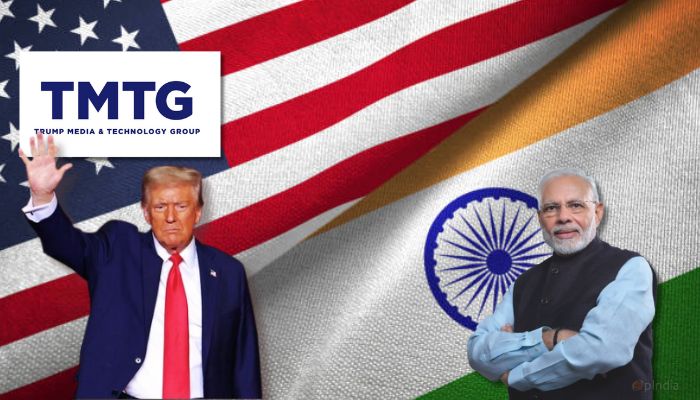

Donald Trump posits himself as a defender of American nationalism and a strong leader who would traverse any lengths to pursue his country’s interests. However, President Donald Trump is simply ‘Dollar Trump’, who tweaks foreign policy to accommodate his personal business interests. Months after the US President called India a ‘dead’ economy, Trump Media & Technology Group (TMTG) is set to invest up to Rs 1 lakh crore in the Indian state of Telangana over the next decade.
On 8th December, Eric Swider, the executive director at Trump Media & Technology Group, announced that the TMTG helmed by Donald Trump’s family is set to invest around Rs 1 trillion in multiple real estate and infrastructure projects across Telangana over the next decade. A major share of this massive investment will go towards the Bharat Future City, a futuristic urban project on the outskirts of Hyderabad.
While announcing the Telangana Rising Global Summit in Hyderabad, Eric Swider lauded India’s booming digital economy and tech ecosystem, saying that “India is on a rise.” Swider also emphasised collaborations in technology, media, and infrastructure.
“I would like the Honourable Chief Minister (Revanth Reddy) to know that over the next 10 years, it is my intention to deploy through our organisations up to ₹1 trillion into the future city and into the areas of development here. India will continue to be on the rise and will lead the world in technology. I think it is important that we find ways to work together and invest together. We have seen technologies here that I am very excited to invest in,” Swider said.
Setting an early benchmark for the scale and scope of success of our vision and game-changer projects, the Trump Group has decided to invest Rs 1,00,000 crore into the #BharatFutureCity and the larger #TelanganaRising journey.
— Revanth Reddy (@revanth_anumula) December 8, 2025
Speaking at the inaugural, Eric Swider, CEO, Trump… pic.twitter.com/5KFgZrnm59
Swider added, “If you go back 20 years, India from the technology space was about call centres. Now, you start looking at who is working in technology companies around the world, you understand that the talent is coming from India. Now, forward to today, you would be blind not to see that the technology capitals around the world are coming from India. India is on the rise.”
Notably, the Bharat Future City Project spans 765 sq. km, incorporating 56 villages between the Srisailam and Nagarjuna Sagar highways. The project will be overseen by the Future City Development Authority (FCDA).
The Bharat Future City will be divided into several zones, including the Technology and Innovation Zone, where AI, electronics, EV and high-tech companies will come. Pharma and Healthcare Zone: Where large industries related to medicines and medical research will be set up. Manufacturing Zone: Where large-scale production companies will come. Educational and Research Institutes: Where people can study and get jobs. Residential and entertainment areas: Where there will be good houses, parks, malls and sports facilities. Green Zones and Reserve Forests: To ensure that the city remains green and in balance with the environment
Trump calls India’s economy ‘dead’, his own media empire pouring billions into an “India on rise”
The Trump Media and Technology Group’s Rs 1 lakh crore investment in India demonstrates that pragmatism always trumps charged and delusional rhetoric. Just a few months ago, in July and August, the Trump administration’s rhetoric towards India was bullish and insulting. President Trump took to Truth Social to label India’s economy ‘dead’. He lumped India’s economy with America’s Bête noire, Russia. “They can take their dead economies down together,” he wrote.

Disgruntled over India’s Russian crude oil purchases had not only called the Indian economy a “dead economy”, but also imposed a 50 per cent tariff on Indian exports as ‘punishment’. This did not end here, the Trump administration officials, especially Peter Navarro, Scott Bessent and Howard Lutnick, piled on, with press briefings, and interviews, portraying India as a villain in global supply chains, a financier of the Russian ‘war machine’, a tariff-dodging freeloader, a geopolitical wildcard cozying up to Russia and China, both of America’s ‘rivals’.
These accusations, rooted in false narratives, came even as the US itself was buying Russian goods, including non-essentials, in large quantities. The Trump administration singled out India as a country fuelling the Russian war machine against Ukraine and took no such hard stance against China, even as Beijing has been the top importer of Russian oil, not India. OpIndia has repeatedly called out the Trump administration’s hypocrisy in throwing shade at India for something America and the whole of Europe have been doing despite imposing sanctions on Russia and villainising Moscow. In fact, no other country has profiteered from the Russia-Ukraine war more than the US.
However, now Trump’s own media empire is pouring billions into the very Indian soil he deemed economically barren. It is almost a cinematic irony that Trump, who weaponised tariffs and tirades against India’s growth story and strategic autonomy, now has his company betting big on India’s potential.
India, with its massive population, digital boom, a thriving startup scene and gradual shift towards business-friendly policies, makes it an irresistible market. It is for these reasons; big American tech companies do not want to miss the bus and are doubling down their investments in India. In December 2025 alone, Amazon announced that it will invest more than $35 billion in India’s cloud computing and artificial intelligence sectors by the year 2030. Microsoft followed suit, and its CEO Satya Nadella announced a landmark Rs 1.5 lakh crore (USD 17.5 billion) investment to accelerate India’s journey towards an AI-driven future.
The massive investment commitments by Amazon and Microsoft reflect a wider recognition of India’s growing digital influence and its potential to shape the global technological order. It also positions India as a critical market for AI innovation.
Interestingly, India’s second-quarter real GDP growth for FY (Fiscal Year) 2025-2026 reached a strong high of 8.2%, significantly exceeding projections of 7.3% growth as the real GDP has expanded at its fastest rate in six quarters. These remarkable numbers came months after the United States slapped 50% tariffs on India, including 25% additional tariffs for purchasing Russian oil.
Clearly, the Trump administration’s ‘tariffs and tirades’ arm-twisting tactics could not bend Modi’s India and only embarrassed the American president. While in politics, Trump gave the ‘America First’ mantra; however, this nationalistic slogan of his blurred the lines between state policy and personal ventures long back, as evident from several White House deals favouring his properties. It was seen how the Trump family’s golf resort in Vietnam got fast-tracked in exchange for tariff reduction from 46% to 20%.
Not to forget, Trump is now mollycoddling Pakistan, a country he has been critical of historically for the latter’s support to Islamic terrorists like Osama Bin Laden and squeezing American funds in the name of counterterrorism measures in Afghanistan. However, Trump took a U-turn, and his family’s company, World Liberty Financial (WLF) signed a ₹17,000 crore cryptocurrency deal with Pakistan.
The US Congress has largely been critical of Trump’s newfound love for Pakistan; however, Trump continues to bolster ties with the Pakistan Army leadership, as evident from the recent approval of $2 billion in funding for the Reko Diq mining project in Pakistan-controlled Balochistan.
Donald Trump has been leveraging political relationships for personal profit in the Middle East as well. Trump’s companies are investing money in countries he has antagonised in the past.
In a nutshell, in Trump’s political rhetoric, India could be a dead economy, but in business realpolitik, opportunistic hypocrisy is his way.