Rotherham’s Hussain brothers operated a violent child rape empire: Newly released trial transcripts reveal the horror of systemic abuse by Pakistani grooming gangs
For decades, a shadow hung over the town of Rotherham, South Yorkshire. It was a shadow cast not by industrial decline, but by a far more sinister force: organised gangs of men, predominantly of Pakistani heritage, who waged a campaign of sexual terrorism against the town’s most vulnerable young girls. The 2016 trial of the Hussain brothers and their accomplices brought into sharp focus the scale of this depravity, revealing a level of cruelty that Judge Sarah Wright described as being of “unimaginable proportions”. Recent transcripts released by Open Justice UK have reopened this dark chapter, offering a verbatim account of the atrocities. These documents, combined with the damning findings of the recent National Audit on Group-Based Child Sexual Exploitation, serve as a grim testament to the systematic rape, torture, and trafficking of children, and the catastrophic failure of a state apparatus that prioritized political correctness over child protection. Today, we are releasing the second tranche of sentencing remarks. 4 from Kirklees. All relatively recent trials, 2022-2025. https://t.co/WpWqzpl8XF pic.twitter.com/DSwvSwAmw4— Open Justice UK (@OPENJ_UK) December 4, 2025 The mechanism of evil: Targeting the vulnerable The sentencing remarks from February 2016 outline a predatory methodology that was as calculated as it was cruel. The ringleaders—Arshid Hussain, Bannaras Hussain, and Basharat Hussain, all of Pakistani origins, did not choose their victims at random; they hunted them. The court heard how the gang targeted young girls who were often in local authority care or estranged from their families. The pattern was chillingly consistent: the abusers would initially appear caring, offering attention, gifts, or drugs to build a false sense of trust. Once established, the trap snapped shut. The “boyfriend” would turn into a pimp, and the caring facade would be replaced by a regime of terror. As noted in the transcripts, the abusers “ruled Rotherham” and exploited their reputation for violence to silence their victims. Tales of horror: Inside the courtroom transcripts The details emerging from the sentencing remarks are gut-wrenching. Victim 2, placed in care at age 11, was sought out daily by Arshid Hussain. When she refused his demands, he beat her until she complied. Arshid passed her to his brother Bannaras and friends, treating her as currency to pay off debts. She was burned with cigarettes, tied up, and raped by lines of men. Victim 7 was subjected to psychological torture by Basharat Hussain. On one occasion, Basharat and Arshid bound her hands and feet and put a sheet over her head. While helpless, she heard another girl screaming while being abused nearby. They poured water on her feet after she smelled burning, terrorizing her with the threat of being set on fire. Victim 6 was told by Arshid Hussain that she was “white trash” and that “Asian women didn’t perform oral sex as it was against their religion,” using racial slurs as he forced himself upon her. A “culture of blindness”: Institutional cover-up While the courts dealt with the specific atrocities of the Hussain brothers, a broader inquiry has revealed that these were not isolated incidents but part of a national crisis facilitated by state failure. The National Audit on Group-Based Child Sexual Exploitation and Abuse, authored by Baroness Louise Casey, recently made disturbing revelations about a “culture of blindness, ignorance and prejudice” that allowed these gangs to operate with impunity. The report sets out the crime in “unsanitised terms,” describing multiple sexual assaults committed against children by multiple men, beatings, gang rapes, and girls forced into abortions. Crucially, the audit confirms what had long been suspected but officially suppressed: the majority of these grooming gangs were comprised of Pakistani and ‘Asian’ men. In Rotherham alone, it was found that 64% of child sexual exploitation cases were perpetrated by British Pakistani men, despite them being a minority in the general population. This reality was deliberately obscured by a refusal to collect data. The audit found that authorities “shied away” from recording the ethnicity of perpetrators, with data missing for nearly two-thirds of suspects nationally. This “collective failure” meant that despite numerous reports regarding “Asian or Pakistani” men exploiting young White girls, the system consistently failed to acknowledge the pattern or protect the victims. Political silence and police complicity The cover-up was driven by a paralyzing fear of being labeled “racist” or “Islamophobic.” The Casey report and subsequent investigations highlight how this fear silenced those who tried to speak out. Political Censorship: Labour MP Sarah Champion was forced to resign as a shadow minister in 2017 after stating that Britain had a problem with British Pakistani men raping white girls, a statement now vi
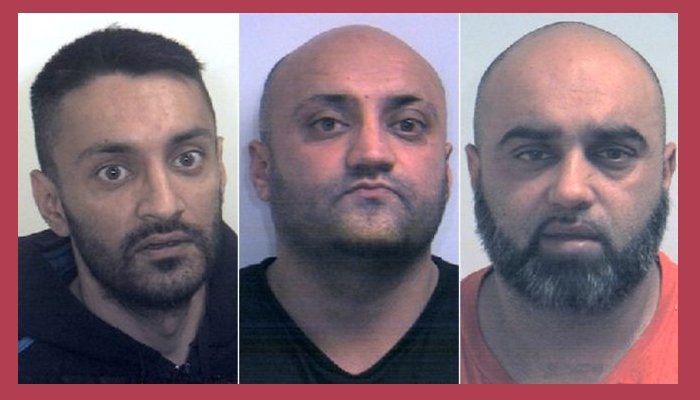

For decades, a shadow hung over the town of Rotherham, South Yorkshire. It was a shadow cast not by industrial decline, but by a far more sinister force: organised gangs of men, predominantly of Pakistani heritage, who waged a campaign of sexual terrorism against the town’s most vulnerable young girls. The 2016 trial of the Hussain brothers and their accomplices brought into sharp focus the scale of this depravity, revealing a level of cruelty that Judge Sarah Wright described as being of “unimaginable proportions”.
Recent transcripts released by Open Justice UK have reopened this dark chapter, offering a verbatim account of the atrocities. These documents, combined with the damning findings of the recent National Audit on Group-Based Child Sexual Exploitation, serve as a grim testament to the systematic rape, torture, and trafficking of children, and the catastrophic failure of a state apparatus that prioritized political correctness over child protection.
Today, we are releasing the second tranche of sentencing remarks. 4 from Kirklees.
— Open Justice UK (@OPENJ_UK) December 4, 2025
All relatively recent trials, 2022-2025. https://t.co/WpWqzpl8XF pic.twitter.com/DSwvSwAmw4
The mechanism of evil: Targeting the vulnerable
The sentencing remarks from February 2016 outline a predatory methodology that was as calculated as it was cruel. The ringleaders—Arshid Hussain, Bannaras Hussain, and Basharat Hussain, all of Pakistani origins, did not choose their victims at random; they hunted them.
The court heard how the gang targeted young girls who were often in local authority care or estranged from their families. The pattern was chillingly consistent: the abusers would initially appear caring, offering attention, gifts, or drugs to build a false sense of trust. Once established, the trap snapped shut. The “boyfriend” would turn into a pimp, and the caring facade would be replaced by a regime of terror. As noted in the transcripts, the abusers “ruled Rotherham” and exploited their reputation for violence to silence their victims.
Tales of horror: Inside the courtroom transcripts
The details emerging from the sentencing remarks are gut-wrenching.
- Victim 2, placed in care at age 11, was sought out daily by Arshid Hussain. When she refused his demands, he beat her until she complied. Arshid passed her to his brother Bannaras and friends, treating her as currency to pay off debts. She was burned with cigarettes, tied up, and raped by lines of men.
- Victim 7 was subjected to psychological torture by Basharat Hussain. On one occasion, Basharat and Arshid bound her hands and feet and put a sheet over her head. While helpless, she heard another girl screaming while being abused nearby. They poured water on her feet after she smelled burning, terrorizing her with the threat of being set on fire.
- Victim 6 was told by Arshid Hussain that she was “white trash” and that “Asian women didn’t perform oral sex as it was against their religion,” using racial slurs as he forced himself upon her.
A “culture of blindness”: Institutional cover-up
While the courts dealt with the specific atrocities of the Hussain brothers, a broader inquiry has revealed that these were not isolated incidents but part of a national crisis facilitated by state failure. The National Audit on Group-Based Child Sexual Exploitation and Abuse, authored by Baroness Louise Casey, recently made disturbing revelations about a “culture of blindness, ignorance and prejudice” that allowed these gangs to operate with impunity.
The report sets out the crime in “unsanitised terms,” describing multiple sexual assaults committed against children by multiple men, beatings, gang rapes, and girls forced into abortions. Crucially, the audit confirms what had long been suspected but officially suppressed: the majority of these grooming gangs were comprised of Pakistani and ‘Asian’ men.
In Rotherham alone, it was found that 64% of child sexual exploitation cases were perpetrated by British Pakistani men, despite them being a minority in the general population.
This reality was deliberately obscured by a refusal to collect data. The audit found that authorities “shied away” from recording the ethnicity of perpetrators, with data missing for nearly two-thirds of suspects nationally. This “collective failure” meant that despite numerous reports regarding “Asian or Pakistani” men exploiting young White girls, the system consistently failed to acknowledge the pattern or protect the victims.
Political silence and police complicity
The cover-up was driven by a paralyzing fear of being labeled “racist” or “Islamophobic.” The Casey report and subsequent investigations highlight how this fear silenced those who tried to speak out.
- Political Censorship: Labour MP Sarah Champion was forced to resign as a shadow minister in 2017 after stating that Britain had a problem with British Pakistani men raping white girls, a statement now vindicated by the data. Similarly, politicians like Keith Vaz downplayed the racial element to avoid “stigmatizing” the community.
- Ignoring Intelligence: Police forces possessed damning intelligence but refused to act. A 2015 profile by West Midlands Police found that 62% of grooming suspects were of Pakistani ethnic background, compared to just 12% White. Yet, police often chose not to alert the public due to concerns about “community tensions.”
- Criminalizing Victims: In a desperate bid to avoid racial profiling, police often arrested the victims rather than the perpetrators. Young girls were treated as offenders for minor violations committed while under the coercive control of the gangs, while the men exploiting them were left free to continue their abuse.
Police complicity, crackdown on victim families, and lenient sentences
The horrors of Rotherham were not an anomaly but part of a nationwide epidemic of grooming crimes that authorities actively sought to downplay. From the 1980s onwards, towns such as Telford, Rochdale, Oxford, and Newcastle became hunting grounds for grooming gangs, predominantly of British Pakistani origin. In Telford alone, as many as 1,000 girls were exploited over a 40-year period in a town of just 170,000 people, with three murders linked to the scandal. In Rochdale, the abuse of at least 47 young girls began in 2002, while government figures estimate that nearly 19,000 adolescents across England have been sexually groomed.
The response from law enforcement often amounted to complicity through negligence. Driven by an “obsessive avoidance of racial profiling” and a fear of being perceived as culturally insensitive, police forces frequently failed to probe grooming allegations. In a perverse inversion of justice, officers often arrested the victims and their families for minor violations while they were still in contact with their abusers, rather than targeting the rapists. This deliberate cover-up allowed gangs to operate freely, running what were effectively rape houses while maintaining a facade of community integration.
This systemic failure was bolstered by media and political figures who shielded the perpetrators by using vague terminologies like “Asian” or “South Asian,” obscuring the specific religious and ethnic drivers of the crimes, namely, Pakistani-origin men targeting vulnerable white and non-Muslim girls. Despite reports from the NSPCC in 2023 indicating an 82% rise in online grooming offenses, the true scale of the exploitation remains unknown, hidden behind a wall of official silence and denial.
How the system was paralysed by political correctness
The horrors detailed in the Rotherham transcripts did not occur in a vacuum. They were allowed to fester for decades because of a systemic failure that many commentators and reports have attributed to a paralyzing fear of “political correctness.”
For years, the victims, predominantly white, working-class girls were ignored by the very institutions designed to protect them. Police, social workers, and council officials were hesitant to investigate reports of Asian men abusing white girls for fear of being labeled “racist.” This hesitation created a culture of impunity where grooming gangs operated openly. As noted in the transcripts, the Hussain brothers drove distinctive cars, were well-known in the area, and behaved as if they were untouchable.
The 2014 Jay Report, which blew the lid off the scandal, estimated that at least 1,400 children had been exploited in Rotherham between 1997 and 2013. Yet, repeatedly, the ethnicity of the perpetrators, overwhelmingly Pakistani Muslim men—became a reason for authorities to look the other way. The Labour-run Rotherham Council was accused of prioritizing community cohesion over child protection, fearing that exposing the gangs would damage race relations or cost them votes within the crushing “block vote” dynamics of local politics.
The Insult of Taxpayer-Funded Defense
Adding insult to the grievous injury suffered by the victims was the revelation regarding the legal defense of these monsters. As highlighted by investigative reports, also covered by OpIndia here — the perpetrators of these heinous crimes, despite running lucrative businesses and “owning the town,” pleaded poverty to access state funds.
The Hussain brothers received over £370,000 in legal aid for the 2016 trial alone, with total costs to the taxpayer estimated at nearly half a million pounds. While Arshid Hussain was represented by a QC and defended with public money, many of his victims received zero compensation. Those who did receive payouts were often given derisory sums, sometimes as low as £2,000.
Sammy Woodhouse, a survivor of the Rotherham abuse, poignantly remarked on this injustice, noting that the abusers received more in legal aid than the survivors received in compensation. It is a stark illustration of a justice system that, even in its attempt to prosecute, seemed structurally biased against the victims.
The sentences: A reckoning too late
In February 2016, facing the undeniable weight of evidence, Judge Sarah Wright handed down significant sentences, noting the “devastating” impact on the victims.
- Arshid Hussain: Sentenced to 35 years for his role as a ringleader with “particularly high” culpability.
- Basharat Hussain: Sentenced to 25 years.
- Bannaras Hussain: Sentenced to 19 years after pleading guilty.
- Karen MacGregor: Sentenced to 13 years for facilitating the abuse in her home.
A haunted legacy
The Rotherham 2016 trial transcripts strip away the bureaucratic language of “exploitation” to reveal the violent reality of what these gangs did. They systematically broke the bodies and spirits of young girls while the town of Rotherham continued its daily life.
However, as the National Audit makes clear, the guilt extends far beyond the men in the dock. It rests also with the police officers who ignored reports, the council officials who prioritized community cohesion over child safety, and the politicians who silenced the truth. The 197-page Casey report serves as a permanent indictment of a system that, for decades, sacrificed its most vulnerable daughters to avoid an uncomfortable conversation about culture, crime, and integration.