The year without verdicts, Kashi, Mathura, Madurai and beyond: How courts put India’s religious disputes on pause in 2025
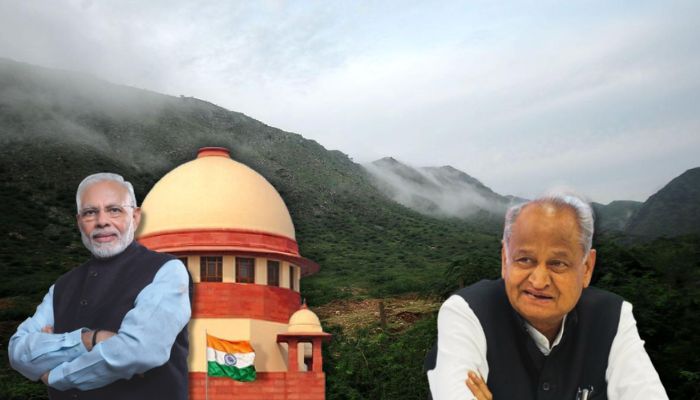
In 2025, religious conflicts once again took the front stage in India’s judicial system. From temple-mosque conflicts to questions of the administration and state intervention, courts across the country were repeatedly called upon to adjudicate matters where faith, law, history, and public order intersected. However, the year saw very few definitive results despite ongoing judicial involvement. Instead, most high-profile disputes were steered into a holding pattern through interim stays, status quo orders, court-appointed committees, and procedural pauses. Rather than delivering conclusive rulings, courts prioritised stability, restraint, and prevention of unrest, effectively postponing resolution. The year 2025 emerged as one defined not by judicial closure but by judicial caution, as evidenced by the Gyanvapi complex in Varanasi, the Krishna Janmabhoomi dispute in Mathura, Madurai’s Karthigai Deepam row, and the Bhojshala controversy in Madhya Pradesh. These cases reveal a consistent pattern of the management of religious disputes through interim control rather than constitutional finality. This article examines how and why these cases remained unresolved, where each dispute stood at the end of 2025, and what this prolonged judicial limbo signals for the future of religious litigation in India. A year of interim orders, not judgments In 2025, the commonality among religious disputes was the consistent reliance on interim mechanisms rather than final adjudication. Rather than settling questions of title, worship rights, or historical claims, courts repeatedly chose to pause proceedings through temporary legal tools. Courts have granted temporary stays to halt surveys, inspections, or construction-related actions across cases. Status quo orders became the preferred instrument, freezing ground realities and preventing either side from gaining an advantage. In some cases, like the Banke Bihari Temple dispute, courts appointed committees to manage day-to-day affairs, effectively deferring substantive decisions. Elsewhere, administrative pauses were imposed to prevent escalation while appeals were heard. One of the key factors of this type of judicial approach was the fear of violence and breakdown of public order. Many of these disputes carry the potential to trigger communal tensions, making the courts wary of making rulings that might exacerbate a situation beyond the bounds of the law. Moreover, these disputes were highly politically sensitive. Any final decision on disputes between temples and mosques, or between religious administrations, risks political mobilisation, public demonstrations, and charges of judicial overreach. Courts seemed aware that they were operating in a politically sensitive atmosphere. At last, judges were walking a constitutional tightrope. Questions involving the Places of Worship (Special Provisions) Act, 1991, religious freedom, secularism, and historical claims present complex constitutional dilemmas. Courts choose to exercise caution rather than create irrevocable precedents or open legal floodgates. Where each case stood at the end of 2025 Despite consistent judicial attention throughout the year, no significant religious disputes have reached substantive closure in 2025. But each case remained suspended at different procedural stages largely due to interim judicial interventions. Gyanvapi–Kashi Vishwanath Dispute (Varanasi) By the end of 2025, its proceedings in the Gyanvapi dispute remained firmly paused. The Supreme Court continued its interim stay on substantive actions arising from orders of the Varanasi court and the Allahabad High Court. Earlier, the Varanasi district court ordered an ASI survey and found the devotees’ 2023 lawsuit maintainable. Then, in January 2024, the court ordered that appropriate arrangements be made to allow worship in the basement of the Gyanvapi complex. The maintainability of the original 1991 suit had earlier been upheld in 2022. The case originated in a 1991 suit filed on behalf of the deity Adi Vishweshwar, claiming that the mosque was constructed on the site of the Kashi Vishwanath temple. In 2021, five Hindu women filed a separate suit before a Varanasi civil court seeking permission to worship idols located inside the mosque complex. Krishna Janmabhoomi–Shahi Idgah Dispute (Mathura) Multiple civil suits were filed seeking the removal of the Shahi Idgah mosque. It claims to stand on the birthplace of Lord Krishna. In May 2023, the Allahabad High Court transferred all the pending suits to itself and later rejected objections to their maintainability in August 2024. In January 2025, the Supreme Court stayed the high court’s order allowing inspection of the Shahi Idgah complex by a court-appointed commissioner. The mosque committee filed an appeal challenging the High Court’s remaining proceedings. As of now, the stay on inspection continues, and no further fact-finding or trial proceedings ha
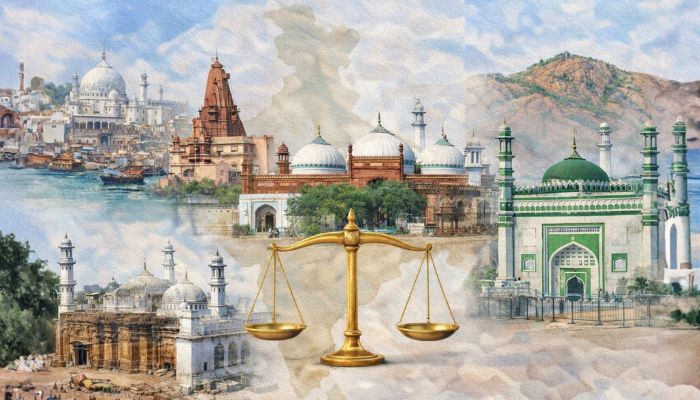

In 2025, religious conflicts once again took the front stage in India’s judicial system. From temple-mosque conflicts to questions of the administration and state intervention, courts across the country were repeatedly called upon to adjudicate matters where faith, law, history, and public order intersected. However, the year saw very few definitive results despite ongoing judicial involvement. Instead, most high-profile disputes were steered into a holding pattern through interim stays, status quo orders, court-appointed committees, and procedural pauses. Rather than delivering conclusive rulings, courts prioritised stability, restraint, and prevention of unrest, effectively postponing resolution.
The year 2025 emerged as one defined not by judicial closure but by judicial caution, as evidenced by the Gyanvapi complex in Varanasi, the Krishna Janmabhoomi dispute in Mathura, Madurai’s Karthigai Deepam row, and the Bhojshala controversy in Madhya Pradesh. These cases reveal a consistent pattern of the management of religious disputes through interim control rather than constitutional finality.
This article examines how and why these cases remained unresolved, where each dispute stood at the end of 2025, and what this prolonged judicial limbo signals for the future of religious litigation in India.
A year of interim orders, not judgments
In 2025, the commonality among religious disputes was the consistent reliance on interim mechanisms rather than final adjudication. Rather than settling questions of title, worship rights, or historical claims, courts repeatedly chose to pause proceedings through temporary legal tools.
Courts have granted temporary stays to halt surveys, inspections, or construction-related actions across cases. Status quo orders became the preferred instrument, freezing ground realities and preventing either side from gaining an advantage. In some cases, like the Banke Bihari Temple dispute, courts appointed committees to manage day-to-day affairs, effectively deferring substantive decisions. Elsewhere, administrative pauses were imposed to prevent escalation while appeals were heard.
One of the key factors of this type of judicial approach was the fear of violence and breakdown of public order. Many of these disputes carry the potential to trigger communal tensions, making the courts wary of making rulings that might exacerbate a situation beyond the bounds of the law. Moreover, these disputes were highly politically sensitive. Any final decision on disputes between temples and mosques, or between religious administrations, risks political mobilisation, public demonstrations, and charges of judicial overreach.
Courts seemed aware that they were operating in a politically sensitive atmosphere. At last, judges were walking a constitutional tightrope. Questions involving the Places of Worship (Special Provisions) Act, 1991, religious freedom, secularism, and historical claims present complex constitutional dilemmas. Courts choose to exercise caution rather than create irrevocable precedents or open legal floodgates.
Where each case stood at the end of 2025
Despite consistent judicial attention throughout the year, no significant religious disputes have reached substantive closure in 2025. But each case remained suspended at different procedural stages largely due to interim judicial interventions.
Gyanvapi–Kashi Vishwanath Dispute (Varanasi)
By the end of 2025, its proceedings in the Gyanvapi dispute remained firmly paused. The Supreme Court continued its interim stay on substantive actions arising from orders of the Varanasi court and the Allahabad High Court. Earlier, the Varanasi district court ordered an ASI survey and found the devotees’ 2023 lawsuit maintainable. Then, in January 2024, the court ordered that appropriate arrangements be made to allow worship in the basement of the Gyanvapi complex. The maintainability of the original 1991 suit had earlier been upheld in 2022.
The case originated in a 1991 suit filed on behalf of the deity Adi Vishweshwar, claiming that the mosque was constructed on the site of the Kashi Vishwanath temple.
In 2021, five Hindu women filed a separate suit before a Varanasi civil court seeking permission to worship idols located inside the mosque complex.
Krishna Janmabhoomi–Shahi Idgah Dispute (Mathura)
Multiple civil suits were filed seeking the removal of the Shahi Idgah mosque. It claims to stand on the birthplace of Lord Krishna. In May 2023, the Allahabad High Court transferred all the pending suits to itself and later rejected objections to their maintainability in August 2024. In January 2025, the Supreme Court stayed the high court’s order allowing inspection of the Shahi Idgah complex by a court-appointed commissioner. The mosque committee filed an appeal challenging the High Court’s remaining proceedings. As of now, the stay on inspection continues, and no further fact-finding or trial proceedings have been permitted to advance. The dispute centres on competing claims over land adjoining the Krishna Janmabhoomi temple complex and raises questions under the Places of Worship (Special Provisions) Act, 1991.
Shahi Jama Masjid-Harihar temple, Sambhal
The dispute arose after a civil court in Sambhal allowed a survey of the Shahi Jama Masjid premises in November 2024 on Hindu claims that the mosque stood on the site of the Harihar temple dedicated to Kalki. The mosque’s committee of management reached the Supreme Court to challenge the Survey order. In January 2025, the Supreme Court stayed the execution of a municipal notice concerning a well near the mosque and sought a status report. In August 2025, the Court ordered maintenance of the status quo and issued notice to the Hindu petitioners. The status quo order was subsequently extended, effectively halting any survey or alteration of the site. As of now, the dispute remains frozen pending consideration of procedural and jurisdictional issues.
Madurai Karthigai Deepam Lamp Dispute (Tamil Nadu)
This dispute centers on whether Hindu devotees can light traditional Karthigai Deepam atop Thiruparankundram Hill, which houses both the Murugan temple and a dargah. Hindu devotees argue that lighting the lamp on the hilltop is an essential and longstanding religious practice, and that the State and the HR&CE Department have repeatedly blocked it, citing law and order concerns. In December 2025, the Madras High Court allowed a plea seeking permission to light the Karthigai Deepam lamp at the ancient Deepathoon pillar on Thiruparankundram Hill, rather than its usual location near the Uchi Pillayar temple.
Justice G R Swaminathan allowed and directed the Subramaniya Swamy Temple management to arrange for the Karthigai Deepam lamp to be lit at the ancient Deepathoon pillar on the festive day on December 3. The Tamil Nadu government opposed the order, citing tradition and public order concerns. On the day of the festival, a protest broke out, which led to the violence and deployment of central security forces. The High Court subsequently initiated contempt proceedings against state officials for alleged failure to implement its directions. The Tamil Nadu government approached the Supreme Court challenging the High Court order, and the matter is pending.
Banke Bihari Temple management Dispute(Vrindavan)
The dispute centers on control and administration of the historic Banke Bihari Temple, which the Sevayat families have traditionally managed. In August 2025, the Supreme Court constituted a high-powered Temple Management Committee to oversee daily functioning and crowd management.
The committee was appointed pending adjudication of the constitutional validity of an Uttar Pradesh ordinance that brought temple administration under a statutory trust. In December 2025, the temple’s management committee and a Sevayat filed a fresh petition questioning the scope and authority of the court-appointed committee.
As of now, the matter is listed for further hearing in early 2026.
Ajmer Sharif Dargah Demolition Case
In December 2025, the Delhi High Court restrained the central government from demolishing structures within the Ajmer Sharif Dargah complex without providing an opportunity of hearing to affected parties. The interim order was passed on a plea filed by a khadim of the dargah challenging notices issued by the Ministry of Minority Affairs for removal of alleged encroachments.The Court emphasised adherence to principles of natural justice and also directed the Centre to expedite the formation of the Dargah Committee under the Dargah Khawaja Sahib Act, 1955. The matter remains pending.
Conclusion
By the end of 2025, Major religious disputes remained unsolved, governed largely by interim judicial control rather than final adjudication. While this cautious approach may have prevented immediate unrest, it also ensured that fundamental questions of history, rights, and constitutional interpretation were deferred. As these disputes move into 2026, the challenge before the judiciary will be whether continued restraint can substitute for constitutional clarity or whether decisive resolution will eventually become unavoidable.