Exclusive: Documents show how Rajasthan Congress govt had said Aravalli mining ban would harm economy, while Ashok Gehlot now leads the protests
The Congress party is outraged over the Supreme Court-accepted revised ‘100-meter’ definition of the Aravalli Hills, alleging that the Modi government is somehow excluding 90% of the Hills and opening doors for large-scale mining in the ecologically sensitive area. In a fresh attack, Congress leader and former Chief Minister of Rajasthan, Ashok Gehlot, has accused the Modi government of hatching a “well-planned conspiracy” to undermine safeguards and allow mining in the Aravallis. Gehlot claimed that the Central government’s move to redefine the Aravallis with a 100-meter criterion should not be seen in isolation, as “this is part of a larger design to capture institutions and hand over the Aravallis to the mining mafia.” Claiming that Union Environment Minister Bhupendra Yadav’s clarification that only 0.10% of the Aravallis would be opened for mining is “misleading and factually incorrect”, Gehlot said, “The CEC, formed in 2002 under the Supreme Court’s supervision to protect forests, has now been turned into a government puppet. Earlier, its members were appointed with the Court’s approval. Today, the Centre controls appointments, reducing the CEC to a rubber stamp.” VIDEO | Jaipur: Former Rajasthan CM and Congress leader Ashok Gehlot, on changing definition of Aravalli Hills and Ranges, said, "27,200 new legal and illegal mines may open in 0.19 percent of Aravallis, govt’s decision will destroy 90 percent of the range." (Full video… pic.twitter.com/U6B423kD9O— Press Trust of India (@PTI_News) December 23, 2025 Ashok Gehlot cries hoarse over 100-meter criterion of Aravalli Hills definition and mining policy, had advocated the same as Rajasthan CM in 2002 Congress has track record of hypocritically changing its stance over issues and policies it advocated for while in government, to opposing it when out of power. Ashok Gehlot, the former Chief Minister of Rajasthan, is adding another chapter in the Congress party’s track record of “It was good when we were doing it, but it is bad when you are doing it”. While Gehlot accuses the BJP-led governments in the Centre and Rajasthan of conspiring to hand over the Aravalli Hills to mining mafias, citing the Centre’s ‘0.019% mining area’ argument, in 2002, the Gehlot government itself wanted to open the Aravallis for mining. आज मैं अपनी प्रोफाइल पिक्चर (DP) बदलकर #SaveAravalli अभियान का हिस्सा बन रहा हूँ। यह सिर्फ एक फोटो नहीं, एक विरोध है उस नई परिभाषा के खिलाफ जिसके तहत 100 मीटर से कम ऊंचाई वाली पहाड़ियों को 'अरावली' मानने से इंकार किया जा रहा है। मेरा आपसे अनुरोध है कि अपनी प्रोफाइल पिक्चर बदलकर… pic.twitter.com/pt9u1O8UpX— Ashok Gehlot (@ashokgehlot51) December 18, 2025 In 2002, the Ashok Gehlot-led Congress government in Rajasthan had filed an affidavit before the Supreme Court. The state government apprised the court that it sent proposals to the Central government for “diversion of forest land for mining purposes in respect of 1543 cases.” Presently, Ashok Gehlot and the Congress party want complete prohibition on mining in the Aravalli Hills. However, in its 2002 affidavit, the Congress government in Rajasthan highlighted that the mining sector generates employment for a significant number of people in the state, and a blanket ban on mining in the Aravallis would strip them of their livelihood. “Mining sector provides and generates employment for a very large number of people and therefore it would be difficult for them to sustain themselves, during this difficult period, if mining is prohibited in the entire Aravalli hills. It may also be mentioned herein that a large proportion of tribal population live in the Aravalli hills and stopping of mining operations would deprive them of an important source of livelihood,” the Gehlot government’s affidavit read. It added, “That the State Government submits that the ban imposed on all mining activities would severely affect the state economy as minerals produced in the referred areas and economic activities dependent on these minerals and mining operations play very critical role in the economy of the State.” The affidavit highlighted how there were over 5000 mining leases and 641 quarry licenses in 14 states where the Aravalli Hills are situated in the state, and that these provide direct employment to over 1.75 lac people. It added that over 6 lac people get employment across 14 districts via mining operations, including transportation of mined mineral, handling of mining machinery and equipment, mineral processing and marketing/trading, etc. “Moreover, if mining in Aravalli areas is stopped then about 9700 industrial units having investment of about Rs. 884 crores and which provide direct employment to about 64000 people, would adversely be affected in 14 districts where Arravali hills are located. Not only this, other mineral based industrial units of the state which obtain raw material from mines under reference would also be affected,” the Gehlot government s
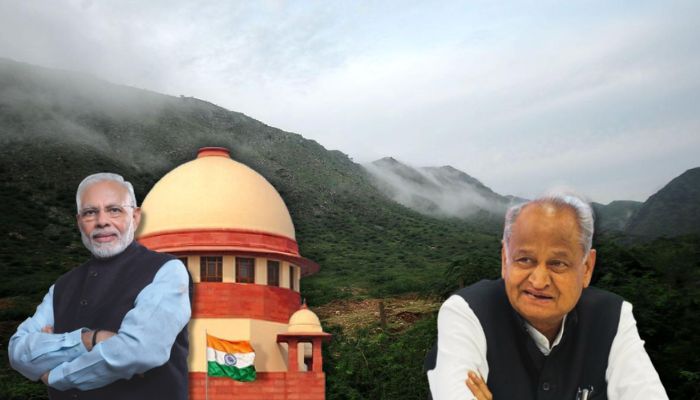

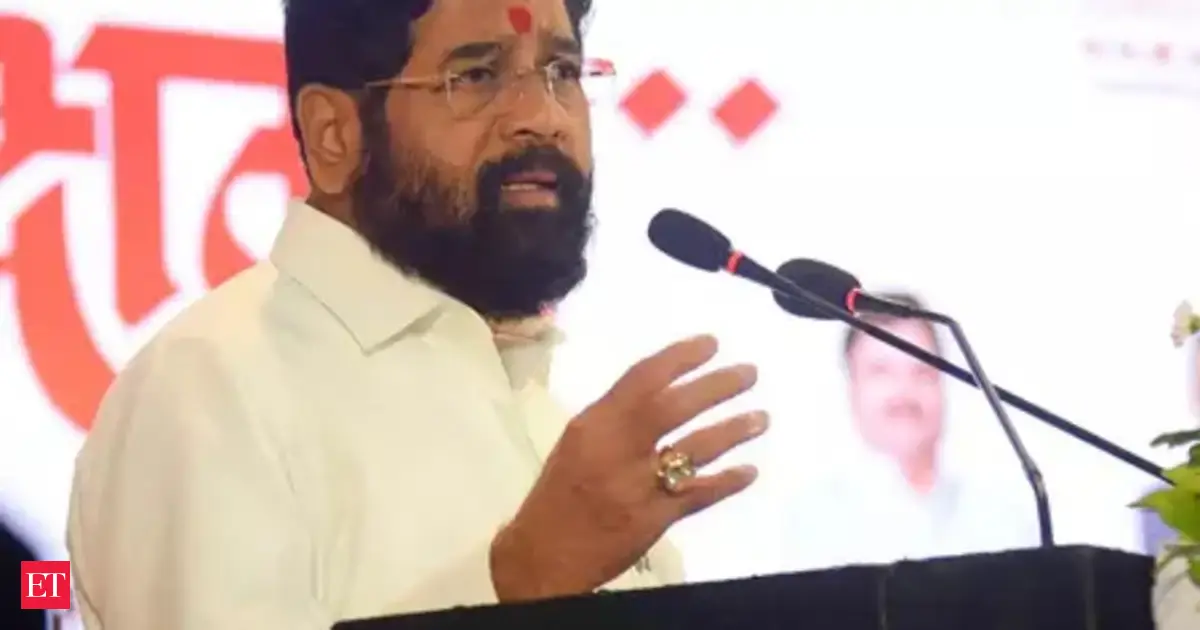
The Congress party is outraged over the Supreme Court-accepted revised ‘100-meter’ definition of the Aravalli Hills, alleging that the Modi government is somehow excluding 90% of the Hills and opening doors for large-scale mining in the ecologically sensitive area. In a fresh attack, Congress leader and former Chief Minister of Rajasthan, Ashok Gehlot, has accused the Modi government of hatching a “well-planned conspiracy” to undermine safeguards and allow mining in the Aravallis.
Gehlot claimed that the Central government’s move to redefine the Aravallis with a 100-meter criterion should not be seen in isolation, as “this is part of a larger design to capture institutions and hand over the Aravallis to the mining mafia.”
Claiming that Union Environment Minister Bhupendra Yadav’s clarification that only 0.10% of the Aravallis would be opened for mining is “misleading and factually incorrect”, Gehlot said, “The CEC, formed in 2002 under the Supreme Court’s supervision to protect forests, has now been turned into a government puppet. Earlier, its members were appointed with the Court’s approval. Today, the Centre controls appointments, reducing the CEC to a rubber stamp.”
VIDEO | Jaipur: Former Rajasthan CM and Congress leader Ashok Gehlot, on changing definition of Aravalli Hills and Ranges, said, "27,200 new legal and illegal mines may open in 0.19 percent of Aravallis, govt’s decision will destroy 90 percent of the range."
— Press Trust of India (@PTI_News) December 23, 2025
(Full video… pic.twitter.com/U6B423kD9O
Ashok Gehlot cries hoarse over 100-meter criterion of Aravalli Hills definition and mining policy, had advocated the same as Rajasthan CM in 2002
Congress has track record of hypocritically changing its stance over issues and policies it advocated for while in government, to opposing it when out of power. Ashok Gehlot, the former Chief Minister of Rajasthan, is adding another chapter in the Congress party’s track record of “It was good when we were doing it, but it is bad when you are doing it”.
While Gehlot accuses the BJP-led governments in the Centre and Rajasthan of conspiring to hand over the Aravalli Hills to mining mafias, citing the Centre’s ‘0.019% mining area’ argument, in 2002, the Gehlot government itself wanted to open the Aravallis for mining.
आज मैं अपनी प्रोफाइल पिक्चर (DP) बदलकर #SaveAravalli अभियान का हिस्सा बन रहा हूँ। यह सिर्फ एक फोटो नहीं, एक विरोध है उस नई परिभाषा के खिलाफ जिसके तहत 100 मीटर से कम ऊंचाई वाली पहाड़ियों को 'अरावली' मानने से इंकार किया जा रहा है। मेरा आपसे अनुरोध है कि अपनी प्रोफाइल पिक्चर बदलकर… pic.twitter.com/pt9u1O8UpX
— Ashok Gehlot (@ashokgehlot51) December 18, 2025
In 2002, the Ashok Gehlot-led Congress government in Rajasthan had filed an affidavit before the Supreme Court. The state government apprised the court that it sent proposals to the Central government for “diversion of forest land for mining purposes in respect of 1543 cases.”

Presently, Ashok Gehlot and the Congress party want complete prohibition on mining in the Aravalli Hills. However, in its 2002 affidavit, the Congress government in Rajasthan highlighted that the mining sector generates employment for a significant number of people in the state, and a blanket ban on mining in the Aravallis would strip them of their livelihood.

“Mining sector provides and generates employment for a very large number of people and therefore it would be difficult for them to sustain themselves, during this difficult period, if mining is prohibited in the entire Aravalli hills. It may also be mentioned herein that a large proportion of tribal population live in the Aravalli hills and stopping of mining operations would deprive them of an important source of livelihood,” the Gehlot government’s affidavit read.
It added, “That the State Government submits that the ban imposed on all mining activities would severely affect the state economy as minerals produced in the referred areas and economic activities dependent on these minerals and mining operations play very critical role in the economy of the State.”
The affidavit highlighted how there were over 5000 mining leases and 641 quarry licenses in 14 states where the Aravalli Hills are situated in the state, and that these provide direct employment to over 1.75 lac people. It added that over 6 lac people get employment across 14 districts via mining operations, including transportation of mined mineral, handling of mining machinery and equipment, mineral processing and marketing/trading, etc.
“Moreover, if mining in Aravalli areas is stopped then about 9700 industrial units having investment of about Rs. 884 crores and which provide direct employment to about 64000 people, would adversely be affected in 14 districts where Arravali hills are located. Not only this, other mineral based industrial units of the state which obtain raw material from mines under reference would also be affected,” the Gehlot government said back in 2002.

In contrast to the newfound love for the environment and protection of the Aravallis, in 2002, when in power, the Congress government prioritised large deposits of Rock Phosphate, Zinc, Wollestonite, and other minerals, arguing that a ban on mining would harm the interests of various industries. The Congress government emphasised the state’s economy, not Aravalli’s ecology. Ashok Gehlot prioritised revenue from mining, not restrictions.
While Ashok Gehlot now claims that his government proposed the CEC-recommended ‘100-meter’ definition in 2002, considering the “livelihood perspective”, this perspective has not become irrelevant today. Allowing mining activities in the Aravallis, even in the much-talked-about 0.019% area, would generate huge employment opportunities; however, since Congress is not in power in the state, mining has become bad. The BJP government is even considering allowing mining in 0.019% of the area, that, too, in the non-protected zone, would amount to “handing over the Aravallis to mining mafias.”
Apparently, Congress’s perspective about what it deems pragmatic action and what it deems ‘conspiracy for destruction’ changes based on whether it is in power or opposition.
It is also worth mentioning that the Ashok Gehlot-led Congress government issued the highest number of mining permissions, over 700, based on the 100-meter definition of the Aravallis, which he is now opposed to.
In an interview with IndiaToday, Union Environment Minister Bhupendra Yadav highlighted that out of the 1,008 mines that are running in Rajasthan, “700 mines were set up under Ashok Gehlot.”
The minister added that under the Congress government, mining leases were given indiscriminately, and the Supreme Court took note of this and put a stay.
A March 2024 CEC report highlighted how illegal mining in the Aravallis has been a persistent menace over the years, and the court in 2010 pointed out that mining lease holders were carrying out mining activity even after the expiration of their lease.

Calling out Ashok Gehlot’s hypocrisy, BJP leader Arun Chaturvedi said, “I am surprised that Gehlot himself, when he was CM in 2002, and his government was in power, gave his consent to this very issue. Today, he is raising the issue again, stirring up trouble unnecessarily.”
#WATCH | Ajmer: On court order regarding Aravalli mountain range, Rajasthan State Finance Commission Chairman Arun Chaturvedi says, "A few days ago, former Rajasthan CM Ashok Gehlot tweeted about granting permission for mining within a 100-meter radius, turning this judicial… pic.twitter.com/15AQHBnGLb
— ANI (@ANI) December 21, 2025
He added that, as in 98% of the Aravallis, mining is prohibited, “there is no justification for politicising this issue at this stage…”
It seems that after the ‘vote chori’ bogey peddled by Congress, especially party prince Rahul Gandhi, failed to gain traction, Congress is concocting an alarmist narrative in the name of the Aravalli Hills to target the BJP. OpIndia reported earlier how Sonia Gandhi led the charge this time and wrote an op-ed in The Hindu on 3rd December to claim that the Modi government has “signed a death warrant” for the Aravalli hills. The senior Congress leader further claimed that hills not under the 100 metres elevation will not be protected against mining and thus, 90% of the Aravalli Hills will be opened for illegal miners and mafias.
“The Modi Government has now nearly signed a death warrant for these hills, already denuded by illegal mining. It has declared that any hills in the range with an elevation of less than 100 metres are not subject to the strictures against mining. It is an open invitation for illegal miners and mafias to finish off 90% of the range which falls below the height limit set by the Government,” Sonia Gandhi wrote.

Congress leaders and their ideologically supportive media and social media ecosystem is amplifying the party’s alarmist narrative about the future of the Aravalli Hills and Ranges.
It all started after the Supreme Court, on 20th November 2025, approved the operational definition of Aravalli given by the Ministry of Environment.
The revised definition of the Aravalli Hills is, “Any landform located in the Aravalli districts, having an elevation of 100 metres or more from the local relief, shall be termed as Aravalli Hills.
Meanwhile, the definition of Aravalli Range is, “Two or more Aravalli Hills, as defined above, located within a proximity of 500m from each other, measured from the outermost point on the boundary of the lowest contour line on either side forms Aravalli Range.”
The apex court also directed the Central government to carefully map the region and prepare a Management Plan for Sustainable Mining (MPSM).
As the left liberal ecosystem amplified a #SaveAravalli campaign, as if the Central government was going to reduce the Aravallis to dust within days, the Modi government clarified that neither the Aravalli Hills is going to be handed over to illegal mining mafias nor 90% of the hills is going to lose their “Aravalli” status. It also refuted the claims that the present safeguards would be diluted to facilitate mining activities.
In contrast with one of the major talking points of the opposition and its supportive ecosystem, the 100-metre rule, the government says that this rule refers to elevation above local relief and not the top 100 meters of hills.
Not to forget, it was the state of Rajasthan which had a formally established Aravalli definition based on the 2002 Committee Report of the State Government, relying on Richard Murphy’s landform classification, which identified all landforms rising 100 m above local relief as hills and, based on that, prohibited mining on both the hills and their supporting slopes. Rajasthan has been following this definition since 9th January 2006.
The Central government earlier said that all the landforms enclosed within the lowest binding contour encircling Hills of height 100 metres or more, irrespective of their height and slopes, are excluded from the grant of a mining lease.
The government also made it clear that until the finalisation of the MPSM through the Indian Council of Forestry Research and Education (ICFRE) is completed, no new mining leases shall be permitted. In future, all mining would be permitted as per the MPSM only in those areas where sustainable mining could be permitted.
Evidently, the Congress party is trying to manufacture a controversy, even as the revised height-based definition in question is only operational, the Supreme Court has ordered no new mining leases, ensuring a preventive shield against immediate ecological threats.
In its statement dated 21st December, the Ministry of Environment, Forest and Climate Change (MoEFCC) had already stated that mining remains fully prohibited in protected areas, eco-sensitive zones, tiger reserves, wetlands, and CAMPA plantation sites. However, to further shut down the opposition’s cacophony, the ministry issued another statement on 24th December, imposing a “complete Ban on the Grant of any New Mining Leases in the Aravallis.”
“This prohibition applies uniformly across the entire Aravalli landscape and is intended to preserve the integrity of the range. The directions are aimed at safeguarding the Aravallis as a continuous geological ridge extending from Gujarat to the National Capital Region, and at stopping all unregulated mining activities,” the MoEFCC stated.
It further directed the Indian Council of Forestry Research and Education (ICFRE) to identify additional areas/zones in the entire Aravallis, where mining should be prohibited, over and above the areas already prohibited for mining by the Centre, based on ecological, geological and landscape-level considerations.
Even the MPSM prepared and finalised by the ICFRE will not be directly implemented, but will be brought before the public for wider stakeholder consultation. Simply put, no new mining lease shall be granted till a science-based MPSM is prepared, that MPSM will be put in the public domain for consultation, and only after thorough assessment of the cumulative environmental impact and ecological carrying capacity, identify ecologically sensitive and conservation-critical areas, and laying down measures for restoration and rehabilitation, that fresh mining lease strictly in non-protected areas will be allowed.
In fact, the Centre has issued strict directions for the state governments of Gujarat, Rajasthan, and Haryana to ensure that active legal mining operations are conducted in strict compliance with all environmental safeguards and in conformity with the Supreme Court’s order.
Ashok Gehlot, the self-proclaimed saviour of Aravalli from the mining mafia, gave mining contracts to his relatives
Ironically, of all its leaders, Congress chose Ashok Gehlot to lead the attack against the BJP over the Aravalli mining policy issue. Gehlot has himself been under the scanner for his alleged role in a multi-crore mining scam.
Back in 2015, Gehlot and one of his relatives were named, though not as accused, in the chargesheet filed by the Anti-Corruption Bureau (ACB). It was stated that an IAS officer, Ashok Singhvi, told another accused that Gehlot’s relative was employed by a mining baron to gain favours from the political class. Singhvi, along with three mining officials, were accused by the ACB of running kickback cartels. They used to arbitrarily cancel agreements and halt mining operations to extort money from owners.
Gehlot was earlier accused of giving sandstone mining contracts to his relatives while he was CM in 2013. It was alleged that Gehlot allotted 19 out of 37 mines to his relatives.
Under Gehlot’s leadership in 2022, the Mines Department in Rajasthan allegedly converted limestone mines to marble grade and cost the exchequer a loss of Rs 1,000 crore.
Back in 2014, it was reported that Gotan Limestone Khanij Udyog Ltd (GKUPL), a company owned by Ashok Gehlot’s relatives, Ram Vallabh Chauhan, Suresh Chauhan, Ramesh Chauhan and Ram Avtar Chauhan (Chauhan brothers), illegally sold 10 square 10-square-kilometre mining area to Ultra Tech Cement company located in Nagaur district’s Gotan area.
The ACB had found that the sale of the mining area violated mining lease norms. First, they sold a 2-sq-km area to JK Cement in 1997, and while its transfer application remained pending for approval with the Mines Department, Gehlot’s relatives sold the entire 10-sq-km area to Ultra Tech in 2012.
Why Aravalli Hills matter
The approximately 2.5 billion-year-old Aravallis originate in Gujarat and extend through Rajasthan, Haryana, and Delhi. Guru Shikhar (1,722 m) in Mount Abu is its highest peak. The Delhi Ridge, often referred to as the capital’s “green wall” or “green lungs,” is also an extension of the Aravalli Range.
Without the Aravallis, the Thar Desert in Rajasthan could gradually expand eastward, reaching Haryana, Delhi, and western Uttar Pradesh. Due to this, the Aravallis are considered a natural shield against desertification.

From regulating the movement of hot winds, playing a significant role in maintaining groundwater levels, being treasury of minerals like sandstone, limestone, marble, and granite, as well as lead, zinc, copper, gold, and tungsten, housing diverse flora and fauna, to having origins of the Chambal, Sabarmati, and Luni rivers, the Aravalli Hills and Ranges are life-givers.
Congress’s politics of convenience
Thus, illegal mining and other non-forest activities in the protected zones of the Aravallis must not be allowed; however, the opposition’s fearmongering around the revised definition of the Hills and mining policy indicates that the Aravallis are not an emotional subject or an issue of genuine concern for the Congress party, but yet another opportunity to score points against its political adversary.
This, however, is not the first time that an out-of-power Congress is outraged over something it approved during its rule. Especially, Ashok Gehlot has been a master of this game, as evident not only from the change in stance from 2002 affidavit favouring mining to seeking complete restrictions now, but also from the Hanumangarh ethanol plant row.
It must be recalled that the ethanol plant in Hanumangarh was approved by the Congress government under Ashok Gehlot’s leadership in 2023, but when the BJP came to power and continued its construction, the same Gehlot and the Congress party turned against it.
It all began with the Congress government choosing a proposed ethanol plant project of the Punjab-based firm Dune Ethanol Private Limited for funding to the tune of ₹450 crores in 2023. Everything was going hunky dory till the elections happened, and Congress was voted out of power. For Congress, the very project which would have generated jobs and boosted the economy, became ‘BJP’s scheme of favouring corporates’.