Supreme Court upholds ECI’s Special Intensive Revision exercise: A detailed look at what the verdict said on electoral roll purity, citizenship verification and constitutional powers
The Supreme Court on Wednesday, 27th May, upheld the Election Commission of India’s decision to conduct a Special Intensive Revision (SIR) of electoral rolls and said the exercise was aimed at strengthening free and fair elections in the country. The judgment came in response to a batch of petitions challenging the Election Commission’s decision to conduct the SIR process in Bihar last year. A bench comprising Chief Justice Surya Kant and Justice Joymalya Bagchi held that the Election Commission has the constitutional authority to carry out such a revision under Article 324 of the Constitution, along with powers granted under the Representation of the People Act, 1950, and the rules framed under it. Big Victory For Election Commission, SC Upholds EC's Power To Conduct SIR — 'We Are Equally Satisfied…'https://t.co/sOU8GqdWBe— NDTV Profit (@NDTVProfitIndia) May 27, 2026 The Court said the Special Intensive Revision was directly connected to ensuring the “integrity, accuracy and purity” of electoral rolls, which form the foundation of the democratic process. The Supreme Court framed four key questions Delivering its verdict [pdf] on a batch of pleas questioning the legality of the SIR exercise, the apex court identified four key questions for consideration: Does the Election Commission of India have the power to conduct the Impugned Special Intensive Revision? Whether the Impugned Special Intensive Revision is founded on a legitimate purpose, and if so, whether the measures adopted by the Election Commission of India are proportionate to the object sought to be achieved? Whether the procedure adopted by the Election Commission of India in conducting the Impugned Special Intensive Revision is contrary to, or in violation of, the provisions of the Representation of the People Act, 1950 and the Registration of Electors Rules, 1960? Whether, in the exercise of its constitutional mandate of preparation and maintenance of electoral rolls, and in furtherance of the statutory conditions governing such registration, the Election Commission of India is empowered to scrutinise the citizenship status of persons seeking inclusion or continuation in the electoral roll? Court says ECI has constitutional power to conduct SIR Addressing the first issue, the Supreme Court clearly ruled that the Election Commission was fully empowered to conduct the Special Intensive Revision. The Court observed that the SIR process was authorised under Section 21(3) of the Representation of the People Act, along with Article 324 of the Constitution. It rejected arguments that the exercise violated existing election laws. “The impugned SIR does not supplant the RP Act or the 1960 Rules. It rather breathes life into the constitutional mandate of Article 324,” the Court said. An excerpt from the judgment The bench further clarified that the Election Commission was allowed to adopt a different procedure from ordinary revisions if circumstances required it. “So long as the Commission acts within the bounds of the statute, records reasons for recourse to the special power, and does not transgress any express prohibition contained in the Act or the Rules, the exercise cannot be struck down merely because it adopts a procedure different from that applicable to an ordinary revision,” the judgment stated. The Court also linked the SIR directly with the constitutional requirement of free and fair elections. “Free and fair elections do not rest merely upon the mechanics of polling. They equally depend upon the integrity, accuracy and purity of the electoral roll,” the bench observed. The judges noted that more than two decades had passed since the last intensive revision and that rapid urbanisation, migration and large-scale additions and deletions in voter rolls justified the fresh verification exercise. The court says SIR has a legitimate purpose Addressing the second question, the Supreme Court held that the objective behind the SIR exercise was both legitimate and constitutionally necessary. “The objective sought to be achieved by the Commission, namely, the restoration of accuracy, completeness, and integrity of the electoral roll, is not only legitimate but is integral to the constitutional mandate entrusted to it,” the Court said. The Court rejected the argument that the SIR lacked a proper purpose or was politically motivated. It held that the reasons given by the Election Commission had a “direct and rational nexus” with maintaining a credible electoral process. An excerpt from the judgment The bench also examined whether the methods used during the SIR exercise were proportionate to the objective. The Court found that the measures adopted by the Election Commission, including house-to-house verification and collection of updated forms, were reasonable. “These measures are not only logically connected to the stated objective but are, in fact, intrinsically designed t
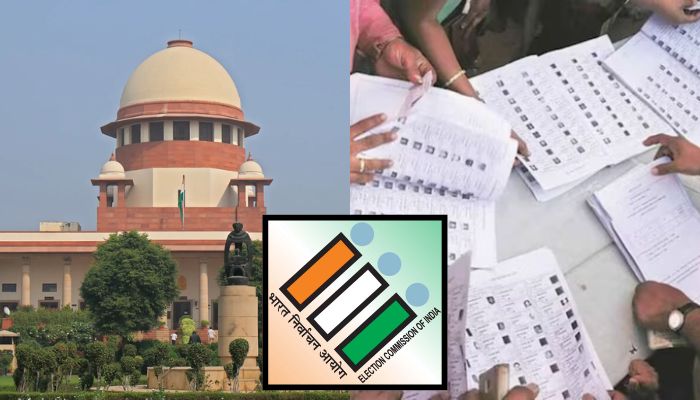
The Supreme Court on Wednesday, 27th May, upheld the Election Commission of India’s decision to conduct a Special Intensive Revision (SIR) of electoral rolls and said the exercise was aimed at strengthening free and fair elections in the country. The judgment came in response to a batch of petitions challenging the Election Commission’s decision to conduct the SIR process in Bihar last year.
A bench comprising Chief Justice Surya Kant and Justice Joymalya Bagchi held that the Election Commission has the constitutional authority to carry out such a revision under Article 324 of the Constitution, along with powers granted under the Representation of the People Act, 1950, and the rules framed under it.
Big Victory For Election Commission, SC Upholds EC's Power To Conduct SIR — 'We Are Equally Satisfied…'https://t.co/sOU8GqdWBe— NDTV Profit (@NDTVProfitIndia) May 27, 2026
The Court said the Special Intensive Revision was directly connected to ensuring the “integrity, accuracy and purity” of electoral rolls, which form the foundation of the democratic process.
The Supreme Court framed four key questions
Delivering its verdict [pdf] on a batch of pleas questioning the legality of the SIR exercise, the apex court identified four key questions for consideration:
Does the Election Commission of India have the power to conduct the Impugned Special Intensive Revision?
Whether the Impugned Special Intensive Revision is founded on a legitimate purpose, and if so, whether the measures adopted by the Election Commission of India are proportionate to the object sought to be achieved?
Whether the procedure adopted by the Election Commission of India in conducting the Impugned Special Intensive Revision is contrary to, or in violation of, the provisions of the Representation of the People Act, 1950 and the Registration of Electors Rules, 1960?
Whether, in the exercise of its constitutional mandate of preparation and maintenance of electoral rolls, and in furtherance of the statutory conditions governing such registration, the Election Commission of India is empowered to scrutinise the citizenship status of persons seeking inclusion or continuation in the electoral roll?
Court says ECI has constitutional power to conduct SIR
Addressing the first issue, the Supreme Court clearly ruled that the Election Commission was fully empowered to conduct the Special Intensive Revision.
The Court observed that the SIR process was authorised under Section 21(3) of the Representation of the People Act, along with Article 324 of the Constitution. It rejected arguments that the exercise violated existing election laws.
“The impugned SIR does not supplant the RP Act or the 1960 Rules. It rather breathes life into the constitutional mandate of Article 324,” the Court said.
An excerpt from the judgment
The bench further clarified that the Election Commission was allowed to adopt a different procedure from ordinary revisions if circumstances required it.
“So long as the Commission acts within the bounds of the statute, records reasons for recourse to the special power, and does not transgress any express prohibition contained in the Act or the Rules, the exercise cannot be struck down merely because it adopts a procedure different from that applicable to an ordinary revision,” the judgment stated.
The Court also linked the SIR directly with the constitutional requirement of free and fair elections.
“Free and fair elections do not rest merely upon the mechanics of polling. They equally depend upon the integrity, accuracy and purity of the electoral roll,” the bench observed.
The judges noted that more than two decades had passed since the last intensive revision and that rapid urbanisation, migration and large-scale additions and deletions in voter rolls justified the fresh verification exercise.
The court says SIR has a legitimate purpose
Addressing the second question, the Supreme Court held that the objective behind the SIR exercise was both legitimate and constitutionally necessary.
“The objective sought to be achieved by the Commission, namely, the restoration of accuracy, completeness, and integrity of the electoral roll, is not only legitimate but is integral to the constitutional mandate entrusted to it,” the Court said.
The Court rejected the argument that the SIR lacked a proper purpose or was politically motivated. It held that the reasons given by the Election Commission had a “direct and rational nexus” with maintaining a credible electoral process.
An excerpt from the judgment
The bench also examined whether the methods used during the SIR exercise were proportionate to the objective. The Court found that the measures adopted by the Election Commission, including house-to-house verification and collection of updated forms, were reasonable.
“These measures are not only logically connected to the stated objective but are, in fact, intrinsically designed to achieve it,” the Court observed.
The Court noted that physical verification helped identify outdated or duplicate entries, while standardised forms ensured uniform scrutiny across constituencies.
The judgment also highlighted that procedural safeguards existed within the process, including scrutiny by officers, notices in doubtful cases, hearings and appellate remedies.
“These procedural safeguards reinforce the rational connection between the means adopted and the objective sought to be achieved,” the Court said.
Concluding this issue, the Court ruled, “We are satisfied that the impugned SIR bears a direct and proximate nexus to ensure the purity and accuracy of the electoral roll.”
Court rejects challenge to SIR procedure
While examining the third issue, the Supreme Court rejected claims that the SIR process violated Rule 21A of the Registration of Electors Rules, 1960.
The petitioners had argued that the exercise allowed deletion of names without adequate safeguards. However, the Court said that safeguards such as notice, inquiry, hearing and reasoned determination were still available within the SIR framework.
An excerpt from the judgment
The Court clarified that these safeguards were spread across different stages of the process, including enumeration, draft publication and claims-and-objections proceedings.
“The statutory framework does not mandate a rigid or singular procedural format but instead requires fairness in action,” the Court said.
The Court also upheld the Election Commission’s decision to prescribe a documentary verification system.
According to the bench, the documentation requirement was aimed at ensuring “administrative consistency and evidentiary reliability.”
The petitioners had objected to the exclusion of documents like ration cards and voter ID cards from the accepted list. However, the Court refused to interfere with the Election Commission’s discretion in deciding which documents should be accepted.
“The choice of proposed documents for verification of electoral rolls and their evidentiary standards necessarily fall within the discretionary domain of the Commission,” the Court observed.
The Court finally held that the documentation framework was neither arbitrary nor illegal.
“We hold that the documentation regime prescribed by the Commission represents a considered exercise of its administrative discretion in furtherance of its Constitutional mandate,” the bench stated.
An excerpt from the judgment
ECI can examine citizenship for voter rolls, says SC
The fourth issue dealt with whether the Election Commission had the authority to examine questions related to citizenship while preparing electoral rolls.
The Supreme Court ruled that the Election Commission does have the power to examine citizenship-related questions for the limited purpose of deciding eligibility for inclusion in electoral rolls.
However, the Court also made it clear that the Election Commission’s findings would not amount to a final declaration on someone’s citizenship status. “It concerns not merely the scope of the Commission’s powers, but the manner in which those powers are to be exercised in a domain that directly engages the status of citizenship,” the Court observed.
An excerpt from the judgment
The Court accepted the Election Commission’s argument that Articles 325 and 326 of the Constitution, along with Section 16 of the Representation of the People Act, empower it to verify whether a person fulfils the conditions required for voter registration.
At the same time, the bench stressed that citizenship is a serious constitutional issue and cannot be conclusively decided by the Election Commission alone.
The judges clarified that if the Commission finds doubts regarding someone’s citizenship, it must refer the matter to the competent authority under the Citizenship Act for final adjudication.
Court’s concluding directions
The Supreme Court later clarified several questions and laid down clear safeguards regarding cases involving doubtful citizenship and rumoured claims.
“In cases where the Commission is not satisfied that a person meets the statutory conditions for inclusion in the electoral roll, it would be incumbent upon it to refer such an individual to the competent authority within the Central Government for adjudication in accordance with law,” the Court said.
The bench added that the Election Commission’s findings would remain limited only to electoral purposes and would not finally determine citizenship.
The Court also directed the Election Commission to refer, within four weeks, all cases where names had been deleted from the 2003 electoral rolls on citizenship-related grounds.
The competent authority under the Citizenship Act was asked to decide such cases after giving proper notice and hearing to affected individuals. The Court further clarified that if any deleted individuals are later found to be Indian citizens, their names must be restored to the electoral rolls.
Background of the case
The controversy began last year when the Election Commission ordered a Special Intensive Revision of electoral rolls in Bihar ahead of the Assembly elections. Multiple organisations, including the Association for Democratic Reforms (ADR) and the National Federation for Indian Women (NFIW), challenged the process before the Supreme Court.
The petitioners argued that the SIR exercise could lead to the arbitrary deletion of voters and might disenfranchise lakhs of genuine citizens.
However, the Election Commission defended the move, saying the revision was necessary to remove duplicate, inaccurate and ineligible entries from voter rolls.
Initially, around 65 lakh names were removed from Bihar’s draft electoral rolls published on 1st August. Later, after appeals and corrections, the number came down to around 47 lakh.
As the hearings continued over months, the Supreme Court stepped in to add balanced safeguards. The Court directed the ECI to issue a formal notice explicitly stating that Aadhaar would be accepted as a valid identity proof document for the inclusion of voters in the revised lists being prepared under the SIR. The SIR exercise in Bihar was completed on 30th September.
According to official figures, Bihar had 7.89 crore voters before the revision process began, while 7.42 crore voters remained on the revised list after completion of the exercise.
The Election Commission later extended the SIR process to other states as well and issued a notification on 27th October to conduct it in West Bengal, Kerala and Tamil Nadu, which led to further legal challenges and eventually resulted in the Supreme Court’s final verdict upholding the exercise.