Pakistan’s expired humanitarianism: How a performative nation keeps exposing itself, one rotten relief package at a time
There is a peculiar pattern in Pakistan’s behaviour whenever tragedy strikes a neighbouring nation. Natural disaster, humanitarian crisis, civilian distress, Islamabad treats it less like an urgent call for help and more like an opportunity for a self-congratulatory publicity stunt. It has become a professional habit: do the bare minimum, loudly market the gesture, and expect the world to applaud. Except, every time, the truth leaks out like the smell of expired lentils Pakistan keeps dumping as “aid”. The most recent embarrassment unfolded in Sri Lanka. The island nation, already suffering from the wounds of devastating floods and a deadly cyclone, found itself at the receiving end of Pakistan’s “help”. Islamabad’s High Commission in Colombo proudly posted photos online, flaunting relief supplies supposedly sent to bring solace to disaster-affected Sri Lankans. They probably expected hashtags, praise, and diplomatic brownie points. What they received instead was humiliation. Printed clearly on those shiny “aid” packages, in letters no amount of PR filters could hide, was the date: EXP: 10/2024. The relief material had expired more than a year ago. Humanitarian aid is meant to uplift people in crisis, but what Pakistan sent to Sri Lanka was effectively garbage dressed up as compassion. Items that should have been discarded were being offered to disaster survivors who had already lost enough. There is incompetence, and then there is whatever this is. To add insult to injury, the High Commission itself proudly showcased the expired consignment, which means nobody in Pakistan’s diplomatic chain even bothered to check what they were dispatching. That is not just careless; it is callous. You don’t need to be wealthy to show empathy. But Pakistan always somehow finds a way to look like it doesn’t even care. Not a one-off disaster: A consistent pattern of hollow humanitarianism Sri Lanka is simply the latest chapter in a book Pakistan has been writing for years, a manual on performative humanitarianism. The idea seems to be: send anything, claim a moral victory, and hope domestic media and delusional social media warriors will project it as global goodwill. This ritualistic, photo-op-first approach to crises has become Pakistan’s signature diplomatic tool. Just a few years ago in 2022, Afghanistan, another neighbour Pakistan had then claimed eternal brotherhood with, although they are at each other’s throat currently, received rotten wheat from Islamabad. It wasn’t “slightly damaged” or “close to expiry”. The Taliban, of all people, had to publicly point out that the wheat was not fit for consumption. When even the Taliban are lecturing you on quality control, it is time for some serious national introspection. However, Pakistan avoids introspection with the same dedication with which it avoids accountability. Instead of examining how and why such degrading aid was dispatched, Pakistan’s authorities ensured that the Afghan spokesperson who dared to speak the truth was swiftly removed. In Pakistan’s worldview, the narrative is always more important than reality. If facts embarrass the state, you do not correct the facts, you silence them. India stands up with real help, not photo-ops While Pakistan spoils its neighbours with expired excuses, India has embraced a humanitarian role anchored in responsibility, credibility, and respect. Under the Neighbourhood First policy, India has displayed what real relief operations look like, strategic, swift, and driven by compassion. India’s ongoing mission in Sri Lanka, Operation Sagar Bandhu, has already delivered more than 53 tonnes of life-saving supplies by land, air, and sea. These include tents, hygiene kits, surgical equipment, medicines, blankets, and other essential relief goods, all procured with urgency and empathy, not collected from scrap heaps. What truly distinguishes India’s approach is that it doesn’t stop at delivering materials. The rescue component has been equally significant. Indian Navy ships such as INS Vikrant, INS Udaygiri, and INS Sukanya, along with Indian Air Force helicopters like MI-17s and naval Chetak aircraft, have been actively involved in airlifting stranded people trapped in the most inaccessible zones. Pregnant women, babies, the elderly, injured civilians, India’s rescue forces treated them all not as statistics or diplomatic tokens, but as human lives worth saving. Many of those rescued were Sri Lankan citizens. Many were Indians stuck during travel. There were also tourists from Germany, the UK, Australia, and even Pakistanis who needed evacuation. India did not check passports before extending a hand. That is the difference between a responsible regional power and a performative one. Islamabad’s aid strategy: Impress the audience, not help the victim For Pakistan, humanitarian gestures appear to be little more than marketing products, props to click a few photos with, tweet a few lines about,


There is a peculiar pattern in Pakistan’s behaviour whenever tragedy strikes a neighbouring nation. Natural disaster, humanitarian crisis, civilian distress, Islamabad treats it less like an urgent call for help and more like an opportunity for a self-congratulatory publicity stunt. It has become a professional habit: do the bare minimum, loudly market the gesture, and expect the world to applaud. Except, every time, the truth leaks out like the smell of expired lentils Pakistan keeps dumping as “aid”.
The most recent embarrassment unfolded in Sri Lanka. The island nation, already suffering from the wounds of devastating floods and a deadly cyclone, found itself at the receiving end of Pakistan’s “help”. Islamabad’s High Commission in Colombo proudly posted photos online, flaunting relief supplies supposedly sent to bring solace to disaster-affected Sri Lankans. They probably expected hashtags, praise, and diplomatic brownie points.
What they received instead was humiliation.
Printed clearly on those shiny “aid” packages, in letters no amount of PR filters could hide, was the date: EXP: 10/2024. The relief material had expired more than a year ago. Humanitarian aid is meant to uplift people in crisis, but what Pakistan sent to Sri Lanka was effectively garbage dressed up as compassion. Items that should have been discarded were being offered to disaster survivors who had already lost enough. There is incompetence, and then there is whatever this is.
To add insult to injury, the High Commission itself proudly showcased the expired consignment, which means nobody in Pakistan’s diplomatic chain even bothered to check what they were dispatching. That is not just careless; it is callous. You don’t need to be wealthy to show empathy. But Pakistan always somehow finds a way to look like it doesn’t even care.
Not a one-off disaster: A consistent pattern of hollow humanitarianism
Sri Lanka is simply the latest chapter in a book Pakistan has been writing for years, a manual on performative humanitarianism. The idea seems to be: send anything, claim a moral victory, and hope domestic media and delusional social media warriors will project it as global goodwill. This ritualistic, photo-op-first approach to crises has become Pakistan’s signature diplomatic tool.
Just a few years ago in 2022, Afghanistan, another neighbour Pakistan had then claimed eternal brotherhood with, although they are at each other’s throat currently, received rotten wheat from Islamabad. It wasn’t “slightly damaged” or “close to expiry”. The Taliban, of all people, had to publicly point out that the wheat was not fit for consumption. When even the Taliban are lecturing you on quality control, it is time for some serious national introspection.
However, Pakistan avoids introspection with the same dedication with which it avoids accountability. Instead of examining how and why such degrading aid was dispatched, Pakistan’s authorities ensured that the Afghan spokesperson who dared to speak the truth was swiftly removed. In Pakistan’s worldview, the narrative is always more important than reality. If facts embarrass the state, you do not correct the facts, you silence them.
India stands up with real help, not photo-ops
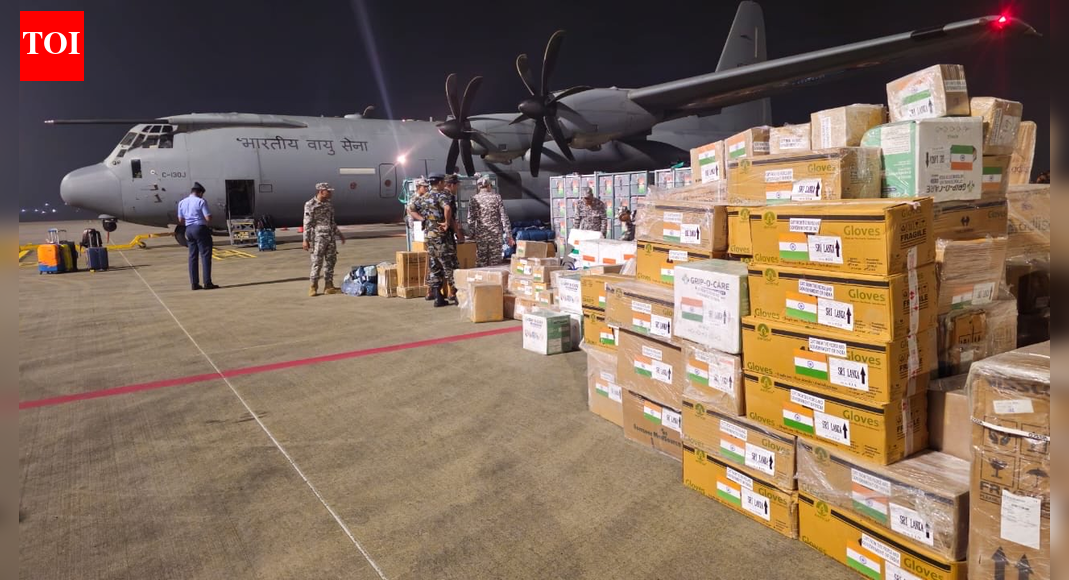
While Pakistan spoils its neighbours with expired excuses, India has embraced a humanitarian role anchored in responsibility, credibility, and respect. Under the Neighbourhood First policy, India has displayed what real relief operations look like, strategic, swift, and driven by compassion. India’s ongoing mission in Sri Lanka, Operation Sagar Bandhu, has already delivered more than 53 tonnes of life-saving supplies by land, air, and sea. These include tents, hygiene kits, surgical equipment, medicines, blankets, and other essential relief goods, all procured with urgency and empathy, not collected from scrap heaps.
What truly distinguishes India’s approach is that it doesn’t stop at delivering materials. The rescue component has been equally significant. Indian Navy ships such as INS Vikrant, INS Udaygiri, and INS Sukanya, along with Indian Air Force helicopters like MI-17s and naval Chetak aircraft, have been actively involved in airlifting stranded people trapped in the most inaccessible zones. Pregnant women, babies, the elderly, injured civilians, India’s rescue forces treated them all not as statistics or diplomatic tokens, but as human lives worth saving.
Many of those rescued were Sri Lankan citizens. Many were Indians stuck during travel. There were also tourists from Germany, the UK, Australia, and even Pakistanis who needed evacuation. India did not check passports before extending a hand. That is the difference between a responsible regional power and a performative one.
Islamabad’s aid strategy: Impress the audience, not help the victim
For Pakistan, humanitarian gestures appear to be little more than marketing products, props to click a few photos with, tweet a few lines about, and forget immediately afterward. The victims do not matter. What matters is whether the gesture can fool the domestic audience into believing their country is a benevolent power standing tall in the region.
This behaviour reveals a deeper cultural and political defect, a national mentality built on denial, where optics always override truth. Pakistan prefers PR over people; it chooses posturing over performance. And every fresh crisis exposes this hollowness again. It is not that Pakistan cannot provide genuine help. It is that it chooses not to because the goal is never to uplift the victim. The goal is to uplift Pakistan’s fragile ego.
The Operation Sindoor parallel: A nation in love with delusion
If Pakistanis can lie so effortlessly during a humanitarian situation, imagine the degree of delusion when military pride is involved. Earlier this year, during the undercover precision strikes carried out under Operation Sindoor, India successfully hit nine terror camps and at least eleven Pakistani Air Force bases. These strikes were a major jolt to Pakistan’s security establishment, exposing vulnerabilities that Islamabad pretends do not exist.
And yet, as Indian strategic and defence circles analyzed the success of the operation, large sections of Pakistan’s population were celebrating online, claiming that their air force had managed to shoot down a couple of Indian fighter jets in retaliation. There was no visual proof, no wreckage, no satellite images, nothing but bravado and digitally manufactured fantasies. Pakistan’s truth is whatever Pakistan’s propaganda mills say it is, regardless of whether evidence exists.
This is the same mindset visible in the expired aid scandal. Reality: expired food sent to a suffering nation. Pakistani narrative: we saved the day. Reality: wheat that even the Taliban reject. Pakistani narrative: leaders of Islamic humanitarianism. Reality: Indian fighter jets struck with accuracy across the border. Pakistani narrative: imaginary Indian losses broadcast by imaginary analysts.
A neighbourhood remembers
In times of crisis, the world does not remember speeches. It remembers who showed up to help, and how. Sri Lanka will remember which neighbour sent functional supplies with military support, and which neighbour sent expired leftovers. Afghanistan will remember who sent 50,000 tonnes of high-quality wheat through complicated transit negotiations, and who sent mouldy grain treated like charity.
Pakistan demands appreciation merely for making a noise. India earns respect by saving lives silently.
Performative generosity vs Real responsibility
Sri Lankans do not need expired medicines. Afghans do not need rotten wheat. Disaster victims do not deserve to be props in Pakistan’s PR theatre. Humanitarianism is not a checkbox exercise or content for social media promotion. It is empathy in action, something Pakistan desperately tries to imitate but consistently fails to demonstrate.
India behaves like a country prepared for leadership: delivering rescue, relief, and reassurance. Pakistan behaves like a country surviving on optics: delivering excuses, expired food, and empty boasts. A neighbour’s darkest hour is a test of character. India’s character shines. Pakistan’s has an expiry date.
And like all its exported products, that date passed long ago.