Kashi-Tamil Sangamam reborn: How the Modi government is revitalising ancient civilisational ties to strengthen national unity
Varanasi, the spiritual capital of India that is Bharat, is all set to host the fourth edition of the Kashi-Tamil Sangamam, a confluence of the world’s oldest city and one of the oldest languages, Tamil. The Kashi-Tamil Sangamam is a flagship cultural and educational initiative launched by the Central government under the Ministry of Education. The initiative is aimed at rediscovering and celebrating the ancient civilizational bond shared by Kashi, Bharat’s spiritual heart and Tamil Nadu, the epicentre of the country’s antiquity and unmatched glory. Conceived as a part of the Modi government’s “Ek Bharat Shreshtha Bharat” vision, the Kashi-Tamil Sangamam is a new platform to bolster unity through shared Dharmic and cultural heritage. The event is organised in collaboration with Banaras Hindu University (BHU), IIT Madras, and the Uttar Pradesh government. The Sangamam brings delegates from Tamil Nadu for immersive experiences, including exhibitions, seminars, temple visits, cultural performances, handicraft exhibitions, spiritual discourse, and interactions with local crafts and cuisine. उच्च शिक्षा विभाग के सचिव डॉ. विनीत जोशी (@Vineet_K26) ने बताया कि इस वर्ष काशी तमिल संगमम् 4.0 में तीन नई पहल होने जा रही हैं—पहली, तमिलनाडु के शिक्षक काशी आकर छात्रों को तमिल भाषा सिखाएंगे; दूसरी, काशी के छात्र तमिलनाडु जाकर तमिल सीखेंगे; और तीसरी, Sage Agasthya Vehicle… pic.twitter.com/Sy50Cz1Xyl— Ministry of Education (@EduMinOfIndia) December 1, 2025 The fourth edition of Kashi-Tamil Sangamam is set to commence on 2nd December 2025, in Varanasi at the Namo Ghat and BHU. The event will run for around two weeks and conclude on 15th December. Kashi Tamil Sangamam preparations ongoing in Varanasi (Image via ANI) This year, the Sangamam’s theme is “Learn Tamil – Tamil Karakalam”, focusing on promoting the Tamil language nationally. The event will involve campaigns like “Karpom Tamil” to teach Tamil to children in Uttar Pradesh. The Kashi-Tamil Sangamam aims to highlight Tamil inscriptions in Kashi, the glorious contributions of Tamil saints to the Bhakti Movement, as well as historical Tamil trading guilds along the Ganga. The Sangamam will include an eight-day experiential tour visiting Kashi’s iconic sites like the Kashi Vishwanath Temple and the Mata Annapoorna Temple, Prayagraj, and Ayodhya. During his Mann Ki Baat programme, Prime Minister Narendra Modi urged widespread participation in the Kashi-Tamil Sangamam and called the event a “wonderful confluence of language and culture” that reinforces national unity. 2 दिसंबर से काशी के नमो घाट पर शुरू हो रहे काशी-तमिल संगमम की थीम बहुत ही रोचक है – Learn Tamil – तमिल करकलम् काशी-तमिल संगमम उन सभी लोगों के लिए एक महत्वपूर्ण मंच बन गया है, जिन्हें तमिल भाषा से लगाव है।#MannKiBaat pic.twitter.com/aWBssO3yFi— Piyush Goyal (@PiyushGoyal) November 30, 2025 Notably, the Kashi Tamil Sangamam was first launched in 2022. Around 10,000 Tamil delegates arrived in Kashi at that time. PM Modi formally inaugurated it on 19th November 2022. The second Sangamam event was organised in 2023 at the Namo Ghat in Varanasi. Back then, the Varanasi Tamil Sangamam train was flagged off and multilingual, and Braille translations of Thirukkural, Manimekalai, and other classic Tamil literature were launched. The third Kashi-Tamil Sangamam was held in February 2025, providing an opportunity for scholars, students, philosophers, merchants, artisans, and artists from Kashi and Tamil Nadu to come together and share their experiences. The Dharmic and cultural connection of Kashi and Tamil Nadu The deep reverence for Kashi and Baba Vishwanath can be traced in Tamil literature. In fact, the ties between Tamil Nadu and Kashi are millennia-old, woven by the shared intellectual, spiritual and economic threads of Hindu civilisation. Being the spiritual capital of India, Kashi has long been a Teerth/pilgrimage hub for Tamil devotees, including kings, fostering a profound dharmic bond between Lord Shiv and his Shaivs (followers of Shiv). Tamil Nadu houses more than 450 temples dedicated to Kashi Vishwanath, including the 15th-century Kasi Viswanathar Temple in Tenkasi (also spelt Thenkasi). This temple is counted among the Pancha Kasi or five Kashis alongside Sivakasi, Uttarkasi, Varanasi and Guptkasi. The Tenkasi Shiv temple was built by Pthe andyas as a surrogate for those Tamil Shivbhakts unable to travel north to Varanasi. Interestingly, it is a legend that King Harikesari Parakkirama Pandian (also spelt, Parakrama Pandyan) journeyed to Kashi to fetch a Shiv Lingam for a temple he wished to construct; however, when the Shiv Lingam could not be moved from a rest spot, the King understood the “divine will” and installed the Lingam in what became Sivakasi. Rishi Agastya is credited with having played a major role in bridging the north and the south. He migrated from Kashi to the Thamizhagam or simply the Tamil region to transmit Vedic knowledge, Ayurveda and Si
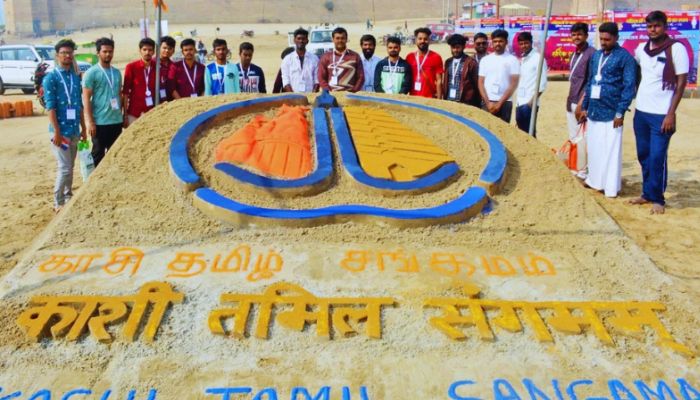

Varanasi, the spiritual capital of India that is Bharat, is all set to host the fourth edition of the Kashi-Tamil Sangamam, a confluence of the world’s oldest city and one of the oldest languages, Tamil.
The Kashi-Tamil Sangamam is a flagship cultural and educational initiative launched by the Central government under the Ministry of Education. The initiative is aimed at rediscovering and celebrating the ancient civilizational bond shared by Kashi, Bharat’s spiritual heart and Tamil Nadu, the epicentre of the country’s antiquity and unmatched glory.
Conceived as a part of the Modi government’s “Ek Bharat Shreshtha Bharat” vision, the Kashi-Tamil Sangamam is a new platform to bolster unity through shared Dharmic and cultural heritage. The event is organised in collaboration with Banaras Hindu University (BHU), IIT Madras, and the Uttar Pradesh government. The Sangamam brings delegates from Tamil Nadu for immersive experiences, including exhibitions, seminars, temple visits, cultural performances, handicraft exhibitions, spiritual discourse, and interactions with local crafts and cuisine.
उच्च शिक्षा विभाग के सचिव डॉ. विनीत जोशी (@Vineet_K26) ने बताया कि इस वर्ष काशी तमिल संगमम् 4.0 में तीन नई पहल होने जा रही हैं—पहली, तमिलनाडु के शिक्षक काशी आकर छात्रों को तमिल भाषा सिखाएंगे; दूसरी, काशी के छात्र तमिलनाडु जाकर तमिल सीखेंगे; और तीसरी, Sage Agasthya Vehicle… pic.twitter.com/Sy50Cz1Xyl
— Ministry of Education (@EduMinOfIndia) December 1, 2025
The fourth edition of Kashi-Tamil Sangamam is set to commence on 2nd December 2025, in Varanasi at the Namo Ghat and BHU. The event will run for around two weeks and conclude on 15th December.

This year, the Sangamam’s theme is “Learn Tamil – Tamil Karakalam”, focusing on promoting the Tamil language nationally. The event will involve campaigns like “Karpom Tamil” to teach Tamil to children in Uttar Pradesh. The Kashi-Tamil Sangamam aims to highlight Tamil inscriptions in Kashi, the glorious contributions of Tamil saints to the Bhakti Movement, as well as historical Tamil trading guilds along the Ganga.
The Sangamam will include an eight-day experiential tour visiting Kashi’s iconic sites like the Kashi Vishwanath Temple and the Mata Annapoorna Temple, Prayagraj, and Ayodhya.
During his Mann Ki Baat programme, Prime Minister Narendra Modi urged widespread participation in the Kashi-Tamil Sangamam and called the event a “wonderful confluence of language and culture” that reinforces national unity.
2 दिसंबर से काशी के नमो घाट पर शुरू हो रहे काशी-तमिल संगमम की थीम बहुत ही रोचक है – Learn Tamil – तमिल करकलम्
— Piyush Goyal (@PiyushGoyal) November 30, 2025
काशी-तमिल संगमम उन सभी लोगों के लिए एक महत्वपूर्ण मंच बन गया है, जिन्हें तमिल भाषा से लगाव है।#MannKiBaat pic.twitter.com/aWBssO3yFi
Notably, the Kashi Tamil Sangamam was first launched in 2022. Around 10,000 Tamil delegates arrived in Kashi at that time. PM Modi formally inaugurated it on 19th November 2022. The second Sangamam event was organised in 2023 at the Namo Ghat in Varanasi. Back then, the Varanasi Tamil Sangamam train was flagged off and multilingual, and Braille translations of Thirukkural, Manimekalai, and other classic Tamil literature were launched.
The third Kashi-Tamil Sangamam was held in February 2025, providing an opportunity for scholars, students, philosophers, merchants, artisans, and artists from Kashi and Tamil Nadu to come together and share their experiences.
The Dharmic and cultural connection of Kashi and Tamil Nadu
The deep reverence for Kashi and Baba Vishwanath can be traced in Tamil literature. In fact, the ties between Tamil Nadu and Kashi are millennia-old, woven by the shared intellectual, spiritual and economic threads of Hindu civilisation. Being the spiritual capital of India, Kashi has long been a Teerth/pilgrimage hub for Tamil devotees, including kings, fostering a profound dharmic bond between Lord Shiv and his Shaivs (followers of Shiv).
Tamil Nadu houses more than 450 temples dedicated to Kashi Vishwanath, including the 15th-century Kasi Viswanathar Temple in Tenkasi (also spelt Thenkasi). This temple is counted among the Pancha Kasi or five Kashis alongside Sivakasi, Uttarkasi, Varanasi and Guptkasi.
The Tenkasi Shiv temple was built by Pthe andyas as a surrogate for those Tamil Shivbhakts unable to travel north to Varanasi.
Interestingly, it is a legend that King Harikesari Parakkirama Pandian (also spelt, Parakrama Pandyan) journeyed to Kashi to fetch a Shiv Lingam for a temple he wished to construct; however, when the Shiv Lingam could not be moved from a rest spot, the King understood the “divine will” and installed the Lingam in what became Sivakasi.
Rishi Agastya is credited with having played a major role in bridging the north and the south. He migrated from Kashi to the Thamizhagam or simply the Tamil region to transmit Vedic knowledge, Ayurveda and Siddha medicine. An ardent Shivbhakt himself, Rishi Agastya forged a deep bond between Sanskrit and Tamil and compiled early Tamil grammar. This shared bond is evident in Tamil literature’s echoes of Sanskritic themes and shared Bhakti traditions, like the Alvars and Nayannars drawing inspiration from Kashi’s Shaiv and Vaishnav ethos.
Even 2300 years ago, the streets of Tamil Nadu’s towns and villages echoed with songs praising the ‘Nagari of Mahadev’.
It is said that the first Tamil Sangam was held in Madurai, the capital of the Pandya kings, and scholars such as Agastya, Shiva, and Murugavel participated in it. The second Sangam, which followed, was centred in Kapatapuram. According to Dr Vishudhanand Pathak, a former professor of Indian Oriental History at Banaras Hindu University, the Kapatapuram Sangam was the largest in history, bringing together scholars from both the north and south.
The Tamil language is so rich that there is mention of a grammar book named ‘Agatitayam Agastyam’ in this language; the period of its composition is before Christ.
The exchanges between Kashi and Thamizhagam extended beyond Dharma to encompass cultural influences and economic activities. Tamil scholars like Subramania Bharati studied in Kashi, while Tamil trading guilds flourished on the banks of the Ganga River. It is also said that around 40,000 Tamil people have settled in Kashi, and the holy city is home to various Tamil-style mutts and Shivalayas within Tamil homes.
Kashi is truly the spiritual centre of gravity for Sanatan Hindu Dharma, and the Kashi-Tamil Sangamam sends out a message to those dreaming of stirring linguistic and regional divisions to eradicate Sanatan Dharma, that in Dharma, Karma, and Moksha, language or regionality are no barriers for Hindus.
In a country like Bharat with a tapestry of over 1,600 languages and myriad regional customs, keeping the country united against divisive forces within and outside the nation is a Herculean task; however, the Hindu culture and civilisation serve as an invisible glue, embodying the idea of unity in diversity in its truest and practical sense. Vedas, Upanishads, Ramayan and Mahabharat or the Tamil Vedas, including the Nalaiyira Divyaprabandham (Vaishnav collection of hymns) and the Tevaram (Shaiv collection of hymns), transcend linguistic barriers and continue to intrigue and inspire Hindus.
Bharatnatyam in the south and Kathak in the north, the river Kaveri, which is also revered as the Ganga in the south and the Ganga River in the north, from dance, literature, to even rivers, Hindu civilisation truly unites the nation.
The Kashi-Tamil Sangamam serves as a great initiative to strengthen national unity and bridge gaps between the south and north, through Dharma, education and culture to make a truly “Shreshtha Bharat”.