India at the end of Naxalism: How a violent movement was born, sustained and finally crushed — tracing the shift from political ambiguity to a decisive national security doctrine
The 31st of March 2026 marks the Modi government-set deadline for the absolute eradication of Naxalism or Left-wing extremism (LWE) in India. Union Home Minister Amit Shah has repeatedly affirmed this deadline, describing it as the end of decades of red terror that once controlled vast swathes of central and eastern India. As India becomes free from the menace of Maoist-Leftist terrorism, here is a look back at the birth, life and death of Naxalism in India. The birth and life of Naxalism: From 1970s to 2010s Naxalism in India traces its origin back to May 1967 in the village of Naxalbari in West Bengal’s Darjeeling district. Some local peasants, tribals, landless labourers, led by radical CPI(M) leaders Charu Majumdar, Kanu Sanyal, Jangal Santhal, among others, rose against those they described as exploitative landlords and jotedars over land, debt, and feudal oppression. Inspired by Mao Zedang’s Chinese model, these people, armed with bows, arrows, and lathis, began raiding granaries and declared a “protracted people’s war”. With the state’s crackdown resulting in the death of over a dozen tribals who joined the Naxalites, the ideology garnered support and state units of CPI (M) in Uttar Pradesh and Jammu and Kashmir, and some sections in Bihar and Andhra Pradesh joined in. While the ‘uprising’ was crushed within weeks by the state police, it sparked a nationwide ideological fire that even went on to devour thousands of Indian people over the decades. Charu Majumdar Majumdar was the principal ideologue behind the Naxalite ‘movement’. He founded the Communist Party of India (Marist-Leninist) in 1969, and authored the ‘Historic Eight Documents’ which formed the ideological foundation of the violent campaign. Majumdar essentially argued for the overthrow of the Indian state, labelling it a “bourgeois-landlord” regime. He infamously advocated that “power grows out of the barrel of a gun”. After Majumdar’s death, rebels split from mainstream communism, forming the CPI(ML) and later factions, including the People’s War Group (PWG) and Maoist Communist Centre (MCC). These groups rejected parliamentary democracy; instead, they laid emphasis on armed ‘revolution’ to overthrow the “semi-feudal” and “semi-colonial” Indian state. These Maoists posited themselves as the ‘protectors’ of adivasis and the poor people against ‘exploiters’ to consolidate power. Their tactics often involved extortion, an illegal levy on businesses, contractors, and even government schemes. In addition, they resorted to landmine ambushes, beheadings, and selective killings of mainstream political leaders and armed forces personnel to enforce control, deter informants, and instil fear in the hearts of locals opposed to their violent methods. Disgracefully, some state governments and political ecosystems treated the Maoist-Naxalite menace as a ‘socio-political’ and ‘law and order’ issue rather than existential terrorism and a national security issue. This flawed approach led to periodic ceasefires, peace talks, and even negotiations, like the infamous 2004 in Andhra Pradesh under YS Rajashekhara Reddy, which collapsed after Maoists regrouped. Similar attempts were made in Odisha and Jharkhand. These talks and the political coddling of Naxalites gave the latter breathing spaces and media attention. For decades, a network of urban sympathisers of Naxalites, or simply Urban Naxals, comprising leftist academics like Arundhati Roy, activists, lawyers, and journalists, provided ideological justification, whitewashing of violent Naxalite activities, legal aid, media coverage, and sometimes even logistical cover. This ecosystem, coupled with pliable political leadership, essentially helped sustain recruitment and international narratives framing the Indian Republic as an aggressor while the violent Naxalite terrorists as ‘heroes’. On 28th March 2010, author and radical leftist activist, Arundhati Roy, spent around two weeks in Maoist-controlled Dantewada. She wrote essays, articles and even a book glorifying Naxalites, their violent tactics and anti-national activities. Just a month later, on 6th April 2010, Maoists carried out a massive attack in Chhattisgarh’s Dantewada, wherein 75 Central Reserve Police Force (CRPF) and state police personnel were killed in the Mukrana forest. The CRPF team was attacked while they were taking a break after a long, tiring night of travelling. The team had completed its three-day anti-Maoist operation and was on its way. They took a break at around 6 am after travelling all night, when they were ambushed by up to 1,000 Maoists positioned on the neighbouring hilltop. The Naxals, fully aware of the CRPF troop movement, launched an attack with deadly precision, giving the soldiers no chance to mount a response. They blew up an anti-landmine vehicle and then began firing indiscriminately. Instead of unleashing hell on Maoist terrorists, Home Minister P Chidambaram begged them to
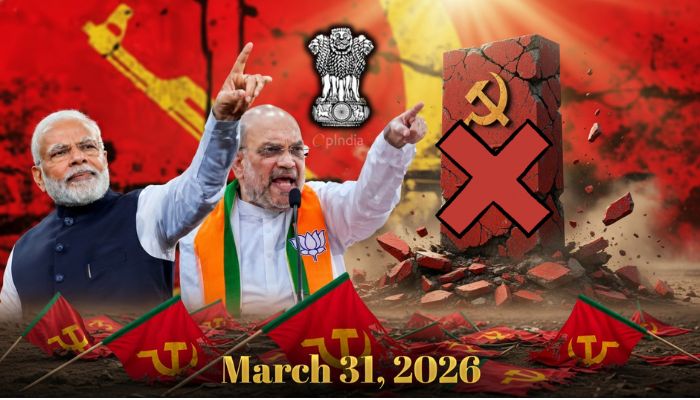
The 31st of March 2026 marks the Modi government-set deadline for the absolute eradication of Naxalism or Left-wing extremism (LWE) in India. Union Home Minister Amit Shah has repeatedly affirmed this deadline, describing it as the end of decades of red terror that once controlled vast swathes of central and eastern India. As India becomes free from the menace of Maoist-Leftist terrorism, here is a look back at the birth, life and death of Naxalism in India.
The birth and life of Naxalism: From 1970s to 2010s
Naxalism in India traces its origin back to May 1967 in the village of Naxalbari in West Bengal’s Darjeeling district. Some local peasants, tribals, landless labourers, led by radical CPI(M) leaders Charu Majumdar, Kanu Sanyal, Jangal Santhal, among others, rose against those they described as exploitative landlords and jotedars over land, debt, and feudal oppression. Inspired by Mao Zedang’s Chinese model, these people, armed with bows, arrows, and lathis, began raiding granaries and declared a “protracted people’s war”.
With the state’s crackdown resulting in the death of over a dozen tribals who joined the Naxalites, the ideology garnered support and state units of CPI (M) in Uttar Pradesh and Jammu and Kashmir, and some sections in Bihar and Andhra Pradesh joined in.
While the ‘uprising’ was crushed within weeks by the state police, it sparked a nationwide ideological fire that even went on to devour thousands of Indian people over the decades.
Charu Majumdar
Majumdar was the principal ideologue behind the Naxalite ‘movement’. He founded the Communist Party of India (Marist-Leninist) in 1969, and authored the ‘Historic Eight Documents’ which formed the ideological foundation of the violent campaign. Majumdar essentially argued for the overthrow of the Indian state, labelling it a “bourgeois-landlord” regime. He infamously advocated that “power grows out of the barrel of a gun”.
After Majumdar’s death, rebels split from mainstream communism, forming the CPI(ML) and later factions, including the People’s War Group (PWG) and Maoist Communist Centre (MCC). These groups rejected parliamentary democracy; instead, they laid emphasis on armed ‘revolution’ to overthrow the “semi-feudal” and “semi-colonial” Indian state. These Maoists posited themselves as the ‘protectors’ of adivasis and the poor people against ‘exploiters’ to consolidate power.
Their tactics often involved extortion, an illegal levy on businesses, contractors, and even government schemes. In addition, they resorted to landmine ambushes, beheadings, and selective killings of mainstream political leaders and armed forces personnel to enforce control, deter informants, and instil fear in the hearts of locals opposed to their violent methods.
Disgracefully, some state governments and political ecosystems treated the Maoist-Naxalite menace as a ‘socio-political’ and ‘law and order’ issue rather than existential terrorism and a national security issue. This flawed approach led to periodic ceasefires, peace talks, and even negotiations, like the infamous 2004 in Andhra Pradesh under YS Rajashekhara Reddy, which collapsed after Maoists regrouped. Similar attempts were made in Odisha and Jharkhand. These talks and the political coddling of Naxalites gave the latter breathing spaces and media attention.
For decades, a network of urban sympathisers of Naxalites, or simply Urban Naxals, comprising leftist academics like Arundhati Roy, activists, lawyers, and journalists, provided ideological justification, whitewashing of violent Naxalite activities, legal aid, media coverage, and sometimes even logistical cover. This ecosystem, coupled with pliable political leadership, essentially helped sustain recruitment and international narratives framing the Indian Republic as an aggressor while the violent Naxalite terrorists as ‘heroes’.
On 28th March 2010, author and radical leftist activist, Arundhati Roy, spent around two weeks in Maoist-controlled Dantewada. She wrote essays, articles and even a book glorifying Naxalites, their violent tactics and anti-national activities.
Just a month later, on 6th April 2010, Maoists carried out a massive attack in Chhattisgarh’s Dantewada, wherein 75 Central Reserve Police Force (CRPF) and state police personnel were killed in the Mukrana forest.
The CRPF team was attacked while they were taking a break after a long, tiring night of travelling. The team had completed its three-day anti-Maoist operation and was on its way. They took a break at around 6 am after travelling all night, when they were ambushed by up to 1,000 Maoists positioned on the neighbouring hilltop. The Naxals, fully aware of the CRPF troop movement, launched an attack with deadly precision, giving the soldiers no chance to mount a response. They blew up an anti-landmine vehicle and then began firing indiscriminately.
Instead of unleashing hell on Maoist terrorists, Home Minister P Chidambaram begged them to announce a 72-hour ceasefire and hold talks with the government. Emboldened by the Congress government’s embrace of cowardice, Maoist terrorists rejected the ceasefire ‘request’.
While Maoists/Naxalites carried out attacks after attacks, be it the Dantewada ambush in April 2010, Naxal ambush in Narayanpur, which killed 26 CRPF personnel in June 2010, Jnaneswari Express train derailment in May 2010, wherein 48 passengers lost their lives in the incident and more than 200 passengers were injured, or the IED attack by Naxalites on Congress cadres in Darbha Valley, Chhattisgarh, wherein 27 people, including Chhattisgarh Congress leaders, including state secretary Nand Kumar Patel, his son Dinesh, former Union minister VC Shukla and former state minister Mahendra Karma, the Congress-led Central government prioritised talks or tough action, coddling over crackdown.
Killings, beheadings, and kidnappings of government officials, including the much-talked-about kidnapping of Malkangiri collector R V Krishna by Maoists and the release of Maoists in exchange, were the norm in the 2000s.
The soft approach of the previous Congress-led government continued even as the human cost of Maoist-Naxalite terrorism exceeded 12,000 since 2000 alone, including over 4000 civilians, 2,723 security force personnel, informants, and tribals brainwashed into joining the Naxalite armed ‘movement’. Tribals and villagers in the Dandakaranya region bore the brunt of extortion, forced Naxalite recruitment on one hand, summary executions of informers, and displacement on the other. Local economies were shattered, and governance was disallowed to operate. People willing to join the mainstream were either killed, terrorised into silence or brainwashed into joining Maoist terrorism.
While Prime Minister Manmohan Singh once called Maoist terrorism India’s “single biggest internal security threat”, this statement was confined to mere acknowledgement and did not trigger any policy shift for decisive action. The result? Maoist insurgency survived and sustained, found ideological sympathisers and glorifiers across cinema, media, and fascinated those who emerged as pro-Naxal ‘intellectuals’.
Discarding previous ‘socio-political’ issue approach, Modi government declared Naxalism as national security threat: How a change in approach led to end of Naxalism
The historic victory of the Bhartiya Janata Party-led NDA marked the beginning of a new era on multiple fronts, particularly in national security. The Modi government reframed Naxalism unambiguously as a national security and terrorism issue, not a socio-political or development bargaining chip. This zero-tolerance approach birthed a coordinated national strategy against Naxalism, which comprised security operations, targeted development, choking lifelines, and rehabilitation schemes for those willing to surrender and join the mainstream.
The last few years have witnessed massive, intelligence-driven operations by the police in Chhattisgarh, Jharkhand, Madhya Pradesh, Maharashtra, Andhra Pradesh, and Telangana, encompassing the entire Naxal-infected Dandakaranya region. The state police departments expanded Andhra Pradesh’s greyhounds model, and elite forces intensified the anti-Naxal crackdown.
With coordinated efforts and a strong political will, HM Amit Shah soon began yielding results as a leadership decapitation in the Maoist camp began. Top Maoist commanders, like Basavaraju and Madvi Hidma, among others, were neutralised in large numbers while surrenders hit record highs, crossing over 2000 in 2025 alone.
In addition to eliminating intransigent Naxalites, the authorities focused on draining the Maoist financial lifelines. Dedicated NIA verticals, Enforcement Directorate probes, raids, and state action resulted in the seizure of assets worth crores. Demonetization, coupled with tighter banking and telecom penetration in forests, and a crackdown on extortion rackets operating in the Dandakaranya region, starved the Maoists of cash and logistics, while their mainstream ideological sympathisers cried victimhood.
The Modi government also gave special attention to not giving attention to the open letters, pleas, and propaganda peddled by Urban Naxals against the state crackdown on Maoists.
In May 2025, Indian security forces achieved a major breakthrough in the war against left-wing extremism or Naxalism by eliminating top Maoist terrorist Nambala Keshav Rao, also known as Basavaraju. The Maoist leader was killed in an encounter in the Abujhmadh (also spelt Abujmarh) forests of Chhattisgarh’s Narayanpur district.
Nambala Kesava Rao alias Basavaraju was among the 26 Naxal terrorists killed by the security forces on the 21st of May 2025. Basavaraju, the general secretary of the banned outfit Communist Party of India-Maoist (CPI-M). The 70-year-old Maoist leader was among India’s most wanted Maoist leaders and had a bounty of Rs 1.5 crore on his head. He was behind the 2010 Chintalnar massacre of 76 CRPF jawans and the 2013 attack in Jhiram Ghati, wherein several Congress leaders were killed.
Abujh means what cannot be understood, while Madh means hill. Abujhmadh has been the only piece of land in India which has had no revenue map; villagers have no title deeds (patta) to the land they live in or cultivate, even though the area (4000 km) is bigger than the state of Goa.
Due to Naxalism, this area had little to no civil administration. With a population of around 40 to 45 thousand, mostly Abhujhmadhia tribe people, Abujhmadh included the Orcha block and some regions of the Narayanpur district. Abujhmadhia are among the Particularly Vulnerable Tribal Groups (PVTGs) of Chhattisgarh and are entitled to special benefits and rights from the government meant for endangered groups like them. The area also includes the parts of Dantewada and Bijapur in Chhattisgarh, and Gadhchiroli in Maharashtra.
There has been no roads, hospitals and other basic facilities in Abujhmadh since the Naxalites would not allow any development work or any step towards mainstreaming of this region and its people take place. As per locals, Naxalites used to set buses ablaze if they entered villages in Abujhmadh. Maoists made sure that no land deeds were earmarked in Abujhmadh, no motorable roads are constructed and no development ever reaches the villages on this hill. To ensure this, the Maoist terrorsts would either resort to violence or propaganda, mostly both.
By 2000s, the Maoists transformed Abujhmadh into their stronghold. They destroyed roads, burnt over 50 schools and cut off the region from whatever connected it to the mainstream. The Maoists began operating “Jantana Sarkar” in Abujhmadh. They ran their own schools in Murumwada and Botor, where, even till the recent years, Maoists taught their own syllabus.
Abujhmadh is covered by the single Assembly constituency of Narayanpur. Around 90 per cent of its area remains unsurveyed. Back in April 2017, a revenue survey was conducted in Akabeda and other villages with the assistance of IIT-Roorkee; however, the survey could not make much progress due to security concerns and a lack of infrastructure.
Abujhmadh got its first operation theatre and two new mobile towers in 2023; however, over most of the area has been without a mobile network.
In December 2024, a District Reserve Guard (DRG) head constable was killed by Maoists in Abujhmadh’s Kohkameta during an encounter. Maoists have also been killing former Sarpanch (village leaders) in areas controlled by them. In 2024, two ex-sarpanches, including a BJP functionary, were killed by Maoists in Bijapur district under south Bastar. In 2023, an ex-Sarpanch named Ramji Dodi from the Zara village in Abujhmadh was abducted by Maoists along with his two nephews and taken to a jungle area where he was strangled to death. The sarpanch was brutally murdered by Maoists for being a ‘Mukhbir’ or police informer.
Despite the challenges, the security forces and the government relentlessly continued their efforts to end the Naxal menace not only in Abujhmadh but also in the entire Dandakaranya region.
The elimination of Basavaraju, who once dominated the unofficial headquarters of Maoists, Abujhmadh, shocked the remaining Maoist cadres and their Urban Naxal supporters. With his death, the end of Naxalism began to appear inevitable even to the Modi government’s ideological adversaries.
In November 2025, it was reported that around 80% of the Naxals active in the Abujhmad region of Chhattisgarh had laid down their weapons.
Before this, security forces conducted ‘Operation Black Forest’ to break the backbone of Naxals near Karreguttalu Hill (KGH) at the Chhattisgarh-Telangana border. The 21-day-long operation carried out by the joint forces of the Central Reserve Police Force (CRPF) and state police between April 21 and May 11 neutralised 31 Naxals carrying a bounty of Rs 1.72 crore. A total of 214 Naxal hideouts and bunkers were destroyed in the operation, and a total of 450 IEDs, 818 BGL shells, 899 bundles of Codex, detonators and a huge amount of explosive material have been recovered during the searches. In addition, nearly 12,000 kilograms of food supplies have also been recovered.
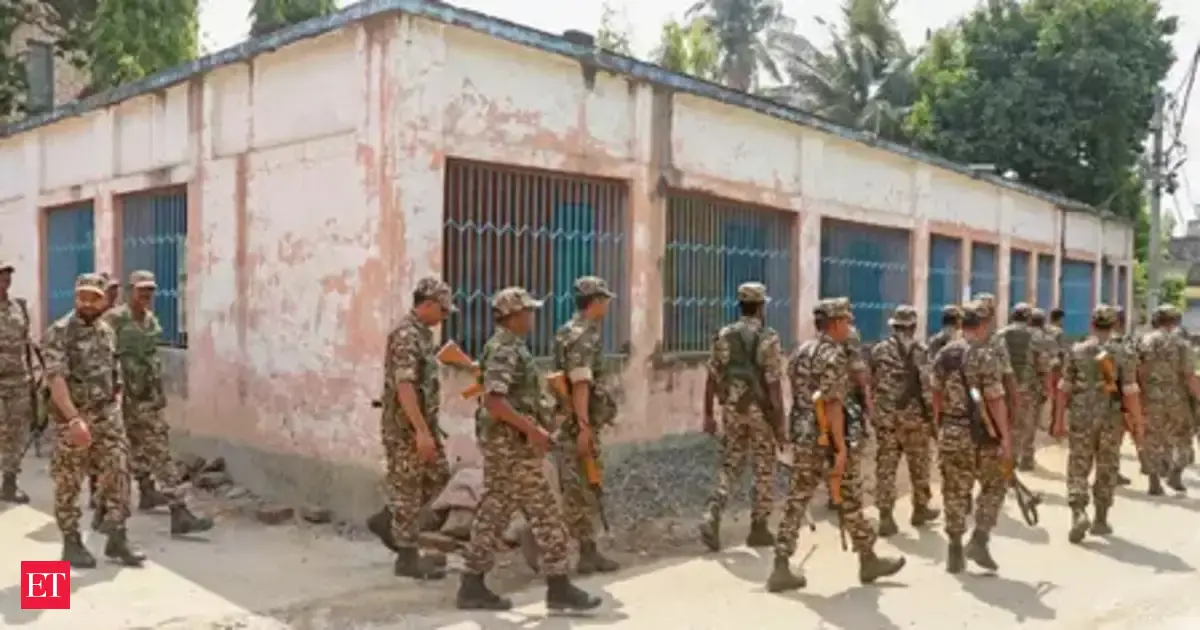
The government launched Operation Kagar in January 2024, a multi-pronged strategy combining aggressive military operations, enhanced coordination between Central and State forces, and development efforts to address the root causes of Naxalism. Under this operation, around 1 lakh para-military troops, including the Central Reserve Police Force (CRPF), its elite CoBRA units, District Reserve Guards DRG), and state police, have been deployed in the left-wing terrorism affected areas. These security personnel are equipped with modern technology like drones for information gathering, AI for intelligence gathering, and satellite imagery, among others. The security forces have been undertaking operations in the Naxal-infected Dandakaranya region spanning multiple states.
Apart from neutralising Naxal leaders and urging Maoist cadres to surrender, the government is also carrying out development work in Naxal-affected regions to connect them to the mainstream. The government has constructed 11,503 kilometres of highways in Naxal-affected areas. The minister added that 20,000 kilometres of rural roads were built.
One of the biggest game-changers in this transformation has been the work done by the Border Roads Organisation (BRO). According to a report by The Indian Express, over the last 15 months, the BRO has built 20 Bailey bridges and completed 75 km of road construction in extremely difficult terrain across Maoist-affected districts like Bijapur and Sukma.
In November 2024, the BRO was assigned the task of developing a 130-km road network in these districts, areas that had seen some of the worst Maoist violence. The project includes over 10 separate road works that had remained incomplete for years due to constant threats from Naxals.
A BRO official highlighted the challenges, saying, “80% of the road projects were lying dormant for over half a decade on account of poor response from local contractors due to constant threat from Naxals.”
In the past, Maoists frequently targeted road construction. Equipment was destroyed, contractors were killed, and even security personnel deployed for protection were attacked. As recently as last year, a contractor was killed in Bijapur’s Pamed area.
As the flame flickers before extinguishing, Maoists continued to make last-ditch efforts to ‘fight back’. Officials revealed that Maoists had planted a 50-kg improvised explosive device (IED) in Basaguda, which was later defused by the CRPF.
Meanwhile, Chhattisgarh Chief Minister Vishnu Deo Sai made a strong statement on 18th March, stating that Naxalism in the state is effectively over.
“Naxalism has ended. Only a formal declaration awaits,” he said while speaking to reporters. He added, “It is indeed welcome that due to the strong leadership of our Prime Minister Narendra Modi and the Home Minister, and the courage of our security forces, the government’s commitment to eliminate Naxalism across the country by March 31, 2026, is being fulfilled…”
Operation Kagar’s success can be understood from the fact that from 2015 to 2025, the number of Naxal-affected districts reduced from 106 to 18. Of these districts, 12 were considered the worst-affected by Naxalism. However, this number was further reduced to only 6 worst Naxal-affected districts, including Bijapur, Kanker, Narayanpur, and Sukma in Chhattisgarh, West Singhbhum in Jharkhand, and Gadhchiroli in Maharashtra.
On 19th February, Bihar authorities announced that the state is now “Naxal-free” after the surrender of prominent Maoist Suresh Koda, also known as Mustakim, who had a reward of Rs 3 lakh. He surrendered himself to the Special Task Force (STF) of the Munger district police a day ago. It is pertinent to note that the number of districts affected by left-wing extremists (LWE) has also decreased to seven, as per a recent analysis of the affected region.
In January this year, the Centre released a detailed 10-point plan to ensure that areas cleared of Left-Wing Extremism remain peaceful. The plan is meant for the post-Left-Wing Extremism phase and focuses on stabilising districts that have lived through years of violence.
The Modi government’s new security doctrine, a clear message to Maoists, give up arms or die, resulted in voluntary surrenders, elimination of intransigent Naxalites, clearing of Naxal strongholds, and return of countless surrendered Naxalites into the mainstream.
As pressure began to build and the Maoist structure began to collapse, calls for a “ceasefire” suddenly grew louder. These appeals were amplified by left-leaning activists and sections of civil society that had long argued for talks. But this was not a peace initiative, but a pressure tactic from a weakening insurgency.
Ceasefires have historically allowed Maoist groups to regroup, rearm, and regain relevance. The government’s refusal to pause the operations shows confidence. Negotiations are tools of resolution, not rescue mechanisms for collapsing movements. By rejecting ceasefire demands, the state made its intent unmistakable: this phase was not about managing Naxalism’s decline, but taking the fight against Naxalism to its decisive conclusion.
Jayaram Reddy, Nambala Keshava Rao alias Basavaraju, Pappu Lohara, Prabhat Ganjhu, Tulsi Bhuiyan, Sudhakar alias Gautam, Sahdeo Soren, Madvi Hidma, Meturu Joga Rao, are among the top Naxalite leaders killed by the security forces in 2025 alone. These killings created a leadership vacuum with the Politburo and Central Committee shrinking from 45 to less than 10 members.
As pointed out by Home Minister Amit Shah on the floor of the Parliament on 30th March 2026, a Red Corridor had been created across 12 states, including Chhattisgarh, Telangana, Andhra Pradesh, Odisha, Maharashtra, Madhya Pradesh, Jharkhand, Bihar, Bengal, Kerala, parts of Karnataka, and 3 districts of Uttar Pradesh. In these areas, 12 crore people lived in poverty for years, and 20,000 youths lost their lives. Who is responsible for this? Shah said that the root cause of Naxalism is not the demand for development, but Left-wing ideology, which was accepted by the leader of the then ruling party to win the Presidential election in 1969.
The movement that started from Naxalbari spread to 12 states, covering 17% of the country’s land area and more than 10% of its population, with the tacit backing of the previous ruling dispensation. However, the Modi government has crushed this Red corridor and freed it from the disease of Naxalism. The end of Naxalism today reflects a decisive shift in treating an armed ideology-driven insurgency as a national security issue and unleashing proportionate measures, instead of begging for talks, mollycoddling gun-yielding terrorists and letting a whole leftist cabal run propaganda humanising the enemies of the Indian Republic.
What a change in approach towards tackling internal national security threats like Naxalism brought can be understood from how times changed from the Indian government requesting Maoists to declare a ceasefire and hold talks under Congress rule to Maoists writing letters and relaying radio messages begging the Modi government to pause anti-Naxal operations, and allow them time to coordinate the surrender of other Naxalites.
OpIndia earlier reported how the leftists in an open letter blatantly sided with the Maoist terrorists and emphasised that the government should discontinue its anti-Naxal crackdown. However, despite all the challenges and hurdles brought up by Maoists and their cheerleaders in politics and ‘civil society’, the Modi government and the security forces have continued their crackdown on the Naxalites unabated.
Now, as the Red Terror crumbled, the supporters of left-wing terrorists came out last year, using the pretext of protesting against air pollution in Delhi to demonstrate their support for the infamous slain Maoist Madvi Hidma with his posters, amid slogans of “Comrade Hidma Amar Rahe.”
While the pockets of residual extremism may linger quite some more time, the ‘Kitne Hidma maaroge’ brigade might make headlines once or twice in a year to find relevance for their dead cause, the organised threat of Naxalism that terrorist vast regions of India for nearly six decades stands defeated at the hands of Indian security forces and the Modi government right on the pre-decided deadline, 31st March 2026.