Gujarat HC ends Danta royal family’s Ashtami Puja privilege at Ambaji Temple, upholds legality of Trust: What was the dispute and what the court said
On Wednesday (24th December), the Gujarat High Court delivered its verdict in the long-running dispute related to the Shaktipeeth Ambaji temple. At the core of the dispute was the ownership of the temple, although several other issues were also linked to the matter. With regard to the ownership issue, the court ratified the trust under which the temple is currently managed. The court also terminated the privilege of the royal family of Danta to worship in the Ambaji temple on the eighth day of Navratri and to restrict the entry of devotees during this period. The history of the Shaktipeeth Ambaji Temple ownership dispute The present case stems from an appeal filed in the High Court by the royal family of Danta. In this petition, a 2008 judgment of the Banaskantha District Court has been challenged. The petition said that the Ambaji temple was inherited by the royal family of Danta State from their ancestors, and therefore, it is their private/personal property. If it is private property, the temple cannot be managed by a public trust, and therefore, the trust should be declared illegal. In 2011, the temple trust filed an objection petition, arguing that the temple trust is completely legal, but the tradition of the royal family worshipping in the temple on the eighth day of Navratri and not allowing devotees to enter during this time should also be stopped, because now everyone is equal. Finally, the matter reached the court. The High Court, while giving its verdict, divided the issue into two parts: what was the situation before independence, and what was the situation after independence. The High Court says that there is no doubt that the political power in the area where the temple was located was with the Maharaja of Danta before 1948, but historical documents, land records and gazettes indicate that the temple is owned by Mataji (Ma Ambaji) and the Maharaja was only her servant or administrator. It is worth mentioning here that according to Indian law, the deity residing in the temple is considered the owner of the temple. The court cited the pre-independence civil court judgments of 1934 and 1937, stating that the court of that time had also established that the Maharaja was managing the temple because he was the ruler there, not because he ‘owned’ it. In 1934 and 1937, the then Civil Court wrote in its judgment that the Maharaja was not the owner of the temple, but only the administrator, and the property belonged to the goddess (in this case, Maa Ambaji). According to the High Court, the fact that these decisions were not challenged in any court later means that it was clear even before independence that the royal family did not own the temple. Post-independence timeline of the dispute India achieved independence from British colonial rule in 1947, and by 1948, all princely states were merged into the Indian union. On 5th October 1948, the Maharaja of Danta signed the merger agreement with the government. This agreement provided that the king could keep his private property and that the state or public property would go to the government. The list submitted by the Maharaja after the merger mentioned the Ambaji temple and other properties related to it as private property. The government did not accept this and clarified in several letters that the Maharaja was a sevak of the temple and the temple was a religious institution, hence it would be managed by a public trust. The then Bombay government also invited the Maharaja to become the chairman of the trust, but he refused and remained adamant that the temple came under his property and its complete management should be handed over to him. In 1954, the Maharaja went to the Bombay High Court and sought a stay on the government’s takeover of the temple. The High Court granted interim relief and stopped the government from moving forward. Meanwhile, the matter reached the Supreme Court and in 1957, the Constitution Bench of the Supreme Court overturned the Bombay High Court’s verdict. Supreme Court’s 1957 ruling marked a turning point The Supreme Court stated that the Maharaja had failed to prove his ownership, and the property is a religious institution. The court cited Article 363 of the Constitution and said that the court cannot rehear the merger agreement. Thus, the issue of ownership of the temple is closed. Article 363 of the Constitution states that no court in the country can now interfere with the agreements made at the time of merger or reopen the case and hear it. This provision was made to ensure that the agreements made at the time of merger are not challenged in the courts later, and the work of the courts does not increase. Government took over the temple on court orders, but the dispute persisted In compliance with the Supreme Court verdict, the government took over the management of the temple. Gujarat was established in 1960, and finally, in 1961, the government appointed an admi
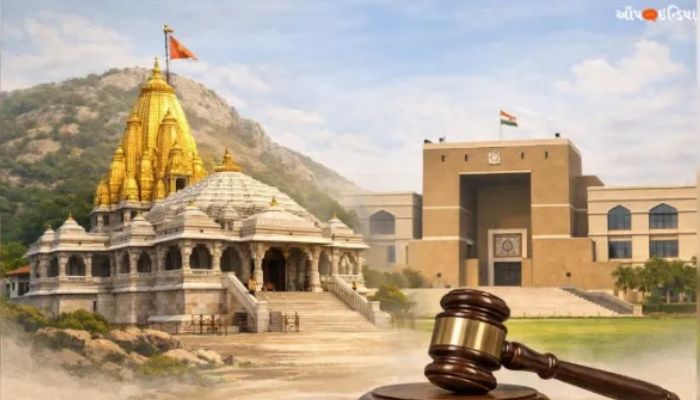

On Wednesday (24th December), the Gujarat High Court delivered its verdict in the long-running dispute related to the Shaktipeeth Ambaji temple. At the core of the dispute was the ownership of the temple, although several other issues were also linked to the matter. With regard to the ownership issue, the court ratified the trust under which the temple is currently managed. The court also terminated the privilege of the royal family of Danta to worship in the Ambaji temple on the eighth day of Navratri and to restrict the entry of devotees during this period.
The history of the Shaktipeeth Ambaji Temple ownership dispute
The present case stems from an appeal filed in the High Court by the royal family of Danta. In this petition, a 2008 judgment of the Banaskantha District Court has been challenged. The petition said that the Ambaji temple was inherited by the royal family of Danta State from their ancestors, and therefore, it is their private/personal property. If it is private property, the temple cannot be managed by a public trust, and therefore, the trust should be declared illegal.
In 2011, the temple trust filed an objection petition, arguing that the temple trust is completely legal, but the tradition of the royal family worshipping in the temple on the eighth day of Navratri and not allowing devotees to enter during this time should also be stopped, because now everyone is equal.
Finally, the matter reached the court. The High Court, while giving its verdict, divided the issue into two parts: what was the situation before independence, and what was the situation after independence.
The High Court says that there is no doubt that the political power in the area where the temple was located was with the Maharaja of Danta before 1948, but historical documents, land records and gazettes indicate that the temple is owned by Mataji (Ma Ambaji) and the Maharaja was only her servant or administrator.
It is worth mentioning here that according to Indian law, the deity residing in the temple is considered the owner of the temple.
The court cited the pre-independence civil court judgments of 1934 and 1937, stating that the court of that time had also established that the Maharaja was managing the temple because he was the ruler there, not because he ‘owned’ it.
In 1934 and 1937, the then Civil Court wrote in its judgment that the Maharaja was not the owner of the temple, but only the administrator, and the property belonged to the goddess (in this case, Maa Ambaji). According to the High Court, the fact that these decisions were not challenged in any court later means that it was clear even before independence that the royal family did not own the temple.
Post-independence timeline of the dispute
India achieved independence from British colonial rule in 1947, and by 1948, all princely states were merged into the Indian union. On 5th October 1948, the Maharaja of Danta signed the merger agreement with the government. This agreement provided that the king could keep his private property and that the state or public property would go to the government.
The list submitted by the Maharaja after the merger mentioned the Ambaji temple and other properties related to it as private property. The government did not accept this and clarified in several letters that the Maharaja was a sevak of the temple and the temple was a religious institution, hence it would be managed by a public trust. The then Bombay government also invited the Maharaja to become the chairman of the trust, but he refused and remained adamant that the temple came under his property and its complete management should be handed over to him.
In 1954, the Maharaja went to the Bombay High Court and sought a stay on the government’s takeover of the temple. The High Court granted interim relief and stopped the government from moving forward. Meanwhile, the matter reached the Supreme Court and in 1957, the Constitution Bench of the Supreme Court overturned the Bombay High Court’s verdict.
Supreme Court’s 1957 ruling marked a turning point
The Supreme Court stated that the Maharaja had failed to prove his ownership, and the property is a religious institution. The court cited Article 363 of the Constitution and said that the court cannot rehear the merger agreement. Thus, the issue of ownership of the temple is closed.
Article 363 of the Constitution states that no court in the country can now interfere with the agreements made at the time of merger or reopen the case and hear it. This provision was made to ensure that the agreements made at the time of merger are not challenged in the courts later, and the work of the courts does not increase.
Government took over the temple on court orders, but the dispute persisted
In compliance with the Supreme Court verdict, the government took over the management of the temple. Gujarat was established in 1960, and finally, in 1961, the government appointed an administrator. He applied for the establishment of a public trust under the name of Shri Ambaji Mata Devasthan under the Bombay Public Trust Act. The king also opposed this.
After the Maharaja’s protest, the Joint Charity Commissioner investigated, re-applications were made, and the matter reached the District Court. But even after years of legal proceedings, all the institutions and courts remained adamant that the ownership did not belong to the royal family. However, the turning point came in 1979, when the Joint Charity Commissioner rejected the Maharaja’s application for ownership, but gave relief and gave the green signal to perform some pujas on Navratri. But from here, a new controversy began.
Join Charity Commissioner granted the privilege to the royal family, later upheld by the Banaskantha Court
The Maharaja approached the Banaskantha District Court to claim temple ownership. Meanwhile, in 1981, the trust filed a petition and objected to the privilege of worship. Finally, in 2008, the Banaskantha court gave a verdict and once again ratified the trust, rejecting the arguments of the king’s ownership but also maintaining the privilege for worship that the Joint Charity Commissioner had given.
Consequently, the Maharaja again approached the Gujarat High Court and demanded that the trust be declared illegal and the ownership of the temple be handed over to him, reversing the Banaskantha court’s verdict. In response, the trust filed an objection petition challenging the privilege.
Gujarat High Court verdict
The original questions before the Gujarat High Court were whether the 2008 judgment of the Banaskantha Court was legally correct and whether the decision of the Charity Commissioner or other authority granting the privilege was correct.
The court does not have much scope on the first issue, because the Constitution Bench of the Supreme Court has already resolved the matter in 1957. No other court, however, reconsiders the Supreme Court’s decision, but even if it wants to go in that direction, the High Court does not have the option of reconsideration because Article 363 comes into play here, which says that the merger agreement of 1948 cannot be challenged in any court later.
The court also clarified that the royal family has never been able to prove their ownership of the temple, pointing out that in all the documents, they are shown as custodians and not owners. The property belongs to the goddess. Therefore, the High Court accepted that the Ambaji temple has never been private property.
The High Court said that just because the management of the temple was historically in the hands of the Maharajas, it cannot be said that the ownership rights will also remain with them. It added that management is a limited role; it does not establish property rights.
Court on the royal family’s privilege of performing pooja during Navratri
About the issue of the royal family’s privilege of performing pooja in the temple in question on the eighth day of Navratri, the court simply asked, “If a person does not own a certain property, how can he get a privilege there?” The court found a discrepancy in the decision of the Charity Commissioner and other authorities and said that this is a legal error, which needs to be corrected.
The High Court noted that there is no evidence to suggest that such privileges would continue for the royal family after 1947. Neither the Bombay government nor the Gujarat government has said anything like this in any document. The court says that even if certain traditions were followed before independence, they should also get legal protection after independence, is not the case in this matter.
The court said that banning devotees from entering the temple even on a temporary basis is a violation of Articles 25 and 26 of the Constitution. Secondly, this is a religious institution, and everyone is equal there. The High Court said that the Charity Commissioner had no legal authority to grant such privileges, even in a situation where the ownership rights do not lie with the royal family, as the Charity Commissioner and other courts have already held.
Meanwhile, the royal family argued by citing Articles 25 and 26 of the Constitution that if the tradition is stopped, their religious freedom may be threatened. The High Court said in this matter that Articles 25 and 26 provide religious freedom, but subject to public order and morality. People cannot be prevented from entering a temple, which is public property, in this way.
The High Court concluded that no person, including past rulers, can enjoy a special status, and the law applies equally to all.
Consequently, the High Court dismissed the first appeal filed by the royal family against the 2008 Banaskantha court verdict and upheld the Public Trust. In addition, the court accepted the objection filed by the trust and revoked all privileges. The court also cancelled the approval given to the decision to keep devotees outside the temple.
Mixed reactions to the verdict, the royal family is likely to knock on the Supreme Court’s door soon
The Gujarat High Court’s verdict in this matter has sparked mixed reactions. A section of people opines that since the princely states are no more, it is natural that the privileges will not remain. There is no problem with the royal family worshipping, but now everyone will be treated equally and given entry.
The others, including the supporters of the royal family, are of the view that this was the only tradition that connected the royal family and the temple, and it should have continued given its emotional significance. They assert that the sentiments of many people are linked to the royal family and the temple. The princely states are no more, but people’s feelings towards the royal families are still intact, as can be seen in not one but many princely states. That is why now there is a demand that the royal family should go to the Supreme Court. Given the history and importance of the matter, it is certain that the matter will reach the apex court.