Delhi Riots bail hearing: Why the accused persons’ liberty arguments may not overcome UAPA’s strict prima facie bar and how Delhi Police’s conspiracy case still holds in law
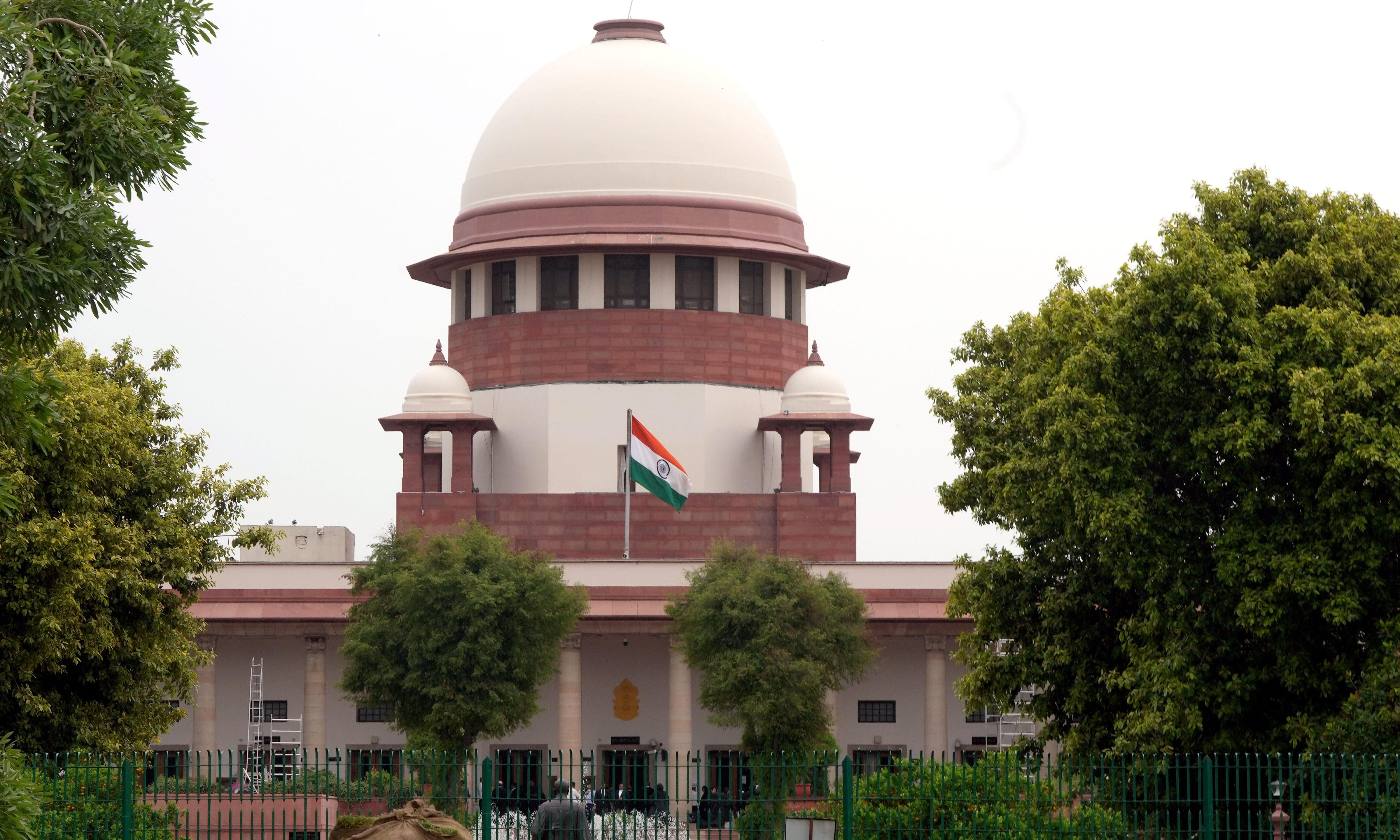
The Supreme Court’s ongoing consideration of bail pleas filed by Umar Khalid, Sharjeel Imam, Gulfisha Fatima, Meeran Haider, Shadab Ahmed and Mohd Saleem Khan in the Delhi riots “larger conspiracy” case marks a crucial intersection of individual liberty and collective security.On December 9, the accused (barring Umar Khalid who has moved an interim bail for his sister’s wedding in the trial court) concluded their rejoinder arguments in the batch of bail petitions arising from the 2020 North-East Delhi riots conspiracy FIR registered by the Delhi Police under the IPC and the Unlawful Activities (Prevention) Act, 1967 (UAPA). A Bench of Justices Aravind Kumar and NV Anjaria heard detailed submissions from senior counsel appearing for the accused, while Additional Solicitor General SV Raju is scheduled to argue for the Delhi Police. The defence has continuously highlighted (i) their lack of direct involvement in acts of violence, (ii) their lengthy incarceration as undertrials, (iii) their purported trial delay, and (iv) the description of their actions as lawful protest rather than terrorism. However, the Delhi Police have presented the Court with a 389-page affidavit claiming “irrefutable documentary and technical evidence” of a planned “regime change operation” that targeted non Muslims and planned nationwide communal riots.The Delhi High Court’s comprehensive ruling on September 2, 2025, denying bail to these same defendants, in which the court has already thoroughly examined both delay and conspiracy, must be taken into consideration when evaluating its counter arguments. The UAPA bail framework: A higher threshold The starting point is Section 43D(5) UAPA, which states that if the court determines after reviewing the case diary or chargesheet that there are “reasonable grounds for believing that the accusation against such person is prima facie true,” the person accused of offenses under Chapters IV and VI will not be released on bail.Following NIA v. Zahoor Ahmad Shah Watali and later Gurwinder Singh, the Delhi High Court has already distilled the key points in the common judgment dated September 2, 2025, denying bail for these accused. The Court does not hold a mini-trial during the bail phase. It examines the prosecution’s evidence holistically rather individually. Assuming the prosecution’s evidence is trustworthy unless completely ludicrous, it documents a conclusion based on broad probabilities that is are the accusations prima facie true?The defence’s response mostly cites K.A. Najeeb and other rulings to support its claim that extended detention and postponement justify granting bail to the accused. However, the Supreme Court has also made it clear in later rulings that “mere delay in trial pertaining to grave offences cannot be invoked as a cause to grant bail” under the UAPA and that delay by itself cannot negate the strictures of Section 43D(5). To put it another way, a prosecution’s prima facie weakness may be strengthened by delay and prolonged detention, but they cannot take the place of the court’s requirement that the accusations be deemed insufficient even on a prima facie reading.The accused’s reply arguments must be evaluated in light of this. Sharjeel Imam’s ‘Speech only’ defence In defence of Sharjeel Imam, Senior Advocate Siddhartha Dave argues that the Imam has already obtained bail in the direct “speech FIRs” in which his contentious speeches at Jamia, AMU, Asansol, and other locations are directly challenged. None of the 750 riot FIRs pertaining to actual violence and killings name him. He did not specifically ask individuals to pick up firearms, according to the trial court itself. He has been detained for almost six years and it is disproportionate to keep him in custody for nonviolent but “unpalatable” statements. The prosecution emphasises “gravity,” yet if the case had really been so serious, NIA would have taken over instead. Delhi Police’s Special Cell is still conducting an investigation under UAPA. Despite their seeming persuasiveness, these arguments are susceptible to legal criticism when compared to the statutory structure of conspiracy based UAPA offences. (i) Separate conspiracy FIR vs. speech FIRs The separate conspiracy FIR, where it is alleged that speeches served as nodal acts within a larger design to mobilize, radicalize, and coordinate protest sites and road blockades in a manner calculated to trigger communal conflagration during a politically sensitive period, cannot be automatically diluted by bail in “speech FIRs.”With numerous actors and digital trails purportedly connecting speeches, WhatsApp groups, finance, and protest logistics, the High Court has previously handled the bigger conspiracy case as a separate factual matrix. The Court must determine if this entire sequence, taken at face value, shows Imam’s speeches as part of a planned scheme rather than as sporadic outbursts of disapproval at the prima facie stage. (


The Supreme Court’s ongoing consideration of bail pleas filed by Umar Khalid, Sharjeel Imam, Gulfisha Fatima, Meeran Haider, Shadab Ahmed and Mohd Saleem Khan in the Delhi riots “larger conspiracy” case marks a crucial intersection of individual liberty and collective security.
On December 9, the accused (barring Umar Khalid who has moved an interim bail for his sister’s wedding in the trial court) concluded their rejoinder arguments in the batch of bail petitions arising from the 2020 North-East Delhi riots conspiracy FIR registered by the Delhi Police under the IPC and the Unlawful Activities (Prevention) Act, 1967 (UAPA). A Bench of Justices Aravind Kumar and NV Anjaria heard detailed submissions from senior counsel appearing for the accused, while Additional Solicitor General SV Raju is scheduled to argue for the Delhi Police.
The defence has continuously highlighted (i) their lack of direct involvement in acts of violence, (ii) their lengthy incarceration as undertrials, (iii) their purported trial delay, and (iv) the description of their actions as lawful protest rather than terrorism. However, the Delhi Police have presented the Court with a 389-page affidavit claiming “irrefutable documentary and technical evidence” of a planned “regime change operation” that targeted non Muslims and planned nationwide communal riots.
The Delhi High Court’s comprehensive ruling on September 2, 2025, denying bail to these same defendants, in which the court has already thoroughly examined both delay and conspiracy, must be taken into consideration when evaluating its counter arguments.
The UAPA bail framework: A higher threshold
The starting point is Section 43D(5) UAPA, which states that if the court determines after reviewing the case diary or chargesheet that there are “reasonable grounds for believing that the accusation against such person is prima facie true,” the person accused of offenses under Chapters IV and VI will not be released on bail.
Following NIA v. Zahoor Ahmad Shah Watali and later Gurwinder Singh, the Delhi High Court has already distilled the key points in the common judgment dated September 2, 2025, denying bail for these accused.
The Court does not hold a mini-trial during the bail phase. It examines the prosecution’s evidence holistically rather individually. Assuming the prosecution’s evidence is trustworthy unless completely ludicrous, it documents a conclusion based on broad probabilities that is are the accusations prima facie true?
The defence’s response mostly cites K.A. Najeeb and other rulings to support its claim that extended detention and postponement justify granting bail to the accused. However, the Supreme Court has also made it clear in later rulings that “mere delay in trial pertaining to grave offences cannot be invoked as a cause to grant bail” under the UAPA and that delay by itself cannot negate the strictures of Section 43D(5).
To put it another way, a prosecution’s prima facie weakness may be strengthened by delay and prolonged detention, but they cannot take the place of the court’s requirement that the accusations be deemed insufficient even on a prima facie reading.
The accused’s reply arguments must be evaluated in light of this.
Sharjeel Imam’s ‘Speech only’ defence
In defence of Sharjeel Imam, Senior Advocate Siddhartha Dave argues that the Imam has already obtained bail in the direct “speech FIRs” in which his contentious speeches at Jamia, AMU, Asansol, and other locations are directly challenged. None of the 750 riot FIRs pertaining to actual violence and killings name him. He did not specifically ask individuals to pick up firearms, according to the trial court itself. He has been detained for almost six years and it is disproportionate to keep him in custody for nonviolent but “unpalatable” statements. The prosecution emphasises “gravity,” yet if the case had really been so serious, NIA would have taken over instead. Delhi Police’s Special Cell is still conducting an investigation under UAPA.
Despite their seeming persuasiveness, these arguments are susceptible to legal criticism when compared to the statutory structure of conspiracy based UAPA offences.
(i) Separate conspiracy FIR vs. speech FIRs
The separate conspiracy FIR, where it is alleged that speeches served as nodal acts within a larger design to mobilize, radicalize, and coordinate protest sites and road blockades in a manner calculated to trigger communal conflagration during a politically sensitive period, cannot be automatically diluted by bail in “speech FIRs.”
With numerous actors and digital trails purportedly connecting speeches, WhatsApp groups, finance, and protest logistics, the High Court has previously handled the bigger conspiracy case as a separate factual matrix. The Court must determine if this entire sequence, taken at face value, shows Imam’s speeches as part of a planned scheme rather than as sporadic outbursts of disapproval at the prima facie stage.
(ii) “Not in any riot FIR” is not conclusive in a conspiracy case
Dave’s insistence that Imam is not charged in any FIR involving actual violence ignores a fundamental tenet of conspiracy law, which is that conspiratorial responsibility does not require physical presence at the crime site. Even if someone is far away when the clear crimes are carried out, they might still be a part of a terrorist plot if their previous actions or communications are said to have advanced the plan.
Therefore, the claim that “if my speeches caused riots, I would have been prosecuted in those FIRs” is more akin to a trial defense than a knockout at the bail stage. The Court must determine whether the prosecution’s evidence, if uncontested, could plausibly support the claim that the speeches were meant to be a part of a larger scheme at the 43D(5) stage.
(iii) NIA’s non involvement is not a bail filter
It is also debatable if the lack of NIA entrustment under the National Investigation Agency Act somehow lessens the seriousness of the issue. Section 10 of the NIA Act makes it clear that nothing in the Act restricts the State’s ability to look into and prosecute UAPA offences. Section 6 of the Act only gives the Center the option to direct NIA to examine scheduled offences.
Consequently, the implementation of Section 43D(5) is constitutionally unaffected by NIA’s lack of engagement. It cannot, by itself, turn an otherwise prima facie UAPA case into one in which the bail ban is lifted.
(iv) Long incarceration vs. gravity and conspiracy
The grievance regarding a six year undertrial time has significant merit. However, Najeeb and related precedents take care to emphasise that such relief is extraordinary and typically associated with an almost impossible trial outcome.
According to the High Court’s own assessment, the case’s complexity stems from the size of the alleged conspiracy, the numerous defendants, the amount of digital evidence, and the hundreds of witnesses. Arguments on charges started in September 2024, while the Delhi Police continued to produce supplemental charge sheets until 2023. In a 2024 ruling, the Supreme Court further emphasised that Section 43D(5) cannot be overridden by delay alone, particularly in cases where the State can legitimately refer to the intricacy and conduct of the defence.
Given this, Imam’s argument that the term of imprisonment should take precedence over the accusations of conspiracy may not be entirely compatible with the body of existing UAPA bail precedent.
Protest funding and the civil disobedience analogy
For Shifa ur Rehman, Senior Advocate Salman Khurshid describes his client’s involvement as a civilian sympathetic to the CAA-NRC protests, with the “worst allegation” being that ₹8 lakh was received and utilized to support a protest site by erecting shelters, helping people in inclement weather, etc. No FIR has been filed against him in Jamia or Delhi, and he has not engaged in any violence, speech, or WhatsApp group membership. He argues that disobedience of the law does not equivalent to violence by citing the civil disobedience of Mahatma Gandhi.
This framing is appealing as a moral argument. However, the crucial question in a UAPA bail hearing is not whether funding for protests can ever be legal rather, it is whether the prosecution’s evidence, taken at face value, demonstrates that such funding and logistical support were part of a plan to blockade, paralyze, and ultimately incite violence in this particular factual matrix.
According to reports, the Delhi Police affidavit links various protest locations’ financial transactions and logistical plans to a larger scheme to incite disturbances during the US President’s visit. The comparison to Gandhi’s civil disobedience may be legally inappropriate if such material is in fact on file, civil disobedience is open, public, and non-violent, whereas the prosecution’s case involves a concealed, networked mobilisation intended to incite communal unrest.
The Court is not in a position to definitively decide between the conspiracy and peaceful protest narratives at the 43D(5) stage. Its job is to determine if the latter is prima facie supported by the evidence if it is, the statutory bar is applied even if there are no earlier criminal precedents.
Alibi and delay in trial: The Meeran Haider submissions
For Meeran Haider, Senior Advocate Siddharth Agarwal makes two main arguments:
Alibi: There are train tickets and proof that he was absent owing to his mother’s illness, and he was not in Delhi on the dates of the meetings where the plot is said to have been conceived.
Delay: the prosecution took more than three years from the filing of the first complaint (March 2020) to the filing of the final chargesheet (June 2023), the accused cannot be held accountable for the time between September 2023 and September 2024, when the prosecution was still unsure whether the investigation was complete.
The issue with the alibi is legal position once more. After complete evidence, cross-examination, and potentially expert analysis of CDRs and travel records, an alibi case is usually tried. The Supreme Court has warned in Watali that bail courts should consider whether the State’s story, which is backed up by statements and documents, is generally credible on its face rather than conducting in-depth analyses or selecting between conflicting interpretations.
If the Delhi Police evidence placed Haider in a wider group that participated in planning, communications or resource mobilisation, even if he disputes precise dates, this contest is better suited to trial than to a UAPA bail hearing.
The record on delay is more complex than the defence claims. In a related bail denial (for another accused), the Delhi High Court explicitly stated that a certain accused who had obtained bail was accountable for postponing the charge’s arguments, which harmed co-accused who were still detained. The picture that appears is one of a complicated case where defence strategy, additional chargesheets, and investigative complexity all contribute to the delay.
It could be a bit exaggerated to characterize delay as a one-sided State failure in these situations. The Delhi Police’s stronger argument is that, although the period of detention is unfortunate, it is due to the scope and character of the alleged conspiracy rather than any one institutional indifference that would allow the Section 43D(5) bar to be overturned.
Call data records, CCTV and the Shadab Ahmed argument
Senior Advocate Sidharth Luthra argued that (i) Shadab Ahmed was not present at the crime scene during the riots based on call data records (CDRs) and the lack of CCTV evidence (ii) Oral testimony led the State to reconsider its position 1.5 years later (iii) The exculpatory CDRs were improperly taken into consideration by both the trial court and the High Court.
Once more, these are matters of appreciating the evidence. Strong exculpatory CDRs could significantly bolster the bail plea in a typical IPC case. However, in a UAPA conspiracy case, the alleged planning meetings, digital communications, and cash transfers that make up the conspiracy are all considered important scenes of crime in addition to the actual location of the violence.
The question is more complex than “was he caught on CCTV with a stone” if the chargesheet identifies Ahmed’s involvement in planning, coordination, morale-boosting, or propaganda. and whether his purported pre-riot actions, when combined with others, fall under the purview of UAPA Sections 15, 18, or 20. The Court must consider the State’s evidence as a whole and refrain from dissecting it individually in accordance with Watali.
From the standpoint of Delhi Police, the CDR based argument seems to ask the Supreme Court to reconsider the High Court’s evaluation of the prima facie case, which the statute framework purposefully makes challenging at the bail stage.
“Not a menace to society” : The plea of Mohd Saleem Khan
Advocate Gautam Khazanchi for Mohd Saleem Khan reportedly argued that Khan is not a “menace to society” and has clearly defined a limited position, hence he should be released on bail.
It makes sense that this pitch is human centric. However, the standard under UAPA differs substantially from the general CrPC bail inquiry, which weighs threat to society, possibility of absconding, and tampering. In addition to standard bail considerations, Section 43D(5) adds a more stringent filter, if there are substantial grounds to believe the accusations are prima facie genuine, the accused “shall not be released on bail.”
Therefore, if the alleged acts meet the prima facie level for UAPA offenses when considered in the context of a wider conspiracy, even a person with few alleged acts, pristine past, and a low future risk profile may be denied bail. This section is the statutory expression of the Delhi Police’s belief that terror related conspiracies are qualitatively different from ordinary criminality and require ex ante restraint (prevent the harm).
The Delhi Police case at the bail stage
Drawing comparisons to recent events in Bangladesh and Nepal, the Delhi Police have projected the riots as planned rather than spontaneous in their affidavit and submissions, arguing that speeches and protest logistics were used to divide society along communal lines and effect a regime change through orchestrated violence.
Additionally, they have described the accused as “anti-nationals, not intellectuals.” This is a strong rhetorical choice, but at the bail stage, it ultimately comes down to whether the documents, chats, CDRs, witness statements, and financial records show a cogent, deliberate design connecting the accused to the alleged terror acts.
Legally, the Delhi Police’s view is supported by three essential points:
Existing High Court ruling on a prima facie case: The Watali test was already employed by the Delhi High Court in its 133 page ruling, which concluded that there are good reasons to think the charges are first accurate. That is the exact order that is being contested. The Supreme Court would essentially have to disagree with this initial assessment while adhering to the same Section 43D(5) restrictions in order to grant bail.
Scale and complexity as a reason for the delay: A large portion of the time is explained by the several chargesheets, hundreds of witnesses, and countless accused. Additionally, the record indicates that certain delays can be attributed to defense strategy rather than just the State. The claim that extended detention alone warrants bail seems exaggerated in such a situation.
Conspiracy at the center of the matter: The defence’s arguments consistently emphasize the lack of weapons, CCTV footage, FIRs, or direct aggression. However, this is exactly the goal of a broader conspiracy prosecution, which aims to criminalize those who plan, organize, and intensify disruption while others carry it out. The statutory framework of UAPA just questions whether the police’s perspective on the documents is reasonably believable, whether they finally prevail at trial is a concern for the future.
Conclusion
The Delhi riots conspiracy accused’s reply arguments effectively highlight important civil liberty issues, including as six years in detention, overlapping speech charges, and the dangers of classifying dissent as terrorism. They are worthy of careful thought.
However, many of these submissions seem to drive the Supreme Court toward a merits re-appraisal that the bail structure is intended to avoid when seen solely through the prism of Section 43D(5) UAPA and the Delhi High Court’s earlier rulings. Typical trial questions that are not usually decisive at the prima facie bail stage include alibi, speech interpretation, the qualitative nature of protest funding, and the weight of CDRs versus oral testimony.
The Supreme Court’s ruling will ultimately have ramifications that go well beyond the Delhi riots case. It would indicate the extent to which constitutional courts are prepared to challenge the structural ban on bail imposed by UAPA with Najeeb style liberty grounds. For the time being, a close examination of the defence arguments from yesterday’s hearing indicates that, although they are persuasive verbally, they might not be able to significantly undermine the prima facie satisfaction that now supports the Delhi Police’s case.