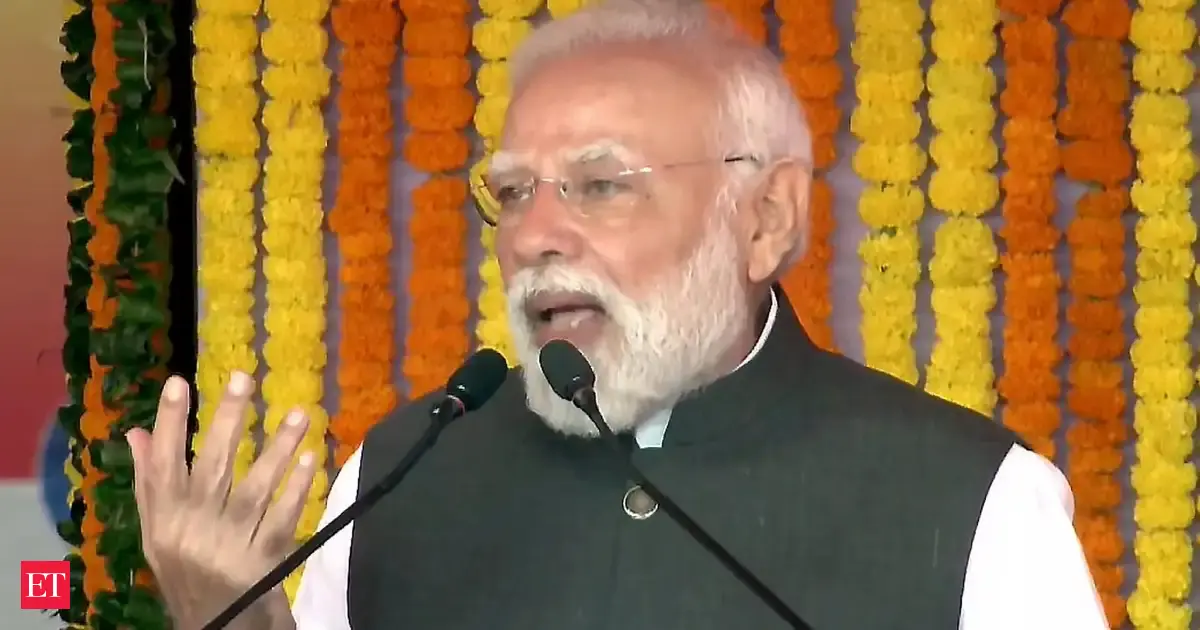
Centre responds to fear-mongering by opposition on new Labour Codes, minister Mansukh Mandaviya gives point by point rebuttal to Mallikarjun Kharge’s allegations
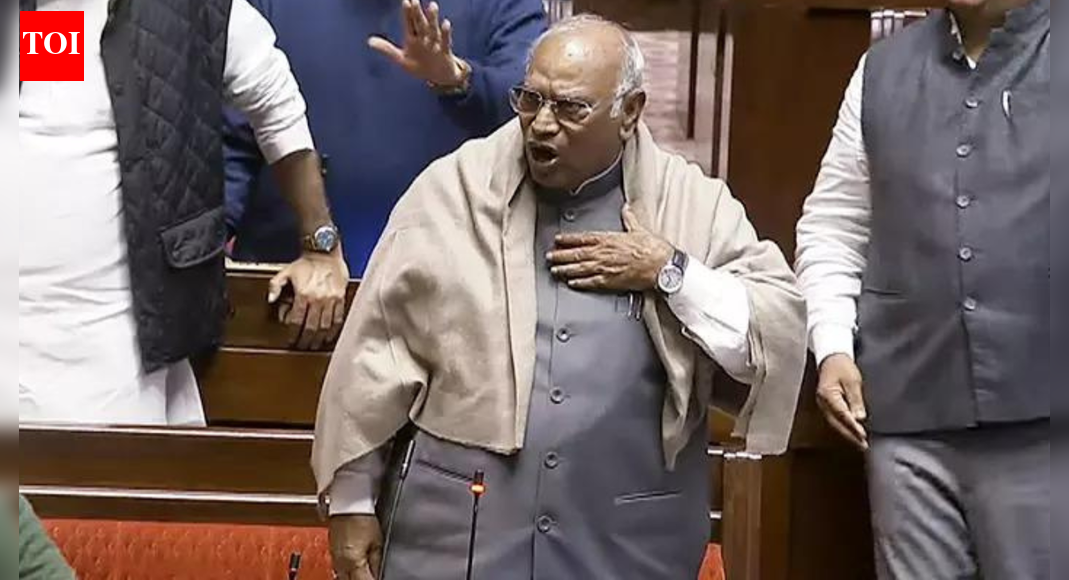
Ever since the Modi government has enforced the new labour codes in November, the opposition parties are fear-mongering about and protesting against it. On 3rd December, Congress president Mallikarjun Kharge published a long X post raising ‘serious concerns’ over the new labour codes. However, Minister of Labour and Employment, Mansukh Mandaviya retorted with a point-by-point rebuttal. Modi Govt is anti-labour, anti-worker and pro-cronies! The Opposition parties protested against the Modi Govt in Parliament today, expressing our strong objection about the newly implemented Labour Codes. Some of the serious concerns in the New Codes are – Threat to Job… pic.twitter.com/5dpIbuSdFF— Mallikarjun Kharge (@kharge) December 3, 2025 Job Security Kharge claimed that the Modi government is “anti-labour, anti-worker and pro-cronies.” He claimed that the new labour codes pose a threat to job security. “Layoff threshold raised from 100 to 300 workers i.e. more than 80% of factories in India can now lay off or retrench workers without government approval, reducing job security. – Expansion of Fixed Term Employment (FTE) will end many permanent jobs. – Companies can now hire workers on short-term contracts, avoiding long-term benefits,” the Congress leader wrote. In response to this claim Labour and Employment Minister, Mansukh Mandaviya said that contrary to the Congress leader’s claim, the existing mandatory one-month notice and retrenchment compensation remain intact, “but Congress conveniently hides this to spread fear.” .@kharge ji, everything you said about the Labour Codes is misleading and false. Here is the truth that exposes your lies.Job Security Fully Protected• Mandatory one-month notice and retrenchment compensation remain intact, but Congress conveniently hides this to spread… https://t.co/pz7I2JgDkj— Dr Mansukh Mandaviya (@mansukhmandviya) December 3, 2025 He added that a provision for Reskilling Fund has also been brought up. Notably, contrary to the fear-mongering being done by the opposition and its supportive propaganda machinery, increasing layoff threshold will aide creation of new jobs by giving the employer flexibility to engage more employees directly. “Increasing the threshold will boost job creation, giving employers flexibility to hire more people directly instead of through contractors. • More formal jobs mean more social security, fixed wages, safety norms, and assured benefits, the very things Congress failed to expand in decades,” Minister Mandaviya said. Refuting Kharge claim that expanding FTEs will end several permanent jobs, Mandaviya said, “Fixed Term Employees (FTEs) now enjoy all benefits equal to permanent employees (EPF, ESI, timely wages, minimum wages). This reduces rampant contractualisation that Congress allowed for years.” Working Hours On new rules regarding working hours, Kharge sais, “Although the Code keeps an 8-hour day on paper, states can allow 12-hour shifts through flexible scheduling. Coupled with state-determined overtime limits, this effectively permits much longer workdays, increasing fatigue and safety risks even when labelled “consensual.” Minister Mandaviya accused Congress of deliberately peddling lies. The minister highlighted that employees can choose to work 12 hours for only 4 days, with three paid holidays. “Weekly working hours remain strictly capped at 48 hours. Any work beyond normal hours requires double overtime pay with the employee’s consent. Congress knows this, but prefers lies over facts,” the minister added. Trade Unions’ Rights The Congress leader further argued that the new codes will “weaken” trade unions and collective rights. He claimed that since the code says that workers must wait for 60 days before striking, in addition, a 14-day cooling-off period, would “prevent quick action against unsafe or unfair conditions.” “Requiring one union with 51% membership to be the sole negotiator sidelines smaller unions and reduces representation for diverse worker groups. – Even the alternative negotiating council (comprised of 20% of workers) may leave many workers without a meaningful voice. – If 50% of workers take leave together, it is treated as a strike. This increases the chances of penalties and makes collective bargaining harder,” Kharge wrote. In response to these claims, the Labour Minister said that the Congress party is peddling lies about 60 days waiting period before doing workers strikes. He said that contrary to Congress’s 60 days claim, “the law clearly states only a 14-day notice period is required.” Dismissing Congress claim that waiting and cooling-off periods would prevent quick action against unsafe or unfair conditions, the minister said, “These reforms prevent flash strikes that harm workers’ wages and public convenience, something Congress used as a political weapon for years.” “Reduced disruption means fewer lost man-days and more stable incomes for workers. The pr
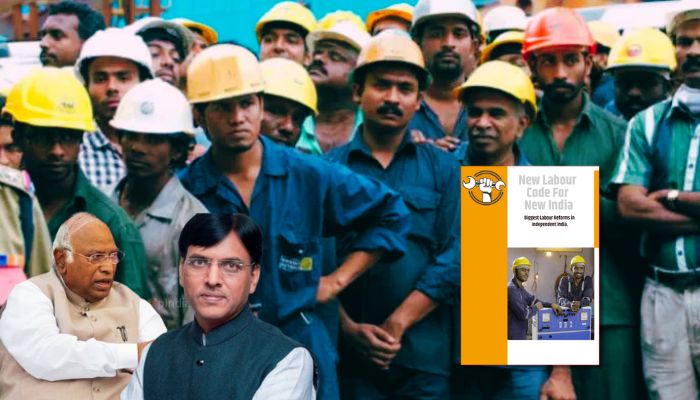

Ever since the Modi government has enforced the new labour codes in November, the opposition parties are fear-mongering about and protesting against it. On 3rd December, Congress president Mallikarjun Kharge published a long X post raising ‘serious concerns’ over the new labour codes. However, Minister of Labour and Employment, Mansukh Mandaviya retorted with a point-by-point rebuttal.
Modi Govt is anti-labour, anti-worker and pro-cronies!
— Mallikarjun Kharge (@kharge) December 3, 2025
The Opposition parties protested against the Modi Govt in Parliament today, expressing our strong objection about the newly implemented Labour Codes. Some of the serious concerns in the New Codes are –
Threat to Job… pic.twitter.com/5dpIbuSdFF
Job Security
Kharge claimed that the Modi government is “anti-labour, anti-worker and pro-cronies.” He claimed that the new labour codes pose a threat to job security.
“Layoff threshold raised from 100 to 300 workers i.e. more than 80% of factories in India can now lay off or retrench workers without government approval, reducing job security. – Expansion of Fixed Term Employment (FTE) will end many permanent jobs. – Companies can now hire workers on short-term contracts, avoiding long-term benefits,” the Congress leader wrote.
In response to this claim Labour and Employment Minister, Mansukh Mandaviya said that contrary to the Congress leader’s claim, the existing mandatory one-month notice and retrenchment compensation remain intact, “but Congress conveniently hides this to spread fear.”
.@kharge ji, everything you said about the Labour Codes is misleading and false. Here is the truth that exposes your lies.
— Dr Mansukh Mandaviya (@mansukhmandviya) December 3, 2025
Job Security Fully Protected
• Mandatory one-month notice and retrenchment compensation remain intact, but Congress conveniently hides this to spread… https://t.co/pz7I2JgDkj
He added that a provision for Reskilling Fund has also been brought up.
Notably, contrary to the fear-mongering being done by the opposition and its supportive propaganda machinery, increasing layoff threshold will aide creation of new jobs by giving the employer flexibility to engage more employees directly.
“Increasing the threshold will boost job creation, giving employers flexibility to hire more people directly instead of through contractors. • More formal jobs mean more social security, fixed wages, safety norms, and assured benefits, the very things Congress failed to expand in decades,” Minister Mandaviya said.
Refuting Kharge claim that expanding FTEs will end several permanent jobs, Mandaviya said, “Fixed Term Employees (FTEs) now enjoy all benefits equal to permanent employees (EPF, ESI, timely wages, minimum wages). This reduces rampant contractualisation that Congress allowed for years.”
Working Hours
On new rules regarding working hours, Kharge sais, “Although the Code keeps an 8-hour day on paper, states can allow 12-hour shifts through flexible scheduling. Coupled with state-determined overtime limits, this effectively permits much longer workdays, increasing fatigue and safety risks even when labelled “consensual.”
Minister Mandaviya accused Congress of deliberately peddling lies. The minister highlighted that employees can choose to work 12 hours for only 4 days, with three paid holidays. “Weekly working hours remain strictly capped at 48 hours. Any work beyond normal hours requires double overtime pay with the employee’s consent. Congress knows this, but prefers lies over facts,” the minister added.
Trade Unions’ Rights
The Congress leader further argued that the new codes will “weaken” trade unions and collective rights. He claimed that since the code says that workers must wait for 60 days before striking, in addition, a 14-day cooling-off period, would “prevent quick action against unsafe or unfair conditions.”
“Requiring one union with 51% membership to be the sole negotiator sidelines smaller unions and reduces representation for diverse worker groups. – Even the alternative negotiating council (comprised of 20% of workers) may leave many workers without a meaningful voice. – If 50% of workers take leave together, it is treated as a strike. This increases the chances of penalties and makes collective bargaining harder,” Kharge wrote.
In response to these claims, the Labour Minister said that the Congress party is peddling lies about 60 days waiting period before doing workers strikes. He said that contrary to Congress’s 60 days claim, “the law clearly states only a 14-day notice period is required.”
Dismissing Congress claim that waiting and cooling-off periods would prevent quick action against unsafe or unfair conditions, the minister said, “These reforms prevent flash strikes that harm workers’ wages and public convenience, something Congress used as a political weapon for years.”
“Reduced disruption means fewer lost man-days and more stable incomes for workers. The process ensures conciliation first, enabling peaceful dispute resolution, unlike the Congress era of chaos. For the first time ever, trade unions get statutory backing as the negotiating union. Collective bargaining is strengthened, not undermined,” the minister added.
The Congress leader also pointed out the standing orders and medium-sized units, and wrote, “Standing orders will not apply to units with fewer than 300 workers. Basic rules on working hours, leave, and termination will not be mandatory.”
Kharge claimed that this may “increase arbitrary “hire and fire” practices in medium-sized units.”
However, the Centre states that raising the applicability of threshold or standing orders from 100 to 300 workers curbs the compliance burden on small and medium textile enterprises, which make up a significant share of India’s apparel and fabric manufacturing base. Exempting smaller units from the requirement of certified standing orders will enable them to focus resources on productivity and export readiness rather than procedural compliance. This would result in improving their competitiveness in the global textile value chain.
Safety and Welfare
Under the “Weakened Safety and Welfare” subtitle, Kharge wrote, “By raising the definition of a factory to 20 workers (with power) and 40 workers (without power) where violations and unsafe conditions are most common, they fall outside the law’s safety net. – Sector-specific protections for vulnerable groups (journalists, beedi workers) have been merged into general codes, reducing safeguards.”
“Important details, such as floor wage calculation and social-security thresholds, are no longer fixed in the main law. They are to be notified as Rules, which the government can change through simple notifications, weakening parliamentary oversight and worker protections. Since the state governments can exempt any workplace from the Social Security Code, core safety and welfare protections can be easily bypassed,” Kharge added.
Furthermore, Kharge claimed that the new labour codes fail to extend safeguards for migrants. In addition, Mandatory Aadhaar-based registration risks leaving out migrants and informal workers who often face documentation errors or limited digital access, creating barriers to social-security enrolment.”
The Labour Minister addressed these claims made by the Congress leader. He said that Labour Codes “expand protections to 40 crore unorganised sector workers, including Gig & Platform workers, something Congress Govt never chose to attempt.”
Contrary to Congress’s claim that raising the definition of a factory to 20 workers (with power) and 40 workers (without power), workers at such establishments fall outside the law’s safety net, the minister said that “health, safety, and welfare rights fully apply to all establishments. No sector-specific protections have been removed. Journalists, beedi workers, and others continue to receive the same protections as before.”
Regarding Congress’s claim that new labour codes fail to extend safeguards for migrants, Minister Mandaviya said that appointment letters are now mandatory for every employee. He also added that states cannot exempt establishments from the Social Security Code without fulfilling conditions set by the Centre.
Accountability
The Congress leader also raised concern that linking fee to settlement of offences will turn wage violations into a payable cost, weakening accountability and effectively monetising illegality.
Addressing these claims, the Labour Minister said that only minor offences have been decriminalised and criminal prosecution are retained for serious violations “to ensure better compliance and faster justice for workers.”
Minister Mandaviya also pointed out that the same provisions of the new labour codes Mallikarjun Kharge ji isattacking, have already been enforced by many non-NDA states “by amending their existing labour laws. So, your criticism rings hollow even in states governed by you and your allies.”
The minister added at last, “Modi Government stands firmly for workers’ welfare, job creation, formalisation, and social security. Congress is attacking reforms it never had the vision to introduce. Congress has sunk so low in its hatred for the BJP that it is now standing against workers’ welfare. Absolutely Pathetic!”
The new Labour Codes
On 21st November 2025, the Modi government enforced the four Labour Codes in India. These include the Code on Wages (2019), the Industrial Relations Code (2020), the Code on Social Security (2020) and the Occupational Safety, Health and Working Conditions Code (2020).
These Labour Codes are aimed at rationalising a whopping 29 existing labour laws, modernise labour regulations, enhance the welfare of workers and lay the foundation for a future-ready workforce.
For the first time, the labour reforms have formally recognised gig and platform workers, including delivery executives on apps like Swiggy, Zomato, etc, bringing them under a formal welfare framework.
Changes brought in by the new Labour Codes which came into force from 21st November 2025
- Mandatory appointment letters to all workers to ensure transparency, job security, and fixed employment.
- All workers to get social security coverage including PF, ESIC, insurance
- All workers to receive a statutory right minimum wage payment.
- Employers must provide all workers above the age of 40 years with a free annual health check-up.
- Employers must provide timely wages to employees.
- Women are permitted to work at night and in all types of work across all establishments, subject to their consent and required safety measures.
- ESIC coverage and benefits are extended Pan-India
- Simplified processes and reduction in Compliance Burden.
- Fixed-Term Employees (FTE) are eligible for gratuity after 1 year instead of 5
- Gender-neutral pay and job opportunities, explicitly prohibiting discrimination—including against transgender persons.
- National Floor Wage to ensure no worker receives a wage below the minimum living standard.