Who is Munna Jhingada: The Dawood aide, Bangkok fugitive and the ISI operative behind a foiled terror conspiracy
On 30th May (Saturday), 8 members of a module connected to the criminal underworld of Mumbai and Inter-Services Intelligence (ISI) of Pakistan have been apprehended by the Delhi Police’s Special Cell. The module mobilised a group of terrorists to assault key regions around the nation, especially Delhi and Mumbai. Anil Shukla, Commissioner of Police, Special Cell, informed, “Major attacks have been averted with the arrests of these individuals. We have collected evidence, including some pictures, videos, and coordinates of specific government and non-government buildings and security establishments at which these attacks were being planned.” The police pointed out that the perpetrators were assigned to assault vital installations, security units and security personnel. Their targets included power plants, airports, railroads and nuclear facilities. They intended to execute grenade attacks and shootings. The authorities have confiscated a significant amount of ammunition and weapons. An operation took place over the course of 17 days, which was jointly carried out by the Delhi Police’s Special Cell from Delhi, Maharashtra and Jharkhand. The arrested people were linked to Shahzad Bhatti, a criminal from Pakistan and Munna Jhingada, a close accomplice of fugitive Dawood Ibrahim, who was imprisoned in Bangkok in 2000 after he was sent there to kill Chhota Rajan on a bogus passport. The police noted that Bhatti has been operating out of Pakistan for the last 5 years, while Jhingada spent 17 years in prison in Bangkok before he was brought back to the country. According to other reports, the police asserted that Munna Jhingada, Dilawar Khan Shahzad Bhatti and Amir Jatt were the 4 primary handlers of the module and the minds behind the terror conspiracy. They are all based in Pakistan at the moment. Security agencies revealed that Jhingada has been operating from a Karachi safe house. The location is near a posh hotel and just a few kilometres from an area attributed to Dawood’s apartment in the city. They suspect that Jhingada used digital communication to stay in contact with terrorist recruiters and operatives based in India. He was actively interacting with them via encrypted conversations and video calls. Evidence that suggested he wanted to arrange and set up a new group of these deadly operatives within the country is under inquiry by agencies. Jhingada was in regular communication with people involved with the nefarious network and exchanged recent pictures of himself with associates. He originally entered the spotlight after the breakup between Dawood Ibrahim and Chhota Rajan following the 1993 Mumbai riots and serial bombings. After the explosions, Rajan left D-Company and formed his own criminal organisation in Southeast Asia because he disapproved of Dawood’s strong bond with ISI. Who is Munna Jhingada Sayyad Muzzakkir Muddasar Hussain, infamously known as Munna Jhingada, is a prominent aide of Dawood Ibrahim and has long been an associate of his trusted deputy, Chhota Shakeel. He is from the Jogeshwari neighbourhood of Mumbai and is charged with orchestrating major terrorist assaults in India. Dawood had asked him to reach Pakistan through Nepal in 1997, after which he commenced working for the D-company network. The former regularly utilised Jhingada, a dreaded shooter, to kill his fiercest adversaries since he was incredibly confident in his shooting abilities. He was even told to go after mobster Arun Gawli. He also became one of Chhota Shakeel’s most dependable actors. Jhingada killed a significant Akhil Bharatiya Sena leader allegedly tied to Arun Gawli in October 1997. He was captured with a small arsenal, which put an end to his murderous rampage. However, he was able to secure bail and departed for Pakistan in 1999. Jhingada has been staying and running terror modules in Karachi, as those allied with the D-company and ISI fled him there in 2019. He has a lot of critical information on Dawood and the ISI. Jhingada was a second-year Bachelor of Arts student at a Jogeshwari (East) college when he first embraced the criminal world on 12th February 1990. He witnessed a fight involving his friends over an eve-teasing incident and then fatally stabbed a man named Wazir. He gained bail in November 1991 after turning himself in to the police. Jhingada was pulled into violence again after briefly going back to work in his father’s plumbing company. Nazir, Wazir’s brother, and his friends attacked him on 31st March 1994 for revenge. He attacked Nazir during the face-off and surrendered at the Meghwadi police station. Jhingada was booked for many crimes between 1990 and 1995, including murder and attempted murder. He escaped to his hometown in the Gonda district of Uttar Pradesh after Nishar Ahmed’s murder in August 1995. He practised with country-made firearms for about six months before starting as a sharpshooter for Chhota Shakeel’s gang in Mumbai. His a
On 30th May (Saturday), 8 members of a module connected to the criminal underworld of Mumbai and Inter-Services Intelligence (ISI) of Pakistan have been apprehended by the Delhi Police’s Special Cell. The module mobilised a group of terrorists to assault key regions around the nation, especially Delhi and Mumbai.
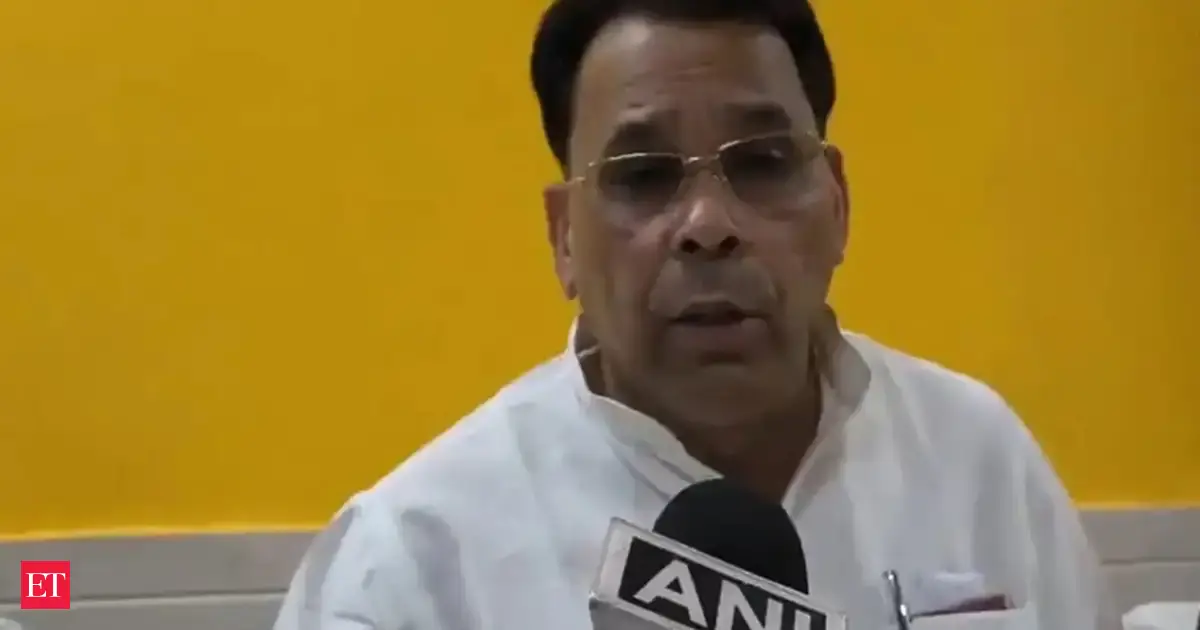
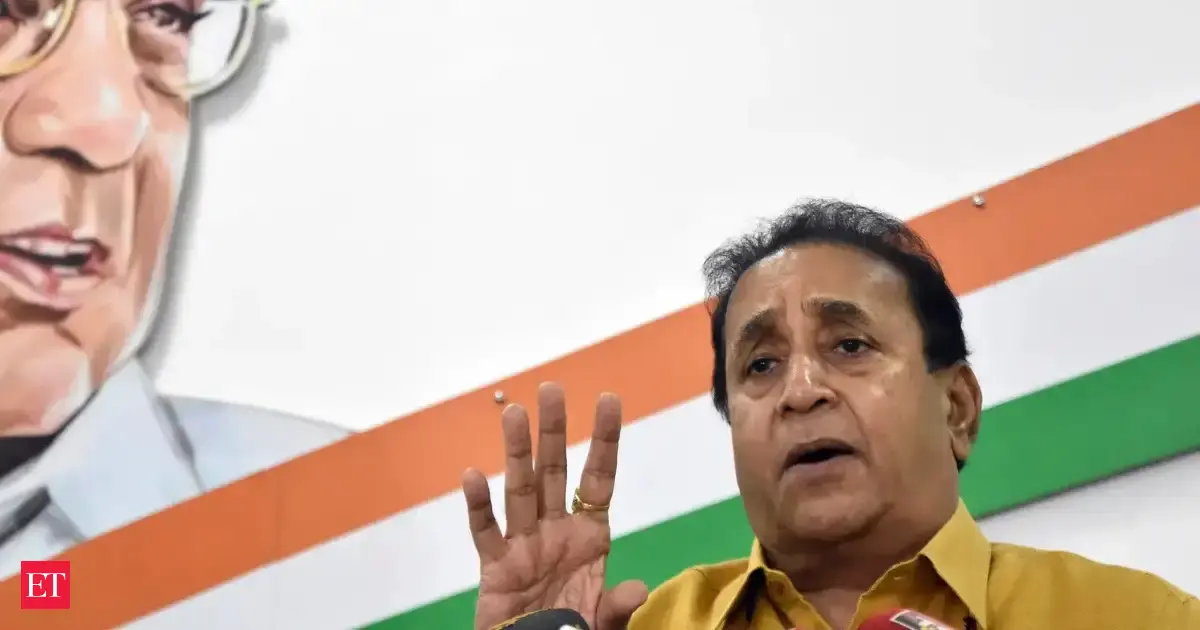
Anil Shukla, Commissioner of Police, Special Cell, informed, “Major attacks have been averted with the arrests of these individuals. We have collected evidence, including some pictures, videos, and coordinates of specific government and non-government buildings and security establishments at which these attacks were being planned.”
The police pointed out that the perpetrators were assigned to assault vital installations, security units and security personnel. Their targets included power plants, airports, railroads and nuclear facilities. They intended to execute grenade attacks and shootings. The authorities have confiscated a significant amount of ammunition and weapons.
An operation took place over the course of 17 days, which was jointly carried out by the Delhi Police’s Special Cell from Delhi, Maharashtra and Jharkhand. The arrested people were linked to Shahzad Bhatti, a criminal from Pakistan and Munna Jhingada, a close accomplice of fugitive Dawood Ibrahim, who was imprisoned in Bangkok in 2000 after he was sent there to kill Chhota Rajan on a bogus passport.
The police noted that Bhatti has been operating out of Pakistan for the last 5 years, while Jhingada spent 17 years in prison in Bangkok before he was brought back to the country. According to other reports, the police asserted that Munna Jhingada, Dilawar Khan Shahzad Bhatti and Amir Jatt were the 4 primary handlers of the module and the minds behind the terror conspiracy. They are all based in Pakistan at the moment.
Security agencies revealed that Jhingada has been operating from a Karachi safe house. The location is near a posh hotel and just a few kilometres from an area attributed to Dawood’s apartment in the city. They suspect that Jhingada used digital communication to stay in contact with terrorist recruiters and operatives based in India. He was actively interacting with them via encrypted conversations and video calls.
Evidence that suggested he wanted to arrange and set up a new group of these deadly operatives within the country is under inquiry by agencies. Jhingada was in regular communication with people involved with the nefarious network and exchanged recent pictures of himself with associates.
He originally entered the spotlight after the breakup between Dawood Ibrahim and Chhota Rajan following the 1993 Mumbai riots and serial bombings. After the explosions, Rajan left D-Company and formed his own criminal organisation in Southeast Asia because he disapproved of Dawood’s strong bond with ISI.
Who is Munna Jhingada
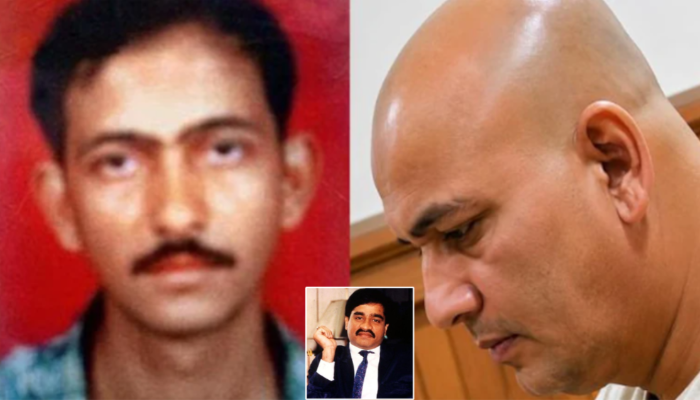
Sayyad Muzzakkir Muddasar Hussain, infamously known as Munna Jhingada, is a prominent aide of Dawood Ibrahim and has long been an associate of his trusted deputy, Chhota Shakeel. He is from the Jogeshwari neighbourhood of Mumbai and is charged with orchestrating major terrorist assaults in India.
Dawood had asked him to reach Pakistan through Nepal in 1997, after which he commenced working for the D-company network. The former regularly utilised Jhingada, a dreaded shooter, to kill his fiercest adversaries since he was incredibly confident in his shooting abilities. He was even told to go after mobster Arun Gawli. He also became one of Chhota Shakeel’s most dependable actors.
Jhingada killed a significant Akhil Bharatiya Sena leader allegedly tied to Arun Gawli in October 1997. He was captured with a small arsenal, which put an end to his murderous rampage. However, he was able to secure bail and departed for Pakistan in 1999. Jhingada has been staying and running terror modules in Karachi, as those allied with the D-company and ISI fled him there in 2019. He has a lot of critical information on Dawood and the ISI.
Jhingada was a second-year Bachelor of Arts student at a Jogeshwari (East) college when he first embraced the criminal world on 12th February 1990. He witnessed a fight involving his friends over an eve-teasing incident and then fatally stabbed a man named Wazir. He gained bail in November 1991 after turning himself in to the police.
Jhingada was pulled into violence again after briefly going back to work in his father’s plumbing company. Nazir, Wazir’s brother, and his friends attacked him on 31st March 1994 for revenge. He attacked Nazir during the face-off and surrendered at the Meghwadi police station.
Jhingada was booked for many crimes between 1990 and 1995, including murder and attempted murder. He escaped to his hometown in the Gonda district of Uttar Pradesh after Nishar Ahmed’s murder in August 1995. He practised with country-made firearms for about six months before starting as a sharpshooter for Chhota Shakeel’s gang in Mumbai.
His arrest on 24th March 1996 marked a crucial turning point. Jhingada met Ismail Malabari, Chhota Shakeel’s confidant, while incarcerated at Arthur Road Jail, who introduced him to their network and helped in obtaining his bail. Jhingada executed multiple contract killings for the cartel between 1994 and 1999. He was accused of killing Sunil Jain, a hawala operator who was suspected of managing money connected to rival criminal Chhota Rajan and fostering links with a well-known Mumbai encounter specialist. Pakistan’s intelligence agency also became aware of his rising proximity to Shakeel.
Dawood Ibrahim and Chhota Rajan gang war
The gang war between Dawood Ibrahim and his erstwhile subordinate Chhota Rajan is directly related to Jhingada’s criminal past. His reputation soared after the unsuccessful attempt on Rajan’s life in Bangkok in 2000. He and other gang members went to Thailand to eliminate him on Shakeel’s orders after the killing of Dilshad Mirza Beg, an Indian-born Nepali politician and Dawood’s primary coordinator in the landlocked nation. The contract value of the operation stood at Rs 4 crore.
However, Rajan survived with wounds while his trusted companion Rohit Verma died. The former was compelled into hiding for almost two years following the attack, which greatly intensified the violent dispute between the warring underworld groups. Afterwards, Jhingada was apprehended by Thai authorities and awarded a 10-year prison sentence for the murder of Rohit Verma.
He was housed in a high-security prison in Bangkok. New Delhi argued that Jhingada was from Mumbai, integral to the Dawood-Shakeel gang and deserved to be extradited to India due to the criminal offences that have been lodged against him after completion of his sentence. He had been accused of more than 70 serious violations, including gang warfare, extortion and murder.
On the other hand, Islamabad argued that he was Mohammad Salim, the name on his fictitious passport and a Pakistani citizen. Indian agencies had presented DNA proof and documentation about his family. Birth certificates, criminal case files and fingerprint evidence were submitted by the Mumbai Crime Branch. Police officials believed that forensic tests carried out in Thailand matched Jhingada’s fingerprints with those given by Indian authorities.
The submission prevailed in the Bangkok lower court, which acknowledged the assertion in 2018. Mumbai Police produced a new dossier in 2019 with information about Jhingada’s criminal background, fingerprints, 6 non-bailable warrants issued by Mumbai courts and an Interpol Red Corner Notice after he contested the verdict before a higher court.
Pakistani officials endorsed Jhingada’s claim by presenting a Pakistani passport and paperwork related to the birth and education of his children. Additionally, he declined to take a DNA test. The case was overturned after a protracted diplomatic battle and legal proceeding at the Bangkok appeals court on 16th September 2019. He was handed over to Pakistan as their claim was accepted, which hampered India’s efforts to drag him back for trial.
His name also grabbed headlines when Uttar Pradesh Anti-Terrorism Squad (ATS) exposed an espionage network working on behalf of Pakistan’s ISI in 2023. He had sent money to Sayyed Armaan, his maternal uncle, to bring in individuals and promote anti-Indian activities.
Armaan and his friend Mohammad Raees were arrested after they gathered photographs and private information about Indian military locations in Uttar Pradesh and shared them with ISI handlers. Jhingada transferred money to Raees via another accused, Mohammad Salman Siddique, who was also caught while he was declared a wanted accused in the case.
The ISI-linked terror module
The module was busted earlier last month. The Special Cell captured 23-year-old Mirzapur native Vijay alias “Shooter” from Pune and Nitish Paswan from Sahibganj in Jharkhand. Their affiliation to Bhatti’s syndicate, which functions out of Pakistan and Dubai, came to light during interrogations.
Shukla stated, “Vijay was in regular contact with members of Bhatti’s network and performed several criminal and terror activities in Delhi, Punjab, Haryana, Rajasthan and Uttar Pradesh. He was also tasked with undertaking these acts in various parts of the country and executing attacks in Delhi NCR (National Capital Region).”
27-year-olds Taoqeer Rizwan Ahmed Sheikh and Arbaz Khan, associated with ISI handlers Yahwar Khan and Jhingada, were taken into custody from Mumbai on 27th May after further questioning and technical surveillance. They were recruited by Huzaifa, who is evading capture. He was acting on behalf of Khan, Jhingada and Bhatti.
The top cop mentioned, “Scrutinising their social media accounts, we found that they had been in touch with the handlers via Instagram and WhatsApp groups, and had already formed a team for carrying out major attacks in Delhi, Mumbai, Punjab and Chandigarh.” Rizwan and Arbaz Khan’s interrogation disclosed that another faction from Punjab was scheduled to travel to Delhi and launch strikes at their command.
Ludhiana residents, 23-year-old Manjeet Singh, along with Gagandeep Singh and Harvinder Singh, both 28 years old, were caught by the police on the Mehrauli-Badarpur route in Delhi.
4 hand grenades, 2 Glock handguns with 24 rounds, 2 stolen two-wheelers and a cell phone with incriminating conversations with handlers in Pakistan and Dubai have been obtained. Pistols and cartridges were manufactured in the Islamic Republic, and grenades were also produced in an ordnance plant there.
The senior official unveiled, “From them, we recovered four hand grenades, two Glock pistols, and 25 live cartridges. We also received other incriminating evidence, laying down the details of locations at which they were planning to attack.”
After examining these men, the authorities uncovered that they were related to Ang Kami Lama, a 66-year-old arrested Nepali national who came into contact with Jhingada while incarcerated in Bangkok. The police highlighted, “He had been serving time in prison for the illegal sale and transportation of drugs from 2001 to 2018.”
According to the cops, Jhingada, who is believed to be based in Pakistan at the moment, sent Lama to Delhi to handle the attack’s financing and logistics. “Preliminary investigation reveals the weapons were dropped by drones,” he outlined. The part played by other Nepali-origin nodes tied to the module and other Nepali citizens is under probe.
Senior police officers conveyed that the New Delhi Range (NDR) team of the special cell received details that handlers of Bhatti’s ISI network in Pakistan and Dubai were preparing terror hits in Delhi, Mumbai, Punjab and Chandigarh while tracking some cadres of his ring.
Moreover, the agencies came across discussions in which the terrorists sought funding to conduct attacks in India. Chats were recovered in which appeals for money totalling lakhs of rupees were addressed. They are also looking into the allegations that weapons and hand grenades were provided through international channels, including their movement in the Gurdaspur district of Punjab.
The operation might have been an element of a larger initiative to revitalise the moribund underworld ring in Mumbai and other regions of the nation. Officials are examining whether the network was trying to expand its arms by enrolling the youth. A possible untoward occurrence has been prevented, but further searches in the matter are transpiring, and raids are taking place in Mumbai and other places to nab other accused.