Who is Bilal Bin Saqib? The mysterious rise of the “crypto bro” who leveraged digital finance to reset Pakistan-US ties
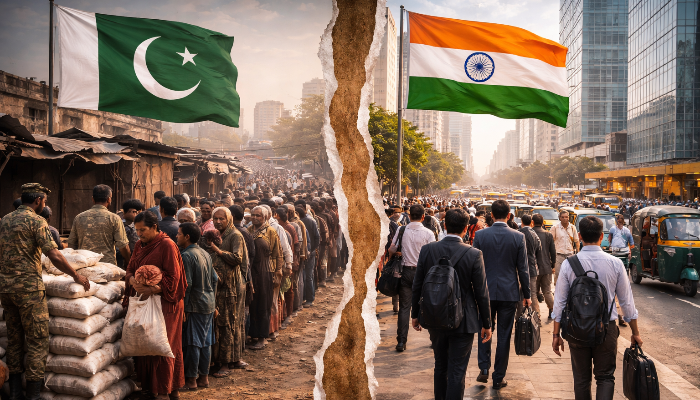
The relationship between the United States and Pakistan has astonishingly emerged from obscurity following President Donald Trump’s re-election in 2024. He earlier consistently called out the country for misappropriating billions of dollars under the guise of the “War on Terror” while providing refuge to terrorists, thereby making a fool out of Washington. However, there has been a seismic shift in the ties between the two sides during his second term. From designating Asim Munir as his “favourite field marshal” and inviting him to a luncheon at the White House to praising him and Prime Minister Shehbaz Sharif as exceptional leaders, Trump has indeed made significant strides from his previous sharp criticism. Pakistan likewise has been actively catering to his ego by nominating him for the Nobel Peace Prize and recognising his assertion of mediating a ceasefire with India, a statement that the Modi government has repeatedly refuted. While the former responded like a de facto vassal state, there is an intriguing factor guiding Trump’s revised opinion. The “crypto bro” shaping the US-Pakistan ties reset The reason behind the unexpected change of heart seems to revolve around 35-year-old Bilal Bin Saqib, who describes himself as a “crypto bro,” and is Chief Executive Officer (CEO) of the Pakistan Crypto Council. He has played an important part in improving the US-Pakistan link over the past year, reported Bloomberg. Saqib, a native of Lahore, revealed that his interest in cryptocurrency began during the historic 2017 Bitcoin bull run, which saw the price rise from less than $1,000 in January to $14,000 by the end of the year. He lived in both Pakistan and the United Kingdom. He is a graduate in social innovation and entrepreneurship from the London School of Economics and an alumnus of Queen Mary University. He has given TED talks and launched a non-profit organisation, “Tayaba,” with his brother. Saqib was honoured as a “Member of the Order of the British Empire” after co-founding the “One Million Meals” initiative while he was in the UK during COVID-19. According to his LinkedIn profile, he worked for “The Coin Master,” a company with 2 to 10 workers and the tagline “Helping Tokens Develop Routes to Web3 Markets,” for four years before he was hired in Pakistan. Saqib enters the picture Pakistan has been dependent on assistance from the International Monetary Fund, which it had found difficult to repay, as it grappled with high inflation, enormous debt and declining foreign reserves. It had little interest in cryptocurrency due to multiple concerns, including Ponzi schemes, fraud and money laundering. However, the attitude had altered by 2024, and the military establishment, the true authority in Pakistan, decided that cryptocurrency would be a helpful negotiating tool in international diplomacy. The country then created a dedicated regulator, enacted legislation covering virtual assets and encouraged international exchanges to submit licence applications. It designated 2,000 megawatts or around 5% of its power grid, for cryptocurrency mining and recommended a national cryptocurrency reserve. Now, it needed a person to supervise everything and chose Saqib, who was quickly handed over multiple positions beginning in March of last year. He was declared as the top executive officer of the Pakistan Crypto Council, special assistant to the prime minister on blockchain and cryptocurrency, alongside chief adviser to the finance minister on crypto. He was ultimately named as the chairman of the Pakistan Virtual Assets Regulatory Authority. Moving from anonymity and into the spotlight Saqib, who was relatively unknown until last year, suddenly turned into one of the terror nation’s most influential figures. He has formed alliances with notable individuals in the cryptocurrency space, including Changpeng Zhao, popularly known as CZ, the controversial billionaire heading Binance Holdings Limited. It is the biggest cryptocurrency exchange in the world and has gained notoriety for sending funds to terror outfits, such as Hamas. Zhao was found guilty of money laundering and served time in jail. However, Trump pardoned him in October. Additionally, Saqib interacted with fund manager Cathie Wood, Bitcoin billionaire Michael Saylor and Nayib Bukele, the president of El Salvador, who created a Strategic Bitcoin Reserve Fund and issued a Bitcoin legal tender in 2021. Meanwhile, he was appointed as an advisor at World Liberty Financial in April 2025. It granted him greater diplomatic and commercial advantages than any other collaboration. Saqib shared a selfie taken at Trump’s Mar-a-Lago club in Florida last month with Witkoff and other executives. It took place simultaneously as Witkoff facilitated a deal between Pakistan and the United States for the renovation of Manhattan’s Roosevelt Hotel. Saqib expressed, “Because of crypto, doors have opened. New conversations have
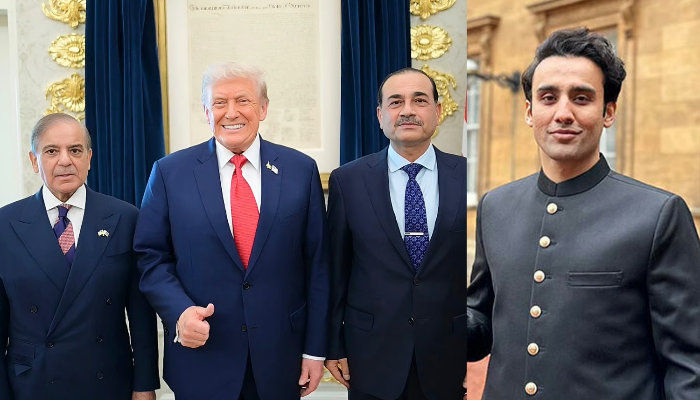
The relationship between the United States and Pakistan has astonishingly emerged from obscurity following President Donald Trump’s re-election in 2024. He earlier consistently called out the country for misappropriating billions of dollars under the guise of the “War on Terror” while providing refuge to terrorists, thereby making a fool out of Washington. However, there has been a seismic shift in the ties between the two sides during his second term.
From designating Asim Munir as his “favourite field marshal” and inviting him to a luncheon at the White House to praising him and Prime Minister Shehbaz Sharif as exceptional leaders, Trump has indeed made significant strides from his previous sharp criticism.
Pakistan likewise has been actively catering to his ego by nominating him for the Nobel Peace Prize and recognising his assertion of mediating a ceasefire with India, a statement that the Modi government has repeatedly refuted. While the former responded like a de facto vassal state, there is an intriguing factor guiding Trump’s revised opinion.
The “crypto bro” shaping the US-Pakistan ties reset
The reason behind the unexpected change of heart seems to revolve around 35-year-old Bilal Bin Saqib, who describes himself as a “crypto bro,” and is Chief Executive Officer (CEO) of the Pakistan Crypto Council. He has played an important part in improving the US-Pakistan link over the past year, reported Bloomberg.
Saqib, a native of Lahore, revealed that his interest in cryptocurrency began during the historic 2017 Bitcoin bull run, which saw the price rise from less than $1,000 in January to $14,000 by the end of the year. He lived in both Pakistan and the United Kingdom. He is a graduate in social innovation and entrepreneurship from the London School of Economics and an alumnus of Queen Mary University. He has given TED talks and launched a non-profit organisation, “Tayaba,” with his brother.
Saqib was honoured as a “Member of the Order of the British Empire” after co-founding the “One Million Meals” initiative while he was in the UK during COVID-19. According to his LinkedIn profile, he worked for “The Coin Master,” a company with 2 to 10 workers and the tagline “Helping Tokens Develop Routes to Web3 Markets,” for four years before he was hired in Pakistan.
Saqib enters the picture
Pakistan has been dependent on assistance from the International Monetary Fund, which it had found difficult to repay, as it grappled with high inflation, enormous debt and declining foreign reserves. It had little interest in cryptocurrency due to multiple concerns, including Ponzi schemes, fraud and money laundering.
However, the attitude had altered by 2024, and the military establishment, the true authority in Pakistan, decided that cryptocurrency would be a helpful negotiating tool in international diplomacy. The country then created a dedicated regulator, enacted legislation covering virtual assets and encouraged international exchanges to submit licence applications. It designated 2,000 megawatts or around 5% of its power grid, for cryptocurrency mining and recommended a national cryptocurrency reserve.
Now, it needed a person to supervise everything and chose Saqib, who was quickly handed over multiple positions beginning in March of last year. He was declared as the top executive officer of the Pakistan Crypto Council, special assistant to the prime minister on blockchain and cryptocurrency, alongside chief adviser to the finance minister on crypto. He was ultimately named as the chairman of the Pakistan Virtual Assets Regulatory Authority.
Moving from anonymity and into the spotlight
Saqib, who was relatively unknown until last year, suddenly turned into one of the terror nation’s most influential figures. He has formed alliances with notable individuals in the cryptocurrency space, including Changpeng Zhao, popularly known as CZ, the controversial billionaire heading Binance Holdings Limited.
It is the biggest cryptocurrency exchange in the world and has gained notoriety for sending funds to terror outfits, such as Hamas. Zhao was found guilty of money laundering and served time in jail. However, Trump pardoned him in October.
Additionally, Saqib interacted with fund manager Cathie Wood, Bitcoin billionaire Michael Saylor and Nayib Bukele, the president of El Salvador, who created a Strategic Bitcoin Reserve Fund and issued a Bitcoin legal tender in 2021. Meanwhile, he was appointed as an advisor at World Liberty Financial in April 2025. It granted him greater diplomatic and commercial advantages than any other collaboration.
Saqib shared a selfie taken at Trump’s Mar-a-Lago club in Florida last month with Witkoff and other executives. It took place simultaneously as Witkoff facilitated a deal between Pakistan and the United States for the renovation of Manhattan’s Roosevelt Hotel.
Saqib expressed, “Because of crypto, doors have opened. New conversations have opened, and trust has been built. We have gotten an opportunity to rebrand,” in an interview. These events have been regarded as a respite for Pakistan, which has been on the verge of bankruptcy and diplomatic isolation.
This could also account for Trump’s regular commendation of Munir, who was dubbed a “great general,” “great guy,, and “serious fighter” by him during a “Board of Peace” meeting last month. On the other hand, the terror state has strengthened its connection with the White House by using cryptocurrency and flattery.
“For a country starved of global investor interest, aligning with Washington’s crypto pivot isn’t just about tech. It’s about signalling relevance in a shifting global order,” insisted Uzair Younus of The Asia Group, which is an advisory company in Washington DC.
Curious case of Saqib’s appointment
It’s unclear exactly how Saqib transformed into Pakistan’s most powerful face in such a short period of time. He has also been ambiguous in his answers concerning who contacted him, solely identifying the finance ministry. He has been similarly vague in relation to his area of expertise, announcing that he is “essentially turning an idea into execution.” He insisted, “I am not a trader. I’m a builder. I am the artist, not the scientist.”
Saqib soon found his footing after officially joining Pakistan’s government. The next month, he convinced Zhao to join the Pakistan Crypto Council as a strategic advisor following the completion of his prison sentence in the US.
The chef pulled up to Pakistan. We cooking heavy — good vibes, no brakes! @cz_binance pic.twitter.com/saHLFlcwJh— Bilal bin Saqib MBE (@Bilalbinsaqib) April 7, 2025
Three weeks later, Saqib hosted Zachary Witkoff, CEO of World Liberty Financial, which he co-founded with Trump. He was accompanied by other personnel of the cryptocurrency firm in Islamabad, and they signed a “letter of intent” with the government to boost cooperation on the adoption of stablecoins.
The meeting was publicised by Pakistan, which conveyed that World Liberty Financial is “backed by the Trump family, including President Donald Trump and his sons,” and Trump has “personally endorsed WLF,” in a formal release.
Witkoff also voiced similar objectives in footage posted by Saqib in which he also talked about the tokenisation of “trillions of dollars” worth of rare-earth minerals. Munir and Sharif displayed these minerals, sourced from Pakistan-occupied Balochistan, to Trump last year, which led to warnings from the indigenous population of the area and the Baloch rebels.
Saqib, in May, showcased Pakistan’s progress in the cryptocurrency space at a Bitcoin conference in Las Vegas. US Vice President JD Vance, Eric Trump and Donald Trump Junior, who are all co-founders of World Liberty Financial, were among the attendees there. A few days later, Saqib met with Bo Hines, the director of the President’s Council of Advisers on Digital Assets at the time, in the White House.
The former was a last-minute addition to a group that landed in the US for trade negotiations. He was directed to participate in an urgent call from an official. He had no prior experience with tariffs and no understanding of the agenda, but contributed to the drafting of a trade accord by the time he left Washington.
Trump’s policies are influenced by crypto diplomacy and personal relationships.
Witkoff arrived in Islamabad along with other executives and prominent people for a meeting attended by Munir, Sharif and several high-level officials in January. Saqib, who was also present there, praised the visit for assisting in “putting Pakistan on the map.”
The growing affinity between Trump and Munir appears to be a product of Pakistan’s crypto diplomacy, or “biplomacy,” as he refers to it. The delegation enjoyed special treatment, which highlighted how the rapport between the two parties had developed recently.
Witkoff, who is also the special US envoy to the Middle East, stated that Pakistan has provided a 15-point action plan, and its national capital has been suggested as a possible location for any negotiations before Trump’s deadline for Iran to reach an agreement or risk attacks on energy infrastructure.
Today, World Liberty Financial signed an MoU with the Ministry of Finance to explore innovation in digital finance, particularly the use of stablecoins for cross-border transactions, signalling growing global interest in Pakistan as a key market for digital assets. pic.twitter.com/rYzbfHYysd— Pakistan Virtual Assets Regulatory Authority (@PakistanVARA) January 14, 2026
“Given how important personal connections are in the Trump White House’s policy process, Pakistan may well have bought itself some influence in the White House that advantaged it when it pitched itself to Washington as a mediator. With this unconventional US administration, unconventional factors can help your cause, and that’s certainly the case with crypto,” mentioned Michael Kugelman. He is a resident senior fellow for South Asia at the Atlantic Council in Washington.
Tehran has been preventing the majority of vessels from crossing the “Strait of Hormuz” and even returned a Karachi-bound containership from the United Arab Emirates (UAE). Hence, a cash-strapped Pakistan also wants to seek a resolution, as the situation could lead to a severe energy shortage in the nation, which is already in great distress.
A mutual exploitative connection that could deteriorate at any moment
Pakistan benefited from the Trump administration in many ways, including reduced duties on its goods to 19% and the classification of the Balochistan Liberation Army as a terrorist entity. Pakistan could assist the US in diversifying vital resource supply lines in addition to becoming a strategically located nuclear power. It is already infamous for carrying out the “dirty work of the West” in the region.
Furthermore, US Strategic Metals, a Missouri-based business and a military-owned firm, signed a memorandum of understanding in September to develop rare-earth resources. Trump is also looking into a business opportunity in the realm of virtual assets in Pakistan.
According to the Finance Ministry, there are 40 million cryptocurrency users there with an estimated trade volume of over $300 billion. This is one of the highest adoption rates in the world as citizens search for investment options in an economy plagued by persistent inflation.
However, a lot can always move downward, especially when the price of oil soars. Pakistan has to repay the International Monetary Fund, which communicated disapproval of independent cryptocurrency ventures. El Salvador learnt the hard way that the adoption of Bitcoin damaged ties with the body and caused funding negotiations to halt.
Most importantly, Trump has illustrated that his actions are exclusively motivated by his interests. He can readily convert adversaries into friends and vice versa if his needs dictate, with Islamabad being no exception. Thus, Munir would be in a difficult situation if he demanded that Pakistan, which last year inked a defence deal with Saudi Arabia, participate in the war against Iran in any manner. Last year’s reports disclosed that Trump was placing substantial pressure on his beloved military man to contribute his troops to Gaza as a part of a new stabilisation force.