Was Bhagwant Mann’s video leak an internal sabotage to clear the path for Arvind Kejriwal in Punjab?
The clergy at Akal Takht, the highest temporal authority of the Sikh faith, declared Punjab Chief Minister Bhagwant Singh Mann a “Khalsa Panth Virodhi (opposed to the Sikh Panth)” and a “Guru Dokhi (one who disrespects the Guru).” He had appeared before the religious body and was questioned about objectionable comments about Sikh devotees. He was also questioned in relation to a widely shared video that featured his look-alike sprinkling alcohol on pictures of Sikh gurus. On 29th June (Monday), all Sikh MLAs across the political parties and cabinet ministers have been summoned before the Akal Takht over an anti-sacrilege law approved by the state. Forensic examinations verified the video’s authenticity after Mann’s denial of the charge and assertion that it was AI-generated. Aam Aadmi Party (AAP) later claimed that the footage was genuine, but analysis found no evidence that the individual in the video was Mann. The chief minister also contended that the man did not resemble him in terms of height or physique and added, “I revere Sri Akal Takht Sahib as ‘supreme’, but some at religious posts peddle false propaganda for their political masters.” A potential political conspiracy Meanwhile, the development has raised numerous suspicions, including the possibility of internal sabotage aimed at fulfilling the long-held ambition of AAP’s national convenor and former Delhi Chief Minister Arvind Kejriwal to take charge of affairs in Punjab. In 2022, as the assembly elections approached in the state, famous poet Kumar Vishwas, a founding member of the party who later parted ways with it, charged that Kejriwal was willing to jeopardise India’s sovereignty and integrity in his eagerness to control the region. He stated that the latter either wanted to be the chief minister of Punjab or the prime minister of an independent Khalistan. He also accused Kejriwal of aiding separatist elements and even meeting with them during the 2017 assembly elections in the border state. The video went viral on social media, and its circulation was first prohibited by the Election Commission, but the ban was eventually lifted. The government had to provide “Y” category protection to Vishwas after assessing the threat based on intelligence inputs, after he made the allegations. Moreover, the Punjab Chief Minister Charanjit Singh Channi sent a letter reportedly written in Gurmukhi by the banned outfit “Sikhs for Justice (SFJ)” endorsing the AAP to Union Home Minister Amit Shah. He also attached a personal note highlighting that the situation was “serious” and endangered the nation’s security and integrity. SFJ chief Gurpatwant Singh Pannun conveyed that a meeting was organised with Kejriwal in New York’s Gurdwara Richmond Hills in 2014, and he vowed to release 1993 Delhi blast convict Devinder Pal Singh Bhullar in exchange for financial aid. He alleged that Khalistani groups funded $16 million to AAP, after which Delhi Lieutenant Governor VK Saxena even recommended a National Investigation Agency (NIA) probe in the matter. When Sisodia asked people to vote for Kejriwal in Punjab Notably, accounts about Kejriwal’s switch to Punjab also surfaced during that year’s election campaign, particularly when Manish Sisodia, the chief minister of Delhi at the time, asked voters to “cast your vote presuming that you are voting to make Kejriwal chief minister. Your vote will be in his name.” He also assured that the latter would oversee the execution of all commitments made by the party to the citizens of the region. Kejriwal had denied the “rumours”, arguing that as the chief minister of Delhi, he had been entrusted with a responsibility by the people there, while talking to The Times of India. Hence, he cannot assume the same role in Punjab. However, he supported Sisodia and stressed there was nothing wrong with his statement. Furthermore, the AAP supremo consistently hailed the “Delhi model” and his government in the union territory for electoral success in the Punjab assembly elections of 2022. “This is a revolution. First, this revolution happened in Delhi, then in Punja,b and it will now happen all over the country,” he had expressed. Kejriwal was also lauded after AAP won 958 of the 1,977 wards across 8 Municipal Corporations, 75 Municipal Councils and 19 Nagar Panchayats in the state last month. The party’s impressive performance in the 2024 civic body polls was similarly attributed to him. AAP has won 55 per cent of the wards in Punjab in the elections held in 977 wards. The credit goes to Arvind Kejriwal’s clean politics. We believe in winning people’s hearts and not conducting politics by pushing people,” mentioned Aman Arora, president of AAP Punjab unit. The pursuit of Kejriwal’s mounting political aims Kejiwal grabbed the spotlight in the Indian political scene during the 2011 anti-corruption movement, known as India Against Corruption, which was spearheaded by social activist Anna Hazare
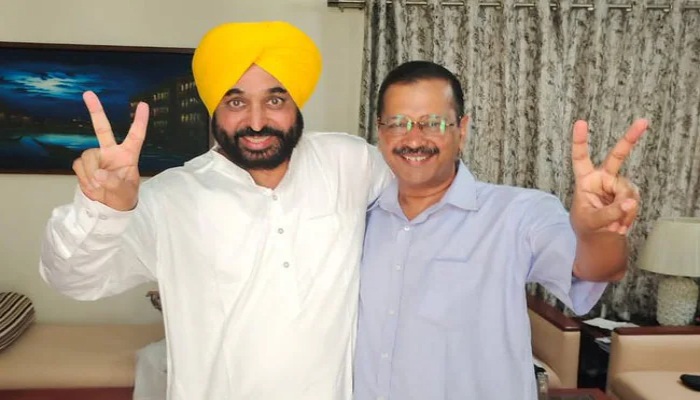
The clergy at Akal Takht, the highest temporal authority of the Sikh faith, declared Punjab Chief Minister Bhagwant Singh Mann a “Khalsa Panth Virodhi (opposed to the Sikh Panth)” and a “Guru Dokhi (one who disrespects the Guru).” He had appeared before the religious body and was questioned about objectionable comments about Sikh devotees.
He was also questioned in relation to a widely shared video that featured his look-alike sprinkling alcohol on pictures of Sikh gurus. On 29th June (Monday), all Sikh MLAs across the political parties and cabinet ministers have been summoned before the Akal Takht over an anti-sacrilege law approved by the state.
Forensic examinations verified the video’s authenticity after Mann’s denial of the charge and assertion that it was AI-generated. Aam Aadmi Party (AAP) later claimed that the footage was genuine, but analysis found no evidence that the individual in the video was Mann. The chief minister also contended that the man did not resemble him in terms of height or physique and added, “I revere Sri Akal Takht Sahib as ‘supreme’, but some at religious posts peddle false propaganda for their political masters.”
A potential political conspiracy
Meanwhile, the development has raised numerous suspicions, including the possibility of internal sabotage aimed at fulfilling the long-held ambition of AAP’s national convenor and former Delhi Chief Minister Arvind Kejriwal to take charge of affairs in Punjab. In 2022, as the assembly elections approached in the state, famous poet Kumar Vishwas, a founding member of the party who later parted ways with it, charged that Kejriwal was willing to jeopardise India’s sovereignty and integrity in his eagerness to control the region.
He stated that the latter either wanted to be the chief minister of Punjab or the prime minister of an independent Khalistan. He also accused Kejriwal of aiding separatist elements and even meeting with them during the 2017 assembly elections in the border state. The video went viral on social media, and its circulation was first prohibited by the Election Commission, but the ban was eventually lifted.
The government had to provide “Y” category protection to Vishwas after assessing the threat based on intelligence inputs, after he made the allegations. Moreover, the Punjab Chief Minister Charanjit Singh Channi sent a letter reportedly written in Gurmukhi by the banned outfit “Sikhs for Justice (SFJ)” endorsing the AAP to Union Home Minister Amit Shah. He also attached a personal note highlighting that the situation was “serious” and endangered the nation’s security and integrity.
SFJ chief Gurpatwant Singh Pannun conveyed that a meeting was organised with Kejriwal in New York’s Gurdwara Richmond Hills in 2014, and he vowed to release 1993 Delhi blast convict Devinder Pal Singh Bhullar in exchange for financial aid. He alleged that Khalistani groups funded $16 million to AAP, after which Delhi Lieutenant Governor VK Saxena even recommended a National Investigation Agency (NIA) probe in the matter.
When Sisodia asked people to vote for Kejriwal in Punjab
Notably, accounts about Kejriwal’s switch to Punjab also surfaced during that year’s election campaign, particularly when Manish Sisodia, the chief minister of Delhi at the time, asked voters to “cast your vote presuming that you are voting to make Kejriwal chief minister. Your vote will be in his name.”
He also assured that the latter would oversee the execution of all commitments made by the party to the citizens of the region. Kejriwal had denied the “rumours”, arguing that as the chief minister of Delhi, he had been entrusted with a responsibility by the people there, while talking to The Times of India. Hence, he cannot assume the same role in Punjab. However, he supported Sisodia and stressed there was nothing wrong with his statement.
Furthermore, the AAP supremo consistently hailed the “Delhi model” and his government in the union territory for electoral success in the Punjab assembly elections of 2022. “This is a revolution. First, this revolution happened in Delhi, then in Punja,b and it will now happen all over the country,” he had expressed.
Kejriwal was also lauded after AAP won 958 of the 1,977 wards across 8 Municipal Corporations, 75 Municipal Councils and 19 Nagar Panchayats in the state last month. The party’s impressive performance in the 2024 civic body polls was similarly attributed to him. AAP has won 55 per cent of the wards in Punjab in the elections held in 977 wards. The credit goes to Arvind Kejriwal’s clean politics. We believe in winning people’s hearts and not conducting politics by pushing people,” mentioned Aman Arora, president of AAP Punjab unit.
The pursuit of Kejriwal’s mounting political aims
Kejiwal grabbed the spotlight in the Indian political scene during the 2011 anti-corruption movement, known as India Against Corruption, which was spearheaded by social activist Anna Hazare. He was portrayed as a strategist and organiser of the campaign and was often seen with Hazare during press conferences. However, Kejiwal’s political ambitions surpassed his loyalty to his “father and guru”, resulting in a split to create his own party, which was met with strong disapproval.
Hazare wished to uphold the sanctity of the mass movement, refused to contest any polls and maintained distance from partisan politics. Thus, he refused to join hands with his prime associate. On the contrary, Kejriwal desired to have political influence and created AAP, which managed to pull off a miracle by winning 28 seats in the 2013 Delhi legislative assembly election, which fortified his intent. AAP recorded 67 seats in 2015 and 62 seats in the 2020 polls in equally remarkable feats. AAP was elected to govern Punjab after winning more than 90 out of 117 seats in 2022.
However, Kejriwal had a rude awakening when the party could only secure 22 seats as the Bharatiya Janata Party (BJP) swept to power in the national capital in 2025. AAP also struggled to make an impact in other parts of the nation despite dedicated efforts in states like Gujarat and Goa. Thus, the party that sought to take over India is now left with power in only one region. Kejriwal has been repeatedly accused of being the real actor behind the scenes, relegating Mann to the position of a “puppet chief minister.” Nevertheless, the reality is that the former has no executive authority.
What could be the reality?
The assembly elections in the state are just a few months away, and thus, the timing of the ongoing controversy surrounding Mann has attracted considerable attention. It is no secret that any politician viewed as disrespectful towards Sikhism or the feelings of its adherents will struggle to win over people. It would be challenging to endorse a chief minister who has been confronted with grave violations concerning religion and is condemned by the apex Sikh entity.
AAP might be very popular among voters, but this incident has undoubtedly tarnished Mann’s reputation, dented his political standing and hindered his route to the Punjab Civil Secretariat in Chandigarh. However, Kejriwal, who is not implicated in any such issues, could emerge as a suitable alternative in the state. Additionally, Mann, who is under fire after the leaked clip, is the sole obstacle standing between the chief minister’s chair and the AAP head.
In politics, initial appearances are rarely the whole story, and this could certainly be true for Punjab. Ultimately, time will reveal the reality. Until then, speculation abounds,s and no potential scenario regarding Kejriwal and the only state remaining under his party’s control can be dismissed.