War, pandemic or disaster: How supply shocks lead to hoarding, black marketing and inflation across the world
The ongoing conflict in West Asia has taken a sharper turn after strong warnings from Donald Trump. In a recent statement, he threatened direct military action against Iran’s power infrastructure if shipping through the strategically important Strait of Hormuz is not restored within 48 hours. “If Iran doesn’t FULLY OPEN, WITHOUT THREAT, the Strait of Hormuz, within 48 HOURS from this exact point in time, the United States of America will hit and obliterate their various POWER PLANTS, STARTING WITH THE BIGGEST ONE FIRST,” Trump wrote, making it clear that the situation could escalate further. Iran, in response, warned that it would target US energy infrastructure in the region if its own facilities were attacked. President Donald J. Trump has posted to his Truth Social platform warning that if Iran fails to reopen the Strait of Hormuz within 48 hours, the US will begin targeting Iranian power plants. The message was posted at 7:44pm EST. pic.twitter.com/BweskY3ZaX— OSINTdefender (@sentdefender) March 21, 2026 This standoff has begun to affect global markets. Oil prices have surged, stock markets have shown volatility, and shipping through the Strait of Hormuz, a route through which nearly one-fifth of the world’s oil passes, has slowed down significantly. Even before any direct large-scale confrontation, the economic ripple effects are clearly visible. How the war began and why it matters globally The current crisis began on 28th February, when the United States and Israel launched coordinated strikes on Iran after weeks of tension and military buildup. The attacks targeted key military sites and leadership figures, including Iran’s Supreme Leader Ayatollah Ali Khamenei, who was killed in the strikes. His son, Mojtaba Khamenei, was later appointed as his successor. Iran retaliated immediately, striking the military bases of the United States. At the same time, Israel escalated the attacks in Lebanon when the Lebanese militant group Hezbollah started firing rockets in support of Iran. This military strike started as a retaliatory action, but it seems the crisis is escalating into a full-blown regional crisis. The crisis is also being felt beyond the military action. The closure of the Strait of Hormuz is affecting the world. This crisis has resulted in the release of oil from the International Energy Agency’s emergency oil reserves. This crisis is being felt even in nations that are far from the crisis area. LPG shortage concerns and panic buying In India, one of the most immediate concerns has been the disruption in LPG supplies. Since a large portion of India’s LPG imports passes through the Strait of Hormuz, any instability in the region directly affects domestic availability. In the last few days, people from cities such as Delhi, Chennai, and Bengaluru have been complaining about the delay in the delivery of LPG cylinders. Long lines of people waiting outside the centres to collect their LPG cylinders and uncertainty over the timing of the refill have become the order of the day. This has led many households to look for alternatives. One of the greatest changes is the sudden surge in the demand for induction stoves or electric cooktops. “We have seen a four times spike in the average weekly sales of induction cooktops,” said Rajendra Gandhi of Stovekraft. “Sales have increased by 300%… There is clear panic buying,” said another retailer. Iran War Strangles LPG Supplies to India, Triggering Surge in Induction Stove Demand With LPG shipments stalled due to Strait of Hormuz disruptions, households and restaurants rush to electric alternatives as cooking gas shortages bite #WashingtonEye pic.twitter.com/mcJgdqsFT5— Washington Eye (@washington_EY) March 19, 2026 Restaurants and small food businesses have also been impacted as they have either closed shop or scaled down their businesses due to the irregular supply of LPG cylinders. As Kumar Rajagopalan from the Retailers Association of India pointed out, a prolonged shortage “could lead to the non-availability of food for millions” who depend on such services daily. However, it is important to note that this situation is still being managed, and authorities have repeatedly urged people not to panic. Black marketing and rising prices Whenever supply becomes uncertain, the risk of black marketing increases. Recent surveys show that the LPG situation is already showing early signs of this. In a survey conducted by LocalCircles, it was revealed that 68% of households experienced delays in the supply of LPG. Around 20% of households also confessed to having bought LPG from the black market. Cylinders were being sold at as high as ₹6,500. Raids across the country yield cylinders hoarded away. Araria, Bihar: 13Tamil Nadu: 398Jhansi: 542Yadgir: 46Chhatarpur, Cuttack…it goes on.On hidden cam, dealers admit giving domestic cylinder for 1600. Even commercial cylinders available for 2400pic.twitter.com/eJyj3qet7f—
The ongoing conflict in West Asia has taken a sharper turn after strong warnings from Donald Trump. In a recent statement, he threatened direct military action against Iran’s power infrastructure if shipping through the strategically important Strait of Hormuz is not restored within 48 hours.
“If Iran doesn’t FULLY OPEN, WITHOUT THREAT, the Strait of Hormuz, within 48 HOURS from this exact point in time, the United States of America will hit and obliterate their various POWER PLANTS, STARTING WITH THE BIGGEST ONE FIRST,” Trump wrote, making it clear that the situation could escalate further. Iran, in response, warned that it would target US energy infrastructure in the region if its own facilities were attacked.
President Donald J. Trump has posted to his Truth Social platform warning that if Iran fails to reopen the Strait of Hormuz within 48 hours, the US will begin targeting Iranian power plants. The message was posted at 7:44pm EST. pic.twitter.com/BweskY3ZaX— OSINTdefender (@sentdefender) March 21, 2026
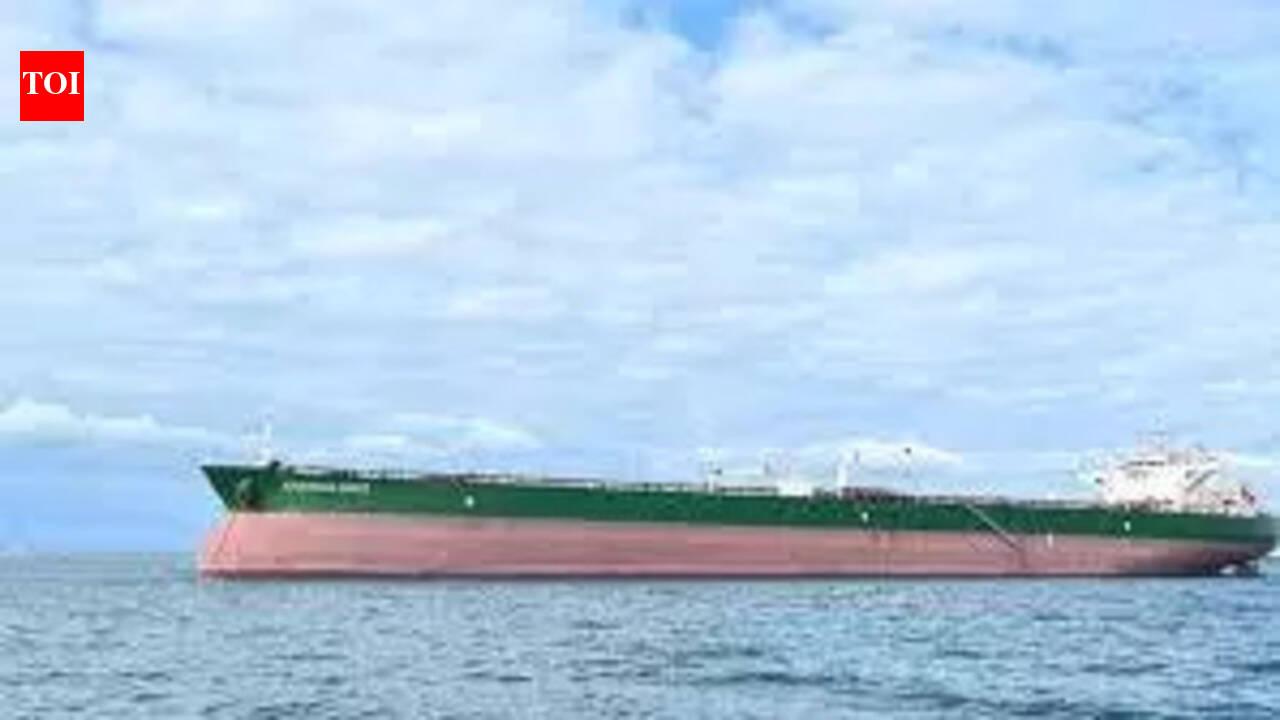
This standoff has begun to affect global markets. Oil prices have surged, stock markets have shown volatility, and shipping through the Strait of Hormuz, a route through which nearly one-fifth of the world’s oil passes, has slowed down significantly. Even before any direct large-scale confrontation, the economic ripple effects are clearly visible.
How the war began and why it matters globally
The current crisis began on 28th February, when the United States and Israel launched coordinated strikes on Iran after weeks of tension and military buildup. The attacks targeted key military sites and leadership figures, including Iran’s Supreme Leader Ayatollah Ali Khamenei, who was killed in the strikes. His son, Mojtaba Khamenei, was later appointed as his successor.
Iran retaliated immediately, striking the military bases of the United States. At the same time, Israel escalated the attacks in Lebanon when the Lebanese militant group Hezbollah started firing rockets in support of Iran. This military strike started as a retaliatory action, but it seems the crisis is escalating into a full-blown regional crisis.
The crisis is also being felt beyond the military action. The closure of the Strait of Hormuz is affecting the world. This crisis has resulted in the release of oil from the International Energy Agency’s emergency oil reserves. This crisis is being felt even in nations that are far from the crisis area.
LPG shortage concerns and panic buying
In India, one of the most immediate concerns has been the disruption in LPG supplies. Since a large portion of India’s LPG imports passes through the Strait of Hormuz, any instability in the region directly affects domestic availability.
In the last few days, people from cities such as Delhi, Chennai, and Bengaluru have been complaining about the delay in the delivery of LPG cylinders. Long lines of people waiting outside the centres to collect their LPG cylinders and uncertainty over the timing of the refill have become the order of the day. This has led many households to look for alternatives.
One of the greatest changes is the sudden surge in the demand for induction stoves or electric cooktops. “We have seen a four times spike in the average weekly sales of induction cooktops,” said Rajendra Gandhi of Stovekraft. “Sales have increased by 300%… There is clear panic buying,” said another retailer.
Iran War Strangles LPG Supplies to India, Triggering Surge in Induction Stove Demand With LPG shipments stalled due to Strait of Hormuz disruptions, households and restaurants rush to electric alternatives as cooking gas shortages bite #WashingtonEye pic.twitter.com/mcJgdqsFT5— Washington Eye (@washington_EY) March 19, 2026
Restaurants and small food businesses have also been impacted as they have either closed shop or scaled down their businesses due to the irregular supply of LPG cylinders. As Kumar Rajagopalan from the Retailers Association of India pointed out, a prolonged shortage “could lead to the non-availability of food for millions” who depend on such services daily.
However, it is important to note that this situation is still being managed, and authorities have repeatedly urged people not to panic.
Black marketing and rising prices
Whenever supply becomes uncertain, the risk of black marketing increases. Recent surveys show that the LPG situation is already showing early signs of this.
In a survey conducted by LocalCircles, it was revealed that 68% of households experienced delays in the supply of LPG. Around 20% of households also confessed to having bought LPG from the black market. Cylinders were being sold at as high as ₹6,500.
Raids across the country yield cylinders hoarded away. Araria, Bihar: 13Tamil Nadu: 398Jhansi: 542Yadgir: 46Chhatarpur, Cuttack…it goes on.On hidden cam, dealers admit giving domestic cylinder for 1600. Even commercial cylinders available for 2400pic.twitter.com/eJyj3qet7f— Padmaja Joshi (@PadmajaJoshi) March 14, 2026
The report also highlighted how “supply shortages and panic buying have created opportunities for illegal sellers to charge exorbitant prices.” Problems such as fake booking messages and technical issues also exist, making the situation worse.
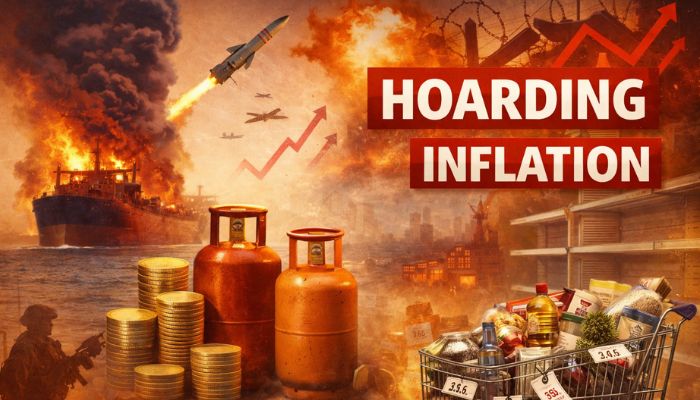
Inflation starts creeping in when goods and products start being sold at a premium in the black market. When essential goods and products are sold at a premium, it is bound to create a ripple effect in the market.
What is Hoarding?
In such situations, one key issue that often emerges is hoarding. Simply put, hoarding is when individuals or traders buy large quantities of essential goods and store them, not for immediate use, but to sell later at higher prices when supply becomes scarce.
The Supreme Court, in the Kamla Prasad case, explained hoarding as secretly accumulating goods to create artificial scarcity. This practice not only disrupts supply but also puts ordinary consumers at a disadvantage.
This is an act of creating an illegitimate monopoly over the market and taking undue advantage of people who are helpless and have no other option but to purchase the commodity from the hoarder. Hoarding and Black marketing are interrelated as the persons involved in hoarding purchase large quantity of basic or essential goods and sell it in the black market at extremely high prices when goods are in high demand.
Lessons from COVID-19 Pandemic
India has already seen how damaging hoarding can be during the COVID-19 pandemic. During the second wave, there was a severe shortage of oxygen cylinders, hospital beds, and essential medicines like Remdesivir.
In many cases, people were forced to buy these life-saving items at extremely high prices. Reports showed that oxygen cylinders were sold at several times their actual cost, and some families paid tens of thousands of rupees just to arrange treatment for their loved ones.
There were also shocking instances of fake medicines being sold. Authorities later uncovered rackets where empty vials were filled with fake substances and sold as genuine drugs.
At the same time, many organisations and volunteers stepped in to help. Groups like Hemkunt Foundation and Khalsa Aid provided free oxygen and medical support, showing that while some exploited the crisis, others worked selflessly to help.
Globally, similar patterns were seen. Panic buying of toilet paper became symbolic of the early pandemic days. Masks and sanitisers disappeared from shelves and reappeared at inflated prices.
Hong Kong during the SARS outbreak
The SARS outbreak of 2003, though more limited geographically, left a deep impact on Hong Kong. The virus infected nearly 2,000 people in the city and caused widespread fear. N95 masks are typically used on construction sites, but they were commonly worn by Hongkongers during the 2003 outbreak of severe acute respiratory syndrome (SARS).
SARS hit Hong Kong hard, killing around 300 in the city out of over 700 deaths worldwide. The crisis also battered the local economy, pushing unemployment to arecord high and sendingproperty prices, some of the most expensive in the world, plummeting.
Even before cases surged during COVID-19, people began stockpiling masks, especially N95 respirators. These became difficult to find and increasingly expensive. Public spaces saw almost everyone wearing masks, reflecting both fear and preparedness.
The situation was shaped by past experience. Residents remembered the impact of SARS and reacted quickly, sometimes even before authorities issued warnings. While this helped in containment, it also led to temporary shortages and increased demand for essential protective gear.
Hoarding during the Russia-Ukraine War
Another recent example comes from the Russia-Ukraine war, which began with the annexation of Crimea in 2014 and the invasion started on 24th February, 2022 as part of a special military operation. Russia has occupied large areas in the east and south of Ukraine since then. The conflict has seen large-scale casualties in both countries and led to the largest refugee crisis on the continent since the Second World War.
As the war disrupted global supply chains, especially for wheat and sunflower oil, people in several European countries began stockpiling food items. In Italy, supermarkets saw a surge in purchases of pasta and flour. Pharmacies in Norway reported running out of iodine due to fears linked to nuclear risks, while supermarkets in several countries saw a spike in panic buying.
Prices of basic food items increased as supply chains were disrupted. Countries dependent on imports from the region faced greater challenges. However, not all regions experienced panic to the same extent, showing that such behaviour often depends on perception and local conditions.
A report by State Bank of India (SBI) economists showed that the conflict between Russia and Ukraine has impacted certain high-frequency indicators like financial markets, exchange rate and crude prices in the short term for India.
Although the shortages were not uniform everywhere, the fear of disruption was enough to change consumer behaviour and push prices upward.
Profiting from crisis: A recurring pattern
One disturbing trend that repeats across crises is how some individuals try to profit from difficult situations. Whether it is war, a pandemic, or a natural disaster, there are always cases where essential goods are hoarded and sold at inflated prices.
In India, several arrests were made during the COVID-19 crisis for stockpiling oxygen concentrators and selling them illegally. In the national capital alone, Delhi Police registered over 220 cases and arrested more than 140 people for hoarding and black-marketing COVID-19 medicines, including Remdesivir injections, during the outbreak. The Pandemic was seen as a money-minting opportunity in Delhi. Similar cases are now being reported in the context of LPG shortages.
These actions not only worsen the crisis but also increase inflation. When essential goods become expensive, it affects everything from household budgets to business costs, eventually slowing down the overall economy.
Government response and preventive measures
The Government of India has initiated several measures to control the situation. The Ministry of Petroleum and Natural Gas has strengthened the enforcement of the regulations.
More than 12,000 raids have been conducted, resulting in the seizure of over 15,000 LPG cylinders. Surprise inspections have also been conducted. The government’s priority is “ensuring uninterrupted LPG supply.” It has also advised people not to panic. , Alternative arrangements like induction cooking and PNG have also been suggested.
India cracks down on LPG hoarding amid West Asia tensions. Over 12,000 raids conducted nationwide, with 15,000+ cylinders seized to curb black marketing. Govt assures stable supply and urges citizens to avoid panic buying. pic.twitter.com/wpWT7SRxYq— The News Drill (@thenewsdrill) March 17, 2026
Legal provisions have also been made. The Essential Commodities Act of 1955 provides the government the authority to control the prices of essential commodities. Similarly, the Prevention of Black Marketing and Maintenance of Supplies of Essential Commodities Act of 1980 provides the government with the authority to take stringent action, including detention, against people who indulge in black marketing.
During the COVID-19 pandemic, the same act was used. Similarly, the Drugs and Cosmetics Act of 1940 was enacted with the intention of regulating the import, manufacture, distribution, and sale of drugs and cosmetics. Courts also stepped in, directing authorities to ensure fair pricing and availability of medical supplies.
Conclusion
Crises like wars, pandemics, and natural disasters often expose weaknesses in supply chains and human behaviour. While disruptions are sometimes unavoidable, panic buying, hoarding, and inflation make the situation worse.
The ongoing crisis in West Asia reminds us of the interlinked nature of our economy. Disruptions in one region can impact life in another.
The solution lies in a well-balanced response to the crisis, effective government interventions, supply chain efficiency, and responsible citizen behaviour. Avoiding panic buying and seeking authentic information can help us avert shortages.
While history indicates a higher probability of hoarding and inflation in times of crisis, it also indicates that with timely interventions and cooperation from people, we can keep things under control.