VGRC, maritime jobs and multi-crore investments: How the Gujarat govt is linking the state’s vast coastline with the Blue Economy
Gujarat has long been regarded as India’s industrial engine. However, this identity is no longer confined to land-based development alone. The Gujarat government is now actively linking the state’s vast coastline with the blue economy. A recent updated assessment carried out using modern mapping technologies has revealed that Gujarat’s coastline is far more extensive than previously recorded. This change is not due to any “rise in sea levels” but the result of precise technical measurement, and it opens up a new gateway for economic growth, investment, and employment through the blue economy. Against this backdrop, the government has presented a roadmap at the Vibrant Gujarat Regional Conference (VGRC), outlining how it plans to work with the private sector to boost investment in the maritime economy and convert coastal potential into tangible development. Earlier, Gujarat’s coastline was measured almost like a straight line, leaving many coastal areas unaccounted for and resulting in imprecise assessments. Recent high-end mapping, however, has shown that India, and Gujarat in particular, has far greater potential to strengthen its maritime economy, as the state’s actual coastline is significantly longer. Why is the new assessment of Gujarat’s coastline important? For decades, data on India’s coastline relied on limited resources and outdated survey methods. Advanced mapping tools such as satellite imagery, GIS-based analysis, and high-resolution data have now provided a far more detailed picture of coastal geography. As a result, Gujarat’s coastline, earlier estimated at around 1,600 km, is now assessed to be over 2,340 km. This is not just a numerical revision; it reflects the true scale of Gujarat’s maritime potential, which can now serve as a foundation for policymaking, infrastructure planning, and investment strategies. Expanded coastline measurement goes beyond redrawing lines on a map—it enlarges the scope for coastal resources, marine biodiversity, fisheries, port-led trade, logistics corridors, and coastal industrial clusters. Simply put, Gujarat’s “maritime India” is now larger and far more promising than earlier believed. The blue economy: From the sea to prosperity The blue economy is not a fashionable buzzword. It means achieving economic growth, generating employment, and maintaining environmental balance through the sustainable use of marine resources. It spans a wide ecosystem, from ports and shipping to fisheries, marine tourism, coastal infrastructure, marine technology, and logistics. At the policy level, the blue economy is being treated as a strategic priority by the Government of India, given the country’s maritime location, long coastline, and presence along global trade routes. Gujarat holds special significance in this vision because it already hosts some of India’s most active industrial zones. With the new mapping revealing expanded coastal capacity, the prospects of port-led and sea-led growth have become even stronger. Gujarat is now well positioned to lead the next phase of “sea-led growth” in India. How the government is linking the expanded coastline with the blue economy One of the most visible examples of policy and investment momentum around the blue economy is the Vibrant Gujarat Regional Conference (VGRC) organised for the Saurashtra–Kutch region. Held on 11–12 January 2026 at Marwadi University in Rajkot and inaugurated by Prime Minister Narendra Modi, the conference focused on industrial and economic development across 12 districts. Key sectors included ports and logistics, fisheries, ceramics, engineering, and other industries linked to the maritime economy. VGRC was designed as a regional platform to connect the Vibrant Gujarat model with local development, translating investment commitments into on-ground opportunities. It was organised under the state government’s official framework aligned with the vision of Viksit Bharat 2047. VGRC: A platform connecting policy, industry, and investment The Vibrant Gujarat Regional Conference is more than a one-off event. It is part of a broader model where the government brings together investors, industry leaders, experts, and regional strengths to create a practical development roadmap. Reports of a large number of MoUs signed during the recent VGRC underline the state government’s strategy of fast-tracking regional investments. In this context, the discussion on the blue economy is particularly important. The revised assessment of Gujarat’s coastline is pushing the state toward a new maritime development plan, where public–private partnerships can drive investment in ports, logistics, and fisheries, delivering direct benefits to millions of people. MoUs and investment scale During the two-day conference, MoUs were signed for a total of 5,492 projects, with proposed investments of approximately ₹5.78 lakh crore. This investment has the potential to become a major engine for em
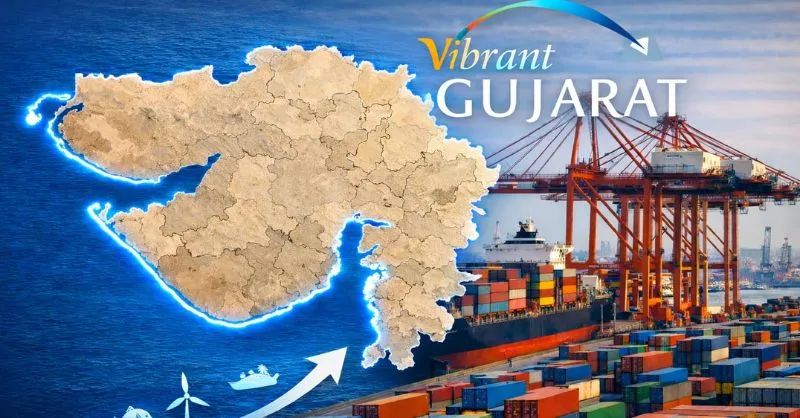

Gujarat has long been regarded as India’s industrial engine. However, this identity is no longer confined to land-based development alone. The Gujarat government is now actively linking the state’s vast coastline with the blue economy. A recent updated assessment carried out using modern mapping technologies has revealed that Gujarat’s coastline is far more extensive than previously recorded. This change is not due to any “rise in sea levels” but the result of precise technical measurement, and it opens up a new gateway for economic growth, investment, and employment through the blue economy.
Against this backdrop, the government has presented a roadmap at the Vibrant Gujarat Regional Conference (VGRC), outlining how it plans to work with the private sector to boost investment in the maritime economy and convert coastal potential into tangible development.
Earlier, Gujarat’s coastline was measured almost like a straight line, leaving many coastal areas unaccounted for and resulting in imprecise assessments. Recent high-end mapping, however, has shown that India, and Gujarat in particular, has far greater potential to strengthen its maritime economy, as the state’s actual coastline is significantly longer.
Why is the new assessment of Gujarat’s coastline important?
For decades, data on India’s coastline relied on limited resources and outdated survey methods. Advanced mapping tools such as satellite imagery, GIS-based analysis, and high-resolution data have now provided a far more detailed picture of coastal geography. As a result, Gujarat’s coastline, earlier estimated at around 1,600 km, is now assessed to be over 2,340 km.
This is not just a numerical revision; it reflects the true scale of Gujarat’s maritime potential, which can now serve as a foundation for policymaking, infrastructure planning, and investment strategies. Expanded coastline measurement goes beyond redrawing lines on a map—it enlarges the scope for coastal resources, marine biodiversity, fisheries, port-led trade, logistics corridors, and coastal industrial clusters. Simply put, Gujarat’s “maritime India” is now larger and far more promising than earlier believed.
The blue economy: From the sea to prosperity
The blue economy is not a fashionable buzzword. It means achieving economic growth, generating employment, and maintaining environmental balance through the sustainable use of marine resources. It spans a wide ecosystem, from ports and shipping to fisheries, marine tourism, coastal infrastructure, marine technology, and logistics. At the policy level, the blue economy is being treated as a strategic priority by the Government of India, given the country’s maritime location, long coastline, and presence along global trade routes.
Gujarat holds special significance in this vision because it already hosts some of India’s most active industrial zones. With the new mapping revealing expanded coastal capacity, the prospects of port-led and sea-led growth have become even stronger. Gujarat is now well positioned to lead the next phase of “sea-led growth” in India.
How the government is linking the expanded coastline with the blue economy
One of the most visible examples of policy and investment momentum around the blue economy is the Vibrant Gujarat Regional Conference (VGRC) organised for the Saurashtra–Kutch region. Held on 11–12 January 2026 at Marwadi University in Rajkot and inaugurated by Prime Minister Narendra Modi, the conference focused on industrial and economic development across 12 districts. Key sectors included ports and logistics, fisheries, ceramics, engineering, and other industries linked to the maritime economy.
VGRC was designed as a regional platform to connect the Vibrant Gujarat model with local development, translating investment commitments into on-ground opportunities. It was organised under the state government’s official framework aligned with the vision of Viksit Bharat 2047.
VGRC: A platform connecting policy, industry, and investment
The Vibrant Gujarat Regional Conference is more than a one-off event. It is part of a broader model where the government brings together investors, industry leaders, experts, and regional strengths to create a practical development roadmap. Reports of a large number of MoUs signed during the recent VGRC underline the state government’s strategy of fast-tracking regional investments.
In this context, the discussion on the blue economy is particularly important. The revised assessment of Gujarat’s coastline is pushing the state toward a new maritime development plan, where public–private partnerships can drive investment in ports, logistics, and fisheries, delivering direct benefits to millions of people.
MoUs and investment scale
During the two-day conference, MoUs were signed for a total of 5,492 projects, with proposed investments of approximately ₹5.78 lakh crore. This investment has the potential to become a major engine for employment, infrastructure creation, and regional development.
Key regional investments include:
- Kutch district: MoUs worth ₹1.25 lakh crore
- Bhavnagar: proposed investment of ₹60,000 crore
- Amreli: investment agreements worth ₹36,000 crore
- Rajkot: ₹23,000 crore across 2,921 projects
{Thread Alert}
— Harsh Sanghavi (@sanghaviharsh) January 13, 2026
Vibrant Gujarat Regional Conference (Kutch & Saurashtra) turned vision into action,5,492 MoUs worth ₹5.78 lakh crore,
From MSMEs to global markets, Gujarat is…
These figures clearly show that Kutch, home to the longest coastline, has attracted the largest share of investment, accounting for over half of the total MoU value. This is particularly significant from a blue economy perspective, as it directly links maritime potential with capital inflows.
Role of the maritime sector and importance of the blue economy
Gujarat has India’s longest coastline, with the Saurashtra–Kutch belt holding immense geographical importance. This vast coastal stretch along the Arabian Sea and the Gulf of Kutch naturally supports ports, shipping, logistics, fisheries, and marine industries.
The blue economy focuses on sustainable, structured, and long-term growth of all sea-linked economic activities, shipping, ports, fisheries, marine tourism, marine technology, and logistics. Gujarat’s expanded coastline significantly strengthens this ecosystem. The government aims to convert this opportunity into investment and employment, ensuring direct economic participation for local communities.
Role of the private sector
One of the defining features of the Gujarat model has been close collaboration between the government and the private sector. This partnership explains why Gujarat’s pace of industrialisation, infrastructure creation, and job generation stands out. The same model is critical for the blue economy, where maritime infrastructure and logistics require large capital investment, technical expertise, and long-term operations.
During VGRC, one of the most discussed investment commitments came from the Adani Group, which announced major investments in the Kutch region over the coming years. With an established presence in ports and logistics, and with the Mundra–Kutch belt already central to India’s maritime economy, these commitments align directly with Gujarat’s sea-led development roadmap.
Major private players and investments
- Adani Group: Karan Adani announced an investment of ₹1.5 lakh crore in Kutch over the next five years, focused on port infrastructure, logistics zones, renewable energy (including the 37 GW Khavda renewable park), and doubling port capacity. This is expected to strengthen Gujarat’s position as a domestic and global logistics hub.
- Other corporate investments: Essar Future Energy signed MoUs worth ₹5,100 crore for biofuels and clean energy solutions, with spillover benefits for maritime logistics and energy networks.
A significant share of these investments will go into marine industries, port-linked logistics, energy networks, and infrastructure, generating employment and skill development opportunities for local populations.
Importantly, VGRC was not dominated by a single large corporate player. MoUs linked to fisheries and marine supply chains also indicate growing participation from MSMEs, showing that the blue economy is expanding beyond mega projects into multi-layered economic activity.
Participation across industries
Companies participating in VGRC represented sectors beyond ports and logistics, including electronics, energy, engineering, medical-industrial clusters, petrochemicals, and agri-processing. These sectors indirectly support the blue economy through logistics expansion, supply-chain strengthening, and export-driven manufacturing, creating new opportunities for coastal communities.
What are the benefits?
The real value of investments and MoUs lies in how far they benefit ordinary citizens. The blue economy offers strong potential in this regard, as ports, logistics, fisheries, processing units, cold chains, marine tourism, and transport generate both direct and indirect employment.
Coastal districts often face unique challenges, rich in natural resources but limited in job opportunities. By developing coastal infrastructure, fisheries processing, export-oriented units, and port-linked industrial hubs in partnership with the private sector, benefits will extend beyond large corporations. Local youth will gain skill-based jobs, fishing communities will see stronger value chains, and new markets will emerge in coastal regions.
The expanded coastline data also strengthens coastal security, disaster management, environmental planning, and administrative efficiency. This means development that is not only economic, but also strategic and sustainable.
Gujarat’s next growth chapter is being written through the sea
The new mapping of Gujarat’s coastline signals that the state now has a clearer and more comprehensive understanding of its maritime resources. The VGRC in Rajkot has reinforced that the government is no longer viewing maritime potential as a theoretical advantage, but as a pathway to real investment, private participation, and local employment. Commitments worth ₹5.78 lakh crore across 5,492 projects underscore this direction.
With priority being given to regions like Kutch, home to India’s longest coastline and major ports such as Mundra, the maritime economy and logistics are poised to become the next major engines of Gujarat’s growth model. With both mega infrastructure projects and MSME participation, Gujarat’s blue economy is taking shape as a multi-tiered development model.
If this roadmap translates on the ground at Gujarat’s traditional pace, the state will not only remain India’s industrial engine but also emerge as the core of India’s maritime economy.