US-Iran ceasefire: Read how Trump acknowledged Araghchi’s 10-point plan, talks to start in Pakistan as Iran insists on full control over Strait of Hormuz
In a matter of a few hours, the US President Donald Trump went from prophesying the ‘death’ of a “whole civilisation” in Iran to accepting a humiliating two-week ceasefire. On 7th April 2026, Trump published a Truth Social post, wherein he announced haltig the US forces out to ‘destroy’ Iran and suspending military attacks on Iran for two-weeks as Iranian regime agreed to a “complete, immediate, and safe opening” of the Strait of Hormuz, the vital global oil chokepoint that the Iranian regime had blockaded for all except a few countries like India, Russia, and China. Donald Trump announces ceasefire, accepts Iran’s 10-point proposal as a “workable basis for negotiation”: US President boasts victory as Iran agrees to open the Strait of Hormuz, which was open before America’s attack Announcing the ceasefire agreement on Truth Social after Iran’s ‘deadline’ loomed, Trump said, “Based on conversations with Prime Minister Shehbaz Sharif and Field Marshal Asim Munir, of Pakistan, and wherein they requested that I hold off the destructive force being sent tonight to Iran, and subject to the Islamic Republic of Iran agreeing to the COMPLETE, IMMEDIATE, and SAFE OPENING of the Strait of Hormuz, I agree to suspend the bombing and attack of Iran for a period of two weeks. This will be a double sided CEASEFIRE!” While the American did not explicitly use terms like “victory”, the tone of Trump’s post indicates that Iran’s agreement to open the Strait of Hormuz as a massive win. Basically, Trump told the world that it is a US victory because Iran has agreed to open the Strait, as if the whole point of the war was opening the Strait of Hormuz, or else he would’ve bombed Iran into oblivion. However, the same Strait was open before the US and Israel decided to launch airstrikes against Iran over the latter’s nuclear ambitions and a perceived existential threat to Israel. In a classic Trump-style false bravado and chest-thumping, the US President boasted, “The reason for doing so is that we have already met and exceeded all Military objectives, and are very far along with a definitive Agreement concerning Longterm PEACE with Iran, and PEACE in the Middle East.” Trump further informed about the reception of a 10-point plan from Iran. He called the proposal a “workable basis on which to negotiate”. “We received a 10 point proposal from Iran, and believe it is a workable basis on which to negotiate. Almost all of the various points of past contention have been agreed to between the United States and Iran, but a two week period will allow the Agreement to be finalized and consummated,” Trump posted, adding that he was honoured to represent the US as President, and the Gulf countries affected by the war, in bringing the “problem close to resolution.” Trump reposts Iran Foreign Minister’s statement and acknowledges the 10-point plan: US’s rhetoric boasts victory, actions demonstrate capitulation Soon after President Trump announced the Iran-US ceasefire on social media, the Foreign Minister of Iran, Seyed Abbas Araghchi, issued a statement confirming the understanding arrived at between the two countries. In no time, Trump shared the statement on Truth Social and the US administration’s official handles also posted it. What stood out here was both Araghchi’s tone and Trump’s acknowledgement of Iran’s 10-point proposal. While Trump consistently threatened to decimate Iran, Araghchi called America’s 15-point proposal-based push for negotiations a “request”. “In response to the brotherly request of PM Sharif in his tweet, and considering the request by the U.S. for negotiations based on its 15-point proposal as well as announcement by POTUS about acceptance of the general framework of Iran’s 10-point proposal as a basis for negotiations, I hereby declare on behalf of Iran’s Supreme National Security Council: If attacks against Iran are halted, our Powerful Armed Forces will cease their defensive operations. For a period of two weeks, safe passage through the Strait of Hormuz will be possible via coordination with Iran’s Armed Forces and with due consideration of technical limitations,” Araghchi’s statement reads. Notably, the US had pushed a 15-point framework for a temporary ceasefire, including the reopening of the Strait of Hormuz. Iran, however, rejected this as insufficient and stressed a permanent end to the war rather than a pause. The Iranian regime proposed its own 10-point plan, which was delivered via Pakistan. Statement on behalf of the Supreme National Security Council of the Islamic Republic of Iran: pic.twitter.com/cEtBNCLnWT— Seyed Abbas Araghchi (@araghchi) April 7, 2026 It is interesting to note that Trump had on Monday called the Iranian proposal a “significant step” but “not good enough”; however, as his self-announced deadline to unalive the Iranian “civilisation” neared, Trump turned on his TACO mode and declared the same “not good enough” plan as a “workable
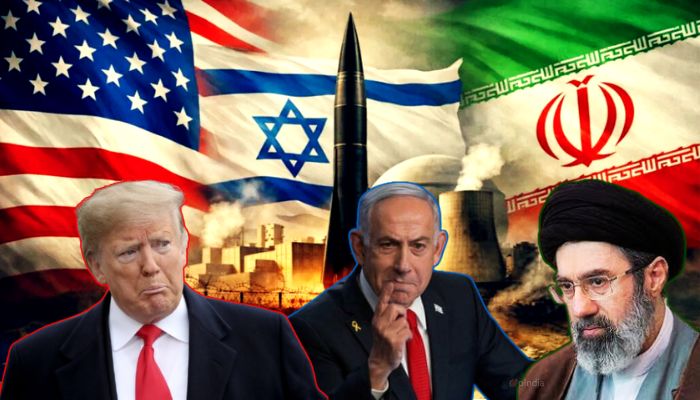
In a matter of a few hours, the US President Donald Trump went from prophesying the ‘death’ of a “whole civilisation” in Iran to accepting a humiliating two-week ceasefire. On 7th April 2026, Trump published a Truth Social post, wherein he announced haltig the US forces out to ‘destroy’ Iran and suspending military attacks on Iran for two-weeks as Iranian regime agreed to a “complete, immediate, and safe opening” of the Strait of Hormuz, the vital global oil chokepoint that the Iranian regime had blockaded for all except a few countries like India, Russia, and China.
Donald Trump announces ceasefire, accepts Iran’s 10-point proposal as a “workable basis for negotiation”: US President boasts victory as Iran agrees to open the Strait of Hormuz, which was open before America’s attack
Announcing the ceasefire agreement on Truth Social after Iran’s ‘deadline’ loomed, Trump said, “Based on conversations with Prime Minister Shehbaz Sharif and Field Marshal Asim Munir, of Pakistan, and wherein they requested that I hold off the destructive force being sent tonight to Iran, and subject to the Islamic Republic of Iran agreeing to the COMPLETE, IMMEDIATE, and SAFE OPENING of the Strait of Hormuz, I agree to suspend the bombing and attack of Iran for a period of two weeks. This will be a double sided CEASEFIRE!”
While the American did not explicitly use terms like “victory”, the tone of Trump’s post indicates that Iran’s agreement to open the Strait of Hormuz as a massive win. Basically, Trump told the world that it is a US victory because Iran has agreed to open the Strait, as if the whole point of the war was opening the Strait of Hormuz, or else he would’ve bombed Iran into oblivion.
However, the same Strait was open before the US and Israel decided to launch airstrikes against Iran over the latter’s nuclear ambitions and a perceived existential threat to Israel.
In a classic Trump-style false bravado and chest-thumping, the US President boasted, “The reason for doing so is that we have already met and exceeded all Military objectives, and are very far along with a definitive Agreement concerning Longterm PEACE with Iran, and PEACE in the Middle East.”
Trump further informed about the reception of a 10-point plan from Iran. He called the proposal a “workable basis on which to negotiate”.
“We received a 10 point proposal from Iran, and believe it is a workable basis on which to negotiate. Almost all of the various points of past contention have been agreed to between the United States and Iran, but a two week period will allow the Agreement to be finalized and consummated,” Trump posted, adding that he was honoured to represent the US as President, and the Gulf countries affected by the war, in bringing the “problem close to resolution.”
Trump reposts Iran Foreign Minister’s statement and acknowledges the 10-point plan: US’s rhetoric boasts victory, actions demonstrate capitulation
Soon after President Trump announced the Iran-US ceasefire on social media, the Foreign Minister of Iran, Seyed Abbas Araghchi, issued a statement confirming the understanding arrived at between the two countries. In no time, Trump shared the statement on Truth Social and the US administration’s official handles also posted it.
What stood out here was both Araghchi’s tone and Trump’s acknowledgement of Iran’s 10-point proposal. While Trump consistently threatened to decimate Iran, Araghchi called America’s 15-point proposal-based push for negotiations a “request”.
“In response to the brotherly request of PM Sharif in his tweet, and considering the request by the U.S. for negotiations based on its 15-point proposal as well as announcement by POTUS about acceptance of the general framework of Iran’s 10-point proposal as a basis for negotiations, I hereby declare on behalf of Iran’s Supreme National Security Council: If attacks against Iran are halted, our Powerful Armed Forces will cease their defensive operations. For a period of two weeks, safe passage through the Strait of Hormuz will be possible via coordination with Iran’s Armed Forces and with due consideration of technical limitations,” Araghchi’s statement reads.
Notably, the US had pushed a 15-point framework for a temporary ceasefire, including the reopening of the Strait of Hormuz. Iran, however, rejected this as insufficient and stressed a permanent end to the war rather than a pause. The Iranian regime proposed its own 10-point plan, which was delivered via Pakistan.
Statement on behalf of the Supreme National Security Council of the Islamic Republic of Iran: pic.twitter.com/cEtBNCLnWT— Seyed Abbas Araghchi (@araghchi) April 7, 2026
It is interesting to note that Trump had on Monday called the Iranian proposal a “significant step” but “not good enough”; however, as his self-announced deadline to unalive the Iranian “civilisation” neared, Trump turned on his TACO mode and declared the same “not good enough” plan as a “workable basis for negotiations”.
Iran’s 10-point plan and Trump’s acceptance of it, even as a “workable basis”, amounts to America’s defeat and betrayal of Israel
The Iranian regime has proposed a 10-point plan to achieve a permanent resolution of the prevailing dispute and war. It is essentially maximalist and focuses on security guarantees, regional dominance, economic relief and most importantly, nuclear legitimacy. The 10 points of Iran’s proposal are:
A fundamental and binding US commitment to ensure no further acts of aggression against Iran.
Continued Iranian control over the Strait of Hormuz with a secure transit protocol under Iran’s armed forces’ coordination.
Acceptance of Iran’s uranium enrichment rights for its nuclear program.
Lifting of all primary sanctions.
Lifting of all secondary sanctions.
Termination of all resolutions targeting Iran by the UN Security Council.
Termination of resolutions by the International Atomic Energy Agency’s (IAEA) Board of Governors.
Full payment of damages to Iran for war losses.
Withdrawal of US combat forces from the bases and deployment points in the region.
Cessation of hostilities across all fronts, including Israel’s conflict with Hezbollah in Lebanon as well as attacks on “Axis of Resistance” allies.
In addition, Iran has also demanded the release of all its frozen assets abroad and a UNSC resolution to may any final peace deal binding. While Iran has consistently presented its 10-point proposal as the negotiation framework, now Trump has also acknowledged and accepted it as the same.
The criticisms of the Iranian regime’s past actions aside, the West Asian nation has managed to secure a major narrative victory in the immediate phase, though not without enduring losses of lives and resources.
From social media narratives to limited diplomatic backchannel engagements with the US, Iran maintained tight control on the agenda. Iran showed absolutely no urgency to secure a ceasefire, and perhaps, taking a page from India’s playbook of letting the bully bark until it gets tired and frustrated with your dignified silence while you speak of your own interests and core stance at the time of your choosing. India’s Modi government demonstrated this courage, dignity and diplomatic acumen last year when Trump launched a tariff tirade to ‘punish’ India for buying Russian oil.
Now the times have taken such a turn that Washington itself has insisted that New Delhi purchase Russian oil to achieve global energy supply stability, which is similar to the status of the Strait of Hormuz; India was already doing so before Trump launched his tariff tirade.
Coming back to Iran-US ceasefire terms, Donald Trump’s ultimatum was neutralised without Iran making any immediate and pertinently humiliating concessions beyond a temporary and conditional reopening of the Strait of Hormuz, with Iran retaining military coordination over the strait. Best part from Iran’s perspective? It can theoretically re-shut the strait if the talks with the US set to be held in Pakistan’s Islamabad fail.
In its 10-point proposal, Iran has essentially sought a reversal of all its historical grievances and managed to make them central to peace talks now. From full sanctions relief, nuclear enrichment acceptance, US troop withdrawal, war compensation, legitimising its regional posture to seeking discontinuation of Israel’s offensive against Hezbollah in Lebanon, Iran momentarily made Trump accept these otherwise unacceptable terms, as the “workable basis for negotiations”.
From weaponising the Strait of Hormuz to keeping its Axis of Resistance in play as a bargaining chip, Iran played its cards right. It, however, should be remembered that the peace talks and a deal based on Iran’s 10-point proposal could still collapse.
Iran’s continuing uranium enrichment essentially means the country will become a nuclear-armed nation in the future. This is Israel’s red line and the core reason behind the Israel-US front launching an offensive against the West Asian country. American legitimising Iran’s nuclear ambitions would essentially amount to letting Iran pose an existential threat to Israel.
Israel has already expressed discontent over the Lebanon point in Iran’s 10-point proposal, going even to the extent of saying that Lebanon is not a part of the ceasefire agreement. In rhetoric, Israel has backed the Iran-US ceasefire agreement; however, in action, it will never allow Iran to continue Uranium enrichment even if the West Asian country promises enrichment only for civilian purposes.
For now, Tehran has the momentum. If the upcoming peace talks fall apart, this momentum can shift in favour of Israel, and the US and Iran can witness the resumption of Israel-US attacks. Time alone will tell what turn these talks will take, but one thing is certain. Trump has invited monumental embarrassment for himself throughout the conflict and caused irreparable damage to America’s prestige. From European allies refusing his importunate appeals to deploy warships to clear the Hormuz blockade, failure to subjugate Iran even after the elimination of Ayatollah Syed Ali Khamenei, to now accepting the unacceptable Iranian demands as a ‘workable basis’, Trump has lost the narrative and the game.