Union Budget 2026: Allocation for the Healthcare sector gets a hike of 10% as the central government aims to enhance access and affordability
Healthcare has received special attention under the Union Budget 2026 announced by Union Finance Minister Nirmala Sitharaman on Sunday (1st February) in the Parliament. The budget aims to strengthen access, affordability, mental health infrastructure and domestic capacity across the domestic and biopharma sectors. “To give a fillip to our commitment to mental health and trauma care, and to ease the financial burden of medical emergencies on families, particularly the poor and vulnerable, we are undertaking targeted interventions across institutions, infrastructure and workforce,” the Union Finance Minister said, presenting the budget. The healthcare allocation under the Union Budget increased by 10% compared to FY25. The Union Finance Minister allocated ₹1,06,530.42 crore to the Ministry of Health and Family Welfare, accompanied by the central government’s proposal of a scheme to support states in establishing five regional medical hubs, NIMHANS and others. Establishment of NIMHANS 2.0 One of the healthcare highlights of the budget is the decision to establish a national institute for mental healthcare in Ranchi, Jharkhand, called the National Institute of Mental Health and Neuro Sciences (NIMHANS 2.0). Sitharaman said that the institute will come up in North India as the region lacks a premier national mental health institution. The first NIMHANS was established in Bengaluru, Karnataka. “There are no national institutes for mental healthcare in North India. We will therefore set up a NIMHANS 2.0 and also upgrade National Mental Health Institutes in Ranchi and Tezpur as regional apex institutions,” she said, presenting her 9th consecutive budget. In addition to that, the budget provides a 50% expansion in emergency and trauma care capacity in district hospitals across the country. The move is aimed at reducing excessive expenditure during medical emergencies. Crucial drugs made more affordable As a measure to enhance the affordability of the healthcare system, the budget plans to make medicines for 17 types of cancer and seven rare diseases more affordable by expanding domestic biopharma manufacturing through the ₹10,000-crore Biopharma SHAKTI mission, and upgrading healthcare infrastructure. The Biopharma SHAKTI mission aims to promote domestic production of biologics and biosimilars and address non-communicable diseases like cancer and autoimmune disorders. Besides, medicines for 7 additional rare diseases have been included for customs duty exemption on personal imports of drugs, medicines and food for special medical purposes (FSMP). “To provide relief to patients, particularly those suffering from cancer, I propose to exempt basic customs duty on 17 drugs or medicines,” Sitharaman said. Traditional medicine and AYUSH institutions With enhanced emphasis on traditional medicine in the budget, the Union Finance Minister announced the establishment of three new All India Institute of Ayurveda institutions to meet the increasing global demand for Ayurvedic healthcare. Sitharaman highlighted the acceptance of Ayurveda across the world, particularly following the COVID-19 pandemic. She added that the exports of high-quality Ayurvedic products would boost the incomes of farmers through the cultivation of medicinal herbs. The Union Finance Minister also proposed to upgrade AYUSH pharmacies, drug testing laboratories and the WHO Global Traditional Medicine Centre in Jamnagar to improve quality standards and availability of skilled personnel. Adding more caregivers to the healthcare system In a step towards creating employment opportunities and skill development in the healthcare sector, the budget envisions a large-scale expansion of allied health education. The existing institutions for allied health professionals (AHPs) will be upgraded, and new AHPs will be set up in the private as well as the government sectors. Moreover, the government plans to add 1 lakh allied health professionals over the next five years across disciplines such as optometry, radiology, anaesthesia, OT technology, applied psychology and behavioural health. Additionally, over the next five years, 1.5 lakh caregivers will be trained under the National Skills Qualification Framework (NSQF)-aligned programmes, focused on geriatric care, wellness, yoga and the operation of medical assistive devices. Long-term capacity building in the healthcare system The budget outlines the government’s long-term vision for the healthcare and biopharma sectors. It focuses on domestic manufacturing, advanced technology and capacity building. The Union Finance Minister noted that healthcare was no longer merely a social sector but a strategic pillar of economic growth. The government has increased healthcare spending over the past few years. The government earmarked ₹99,859 crore for the health sector in FY25, which was an upgrade of 10–11% from FY24. A large part of this amount was directed towards Ayushman Bhar
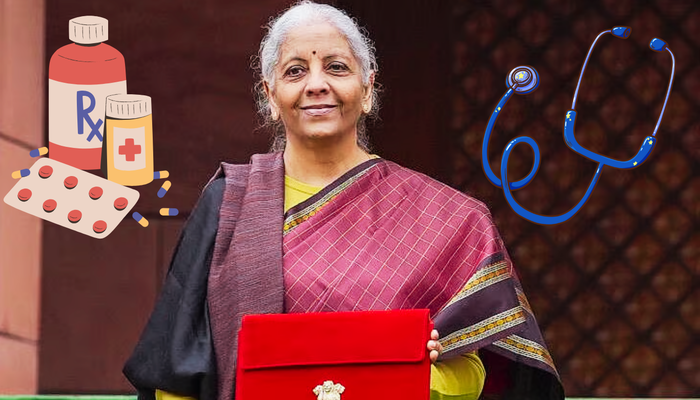

Healthcare has received special attention under the Union Budget 2026 announced by Union Finance Minister Nirmala Sitharaman on Sunday (1st February) in the Parliament. The budget aims to strengthen access, affordability, mental health infrastructure and domestic capacity across the domestic and biopharma sectors.
“To give a fillip to our commitment to mental health and trauma care, and to ease the financial burden of medical emergencies on families, particularly the poor and vulnerable, we are undertaking targeted interventions across institutions, infrastructure and workforce,” the Union Finance Minister said, presenting the budget.
The healthcare allocation under the Union Budget increased by 10% compared to FY25. The Union Finance Minister allocated ₹1,06,530.42 crore to the Ministry of Health and Family Welfare, accompanied by the central government’s proposal of a scheme to support states in establishing five regional medical hubs, NIMHANS and others.
Establishment of NIMHANS 2.0
One of the healthcare highlights of the budget is the decision to establish a national institute for mental healthcare in Ranchi, Jharkhand, called the National Institute of Mental Health and Neuro Sciences (NIMHANS 2.0). Sitharaman said that the institute will come up in North India as the region lacks a premier national mental health institution. The first NIMHANS was established in Bengaluru, Karnataka. “There are no national institutes for mental healthcare in North India. We will therefore set up a NIMHANS 2.0 and also upgrade National Mental Health Institutes in Ranchi and Tezpur as regional apex institutions,” she said, presenting her 9th consecutive budget.
In addition to that, the budget provides a 50% expansion in emergency and trauma care capacity in district hospitals across the country. The move is aimed at reducing excessive expenditure during medical emergencies.
Crucial drugs made more affordable
As a measure to enhance the affordability of the healthcare system, the budget plans to make medicines for 17 types of cancer and seven rare diseases more affordable by expanding domestic biopharma manufacturing through the ₹10,000-crore Biopharma SHAKTI mission, and upgrading healthcare infrastructure. The Biopharma SHAKTI mission aims to promote domestic production of biologics and biosimilars and address non-communicable diseases like cancer and autoimmune disorders.
Besides, medicines for 7 additional rare diseases have been included for customs duty exemption on personal imports of drugs, medicines and food for special medical purposes (FSMP). “To provide relief to patients, particularly those suffering from cancer, I propose to exempt basic customs duty on 17 drugs or medicines,” Sitharaman said.
Traditional medicine and AYUSH institutions
With enhanced emphasis on traditional medicine in the budget, the Union Finance Minister announced the establishment of three new All India Institute of Ayurveda institutions to meet the increasing global demand for Ayurvedic healthcare. Sitharaman highlighted the acceptance of Ayurveda across the world, particularly following the COVID-19 pandemic. She added that the exports of high-quality Ayurvedic products would boost the incomes of farmers through the cultivation of medicinal herbs. The Union Finance Minister also proposed to upgrade AYUSH pharmacies, drug testing laboratories and the WHO Global Traditional Medicine Centre in Jamnagar to improve quality standards and availability of skilled personnel.
Adding more caregivers to the healthcare system
In a step towards creating employment opportunities and skill development in the healthcare sector, the budget envisions a large-scale expansion of allied health education. The existing institutions for allied health professionals (AHPs) will be upgraded, and new AHPs will be set up in the private as well as the government sectors.
Moreover, the government plans to add 1 lakh allied health professionals over the next five years across disciplines such as optometry, radiology, anaesthesia, OT technology, applied psychology and behavioural health. Additionally, over the next five years, 1.5 lakh caregivers will be trained under the National Skills Qualification Framework (NSQF)-aligned programmes, focused on geriatric care, wellness, yoga and the operation of medical assistive devices.
Long-term capacity building in the healthcare system
The budget outlines the government’s long-term vision for the healthcare and biopharma sectors. It focuses on domestic manufacturing, advanced technology and capacity building. The Union Finance Minister noted that healthcare was no longer merely a social sector but a strategic pillar of economic growth.
The government has increased healthcare spending over the past few years. The government earmarked ₹99,859 crore for the health sector in FY25, which was an upgrade of 10–11% from FY24. A large part of this amount was directed towards Ayushman Bharat Pradhan Mantri Jan Arogya Yojana (PM-JAY). The allocation for PM-JAY increased to ₹9,406 crore in FY26 after the coverage for senior citizens, ASHA and Anganwadi workers, and gig workers was expanded. In addition to that, investment under the PM-Ayushman Bharat Health Infrastructure Mission (PM-ABHIM) also increased significantly.