The myth of ‘Bangla Birodhi’, propagated by TMC to tarnish the BJP: Read how the Modi govt has been honouring the legacy of Bengal and Bengalis
As Prime Minister Narendra Modi inaugurated the Rashtra Prerana Sthal in Lucknow on the 101st birth anniversary of former Prime Minister Atal Bihari Vajpayee, one image stood out with quiet force: the imposing statue of Dr Syama Prasad Mookerjee. For a party routinely caricatured as ‘Bangla Birodhi’, here was the Bharatiya Janata Party paying homage to a quintessential Bengali bhadralok, its ideological founder and, through him, to a lineage that shaped post-Independence India for over half a century. Dr Syama Prasad Mookerjee did not merely found the Bharatiya Jana Sangh; he identified, mentored, and politically nurtured two of independent India’s most consequential leaders, Pandit Deendayal Upadhyaya and Atal Bihari Vajpayee. Between them, these two men shaped national political discourse, organisation, and governance for decades. Vajpayee’s statesmanship and Upadhyaya’s integral humanism continue to define the ideological spine of the BJP. To dismiss this lineage as “anti-Bengal” is not just intellectually dishonest, it is historically absurd. Ironically, many of those who now shriek ‘Bangla Birodhi’ owe their political existence to the very tradition they vilify. Mamata Banerjee’s political survival after her exit from the Congress was made possible by Atal Bihari Vajpayee’s political generosity and the BJP’s strategic accommodation. Without that space, the Trinamool Congress may never have emerged as a viable alternative in Bengal. Gratitude, however, is a scarce virtue in politics, especially among those whose survival depends on rigid vote-bank arithmetic. Today, the Trinamool Congress resembles a regional clone of the Congress’s worst instincts, an uneasy coalition of appeasement politics, radical Left tendencies, and institutional hostility. If the Congress represents a pan-India “Maoist-Muslim League” political formulation, the TMC is its pocket edition, tailored to Bengal. Ideology has been replaced by expediency; governance by muscle; and constitutionalism by street power. It is worth restating a fundamental truth that both the Left Front and the TMC deliberately avoid: that there exists a Bengali Hindu homeland within India largely because of Dr Syama Prasad Mookerjee’s foresight. His principled opposition to the partition of Bengal and his insistence on safeguarding Hindu interests in the east ensured that West Bengal remained part of the Indian Union. Indian communists spent decades demonising him for this; the TMC maintains a calculated silence. Acknowledging Syama Prasad’s contribution would puncture the carefully cultivated narrative that nationalism and Bengal are incompatible. For over five decades, Bengal has been ruled by parties claiming to be uniquely “Bengal-centric”. The results are there for all to see: industrial flight, capital starvation, collapsing infrastructure, crumbling public healthcare, decaying schools, teacher shortages, infiltration, and alarming demographic shifts. Under the TMC, this decline has accelerated into systemic rot marked by grassroots corruption, political violence, social boycotts, and the silencing of dissent. Holding a different political opinion in many parts of Bengal now carries real social and physical risk. Travel across India and speak to probashi Bengalis from Delhi to Kashi to Gaya, and a recurring question emerges, often unprompted: “Whither lies salvation and liberation?” It is not rhetoric; it is despair. In Kolkata and the districts, shopkeepers, tea vendors, and small traders speak in hushed tones, fearful yet exhausted. The cup of misery is not just full it is spilling over. The Left championed insularity with ideological rigidity; the TMC has weaponised it with constitutional contempt. Mamata Banerjee’s repeated attacks on constitutional institutions, her abuse of central agencies, her routine casting of aspersions on the judiciary, her thuggish posturing towards the Election Commission, and her wilful non-compliance with Centre state norms reflect an alarming erosion of republican values. Even among opposition-ruled states, West Bengal stands out for this brazenness. The very phrase ‘Bangla Birodhi’ is a manufactured lexicon, alien to Bengal’s civilisational ethos. Bengal’s history is one of cultural synthesis, not parochial hostility. The Maharaja of Darbhanga, Rameswar Singh, a Maithili aristocrat, was among the greatest patrons of Bengali education and culture, donating generously to Calcutta University. Rao Jogindranarayan Roy of Lalgola, born in Ghazipur, became one of the most influential benefactors of the Bengali renaissance, supporting Bankim Chandra Chattopadhyay, Rabindranath Tagore, and Sarat Chandra Pandit. It was under his patronage that the discovery and publication of the Charyapada, pushing back the history of the Bengali language by a millennium, became possible. This syncretic, generous, confident Bengal is precisely what today’s ‘Bangla Birodhi’ peddlers want erased. Against this ba

As Prime Minister Narendra Modi inaugurated the Rashtra Prerana Sthal in Lucknow on the 101st birth anniversary of former Prime Minister Atal Bihari Vajpayee, one image stood out with quiet force: the imposing statue of Dr Syama Prasad Mookerjee.
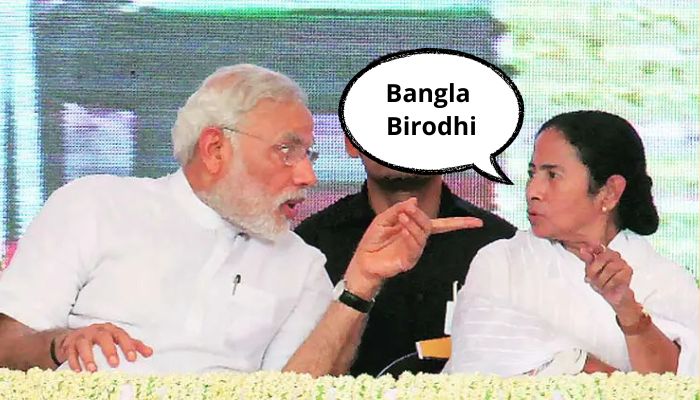
For a party routinely caricatured as ‘Bangla Birodhi’, here was the Bharatiya Janata Party paying homage to a quintessential Bengali bhadralok, its ideological founder and, through him, to a lineage that shaped post-Independence India for over half a century.
Dr Syama Prasad Mookerjee did not merely found the Bharatiya Jana Sangh; he identified, mentored, and politically nurtured two of independent India’s most consequential leaders, Pandit Deendayal Upadhyaya and Atal Bihari Vajpayee. Between them, these two men shaped national political discourse, organisation, and governance for decades. Vajpayee’s statesmanship and Upadhyaya’s integral humanism continue to define the ideological spine of the BJP. To dismiss this lineage as “anti-Bengal” is not just intellectually dishonest, it is historically absurd.
Ironically, many of those who now shriek ‘Bangla Birodhi’ owe their political existence to the very tradition they vilify. Mamata Banerjee’s political survival after her exit from the Congress was made possible by Atal Bihari Vajpayee’s political generosity and the BJP’s strategic accommodation. Without that space, the Trinamool Congress may never have emerged as a viable alternative in Bengal. Gratitude, however, is a scarce virtue in politics, especially among those whose survival depends on rigid vote-bank arithmetic.
Today, the Trinamool Congress resembles a regional clone of the Congress’s worst instincts, an uneasy coalition of appeasement politics, radical Left tendencies, and institutional hostility. If the Congress represents a pan-India “Maoist-Muslim League” political formulation, the TMC is its pocket edition, tailored to Bengal. Ideology has been replaced by expediency; governance by muscle; and constitutionalism by street power.
It is worth restating a fundamental truth that both the Left Front and the TMC deliberately avoid: that there exists a Bengali Hindu homeland within India largely because of Dr Syama Prasad Mookerjee’s foresight. His principled opposition to the partition of Bengal and his insistence on safeguarding Hindu interests in the east ensured that West Bengal remained part of the Indian Union. Indian communists spent decades demonising him for this; the TMC maintains a calculated silence. Acknowledging Syama Prasad’s contribution would puncture the carefully cultivated narrative that nationalism and Bengal are incompatible.
For over five decades, Bengal has been ruled by parties claiming to be uniquely “Bengal-centric”. The results are there for all to see: industrial flight, capital starvation, collapsing infrastructure, crumbling public healthcare, decaying schools, teacher shortages, infiltration, and alarming demographic shifts. Under the TMC, this decline has accelerated into systemic rot marked by grassroots corruption, political violence, social boycotts, and the silencing of dissent. Holding a different political opinion in many parts of Bengal now carries real social and physical risk.
Travel across India and speak to probashi Bengalis from Delhi to Kashi to Gaya, and a recurring question emerges, often unprompted: “Whither lies salvation and liberation?” It is not rhetoric; it is despair. In Kolkata and the districts, shopkeepers, tea vendors, and small traders speak in hushed tones, fearful yet exhausted. The cup of misery is not just full it is spilling over.
The Left championed insularity with ideological rigidity; the TMC has weaponised it with constitutional contempt. Mamata Banerjee’s repeated attacks on constitutional institutions, her abuse of central agencies, her routine casting of aspersions on the judiciary, her thuggish posturing towards the Election Commission, and her wilful non-compliance with Centre state norms reflect an alarming erosion of republican values. Even among opposition-ruled states, West Bengal stands out for this brazenness.
The very phrase ‘Bangla Birodhi’ is a manufactured lexicon, alien to Bengal’s civilisational ethos. Bengal’s history is one of cultural synthesis, not parochial hostility. The Maharaja of Darbhanga, Rameswar Singh, a Maithili aristocrat, was among the greatest patrons of Bengali education and culture, donating generously to Calcutta University. Rao Jogindranarayan Roy of Lalgola, born in Ghazipur, became one of the most influential benefactors of the Bengali renaissance, supporting Bankim Chandra Chattopadhyay, Rabindranath Tagore, and Sarat Chandra Pandit. It was under his patronage that the discovery and publication of the Charyapada, pushing back the history of the Bengali language by a millennium, became possible.
This syncretic, generous, confident Bengal is precisely what today’s ‘Bangla Birodhi’ peddlers want erased.
Against this backdrop, Prime Minister Narendra Modi’s engagement with Bengal stands out. From honouring Netaji Subhas Chandra Bose in the heart of the national capital, to renaming the Andaman and Nicobar Islands after him; from securing UNESCO recognition for Durga Puja and Santiniketan, to expanding Vande Bharat connectivity, from reimagining road and rail infrastructure to articulating a vision of Bengal as the engine of Purvoday, his focus has been both symbolic and substantive.
This is not the approach of an adversary, but of a friend. It is why, beyond political slogans, many ordinary Bengalis increasingly see Narendra Modi as Banglar Mitra. The “Bangla Birodhi” label does not stick because lived reality contradicts it. What Bengal needs today is not manufactured hostility, but liberation from a vicious cycle of degeneration. And history suggests that Bengal’s redemption has always come when it embraced, rather than rejected, its national destiny.