The Hindware-Google trademark dispute explained: Why the Delhi HC held Google liable for trademark infringement and how the ruling could reshape digital marketing in India
In a landmark judgment that could change the way online advertising works in India, the Delhi High Court has ruled against Google in a trademark dispute filed by bathware company Hindware. The Court held that allowing competitors to use the trademark “HINDWARE” as a keyword in Google Ads amounted to trademark infringement and unfair commercial exploitation of the company’s brand reputation. Delivering its verdict on 22nd May, Justice Mini Pushkarna imposed a ₹30 lakh penalty on Google and permanently restrained the tech giant from allowing the use of “HINDWARE” and similar trademark-related combinations as advertising keywords within its AdWords system. The 163-page judgement [pdf] also directed Google to stop auctioning Hindware’s trademark and ordered the company to pay the damages within eight weeks. The ruling is being viewed as one of the most important judgments in India’s digital advertising space because it directly addresses how trademarked keywords are used in search engine advertising and whether platforms like Google can escape liability by calling themselves “intermediaries”. The Delhi High Court has ordered Google to pay a penalty of INR 30 lakh for the misuse of the “Hindware” trademark as a keyword within its Google Ads search module.This ruling concludes a legal battle lasting nearly ten years, started by the bathware brand Hindware. The company… pic.twitter.com/N5B3wmyKCO— Entrepreneur Asia Pacific (@EntrepreneurAPJ) May 30, 2026 What was the dispute between Google and Hindware? The case began after Hindware, formerly known as HSIL Ltd, discovered that rival sanitaryware companies were bidding on its trademark “HINDWARE” through Google Ads. According to Hindware, whenever customers searched for “Hindware” products online, advertisements of competing brands started appearing prominently in search results. The company argued that this practice diverted potential customers and unfairly benefited competitors by exploiting the goodwill attached to the Hindware brand. The dispute was part of two commercial suits filed during 2013 and 2014 against Google entities, along with rival companies including Grohe India, Cera Sanitaryware and Omkara Infoweb. Hindware told the Court that keyword combinations such as “Hindware Sanitary”, “Hindware Sanitaryware” and similar phrases were being purchased by competitors to redirect online traffic. The company argued that Google was not merely a passive platform but an active commercial participant because it suggested keywords, conducted auctions, ranked advertisements and earned revenue from every click generated through those ads. Hindware also pointed out that its trademark had already been recognised as a well-known trademark by the Delhi High Court and that the company had been using the mark since 1991. What Google argued in court Google strongly opposed the allegations and argued that keywords are invisible backend tools that users cannot directly see. The company claimed advertisers independently selected the keywords and created advertisements, while Google merely operated a neutral advertising platform. Google also attempted to shield itself under Section 79 of the Information Technology Act by claiming intermediary protection. “Since users can neither see nor otherwise perceive the keywords provided by the advertiser, such use of trademarks as keywords, being imperceptible or invisible to consumers, cannot be said to amount to ‘use’ under the Trade Marks Act,” Google argued before the Court. The company maintained that it played only a technical role and therefore could not be held responsible for trademark infringement committed by advertisers. Court rejects Google’s intermediary defenc.e The Delhi High Court, however, rejected Google’s argument completely. Justice Mini Pushkarna held that Google was actively involved in the AdWords ecosystem through keyword suggestions, ad ranking systems, monetisation mechanisms and advertising auctions. “The present issues are decided in favour of the plaintiff (Hindware) and against the defendants (Google),” the Court ruled. The Court said Google could not continue earning money from trademark-linked searches while simultaneously claiming it had no responsibility for the resulting infringement. “Google cannot be permitted to shrug off responsibility by making available a tool that leads to infringement, and then turning around to claim that the said tool was not mandatory,” the judgment stated. An excerpt from the judgment The Court further observed that Google actively monetised trademark searches and therefore could not seek safe harbour protection as a passive intermediary. “It has been admitted by Google that it allows use of trademarks as keywordtoto seek out users interested in the goods or services covered by the registered trademark,” the Court noted. An excerpt from the judgment The bench added that Google’s advertisi
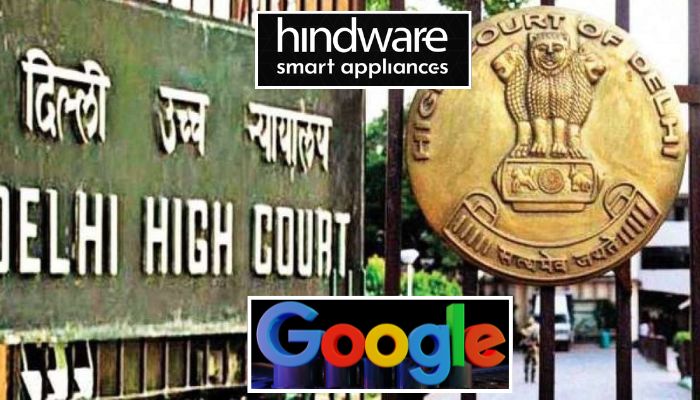
In a landmark judgment that could change the way online advertising works in India, the Delhi High Court has ruled against Google in a trademark dispute filed by bathware company Hindware. The Court held that allowing competitors to use the trademark “HINDWARE” as a keyword in Google Ads amounted to trademark infringement and unfair commercial exploitation of the company’s brand reputation.
Delivering its verdict on 22nd May, Justice Mini Pushkarna imposed a ₹30 lakh penalty on Google and permanently restrained the tech giant from allowing the use of “HINDWARE” and similar trademark-related combinations as advertising keywords within its AdWords system.
The 163-page judgement [pdf] also directed Google to stop auctioning Hindware’s trademark and ordered the company to pay the damages within eight weeks.
The ruling is being viewed as one of the most important judgments in India’s digital advertising space because it directly addresses how trademarked keywords are used in search engine advertising and whether platforms like Google can escape liability by calling themselves “intermediaries”.
The Delhi High Court has ordered Google to pay a penalty of INR 30 lakh for the misuse of the “Hindware” trademark as a keyword within its Google Ads search module.This ruling concludes a legal battle lasting nearly ten years, started by the bathware brand Hindware. The company… pic.twitter.com/N5B3wmyKCO— Entrepreneur Asia Pacific (@EntrepreneurAPJ) May 30, 2026
What was the dispute between Google and Hindware?
The case began after Hindware, formerly known as HSIL Ltd, discovered that rival sanitaryware companies were bidding on its trademark “HINDWARE” through Google Ads.
According to Hindware, whenever customers searched for “Hindware” products online, advertisements of competing brands started appearing prominently in search results. The company argued that this practice diverted potential customers and unfairly benefited competitors by exploiting the goodwill attached to the Hindware brand.
The dispute was part of two commercial suits filed during 2013 and 2014 against Google entities, along with rival companies including Grohe India, Cera Sanitaryware and Omkara Infoweb.
Hindware told the Court that keyword combinations such as “Hindware Sanitary”, “Hindware Sanitaryware” and similar phrases were being purchased by competitors to redirect online traffic.
The company argued that Google was not merely a passive platform but an active commercial participant because it suggested keywords, conducted auctions, ranked advertisements and earned revenue from every click generated through those ads.
Hindware also pointed out that its trademark had already been recognised as a well-known trademark by the Delhi High Court and that the company had been using the mark since 1991.
What Google argued in court
Google strongly opposed the allegations and argued that keywords are invisible backend tools that users cannot directly see.
The company claimed advertisers independently selected the keywords and created advertisements, while Google merely operated a neutral advertising platform.
Google also attempted to shield itself under Section 79 of the Information Technology Act by claiming intermediary protection.
“Since users can neither see nor otherwise perceive the keywords provided by the advertiser, such use of trademarks as keywords, being imperceptible or invisible to consumers, cannot be said to amount to ‘use’ under the Trade Marks Act,” Google argued before the Court.
The company maintained that it played only a technical role and therefore could not be held responsible for trademark infringement committed by advertisers.
Court rejects Google’s intermediary defenc.e
The Delhi High Court, however, rejected Google’s argument completely.
Justice Mini Pushkarna held that Google was actively involved in the AdWords ecosystem through keyword suggestions, ad ranking systems, monetisation mechanisms and advertising auctions.
“The present issues are decided in favour of the plaintiff (Hindware) and against the defendants (Google),” the Court ruled.
The Court said Google could not continue earning money from trademark-linked searches while simultaneously claiming it had no responsibility for the resulting infringement.
“Google cannot be permitted to shrug off responsibility by making available a tool that leads to infringement, and then turning around to claim that the said tool was not mandatory,” the judgment stated.
An excerpt from the judgment
The Court further observed that Google actively monetised trademark searches and therefore could not seek safe harbour protection as a passive intermediary.
“It has been admitted by Google that it allows use of trademarks as keywordtoto seek out users interested in the goods or services covered by the registered trademark,” the Court noted.
An excerpt from the judgment
The bench added that Google’s advertising programme actively encouraged advertisers to use trademarked search terms.
“The Ads Programme of Google encourages the users to use various search terms, including trademarks as keywords for display of the advertisements to the target audience,” the Court observed.
Invisible keyword use is also trademark infringement, says the Court
One of the most significant aspects of the judgment was the Court’s finding that even invisible use of trademarks as keyword triggers amounts to trademark infringement under Indian law.
The Court compared keyword advertising to unlawful meta-tagging practices and held that redirecting online traffic using hidden trademark usage could still manipulate consumer behaviour.
“It is clear that the use of the mark as meta-tags was held to be infringement of trademark,” the judgment stated.
The Court added that invisible use of a trademark to divert traffic from the trademark owner’s website to a competitor’s website would qualify as “use in advertising” under Section 29 of the Trade Marks Act.
An excerpt from the judgment
“Google suggests, offers, and sells words, including trademark terms, as keywords to advertisers. This active offering and selling of trademark terms to advertisers is not mere internal use of the trademark term, and is clearly a commercial use,” the Court observed.
This part of the judgment is particularly important because it establishes that even backend keyword use, which users cannot directly see, can still violate trademark rights if it commercially exploits brand reputation.
Settlements with rival companies
During the long legal battle, rival companies, including Grohe India, Cera Sanitaryware and Omkara Infoweb, settled their disputes with Hindware through mediation and consent decrees.
After those settlements, the litigation continued only against Google India and Google LLC. Although the Court described the matter as one deserving “nominal damages”, it still awarded ₹15 lakh in each of the two suits, bringing the total compensation to ₹30 lakh.
“Accordingly, this Court awards nominal damages of Rs. 15,00,000/- (Rupees Fifteen Lacs only) each in the present suits, totalling to Rs. 30,00,000/- (Rupees Thirty Lacs only) in favour of the plaintiff,” the court said.
An excerpt from the judgment
The court also clarified that the amount was not meant to compensate the actual losses and said, “The aforesaid amount shall be paid by the defendants, i.e., Google LLC/Google India, jointly and severally, within a period of eight weeks. The said amount has been awarded not towards the actual loss or damages suffered by the plaintiff, but as a minimal compensation in the light of the finding of this Court regarding infringement by the defendants.”
Why this verdict matters for India’s digital marketing industry
The judgment is now being viewed as a possible turning point for India’s digital advertising ecosystem.
Competitor keyword bidding has become a common strategy across industries, including e-commerce, fintech, travel, food delivery, banking and direct-to-consumer brands. Companies regularly bid on rival brand names so their advertisements appear whenever users search for competitors online.
Following the verdict, several industry leaders and marketing experts said the judgment could completely reshape performance marketing strategies in India. Vijay Shekhar Sharma reacted to the verdict on X and wrote, “Competitor keyword bidding on your brand name is now legally actionable in India.”
“Competitor keyword bidding on your brand name is now legally actionable in India.” https://t.co/U4Dqvvjjqo— Vijay Shekhar Sharma (@vijayshekhar) May 28, 2026
Prashant Puri, Co-founder and CEO of AdLift, told MoneyControl that the judgment addressed a long-standing concern among brands. “For years, brands have raised concerns that competitors could bid on their trademarked names, effectively using brand equity built over decades to intercept high-intent customers at the final stage of their purchase journey,” he said.
Puri also explained how many companies were forced into “defensive spending”, where they had to purchase advertisements on their own brand names simply to stop competitors from hijacking traffic. “One brand bidding on another’s name often forces companies to spend defensively on their own trademarks, increasing auction competition and costs,” he explained.
Could Google’s ad business model face changes in India?
The ruling may also create serious challenges for Google’s advertising business in India.
Trademark-linked searches represent some of the most commercially valuable searches in digital advertising because users searching for a brand often have very high purchase intent.
According to industry estimates, branded keywords often generate significantly higher conversion rates than generic advertisements. The judgment now raises questions about whether Google will need to redesign parts of its advertising system in India if more trademark owners begin filing similar cases.
Several brands across sectors like finance, consumer goods, electronics and travel may now seek legal protection against competitors using their trademarks as advertising triggers.
Nithin Kamath also reacted to the verdict and pointed out that competitor ads had appeared alongside searches for Zerodha for many years. “Even today, if you search for Zerodha, you will see search results from competitors. This has been happening for well over a decade,” Kamath wrote.
In a landmark judgment on May 22, 2026, the Delhi High Court held Google liable for trademark infringement.The case was between Hindware and Google. The court held that, by allowing competitors of Hindware to purchase the keyword “Hindware” (a trademarked name) through Google…— Nithin Kamath (@Nithin0dha) May 29, 2026
Despite those concerns, the Hindware judgment is likely to become a landmark precedent in India’s digital economy. It signals that Indian courts are increasingly willing to treat trademark-linked search advertising as a serious intellectual property issue rather than merely a technical advertising practice.
For brands, advertisers, regulators and tech platforms alike, the ruling may now force a complete rethink of how digital marketing works in India’s rapidly expanding online economy.