Ten-point explainer why this ceasefire is not a US victory as Trump desperately wants everyone to believe
On 8th April (local time), President of the United States, Donald Trump, claimed a “total and complete victory” after announcing a ceasefire with Iran. However, the terms that have been revealed in public so far, along with the strategic ground reality, suggest the situation in West Asia is far more complicated. BREAKING – Trump says in call with @AFP tonight that Iran ceasefire deal is 'total and complete victory' for United States Trump says he believes China was involved in pushing Iran to the negotiating table.Says Iran's uranium will be 'perfectly taken care of' under the deal,…— Danny Kemp (@dannyctkemp) April 8, 2026 According to AFP, Trump, in a telephonic conversation with the news agency, stated that Iran’s enriched uranium would be “perfectly taken care of”. He claimed that China had helped push Tehran to the negotiating table. He referred to a multi framework under discussion but did not provide any clarity on enforcement, nuclear dismantlement, regime concessions, or military rollback. In a social media post, he claimed it was a “big day for World Peace” and added that “this could be the Golden Age of the Middle East”. Source: Truth Social Notably, the announcement of the ceasefire itself came barely an hour after Trump’s deadline to “obliterate” Iran expired. In a Truth Social post, he threatened to “wipe out” a whole civilisation. He wrote, “A whole civilization will die tonight, never to be brought back again. I don’t want that to happen, but it probably will. However, now that we have Complete and Total Regime Change, where different, smarter, and less radicalized minds prevail, maybe something revolutionarily wonderful can happen, WHO KNOWS?” Source: Truth Social Tehran, on the other hand, is projecting that the outcome is favourable to its own position. Both sides are claiming victory but no one is ready to provide clarity on several questions. From the look of it, the claim of a decisive American win is hard to justify, here is why. Iran’s regime remains intact and in control When a country claims decisive military victory, it involves regime collapse, forced political concessions, or leadership destabilisation. While it is a fact that US and Israel managed to neutralise several leaders of Iran, including Supreme Leader Ayatollah Ali Khamenei, the ruling structure of the Islamic country remains fully intact. The Supreme Leader’s authority continues unchanged, and Tehran has retained control over both domestic governance and foreign policy decisions. Iran has not surrendered. There have been no external political conditions imposed on Iran and there has been no restructuring of power. A new Supreme Leader has already been elected and the US failed to make any major leadership shift. This means the war ended without achieving the most consequential strategic objective which is often associated with total victory. Strait of Hormuz still remains Iran’s leverage One of the most crucial aspects of the West Asia conflict was the security of the Strait of Hormuz. Notably, a significant portion of global oil flows through the Iran controlled Strait. Even after the ceasefire, there is uncertainty over reopening arrangements and shipping safety. In a recent statement, Trump has already signalled a week ago that US does not care much about opening the Strait of Hormuz though he continued to claim that it is a matter of concern and threatened Iran of consequences of Strait was not opened. Mixed statements by Trump only complicate the situation. Trump himself has referred to a framework rather than a settled mechanism. The geographic control that Iran has over the region will continue to stay as it is and it will continue to enjoy the ability to threaten or influence maritime traffic. The US cannot claim “complete success” without neutralising the leverage Iran holds. Nuclear question remains unresolved Trump, in his statement, claimed that Iran’s enriched uranium would be “perfectly taken care of”. However, he offered zero details about the plans he has. There is no confirmation that the material will be removed, dismantled, diluted, or monitored. The absence of specifics suggests the nuclear issue remains open, which was the main reason why the US and Israel attacked Iran. Preventing Iran from obtaining nuclear capability was the central justification for the West Asia conflict. Leaving the uranium stockpile intact is in direct contradiction with Trump’s claims of “total victory”. Iran’s military capacity weakened but not dismantled It is evident that Iran has taken losses after more than a month of strikes by the United States and Israel. However, the military structure of the country is still functional and poses a serious threat to West Asian countries that have ties with the United States. During the conflict, Iran attacked, UAE, Qatar, Saudi Arabia and other countries that have US bases. Command networks, missile units, and air defen
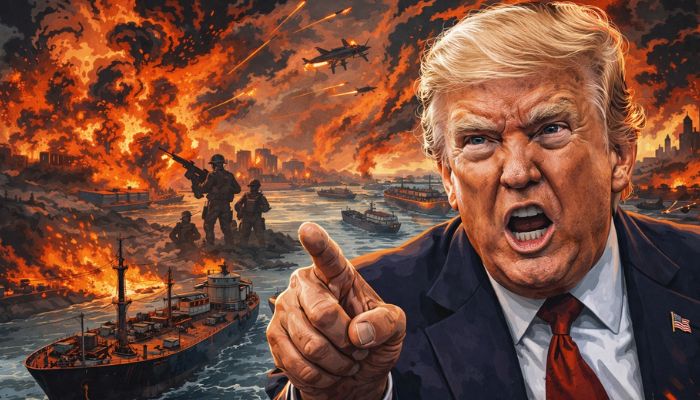
On 8th April (local time), President of the United States, Donald Trump, claimed a “total and complete victory” after announcing a ceasefire with Iran. However, the terms that have been revealed in public so far, along with the strategic ground reality, suggest the situation in West Asia is far more complicated.
BREAKING – Trump says in call with @AFP tonight that Iran ceasefire deal is 'total and complete victory' for United States Trump says he believes China was involved in pushing Iran to the negotiating table.Says Iran's uranium will be 'perfectly taken care of' under the deal,…— Danny Kemp (@dannyctkemp) April 8, 2026
According to AFP, Trump, in a telephonic conversation with the news agency, stated that Iran’s enriched uranium would be “perfectly taken care of”. He claimed that China had helped push Tehran to the negotiating table. He referred to a multi framework under discussion but did not provide any clarity on enforcement, nuclear dismantlement, regime concessions, or military rollback. In a social media post, he claimed it was a “big day for World Peace” and added that “this could be the Golden Age of the Middle East”.
Source: Truth Social
Notably, the announcement of the ceasefire itself came barely an hour after Trump’s deadline to “obliterate” Iran expired. In a Truth Social post, he threatened to “wipe out” a whole civilisation. He wrote, “A whole civilization will die tonight, never to be brought back again. I don’t want that to happen, but it probably will. However, now that we have Complete and Total Regime Change, where different, smarter, and less radicalized minds prevail, maybe something revolutionarily wonderful can happen, WHO KNOWS?”
Source: Truth Social
Tehran, on the other hand, is projecting that the outcome is favourable to its own position. Both sides are claiming victory but no one is ready to provide clarity on several questions. From the look of it, the claim of a decisive American win is hard to justify, here is why.
Iran’s regime remains intact and in control
When a country claims decisive military victory, it involves regime collapse, forced political concessions, or leadership destabilisation. While it is a fact that US and Israel managed to neutralise several leaders of Iran, including Supreme Leader Ayatollah Ali Khamenei, the ruling structure of the Islamic country remains fully intact.
The Supreme Leader’s authority continues unchanged, and Tehran has retained control over both domestic governance and foreign policy decisions. Iran has not surrendered. There have been no external political conditions imposed on Iran and there has been no restructuring of power. A new Supreme Leader has already been elected and the US failed to make any major leadership shift.
This means the war ended without achieving the most consequential strategic objective which is often associated with total victory.
Strait of Hormuz still remains Iran’s leverage
One of the most crucial aspects of the West Asia conflict was the security of the Strait of Hormuz. Notably, a significant portion of global oil flows through the Iran controlled Strait. Even after the ceasefire, there is uncertainty over reopening arrangements and shipping safety. In a recent statement, Trump has already signalled a week ago that US does not care much about opening the Strait of Hormuz though he continued to claim that it is a matter of concern and threatened Iran of consequences of Strait was not opened. Mixed statements by Trump only complicate the situation.
Trump himself has referred to a framework rather than a settled mechanism. The geographic control that Iran has over the region will continue to stay as it is and it will continue to enjoy the ability to threaten or influence maritime traffic. The US cannot claim “complete success” without neutralising the leverage Iran holds.
Nuclear question remains unresolved
Trump, in his statement, claimed that Iran’s enriched uranium would be “perfectly taken care of”. However, he offered zero details about the plans he has. There is no confirmation that the material will be removed, dismantled, diluted, or monitored. The absence of specifics suggests the nuclear issue remains open, which was the main reason why the US and Israel attacked Iran.
Preventing Iran from obtaining nuclear capability was the central justification for the West Asia conflict. Leaving the uranium stockpile intact is in direct contradiction with Trump’s claims of “total victory”.
Iran’s military capacity weakened but not dismantled
It is evident that Iran has taken losses after more than a month of strikes by the United States and Israel. However, the military structure of the country is still functional and poses a serious threat to West Asian countries that have ties with the United States. During the conflict, Iran attacked, UAE, Qatar, Saudi Arabia and other countries that have US bases.
Command networks, missile units, and air defence systems of Iran continue to operate. The country retains the ability to defend itself and project power regionally. If the claims of “total victory” would have been true, the military structure would have been either destroyed or faced long term degradation of capability. That threshold has not been crossed.
Long range strike capability still operational
During the US Iran war, Tehran demonstrated that it has the capability of launching long range strikes across the Gulf region. The survival of this capability means Tehran can still target bases, infrastructure, and allied assets in case of a misadventure by the US. If the country that “lost” retains the ability to strike adversaries after the war, the outcome is closer to a balanced ceasefire than decisive victory of one side.
Iran showed patience during negotiations
The ceasefire has been announced by Trump. It came close to his deadline rather than following a visible Iranian capitulation. Tehran did not publicly signal desperation for a quick exit. Instead, it appeared willing to prolong the conflict while absorbing pressure. Tehran even rejected ceasefire proposal and called for permanent end of the conflict.
On the other hand, Trump continued to make statements and shift his stance towards the West Asia conflict. In a single day, he continued to give statements that contradict his previous stance, making it difficult to grasp if he was actually serious or just blabbering whatever came to his mind after a powernap.
The narrative that Iran was forced into negotiations by overwhelming US dominance fails to stand scrutiny.
Washington appeared eager for an off ramp
Trump’s statements emphasised proposals, frameworks, and partial agreements. He referred to a 10-point Iranian proposal as “workable” and mentioned a broader 15-point transaction under discussion.
His statements made it clear that Washington also sought a negotiated pause. When both sides pursue de escalation, the outcome resembles mutual accommodation rather than one sided victory.
Differences between US and Israeli objectives became visible
During the conflict, Washington and Tel Aviv showed different expectations regarding acceptable end terms. Even now, while Israel has supported the ceasefire, it has made it clear that Lebanon is not included in the ceasefire terms.
Such divergence weakens the perception of a unified strategic campaign. Iran appears to have benefited from these differences, which diluted pressure and allowed space for negotiation.
US defensive resources were heavily used
Iran extensively used missiles and drones to attack US bases and Israel across West Asia. The attacks forced US to use air defence systems in the Gulf for interception operations, consuming large numbers of interceptors and logistical resources. Even if damage done by Iranian strikes was minimal, the scale of defensive deployment suggests the US absorbed operational costs rather than imposing unilateral dominance.
Tangible costs imposed on US regional assets
Iran managed to strike or threaten high value infrastructure and sensors across Gulf states, including US’s AN/FPS 132 early warning radar at Al Udeid base in Qatar worth billions. These actions imposed measurable costs on the US regional posture. A conflict in which the adversary inflicts damage and retains capabilities cannot be seen as a “total victory”.
Taking all the aspects together, the ceasefire is more of an unresolved strategic balance rather than a decisive American triumph. Iran’s leadership is intact, nuclear ambiguity still persists, Hormuz leverage is still in Iran’s hands, and military capabilities remain a threat for US and its allies in the region. Therefore, Trump’s claim of “total and complete victory” is more of a political message than a reality.