Temples destroyed, homes looted, women gang-raped: Ravish Kumar, anti-Hindu atrocities in Bangladesh are not ‘baseless rumours’
After justifying and glorifying the violence after the unceremonious ouster of Sheikh Hasina from power in Bangladesh, propagandist Ravish Kumar is ‘concerned’ about the fresh wave of violence in the neighbouring country. In his new video, he denies the atrocities committed against Hindus during the violence that followed the fall of Sheikh Hasina’s government and accuses the media of spreading fake news. In fact, Ravish Kumar recently uploaded an 18-minute video on the violence that erupted in Bangladesh following the death of anti-India Islamist leader Osman Hadi. In the video, Ravish Kumar tries his best to portray himself as ‘neutral’. However, while reading from the script, Ravish Kumar reveals his old propaganda. Kumar says, “When reports of atrocities against Hindus surfaced around the time of Sheikh Hasina’s removal, the Godi media began circulating baseless and false news, which sparked protests in Bangladesh, and the public there became increasingly concerned about the safety of Hindus.” Here, Ravish Kumar is calling false and baseless news about the widespread attacks on Hindus since the fall of Sheikh Hasina’s government in August 2024, including the vandalism of temples, arson of homes and shops, and the rape and murder of women. OpIndia has provided extensive coverage of these incidents. Ravish Kumar, however, should know that right after Sheikh Hasina’s forced ouster from Bangladesh, more than 2,000 incidents of Islamist atrocities against Hindus were reported between August 4 and 20, 2024. Five Hindus were killed, 157 Hindu families’ homes were looted, more than 70 Hindu temples were destroyed, more than 219 Hindu women were gang-raped, and 78 girls were forcibly converted. In August 2024, more than 4,000 Hindus were forced to leave the country. The anti-Hindu propagandist should know these incidents are not fictitious or random, but confirmed by the UN’s OHCHR report. The report clearly states that they occurred during a “procession” of people celebrating the ouster of Sheikh Hasina from power in Bangladesh. The attackers were radical leaders of the BNP and Jamaat-e-Islami. Moving forward, Ravish Kumar described Osman Hadi, an anti-India radical, as a “rising student leader” and honoured him with the use of “aap” in Hindi. To maintain balance, he mentioned Osman Hadi’s anti-India rhetoric, but then presented him with respect to the audience. Kumar went as far as to portray Osman Hadi’s murder as a conspiracy, even though the Bangladesh police investigation is still ongoing. But Ravish Kumar made no mention of the fact that this same Hadi had also shared a map showing the northeastern states as part of Bangladesh. Calling Osman Hadi a “student leader,” Ravish Kumar also didn’t forget to describe him as a “true patriot” who fought against corruption and championed legitimate issues in his country. Kumar seemed to view the murders of Hindu youth Dipu Chandra Das and Islamic fundamentalist Osman Hadi in the same light. However, these two killings are undeniably distinct. The brutal killing of Dipu Chandra Das is part of a series of atrocities against Hindus, an attempt to set an example for the entire Hindu community that if they raise their voices in Bangladesh, they too will face the same fate. While Osman Hadi’s murder is not an act of communal violence, the masked man who shot him remains untraced. Bangladesh police have already dismissed claims that Hadi’s killers were involved in India or that he had fled to India. Interestingly, Ravish Kumar has previously acknowledged that violence broke out during the protests to topple Sheikh Hasina’s government and has even defended these protesters. However, he refuses to acknowledge that this violence was clearly anti-Hindu. Apparently, Ravish Kumar fears portraying Muslims as oppressors and Hindus as victims. By bestowing the honour of “student leader” on Islamic fanatics like Osman Hadi, what else is he doing if not supporting the violent mobs in Bangladesh?
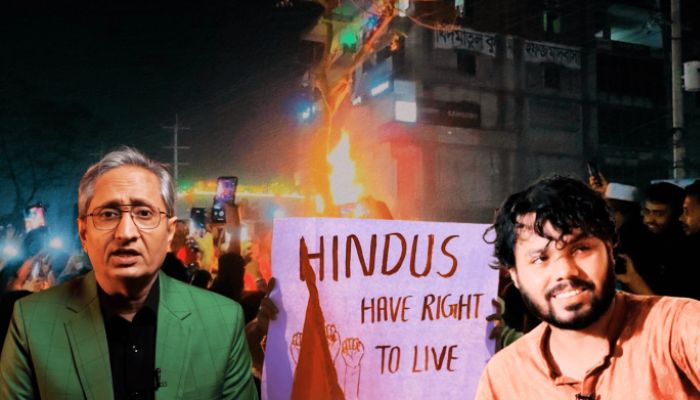

After justifying and glorifying the violence after the unceremonious ouster of Sheikh Hasina from power in Bangladesh, propagandist Ravish Kumar is ‘concerned’ about the fresh wave of violence in the neighbouring country. In his new video, he denies the atrocities committed against Hindus during the violence that followed the fall of Sheikh Hasina’s government and accuses the media of spreading fake news.
In fact, Ravish Kumar recently uploaded an 18-minute video on the violence that erupted in Bangladesh following the death of anti-India Islamist leader Osman Hadi. In the video, Ravish Kumar tries his best to portray himself as ‘neutral’. However, while reading from the script, Ravish Kumar reveals his old propaganda. Kumar says, “When reports of atrocities against Hindus surfaced around the time of Sheikh Hasina’s removal, the Godi media began circulating baseless and false news, which sparked protests in Bangladesh, and the public there became increasingly concerned about the safety of Hindus.”
Here, Ravish Kumar is calling false and baseless news about the widespread attacks on Hindus since the fall of Sheikh Hasina’s government in August 2024, including the vandalism of temples, arson of homes and shops, and the rape and murder of women. OpIndia has provided extensive coverage of these incidents.
Ravish Kumar, however, should know that right after Sheikh Hasina’s forced ouster from Bangladesh, more than 2,000 incidents of Islamist atrocities against Hindus were reported between August 4 and 20, 2024. Five Hindus were killed, 157 Hindu families’ homes were looted, more than 70 Hindu temples were destroyed, more than 219 Hindu women were gang-raped, and 78 girls were forcibly converted. In August 2024, more than 4,000 Hindus were forced to leave the country.
The anti-Hindu propagandist should know these incidents are not fictitious or random, but confirmed by the UN’s OHCHR report. The report clearly states that they occurred during a “procession” of people celebrating the ouster of Sheikh Hasina from power in Bangladesh. The attackers were radical leaders of the BNP and Jamaat-e-Islami.
Moving forward, Ravish Kumar described Osman Hadi, an anti-India radical, as a “rising student leader” and honoured him with the use of “aap” in Hindi. To maintain balance, he mentioned Osman Hadi’s anti-India rhetoric, but then presented him with respect to the audience. Kumar went as far as to portray Osman Hadi’s murder as a conspiracy, even though the Bangladesh police investigation is still ongoing.
But Ravish Kumar made no mention of the fact that this same Hadi had also shared a map showing the northeastern states as part of Bangladesh. Calling Osman Hadi a “student leader,” Ravish Kumar also didn’t forget to describe him as a “true patriot” who fought against corruption and championed legitimate issues in his country. Kumar seemed to view the murders of Hindu youth Dipu Chandra Das and Islamic fundamentalist Osman Hadi in the same light.
However, these two killings are undeniably distinct. The brutal killing of Dipu Chandra Das is part of a series of atrocities against Hindus, an attempt to set an example for the entire Hindu community that if they raise their voices in Bangladesh, they too will face the same fate. While Osman Hadi’s murder is not an act of communal violence, the masked man who shot him remains untraced. Bangladesh police have already dismissed claims that Hadi’s killers were involved in India or that he had fled to India.
Interestingly, Ravish Kumar has previously acknowledged that violence broke out during the protests to topple Sheikh Hasina’s government and has even defended these protesters. However, he refuses to acknowledge that this violence was clearly anti-Hindu. Apparently, Ravish Kumar fears portraying Muslims as oppressors and Hindus as victims. By bestowing the honour of “student leader” on Islamic fanatics like Osman Hadi, what else is he doing if not supporting the violent mobs in Bangladesh?