Telangana: ECI says printing voter enumeration forms in 3 languages would burden exchequer after HC asks it to consider Urdu forms. Read what the poll body told the court
The Telangana High Court has asked the Election Commission of India (ECI) to examine a plea seeking the availability of Urdu enumeration forms during the ongoing Special Intensive Revision (SIR) of electoral rolls in constituencies where at least 20% of the population is familiar with the language. While hearing the matter on Monday, 29th June, Justice B. Vijaysen Reddy observed that courts generally do not interfere in decisions taken by the Election Commission. However, he wanted to know what stand the poll body had taken on a similar issue in states such as Assam, Bihar and West Bengal, where Urdu-speaking populations are also present. The case has brought attention to a larger debate whether election-related documents should be made available in more regional languages for the convenience of voters or whether doing so would place an unnecessary administrative and financial burden on the Election Commission. Petition challenges Telugu-only forms The matter came before the High Court through a petition filed by a social worker from Karimnagar district. The petitioner questioned the Election Commission’s decision to print and distribute enumeration forms only in Telugu for the Special Intensive Revision exercise in Telangana. According to the petition, many voters in several constituencies are more comfortable reading and writing in Urdu. Therefore, restricting the forms to Telugu may create difficulties for such voters during the verification and updating of electoral rolls. The petitioner argued that voters should have the option of receiving forms in a language they understand, especially in constituencies where Urdu speakers form a significant section of the population. ECI explains why forms are in Telugu Appearing for the Election Commission, counsel Avinash Desai informed the court that the forms were printed in Telugu because it is the official language of Telangana. He also clarified that English enumeration forms are already being supplied in areas under the Greater Hyderabad Municipal Corporation (GHMC). According to him, this arrangement was made after discussions with election officials considering the local requirements. Desai further informed the court that during an earlier meeting convened by the Chief Electoral Officer of Telangana, it was unanimously decided that English forms would be sufficient for Hyderabad district because they are convenient for a large section of voters there. Dummy Urdu forms already available The ECI also told the High Court that officials have not completely ignored the needs of Urdu-speaking voters. Since Hyderabad has a sizeable Urdu-speaking population, Booth Level Officers (BLOs) have been instructed to carry around five to ten dummy enumeration forms in Urdu while conducting the house-to-house verification exercise. These sample forms are meant to help Urdu-speaking voters understand how to fill up the official forms. The actual enumeration forms, however, continue to be issued in Telugu or English depending on the area. The Election Commission presented this arrangement as a practical solution to assist voters without changing the entire printing process. Petitioner’s counsel says dummy forms are not enough Senior advocate V. Raghunath, appearing for the petitioner, argued that merely providing dummy forms in Urdu upon request does not satisfy the spirit of the Constitution. According to him, voters should not have to depend on sample forms or seek additional assistance when they have the right to receive official election documents in a language they understand. He submitted before the court that access to election forms in one’s preferred language is linked to meaningful participation in the democratic process. The petitioner therefore urged the High Court to direct the Election Commission to provide actual enumeration forms in Urdu wherever there is a substantial Urdu-speaking population. Court seeks details from other states Justice B. Vijaysen Reddy did not pass any immediate order directing the Election Commission to print Urdu forms. Instead, the judge asked the ECI counsel to place before the court details of the policy followed in Assam, Bihar and West Bengal on the same issue. The court appeared interested in understanding whether similar demands had arisen elsewhere and how the Election Commission had addressed them. The matter has now been adjourned for one week for further hearing. ECI raises concern over administrative burden One of the major issues highlighted during the hearing was the practical difficulty of printing forms in multiple languages. The Election Commission’s counsel argued that directing the authorities to print enumeration forms in three languages would place an unnecessary burden on the State exchequer. Apart from the additional printing cost, the entire logistics of designing, printing, transporting and distributing multiple sets of forms
The Telangana High Court has asked the Election Commission of India (ECI) to examine a plea seeking the availability of Urdu enumeration forms during the ongoing Special Intensive Revision (SIR) of electoral rolls in constituencies where at least 20% of the population is familiar with the language.
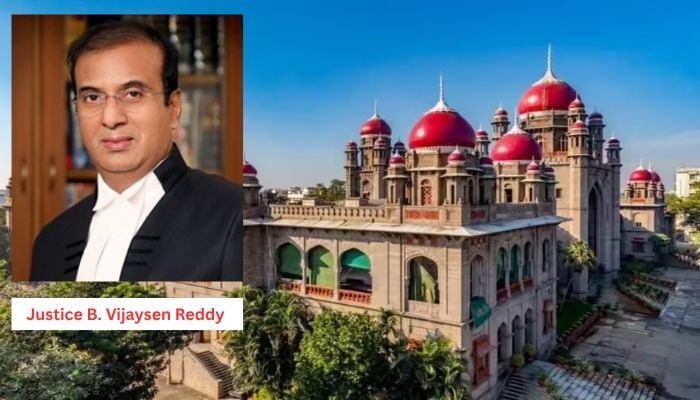
While hearing the matter on Monday, 29th June, Justice B. Vijaysen Reddy observed that courts generally do not interfere in decisions taken by the Election Commission. However, he wanted to know what stand the poll body had taken on a similar issue in states such as Assam, Bihar and West Bengal, where Urdu-speaking populations are also present.
The case has brought attention to a larger debate whether election-related documents should be made available in more regional languages for the convenience of voters or whether doing so would place an unnecessary administrative and financial burden on the Election Commission.
Petition challenges Telugu-only forms
The matter came before the High Court through a petition filed by a social worker from Karimnagar district. The petitioner questioned the Election Commission’s decision to print and distribute enumeration forms only in Telugu for the Special Intensive Revision exercise in Telangana.
According to the petition, many voters in several constituencies are more comfortable reading and writing in Urdu. Therefore, restricting the forms to Telugu may create difficulties for such voters during the verification and updating of electoral rolls.
The petitioner argued that voters should have the option of receiving forms in a language they understand, especially in constituencies where Urdu speakers form a significant section of the population.
ECI explains why forms are in Telugu
Appearing for the Election Commission, counsel Avinash Desai informed the court that the forms were printed in Telugu because it is the official language of Telangana.
He also clarified that English enumeration forms are already being supplied in areas under the Greater Hyderabad Municipal Corporation (GHMC). According to him, this arrangement was made after discussions with election officials considering the local requirements.
Desai further informed the court that during an earlier meeting convened by the Chief Electoral Officer of Telangana, it was unanimously decided that English forms would be sufficient for Hyderabad district because they are convenient for a large section of voters there.
Dummy Urdu forms already available
The ECI also told the High Court that officials have not completely ignored the needs of Urdu-speaking voters.
Since Hyderabad has a sizeable Urdu-speaking population, Booth Level Officers (BLOs) have been instructed to carry around five to ten dummy enumeration forms in Urdu while conducting the house-to-house verification exercise.
These sample forms are meant to help Urdu-speaking voters understand how to fill up the official forms. The actual enumeration forms, however, continue to be issued in Telugu or English depending on the area.
The Election Commission presented this arrangement as a practical solution to assist voters without changing the entire printing process.
Petitioner’s counsel says dummy forms are not enough
Senior advocate V. Raghunath, appearing for the petitioner, argued that merely providing dummy forms in Urdu upon request does not satisfy the spirit of the Constitution.
According to him, voters should not have to depend on sample forms or seek additional assistance when they have the right to receive official election documents in a language they understand.
He submitted before the court that access to election forms in one’s preferred language is linked to meaningful participation in the democratic process.
The petitioner therefore urged the High Court to direct the Election Commission to provide actual enumeration forms in Urdu wherever there is a substantial Urdu-speaking population.
Court seeks details from other states
Justice B. Vijaysen Reddy did not pass any immediate order directing the Election Commission to print Urdu forms.
Instead, the judge asked the ECI counsel to place before the court details of the policy followed in Assam, Bihar and West Bengal on the same issue.
The court appeared interested in understanding whether similar demands had arisen elsewhere and how the Election Commission had addressed them. The matter has now been adjourned for one week for further hearing.
ECI raises concern over administrative burden
One of the major issues highlighted during the hearing was the practical difficulty of printing forms in multiple languages.
The Election Commission’s counsel argued that directing the authorities to print enumeration forms in three languages would place an unnecessary burden on the State exchequer.
Apart from the additional printing cost, the entire logistics of designing, printing, transporting and distributing multiple sets of forms across different constituencies would become much more complicated.
Election exercises such as the Special Intensive Revision involve lakhs of voters and require strict timelines. Any increase in the number of forms or languages also increases the workload for election officials involved in the process.
Why the issue is significant
The Special Intensive Revision is a massive exercise carried out before elections to verify voter details, remove duplicate or ineligible names and include eligible citizens in the electoral rolls.
Enumeration forms are one of the key documents used during this process. Booth Level Officers visit households and collect information from voters using these forms.
Because the exercise is conducted across the state within a limited time, any change in the format or language of the forms has implications for printing, supply, training and data processing.
A practical challenge for the Election Commission
The issue also raises an important practical question. While making election-related documents accessible is desirable, implementing such a demand on a large scale may not be easy.
Telangana has around 3.5 crore registered voters. If even half of the Assembly constituencies qualify under the proposed 20% Urdu-speaking criterion, nearly 35 lakh Urdu enumeration forms may have to be printed in addition to the existing Telugu and English versions.
That would require substantial additional expenditure on paper, printing, transportation and storage. Election officials would also have to ensure that the correct language forms reach the right constituencies without delays or shortages.
The work would not end with printing alone. Every language version would need to be checked carefully for accuracy and consistency so that all forms carry identical instructions and legal content.
More forms mean more work on the ground
The burden would also extend beyond printing. Booth Level Officers, who are already responsible for conducting door-to-door verification within a limited schedule, may have to carry multiple versions of the same form depending on the language preference of voters.
Officials handling the forms at later stages would also have to process documents received in different languages. This could require additional scrutiny and increase the chances of delays in data entry and verification.
In large-scale election exercises involving crores of voters, even a small increase in paperwork can significantly affect timelines and manpower requirements.
Accessibility versus feasibility
The case has therefore highlighted two competing concerns.
On one hand, the petitioner believes voters should have access to official election documents in a language they understand. According to this argument, providing only Telugu forms in constituencies with a sizeable Urdu-speaking population may make participation more difficult for some voters.
On the other hand, the Election Commission maintains that expanding the printing process to include three languages across multiple constituencies is neither practical nor economical. The poll body has also pointed out that Booth Level Officers are already carrying dummy Urdu forms to assist voters wherever necessary.
From an administrative perspective, this concern is significant. Creating an additional language version for constituencies with just 20% Urdu-speaking voters may require a large amount of public resources. The exercise would be time-consuming, expensive and operationally demanding. Beyond printing lakhs of extra forms, officials would also have to manage distribution, verification and processing of multilingual documents, adding another layer of complexity to an already massive electoral exercise.
What happens next?
For now, the High Court has only asked the Election Commission to consider the request and explain how similar situations have been handled in Assam, Bihar and West Bengal.
No direction has been issued requiring the immediate printing of Urdu enumeration forms.
When the matter comes up again next week, the Election Commission is expected to place additional information before the court regarding its policy and practices in other states.
The outcome of the case could influence how language accessibility is balanced with administrative feasibility during future electoral roll revision exercises, not only in Telangana but potentially in other multilingual states as well.