Rural woman, fluent English, brand collabs: Read why Pujarani Pradhan is making the ‘elite’ world uncomfortable
There are two worlds. One where people simply live, and another where they are constantly seen living. That second world is the world of influencers. It runs parallel to everyday life, feeds off it, reshapes it, and at times, distorts it. In the first world, people go about their routines, work, family, responsibilities, small ambitions, and private struggles. In the second, the same routine is curated, edited, narrated, and presented to an audience to consume, digest, and share. Source: Instagram Recently, a humble-looking content creator, Pujarani Pradhan (lifeofpujaa), has become a topic of narrative war between the “elite” side and the masses. Pradhan sits precisely at the intersection of the two worlds described above. She is a woman from rural West Bengal who speaks English with a clear rural accent. She reviews books and movies, shares opinions, and now, she has found herself pulled into the influencer ecosystem in a way that invites both admiration and suspicion. Who is Pujarani Pradhan Pradhan is a around 40-year-old woman. She lives in a rural household, has a child, and creates content primarily in English. Her accent reflects her background, something she neither hides nor tries to polish artificially. Instead, she embraces it, even when mocked. View this post on Instagram A post shared by Pujarini Pradhan (@lifeofpujaa) Her content includes book reviews, commentary on feminism and social issues, and reflections from her everyday life. She speaks about authors, films, and ideas with a tone that is curious, sometimes exploratory, sometimes assertive. She has around 680,000 followers on Instagram and has collaborated with brands including Netflix, Frido, and ChatGPT. She shares her views about c-section, feminism and more. View this post on Instagram A post shared by Netflix India (@netflix_in) She also carries a personality that is quietly disarming. When people mock her pronunciation, she often responds with humour or constructive replies. In one video, she struggled to pronounce the word “responsibilities”, giggled, and continued. The moments from those videos stayed, they were not edited out as flaws but retained as part of the experience. View this post on Instagram A post shared by Pujarini Pradhan (@lifeofpujaa) That video was just about her struggle with English, which is clearly not her native language, or even a fluent one. She appears to be one of those who thinks in her mother tongue, translates it into English, and then speaks, or listens to something in English and translates it into her mother tongue to understand. This is how most multilinguals go around languages they are not fluent in. At the same time, her videos are clearly edited. There are cuts, pauses smoothed out, sentences stitched together. That is not unusual. Editing is part of content creation. But it becomes relevant because it feeds into the debate about authenticity. The trigger – When ‘management’ becomes ‘manipulation’ The controversy began when a content creator, Niharika Jain, who goes by the handle “iam_therapissed“, accused her of being “fake” and an “industry plant”, primarily because she was associated with an agency. The implication was simple, if someone is managed, they are not real. Another content creator, Aishwarya Subramanyam, who goes by the handle “otherwarya”, jumped in and questioned her authenticity but somewhat sided with her. Her second video actually made people believe that Subramanyam was calling Pradhan “evil”, but that was not the case. There are many influencers and netizens who are debating over Pradhan’s content and life. Some like her, some do not, and it happens. It is common with influencers. They have followers comprised of fans and haters. Both are, in fact, important. Now, coming back to the controversy, what Jain said, her arguments collapsed quickly under scrutiny. Why? Because having an agency is not an anomaly in the influencer ecosystem, it is the norm. What it revealed instead was a deeper suspicion, that someone like Pradhan should not be able to reach this level of visibility without hidden backing. Jain, later made her account private. Reportedly, she has posted three stories where she claimed she was being cyberbullied. She also claimed that some 4,000-5,000 bot accounts followed her and called it a tactic to affect her account’s organic engagement. Source: Reddit On the other hand, Pradhan’s response video addressed the controversy directly. She explained how she initially worked with an agency that allegedly exploited her financially, offering her ₹30,000 per day while securing a much larger deal from the brand. She left that arrangement and later joined another team that now handles her brand deals more consistently. View this post on Instagram A post shared by Pujarini Pradhan (@lifeofpujaa) She made it clear that her content,
There are two worlds. One where people simply live, and another where they are constantly seen living. That second world is the world of influencers. It runs parallel to everyday life, feeds off it, reshapes it, and at times, distorts it. In the first world, people go about their routines, work, family, responsibilities, small ambitions, and private struggles. In the second, the same routine is curated, edited, narrated, and presented to an audience to consume, digest, and share.
Source: Instagram
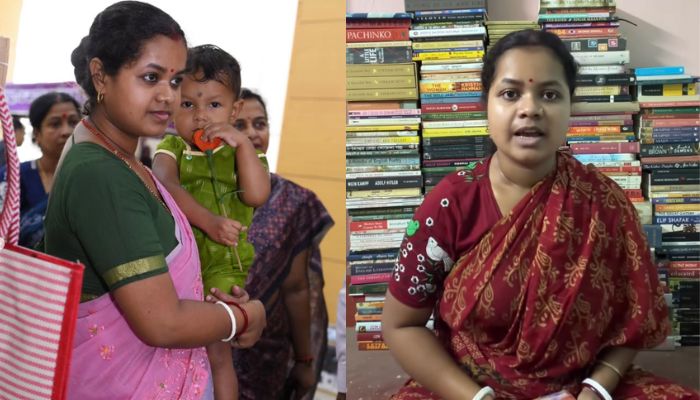
Recently, a humble-looking content creator, Pujarani Pradhan (lifeofpujaa), has become a topic of narrative war between the “elite” side and the masses. Pradhan sits precisely at the intersection of the two worlds described above. She is a woman from rural West Bengal who speaks English with a clear rural accent. She reviews books and movies, shares opinions, and now, she has found herself pulled into the influencer ecosystem in a way that invites both admiration and suspicion.
Who is Pujarani Pradhan
Pradhan is a around 40-year-old woman. She lives in a rural household, has a child, and creates content primarily in English. Her accent reflects her background, something she neither hides nor tries to polish artificially. Instead, she embraces it, even when mocked.
View this post on Instagram A post shared by Pujarini Pradhan (@lifeofpujaa)
Her content includes book reviews, commentary on feminism and social issues, and reflections from her everyday life. She speaks about authors, films, and ideas with a tone that is curious, sometimes exploratory, sometimes assertive. She has around 680,000 followers on Instagram and has collaborated with brands including Netflix, Frido, and ChatGPT. She shares her views about c-section, feminism and more.
View this post on Instagram A post shared by Netflix India (@netflix_in)
She also carries a personality that is quietly disarming. When people mock her pronunciation, she often responds with humour or constructive replies. In one video, she struggled to pronounce the word “responsibilities”, giggled, and continued. The moments from those videos stayed, they were not edited out as flaws but retained as part of the experience.
View this post on Instagram A post shared by Pujarini Pradhan (@lifeofpujaa)
That video was just about her struggle with English, which is clearly not her native language, or even a fluent one. She appears to be one of those who thinks in her mother tongue, translates it into English, and then speaks, or listens to something in English and translates it into her mother tongue to understand. This is how most multilinguals go around languages they are not fluent in.
At the same time, her videos are clearly edited. There are cuts, pauses smoothed out, sentences stitched together. That is not unusual. Editing is part of content creation. But it becomes relevant because it feeds into the debate about authenticity.
The trigger – When ‘management’ becomes ‘manipulation’
The controversy began when a content creator, Niharika Jain, who goes by the handle “iam_therapissed“, accused her of being “fake” and an “industry plant”, primarily because she was associated with an agency. The implication was simple, if someone is managed, they are not real.
Another content creator, Aishwarya Subramanyam, who goes by the handle “otherwarya”, jumped in and questioned her authenticity but somewhat sided with her. Her second video actually made people believe that Subramanyam was calling Pradhan “evil”, but that was not the case. There are many influencers and netizens who are debating over Pradhan’s content and life. Some like her, some do not, and it happens. It is common with influencers. They have followers comprised of fans and haters. Both are, in fact, important.
Now, coming back to the controversy, what Jain said, her arguments collapsed quickly under scrutiny. Why? Because having an agency is not an anomaly in the influencer ecosystem, it is the norm. What it revealed instead was a deeper suspicion, that someone like Pradhan should not be able to reach this level of visibility without hidden backing.
Jain, later made her account private. Reportedly, she has posted three stories where she claimed she was being cyberbullied. She also claimed that some 4,000-5,000 bot accounts followed her and called it a tactic to affect her account’s organic engagement.
Source: Reddit
On the other hand, Pradhan’s response video addressed the controversy directly. She explained how she initially worked with an agency that allegedly exploited her financially, offering her ₹30,000 per day while securing a much larger deal from the brand. She left that arrangement and later joined another team that now handles her brand deals more consistently.
View this post on Instagram A post shared by Pujarini Pradhan (@lifeofpujaa)
She made it clear that her content, scripting, shooting, and editing are done by her alone. The agency handles only the business side. That distinction is important, but often ignored in public debates.
What is an influencer, really
An influencer today is not just a person posting videos. It is a role that combines storytelling, audience building, and commercial viability.
Influencers operate as individual media units. They create, edit, publish, engage, and monetise. Their value lies in the trust they build with their audience and the consistency of that engagement.
In this context, Pradhan is not an exception. She is part of a broader system where individuals convert personal expression into a form of digital capital. Her rural setting does not exclude her from this system, it simply makes her entry into it more visible and, for some, more uncomfortable.
Why brands collaborate with influencers
Brands collaborate with influencers for one reason, access to attention. Traditional advertising pushes messages outward. Influencer marketing embeds those messages within trusted voices. If a creator has a loyal audience, the brand effectively borrows that trust.
I used to see someone or the other share lifeofpuja’s reels almost every day. Different kinds of content she was putting out kept popping up, and I eventually got hooked. Naturally, we at Frido started tracking her engagement, the audience that follows her, the conversations… https://t.co/8oJt5ACJqI— Ami Palan (@markmeyourze) March 29, 2026
Pradhan’s collaborations with major brands indicate that she has crossed a certain threshold of influence. She is no longer just speaking to an audience, she is part of a commercial ecosystem where her voice carries measurable value.
The role of agencies – Middlemen or enablers
Agencies exist to bridge the gap between creators and brands. They negotiate deals, manage contracts, and ensure consistency in collaborations.
For many creators, especially those from non-urban backgrounds, agencies provide access to opportunities they would otherwise struggle to reach. At the same time, the relationship is not always balanced. As Pradhan’s own experience suggests, exploitation is possible, particularly when creators are new and unaware of market rates.
But to equate agency involvement with inauthenticity is to misunderstand the structure of the industry. Agencies, in most cases, do not create the core identity of a creator. They polish it and then monetise it.
The editing question – Does polish reduce authenticity
One of the subtle criticisms against Pradhan is the presence of multiple cuts in her videos. Sentences are stitched together, pauses removed, delivery made smoother.
This is standard practice. Every creator edits. The difference lies in perception. When a highly polished urban influencer does it, it is seen as professionalism. When someone like Pradhan does it, it becomes evidence of “manufacturing”.
The expectation seems to be that authenticity must also look raw, unedited, and imperfect. But even imperfection is often curated.
Language, accent and the politics of mockery
A significant part of the reaction to Pradhan is tied to her English. Not the content of what she says, but how she says it.
Her pronunciation becomes a point of humour. Her accent becomes a point of judgement. Yet, she responds with composure, often turning mockery into engagement.
Source: X
This reveals a deeper hierarchy. English in India is not just a language, it is a marker of class. Accent, fluency, and tone become signals of belonging.
When someone speaks English outside these accepted codes, it unsettles expectations. It forces audiences to confront an uncomfortable question, who decides what “good English” sounds like. In fact, on X, she quoted someone who mocked people speaking English with bad pronunciation and gave a decent reply without being sarcastic or playing victimhood.
Elitism versus authenticity
The fascination with Pradhan lies partly in this contrast. A rural setting combined with English-speaking content disrupts a long-held association between language and class.
But this disruption also invites scrutiny. Her past posts allegedly disappearing from Instagram, her current image appearing more aligned with a certain aesthetic, her collaborations with brands, all of this feeds into a narrative that she is “constructed”.
Yet, all influencers are constructed to some extent. The difference is that some constructions align with what audiences expect, and others do not.
Who decides authenticity
Authenticity is one of the most overused and least defined terms in the influencer ecosystem. Is a creator authentic because they show their real life, because they do not have an agency, because they make mistakes on camera, or because they come from a certain background.
Pradhan’s own statement captures this confusion. She says she does not know how to “pretend to be authentic”. That line is telling, because it exposes the paradox, authenticity itself has become a performance standard.
Audiences demand it, platforms reward it, and creators navigate it. But no one clearly defines it.
The jeans, the past, and the performance of identity
A recent video where she wore jeans and a kurta for the first time after taking permission from her mother-in-law became a moment of celebration for her. It was framed as a personal milestone, a small assertion of choice.
View this post on Instagram A post shared by Pujarini Pradhan (@lifeofpujaa)
In an older video, she had said she loved to wear jeans, suggesting that this was not entirely new. Perhaps something she had stopped after marriage.
This detail shows how complicated lives can be. It shows how identity is not static. It shifts with circumstances, family structures, and personal choices.
But in the influencer world, such shifts are often interpreted as contradictions, because audiences expect continuity. They believe that anything that has changed from the time when the person was not an “influencer” is curated and maybe agency-srive, which is not always the case.
Influencers and narrative power
Influencers do not just create content. They shape narratives. When Pradhan speaks about feminism, class, or daily life, she is not just sharing opinions. She is influencing how her audience interprets these ideas.
This is where the discomfort intensifies. Because narrative power is expected to come from certain spaces, urban, educated, institutionally backed. When it emerges from elsewhere, it is questioned more aggressively.
More than just a controversy
The Pujarani Pradhan episode is not just about one creator being called fake. It is about the uneasy relationship between authenticity, class, and visibility in India’s digital space.
It reveals how influencer culture claims to democratise expression but still carries inherited biases. It shows how agency involvement is misunderstood, how editing is selectively criticised, and how language continues to act as a gatekeeper.
Most importantly, it raises a simple question with no clear answer. In a world where everything is curated, edited, and monetised, what does authenticity even mean anymore.