Mamata resorts to erasing Bengali with Urdu to appease Muslims: Read how the TMC chief is dividing Hindus and rallying Muslims using her language politics
The language politics in West Bengal have once again come into sharp focus, with claims that Chief Minister Mamata Banerjee is promoting Urdu at the cost of Bengali identity to consolidate support ahead of elections. BJP MP Saumitra Khan claims to replace Bengali cultural markers with Urdu in public and political communication. Stop Urdu imposition,@MamataOfficial From "Khela Hobe" to "Ishtehar," you’re erasing Bengali culture for Urdu. First police bullets, now anti-Hindu echoes. Bengal sees your betrayal.Time’s up for TMC! @AmitShah @byadavbjp #BanchteChaiBJPTai #SaveBengal pic.twitter.com/O1RCrMHgA0— Saumitra khan (@KhanSaumitra) March 30, 2026 As mentioned in the X post by Saumitra Khan, “Stop Urdu imposition. From ‘Khela Hobe’ to ‘Ishtehar,’ you’re erasing Bengali culture for Urdu.” It can be noted that the manifesto of Mamata Banerjee being referred to as “Ishtehar,” which is an Urdu term, even though the text itself is written in Bengali. It can thus be noted that these changes are not merely changes in the use of Bengali or Urdu but are a part of a larger trend. Mamata Banerjee’s Eid speech in Urdu Mamata Banerjee addressed a huge gathering of Muslims on the occasion of Eid. She delivered the entire speech in the Urdu language instead of Bengali and Hindi. "अल्लाह आपको आशीर्वाद दे" ◆ ईद के मौके पर पश्चिम बंगाल की मुख्यमंत्री ममता बनर्जी ने कहा @MamataOfficial | #MamataBanerjee | Mamata Banerjee | #EidMubarak | Eid Mubarak | #Eid2026 pic.twitter.com/25QDs5Kt0i— News24 (@news24tvchannel) March 21, 2026 In her speech, she referred to her long-held wishes in her heart. She said, “Allah has already accepted them. May Allah bless them for their well-being and their families. Whoever wants to target Bengal will go to hell.” The decision of Mamata Banerjee to deliver her speech in Urdu sparked controversy, as her decision to choose Urdu over other languages for this public event is nothing but a hidden agenda to attract voters from the Muslim community, especially in these critical times. Urdu as the second language in West Bengal The controversy is also connected to a decision made by the state government earlier. Under the previous government headed by Mamata Banerjee, the status of Urdu as a second language was granted in those areas where the population of Urdu-speaking people is over 10%. The decision applies to those areas covered by the Calcutta Municipal Corporation and other municipalities such as Islampur in North Dinajpur district, Garulia, Kamarhati, Bhatpara, and Titagarh in North 24-Parganas district, and Chapdani, Bansberia, Rishra, and Bhadreshwar in Hooghly district. Two blocks in North Dinajpur Goalpokhor I and II were also included. Later, more areas were added, including regions under the Asansol Municipal Corporation, Bally in Howrah, and Kulti and Jamuria in Burdwan. According to this decision, Urdu can be used in government offices, official documents, and educational institutions. The state also intends to open primary schools with Urdu as the medium of instruction and introduce Urdu as an elective subject in secondary schools and colleges. Government offices will also respond in Urdu to letters written in Urdu. Employees conversant in the language will be posted in the areas. This decision is part of the election manifesto of Mamata Banerjee. Why Urdu has become politically important Urdu has a long history in India, especially from the Mughal period when it developed as a language used in administration, poetry and everyday communication in many parts of North India. Over time, it came to be associated with sections of the Muslim community, even though people speak it from different backgrounds. This perception is now being used politically in West Bengal, where promoting Urdu is seen as a way to connect with Muslim voters. At the same time, Mamata Banerjee’s repeated references to “outsiders” have added another layer to the debate. From blaming people from Bihar after unrest in Uttar Dinajpur to linking Ram Navami violence to outsiders, and earlier remarks during elections targeting people from Uttar Pradesh, Bihar and Rajasthan, her statements have often focused on non-Bengali groups. She has also used similar language in other contexts, including political campaigns outside the state and during protests in Kolkata. Such remarks create fear among Bengalis that their identity is under threat, while also making migrants and non-Bengali speakers feel targeted in the state. Conclusion The ongoing debate shows how language and identity have become central to politics in West Bengal. Mamata Banerjee is promoting Urdu in governance and public messaging; she is also encouraging people to see non-Bengali-speaking communities as “outsiders.” This approach is creating a divide, bringing one group together through language-based outreach while pushing another away, raising concerns about social harmony in the state ahead of el
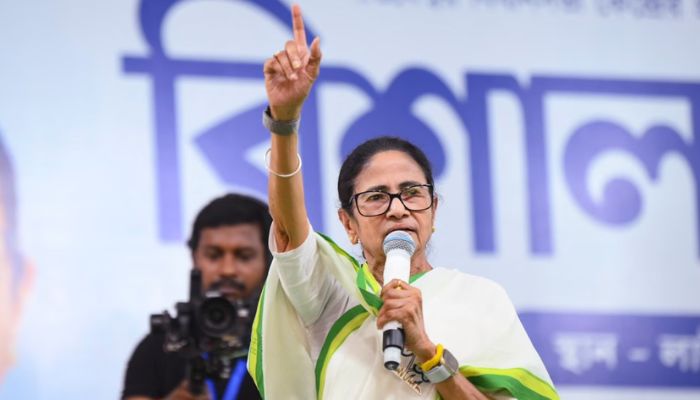
The language politics in West Bengal have once again come into sharp focus, with claims that Chief Minister Mamata Banerjee is promoting Urdu at the cost of Bengali identity to consolidate support ahead of elections. BJP MP Saumitra Khan claims to replace Bengali cultural markers with Urdu in public and political communication.
Stop Urdu imposition,@MamataOfficial From "Khela Hobe" to "Ishtehar," you’re erasing Bengali culture for Urdu. First police bullets, now anti-Hindu echoes. Bengal sees your betrayal.Time’s up for TMC! @AmitShah @byadavbjp #BanchteChaiBJPTai #SaveBengal pic.twitter.com/O1RCrMHgA0— Saumitra khan (@KhanSaumitra) March 30, 2026
As mentioned in the X post by Saumitra Khan, “Stop Urdu imposition. From ‘Khela Hobe’ to ‘Ishtehar,’ you’re erasing Bengali culture for Urdu.” It can be noted that the manifesto of Mamata Banerjee being referred to as “Ishtehar,” which is an Urdu term, even though the text itself is written in Bengali. It can thus be noted that these changes are not merely changes in the use of Bengali or Urdu but are a part of a larger trend.
Mamata Banerjee’s Eid speech in Urdu
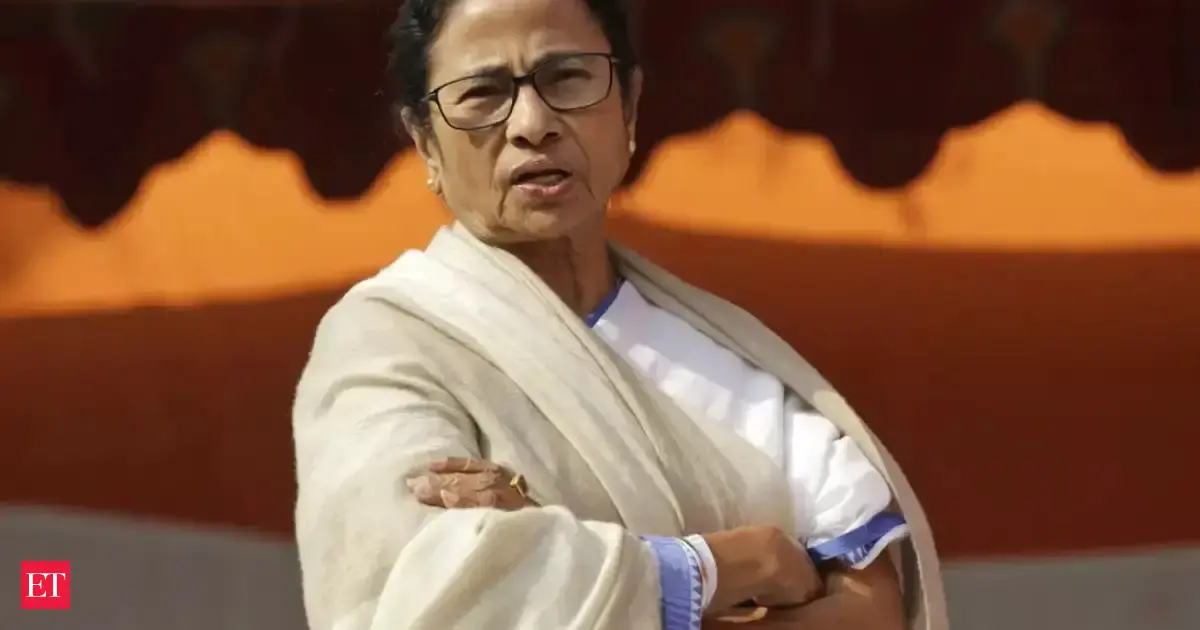
Mamata Banerjee addressed a huge gathering of Muslims on the occasion of Eid. She delivered the entire speech in the Urdu language instead of Bengali and Hindi.
"अल्लाह आपको आशीर्वाद दे" ◆ ईद के मौके पर पश्चिम बंगाल की मुख्यमंत्री ममता बनर्जी ने कहा @MamataOfficial | #MamataBanerjee | Mamata Banerjee | #EidMubarak | Eid Mubarak | #Eid2026 pic.twitter.com/25QDs5Kt0i— News24 (@news24tvchannel) March 21, 2026
In her speech, she referred to her long-held wishes in her heart. She said, “Allah has already accepted them. May Allah bless them for their well-being and their families. Whoever wants to target Bengal will go to hell.”
The decision of Mamata Banerjee to deliver her speech in Urdu sparked controversy, as her decision to choose Urdu over other languages for this public event is nothing but a hidden agenda to attract voters from the Muslim community, especially in these critical times.
Urdu as the second language in West Bengal
The controversy is also connected to a decision made by the state government earlier. Under the previous government headed by Mamata Banerjee, the status of Urdu as a second language was granted in those areas where the population of Urdu-speaking people is over 10%.
The decision applies to those areas covered by the Calcutta Municipal Corporation and other municipalities such as Islampur in North Dinajpur district, Garulia, Kamarhati, Bhatpara, and Titagarh in North 24-Parganas district, and Chapdani, Bansberia, Rishra, and Bhadreshwar in Hooghly district.
Two blocks in North Dinajpur Goalpokhor I and II were also included. Later, more areas were added, including regions under the Asansol Municipal Corporation, Bally in Howrah, and Kulti and Jamuria in Burdwan.
According to this decision, Urdu can be used in government offices, official documents, and educational institutions. The state also intends to open primary schools with Urdu as the medium of instruction and introduce Urdu as an elective subject in secondary schools and colleges. Government offices will also respond in Urdu to letters written in Urdu. Employees conversant in the language will be posted in the areas. This decision is part of the election manifesto of Mamata Banerjee.
Why Urdu has become politically important
Urdu has a long history in India, especially from the Mughal period when it developed as a language used in administration, poetry and everyday communication in many parts of North India. Over time, it came to be associated with sections of the Muslim community, even though people speak it from different backgrounds.
This perception is now being used politically in West Bengal, where promoting Urdu is seen as a way to connect with Muslim voters. At the same time, Mamata Banerjee’s repeated references to “outsiders” have added another layer to the debate.
From blaming people from Bihar after unrest in Uttar Dinajpur to linking Ram Navami violence to outsiders, and earlier remarks during elections targeting people from Uttar Pradesh, Bihar and Rajasthan, her statements have often focused on non-Bengali groups. She has also used similar language in other contexts, including political campaigns outside the state and during protests in Kolkata.
Such remarks create fear among Bengalis that their identity is under threat, while also making migrants and non-Bengali speakers feel targeted in the state.
Conclusion
The ongoing debate shows how language and identity have become central to politics in West Bengal. Mamata Banerjee is promoting Urdu in governance and public messaging; she is also encouraging people to see non-Bengali-speaking communities as “outsiders.”
This approach is creating a divide, bringing one group together through language-based outreach while pushing another away, raising concerns about social harmony in the state ahead of elections.