How does India prepare for LPG supply disruptions? Read about the caverns of LPG reserves in Mangaluru and Visakhapatnam
The tensions in West Asia and the closure of the vital Strait of Hormuz have created a serious threat to global energy security. The extensive disruption in supply chains for crude oil and LPG has created a major challenge for economies. As the world is overwhelmed by this problem and seeks solutions or alternatives, some nations appear to be better positioned to confront the same than others. India, which imports a substantial portion of its crude oil and natural gas through the strait is also tackling the challenge. However, the fears have been alleviated by the consistent assurances from the centre, the arrival of vessels carrying oil from the sensitive passage and the energy reserves available within the country. “India relies on imports for 60% of its LPG needs. Consequently, there is a focus on enhancing domestic supply. Additionally, measures are being implemented to guarantee a steady supply of petrol and diesel. Over the last 11 years, the Indian Government has expanded its energy import sources,” Prime Minister Narendra Modi declared in the Lok Sabha on 23rd March (Monday). He added, “In the past, crude oil, Liquefied Natural Gas (LNG) and other items were sourced from 27 countries. Currently, energy products are procured from 41 nations. Our government has established strategic storage units to address crises such as this, and their capacity is being consistently augmented.” भारत अपनी जरूरत की 60% LPG आयात करता है। इसकी वजह से डोमेस्टिक सप्लाई को प्राथमिकता दी जा रही है। पेट्रोल-डीजल की सप्लाई निर्बाध रूप से जारी रहे, इसके लिए भी काम किया जा रहा है। भारत सरकार ने बीते 11 सालों में एनर्जी इंपोर्ट का डायवर्सिफिकेशन किया है। पहले क्रूड, एलएनजी इत्यादि… pic.twitter.com/FATBTXdrT0— ऑपइंडिया (@OpIndia_in) March 23, 2026 Notably, the Modi government after storming to power has concentrated not only on the establishment of oil reserves but also the creation of Liquefied Petroleum Gas (LPG) reserves for difficult times such as these. India’s largest LPG storage cavern in Mangaluru LPG has taken the place of more conventional fuels like firewood, dung cakes and kerosene as one of the most significant home fuels in the country. The access to clean cooking and better public health has been greatly increased by programs like the Pradhan Mantri Ujjwala Yojana, which gave impoverished households deposit-free LPG connections. These schemes enhanced environmental benefits and energy availability, but they also raised demand. Therefore, the storage cavern constructed by the government could prove instrumental in times of emergency and need. There are two LPG storage caverns in India: Mangaluru and Visakhapatnam (Vizag). Nearly 1.4 lakh tonnes of LPG can be stored in these together. “Engineers India Limited has successfully executed the development of India’s largest underground rock cavern for LPG storage for Hindustan Petroleum Corporation Limited at Mangalore, Karnataka. The facility has now achieved a successful gas-in, marking a major milestone,” Minister of Petroleum and Natural Gas Hardeep Singh Puri informed last year. It is the biggest LPG cavern in India, with a storage capacity of 80,000 metric tonnes (MT). It is situated below the grounds of an existing LPG plant. This project’s unique architecture, which involves excavating the cavern beneath the existing surface structure, makes it even more impressive. This creative method enables the use of land for two purposes, greatly maximising space usage and setting a standard for upcoming infrastructure work. Puri pointed out, “It not only strengthens the nation’s energy security but also demonstrates innovative land utilisation through its dual-use design.” An exceptional engineering feat The official website mentioned, “The cavern construction in Mangalore comprises two large underground tunnels with 1,220 metres and 225 metres in length respectively. The project involves digging an access tunnel over a kilometre long, with depths reaching 128 metres below sea level. The cavern itself is situated 156 metres below sea level, allowing for efficient fuel storage.” The cavern is built within granitic gneiss rock and comprises the drill-and-blast method of construction, which necessitated thorough geological analyses and technical accuracy. Its depth guarantees that the LPG is safely confined by the water’s hydrostatic pressure. This was the inaugural use of underground rock cavern technology for LPG storage in the country which lowers the risk of leaks to nearly zero in contrast to traditional tanks and founded a new benchmark for energy storage. Likewise, it incorporates two-tier water curtain technology that reduces the likelihood of gas leaks. The storage area is composed of several elements, such as a 1.1 kilometre-long access tunnel for the removal of debris along with an upper and lower water curtain system featuring 13 kilometres of vertical and inclined boreholes. There are also main storage galle
The tensions in West Asia and the closure of the vital Strait of Hormuz have created a serious threat to global energy security. The extensive disruption in supply chains for crude oil and LPG has created a major challenge for economies. As the world is overwhelmed by this problem and seeks solutions or alternatives, some nations appear to be better positioned to confront the same than others.
India, which imports a substantial portion of its crude oil and natural gas through the strait is also tackling the challenge. However, the fears have been alleviated by the consistent assurances from the centre, the arrival of vessels carrying oil from the sensitive passage and the energy reserves available within the country.
“India relies on imports for 60% of its LPG needs. Consequently, there is a focus on enhancing domestic supply. Additionally, measures are being implemented to guarantee a steady supply of petrol and diesel. Over the last 11 years, the Indian Government has expanded its energy import sources,” Prime Minister Narendra Modi declared in the Lok Sabha on 23rd March (Monday).
He added, “In the past, crude oil, Liquefied Natural Gas (LNG) and other items were sourced from 27 countries. Currently, energy products are procured from 41 nations. Our government has established strategic storage units to address crises such as this, and their capacity is being consistently augmented.”
भारत अपनी जरूरत की 60% LPG आयात करता है। इसकी वजह से डोमेस्टिक सप्लाई को प्राथमिकता दी जा रही है। पेट्रोल-डीजल की सप्लाई निर्बाध रूप से जारी रहे, इसके लिए भी काम किया जा रहा है। भारत सरकार ने बीते 11 सालों में एनर्जी इंपोर्ट का डायवर्सिफिकेशन किया है। पहले क्रूड, एलएनजी इत्यादि… pic.twitter.com/FATBTXdrT0— ऑपइंडिया (@OpIndia_in) March 23, 2026
Notably, the Modi government after storming to power has concentrated not only on the establishment of oil reserves but also the creation of Liquefied Petroleum Gas (LPG) reserves for difficult times such as these.
India’s largest LPG storage cavern in Mangaluru
LPG has taken the place of more conventional fuels like firewood, dung cakes and kerosene as one of the most significant home fuels in the country. The access to clean cooking and better public health has been greatly increased by programs like the Pradhan Mantri Ujjwala Yojana, which gave impoverished households deposit-free LPG connections.
These schemes enhanced environmental benefits and energy availability, but they also raised demand. Therefore, the storage cavern constructed by the government could prove instrumental in times of emergency and need. There are two LPG storage caverns in India: Mangaluru and Visakhapatnam (Vizag). Nearly 1.4 lakh tonnes of LPG can be stored in these together.
“Engineers India Limited has successfully executed the development of India’s largest underground rock cavern for LPG storage for Hindustan Petroleum Corporation Limited at Mangalore, Karnataka. The facility has now achieved a successful gas-in, marking a major milestone,” Minister of Petroleum and Natural Gas Hardeep Singh Puri informed last year.
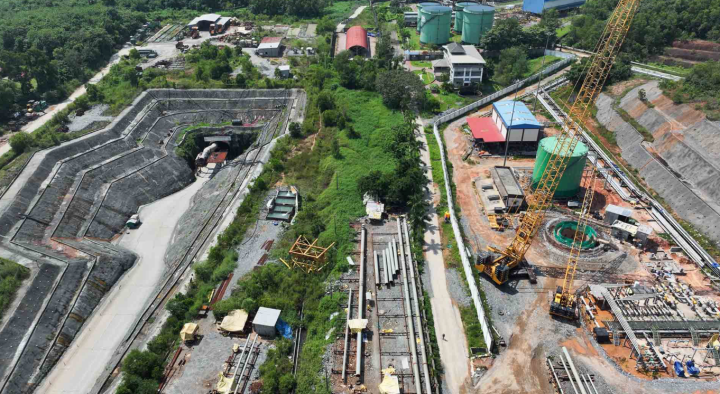
It is the biggest LPG cavern in India, with a storage capacity of 80,000 metric tonnes (MT). It is situated below the grounds of an existing LPG plant. This project’s unique architecture, which involves excavating the cavern beneath the existing surface structure, makes it even more impressive. This creative method enables the use of land for two purposes, greatly maximising space usage and setting a standard for upcoming infrastructure work.
Puri pointed out, “It not only strengthens the nation’s energy security but also demonstrates innovative land utilisation through its dual-use design.”
An exceptional engineering feat
The official website mentioned, “The cavern construction in Mangalore comprises two large underground tunnels with 1,220 metres and 225 metres in length respectively. The project involves digging an access tunnel over a kilometre long, with depths reaching 128 metres below sea level. The cavern itself is situated 156 metres below sea level, allowing for efficient fuel storage.”
The cavern is built within granitic gneiss rock and comprises the drill-and-blast method of construction, which necessitated thorough geological analyses and technical accuracy. Its depth guarantees that the LPG is safely confined by the water’s hydrostatic pressure.
This was the inaugural use of underground rock cavern technology for LPG storage in the country which lowers the risk of leaks to nearly zero in contrast to traditional tanks and founded a new benchmark for energy storage. Likewise, it incorporates two-tier water curtain technology that reduces the likelihood of gas leaks.
The storage area is composed of several elements, such as a 1.1 kilometre-long access tunnel for the removal of debris along with an upper and lower water curtain system featuring 13 kilometres of vertical and inclined boreholes. There are also main storage galleries that are 18 metres wide and 21 metres high, and an operational shaft with a diameter of 6.5 metres that extends to 164.5 metres for housing submersible LPG pumps, fill lines and instrumentation.
The cavern would be able to store nearly 6 lakh barrels of gas which is equal to 60 million litres of fuel. Additionally, it is environmentally friendly and fully safeguarded against weather conditions or attacks. The strategic site was chosen to improve the administration of LPG throughout India. “About 500 skilled workers and engineers are on-site, utilising advanced machinery to ensure the project’s success,” the website added.
“This project is a shining example of engineering excellence and collaborative execution of a complex mega project. The successful completion of this cavern will significantly strengthen India’s LPG storage infrastructure and ensure energy security for the nation,” expressed Vartika Shukla, former Chairman and Managing Director (CMD) of Engineers India Limited (EIL).
Visakhapatnam LPG storage cavern
The nation’s first subterranean LPG storage centre was set up beneath the rocky Dolphin Hills stretch near the Visakhapatnam coast in Andhra Pradesh. It operates at a depth of over 196 metres below sea level and is regarded as South Asia’s deepest and safest underground LPG cavern installation with a storage capacity of about 60,000 metric tonnes of LPG.
Hindustan Petroleum Corporation Limited (HPCL) and France’s largest energy company, “TotalEnergies,” launched a joint venture to execute the task. Each partner has an equal share in the project. It has Cavern A, possessing an occupancy of 1.03 MMT (Million metric Tonnes) and Cavern B which has a potential to hold 0.30 MMT.
The cavern’s construction started in November 1999, and because of the depth of excavation and the geological conditions, it presented difficult engineering hurdles. A significant safety milestone was also reached by the engineers and employees, who recorded 4.48 million work hours without an accident during its building.
Caverns and their importance
Caverns are man-made caves that are used to store petroleum as opposed to warehouses and bunkers. They are custom-built to meet safety regulations for fuel storage, while bunkers provide security during times of conflict and warehouses store food grains and products.
“Caverns are essential to ensure energy security, especially in a country like India, which depends on imports to meet its energy needs. By storing fuel during low-demand periods, India can mitigate the risks associated with fluctuating international prices and supply shortages,” the website read.
Conclusion
India has to cover a substantial path ahead in fortifying its LPG and other energy infrastructure to satisfy local demands without interruption during unforeseen circumstances. Nonetheless, the country has been making notable progress towards this goal, despite the hardships. OpIndia has already provided insights into the Strategic Petroleum Reserves in the country.