Last to strike, first to win: The quiet revolution that made India’s Navy a global force
On April 1, 2026, during a Naval Investiture Ceremony in Mumbai, Indian Navy Chief Admiral Dinesh K. Tripathi revealed a bombshell unrelated to the ceremony. ‘It is not a hidden fact anymore that we were just minutes away from striking Pakistan from sea, when they requested the stoppage of kinetic actions,’ he declared quietly but firmly in front of a hall packed with distinguished officers and naval personnel. The hush that followed was telling. The Admiral was referring to Operation Sindoor, which was India’s tri-services military reaction to the terror attack that killed 26 civilians in Pahalgam, Jammu & Kashmir, in April 2025. Sindoor, which was initiated on May 7, 2025, was designed as a targeted and punitive effort to destroy terrorist infrastructure both inside Pakistan and over the Line of Control. However, in the midst of the precision artillery and airstrikes, something else was taking on, far from the public eye, the Indian Navy had positioned itself in the Arabian Sea, weapons hot, and was just seconds away from a sea-based strike that could have drastically altered the history of the Indian subcontinent. Pakistan requested that the operation be halted. The Indian Navy backed off. However, the world is now aware of how near it was. For ages, military, legal experts, and governments have struggled with this crucial strategic question: Why is the Navy usually the last force to be unleashed, and what happens when it is? The answer encompasses military doctrine, international law, catastrophic logistics, human cost, and, in India’s case, a decade of quiet but tremendous maritime transformation. Understanding the arena: What kind of war are we talking about? Understanding what we mean by ‘armed conflict‘ is necessary before we can comprehend why the Navy waits. This is because not all wars are the same, and international law handles them very differently. The traditional state versus state conflict is known as an International Armed Conflict (IAC). Consider the Gulf War or the 1971 India-Pakistan War. Complete international humanitarian law is applicable under the 1949 Geneva Conventions. Both sides must refrain from attacking hospitals or other protected areas, protect civilians, and treat prisoners humanely. Conflicts between armed groups within a state or between a state and a non-state armed group, such as a terrorist organisation, are referred to as non-international armed conflicts (NIAC). Operation Sindoor, which was purposefully and strategically presented as an attack on terrorist infrastructure rather than Pakistani state forces, operated in an impasse of law between these two groups. Operation Sindoor was cautious when walking this line. The fact that India’s attacks were directed against terror camps rather than Pakistani Army troops is relevant from a legal standpoint. It conveyed a message: we are not at war with your country, but we will not allow your land to be used for terrorist activity. Two fundamental tenets of international humanitarian law (IHL) are proportionality and military necessity. Any attack must not result in an excessive number of civilian casualties and must be proportionate to the military gain sought. This is where naval warfare becomes more important and complicated from a legal standpoint. A cruise missile launched from a destroyer in the Arabian Sea can travel over 700 kilometres and kill a target with surgical precision. However, if the target is near a populated port city, the effects are far-reaching; civilian shipping channels are blocked, coastal economies are paralysed, and international neutral parties (including ships from third countries) may be caught in the crossfire. The laws of naval warfare Most individuals are familiar with the Geneva Conventions. Far fewer people are aware of the exact regulations that govern maritime combat, and these are extremely important. The San Remo manual The San Remo Manual on International Law Applicable to Armed Conflicts at Sea, adopted in June 1994 after six years of deliberation by international lawyers and naval experts, is described as the only comprehensive international instrument that has been drafted on the law of naval warfare since 1913. The Manual codifies customary international law by integrating existing legal norms for naval conflict with the 1949 Geneva Conventions and Protocol I of 1977. The manual is rather difficult. The law of naval warfare is divided into three major categories: international humanitarian law that applies at sea, maritime neutrality law, and prize law. IHL applied at sea oversees conflicts and the protection of people from the effects of armed conflict at sea, including regulations on weapons and methods of combat, as well as the treatment of the sick, wounded, and shipwrecked. It states that naval troops cannot target civilian vessels, hospital ships, or vessels transporting humanitarian aid. Prior to firing on commerce vessels, warni
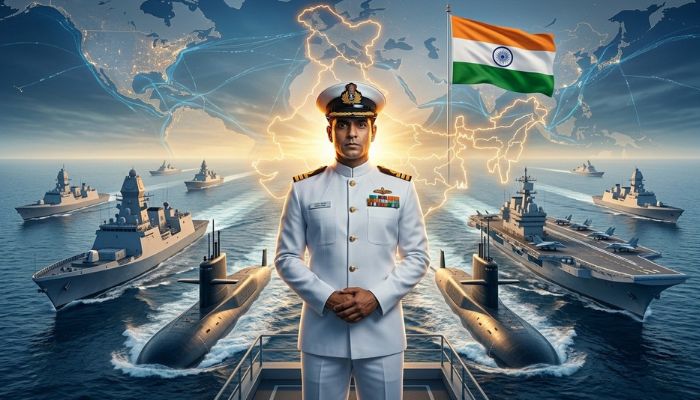
On April 1, 2026, during a Naval Investiture Ceremony in Mumbai, Indian Navy Chief Admiral Dinesh K. Tripathi revealed a bombshell unrelated to the ceremony. ‘It is not a hidden fact anymore that we were just minutes away from striking Pakistan from sea, when they requested the stoppage of kinetic actions,’ he declared quietly but firmly in front of a hall packed with distinguished officers and naval personnel.
The hush that followed was telling. The Admiral was referring to Operation Sindoor, which was India’s tri-services military reaction to the terror attack that killed 26 civilians in Pahalgam, Jammu & Kashmir, in April 2025. Sindoor, which was initiated on May 7, 2025, was designed as a targeted and punitive effort to destroy terrorist infrastructure both inside Pakistan and over the Line of Control. However, in the midst of the precision artillery and airstrikes, something else was taking on, far from the public eye, the Indian Navy had positioned itself in the Arabian Sea, weapons hot, and was just seconds away from a sea-based strike that could have drastically altered the history of the Indian subcontinent.
Pakistan requested that the operation be halted. The Indian Navy backed off. However, the world is now aware of how near it was. For ages, military, legal experts, and governments have struggled with this crucial strategic question: Why is the Navy usually the last force to be unleashed, and what happens when it is? The answer encompasses military doctrine, international law, catastrophic logistics, human cost, and, in India’s case, a decade of quiet but tremendous maritime transformation.
Understanding the arena: What kind of war are we talking about?
Understanding what we mean by ‘armed conflict‘ is necessary before we can comprehend why the Navy waits. This is because not all wars are the same, and international law handles them very differently.
The traditional state versus state conflict is known as an International Armed Conflict (IAC). Consider the Gulf War or the 1971 India-Pakistan War. Complete international humanitarian law is applicable under the 1949 Geneva Conventions. Both sides must refrain from attacking hospitals or other protected areas, protect civilians, and treat prisoners humanely.
Conflicts between armed groups within a state or between a state and a non-state armed group, such as a terrorist organisation, are referred to as non-international armed conflicts (NIAC). Operation Sindoor, which was purposefully and strategically presented as an attack on terrorist infrastructure rather than Pakistani state forces, operated in an impasse of law between these two groups.
Operation Sindoor was cautious when walking this line. The fact that India’s attacks were directed against terror camps rather than Pakistani Army troops is relevant from a legal standpoint. It conveyed a message: we are not at war with your country, but we will not allow your land to be used for terrorist activity.
Two fundamental tenets of international humanitarian law (IHL) are proportionality and military necessity. Any attack must not result in an excessive number of civilian casualties and must be proportionate to the military gain sought. This is where naval warfare becomes more important and complicated from a legal standpoint.
A cruise missile launched from a destroyer in the Arabian Sea can travel over 700 kilometres and kill a target with surgical precision. However, if the target is near a populated port city, the effects are far-reaching; civilian shipping channels are blocked, coastal economies are paralysed, and international neutral parties (including ships from third countries) may be caught in the crossfire.
The laws of naval warfare
Most individuals are familiar with the Geneva Conventions. Far fewer people are aware of the exact regulations that govern maritime combat, and these are extremely important.
The San Remo manual
The San Remo Manual on International Law Applicable to Armed Conflicts at Sea, adopted in June 1994 after six years of deliberation by international lawyers and naval experts, is described as the only comprehensive international instrument that has been drafted on the law of naval warfare since 1913. The Manual codifies customary international law by integrating existing legal norms for naval conflict with the 1949 Geneva Conventions and Protocol I of 1977.
The manual is rather difficult. The law of naval warfare is divided into three major categories: international humanitarian law that applies at sea, maritime neutrality law, and prize law. IHL applied at sea oversees conflicts and the protection of people from the effects of armed conflict at sea, including regulations on weapons and methods of combat, as well as the treatment of the sick, wounded, and shipwrecked.
It states that naval troops cannot target civilian vessels, hospital ships, or vessels transporting humanitarian aid. Prior to firing on commerce vessels, warnings must be issued. It prevents neutral countries’ exclusive economic zones from becoming inadvertent battlegrounds. Furthermore, it requires belligerents to evaluate the impact of naval mines, blockades, and missile strikes on the global civilian maritime environment.
This is not a theory. Approximately 95% of India’s external trade by volume and 77% by value passes through Indian Ocean maritime routes. A naval conflict in the Arabian Sea threatens not only Pakistan but also the global supply system.
The neutral ship problem
One of the most underrated issues of naval combat is what legal experts refer to as the neutral ship problem. On any given day, the Arabian Sea is home to hundreds of vessels, including Saudi tankers, Chinese container ships, Omani fishing trawlers, and Qatari LNG carriers. When naval missiles start flying, everyone is at risk.
States and other maritime entities must traverse a complicated legal framework in a maritime environment that has evolved considerably since its conception. Recent attacks on civilian ships and ports have highlighted the serious humanitarian ramifications for seafarers and the global community of states, which rely greatly on open and secure sea lines of communication.
Admiral Tripathi emphasised this point during the event, stating that the seas have arisen as new battlegrounds. We have gathered here at a time when the global order is distinguished by increasing fragmentation and tension. In such a scenario, the seas are no longer secondary battlegrounds where continental battles spill over. Instead, they are becoming the primary place where strategic purpose is signalled and debated, frequently with disproportionate consequences.
This is why fleets have greater legal and geopolitical weight than land forces. A tank breaching a boundary infringes sovereignty. A naval strike in contested international waters can disrupt global trade.
Reasons why the Navy is almost always the last resort
Throughout history, throughout centuries and continents, fleets have typically been the last, not the first, card to be played.
The logistics of Leviathan
One of the most logistically challenging tasks in human civilisation is the deployment of an aircraft carrier combat group. An aircraft carrier, two guided-missile cruisers, two or three destroyers, a submarine, and a supply ship usually make up a single carrier group, which employs about 7,500 personnel to run what is effectively a floating city.
Satellites, reconnaissance aircraft, and naval intelligence networks can see a carrier battle group as soon as it is sent near a hostile coastline. Every country in the area, as well as a few outside of it, instantly adjusts their strategic stance. Because of the automatic escalation ladder created by this visibility, carriers are frequently referred to as the most lethal diplomatic instruments on the planet. ‘When a crisis breaks out, the first question asked in Washington is where are the carriers?’ American strategists have often joked.
However, that visibility is a limitation as well. Pulling back without accomplishing anything when in an aggressive stance is perceived as weakness. Unintentional war is a risk of moving forward. As a result, the Navy establishes a threshold that is extremely difficult to retreat from once crossed, making its deployment a decision that needs to be made with extreme caution.
Nuclear shadow
Another existential reason for caution in the India-Pakistan relationship is that both countries possess nuclear weapons. The psychological calculus entirely shifts when a naval strike occurs in a Pakistani port, such as when an Indian submarine launches a BrahMos missile into Karachi harbour.
Pakistan’s nuclear policy is purposefully vague. Pakistan has made references to the potential for tactical nuclear use in the event that its conventional military forces are overpowered, in contrast to India, which upholds a ‘No First Use’ policy. That calculation might be triggered by a naval blockade of Karachi, Pakistan’s economic lifeline.
This isn’t speculative. When US naval ships imposing a blockade of Cuba depth-charged a Soviet submarine whose captain was authorised to deploy a nuclear torpedo, they came within hours of starting a nuclear exchange during the 1962 Cuban Missile Crisis. Vasili Arkhipov, the political officer of the submarine, declined to approve the launch. One man’s decision allowed the world to survive. This shadow is always present during naval standoffs with nuclear-armed adversaries.
The damage is extraordinary and irreversible.
A surgical air strike is not the same as a sea-based strike. The damage was limited to a few sites in a hilly border region when India’s air force attacked terror camps in Balakot in 2019. During Operation Trident in 1971, the Indian Navy sank Pakistani destroyers and fuel tanks, causing weeks of long repercussions. Over half of Karachi’s fuel reserves were destroyed, warehouses and naval workshops were destroyed, the Pakistani economy suffered, and the Pakistan Navy’s operations along the western coast were hampered. Over $3 billion was estimated to have been damaged.
Naval attacks have an impact on ports, which have an impact on trade, which has an impact on civilian populations located far from any military target. Because of this precedent, blockades that starve civilian populations are prohibited in the San Remo Manual. The damage potential has increased by an order of magnitude with today’s hypersonic missiles, submarine-launched cruise missiles, and carrier-based strike planes. This is precisely what makes these weapons so powerful as deterrents and so disastrous if they are actually employed.
The human cost at sea is uniquely terrible
There is something especially tragic about maritime casualties. The crew of a vessel has nowhere to go when it is sunk in battle. The Pakistani destroyer PNS Khaibar, carrying 222 sailors, sank in the Arabian Sea during Operation Trident. India lost INS Khukri to a Pakistani submarine during the same conflict; 192 personnel perished along with the ship. In the greatest traditions of naval service, the ship’s skipper, skipper MN Mulla, heroically refused evacuation and perished along with his crew.
Naval conflicts are frequently cruel binary events, survive or sink, in contrast to terrestrial combat, where soldiers have the option to withdraw, surrender, or be evacuated. A single warship loss can result in the loss of billions of dollars’ worth of equipment, the deaths of hundreds of skilled sailors, and a severe blow to the country’s morale. Admirals around the world advise political leaders to consider all other options before putting their fleet in danger just for this cause.
A naval strike is a statement to the entire world, not just the enemy
Aggression occurs when an army crosses a border. An air force attack is considered retaliation. However, since everyone owns the sea, when a navy moves into an offensive position in international waters and starts firing, it simultaneously sends a signal to all maritime nations.
China observes. The US keeps an eye on things. Saudi Arabia keeps an eye on the waters that any Indian naval force must go through in order to reach Pakistani ports. The countries of the Gulf Cooperation Council, which have a strong stake in the stability of the Arabian Sea, observe. The moment India’s naval troops fire on Pakistan from the sea, it becomes a worldwide event with unforeseen diplomatic implications. Because of this, the Navy is kept in reserve until the very last minute and utilised as a deterrent long before it is ever used as a weapon.
History’s classroom: What previous naval standoffs taught us
The Falkland War (1982)
Argentina invaded the British Falkland Islands in April 1982. Margaret Thatcher, the prime minister, had to decide whether to send a naval task force 13,000 kilometres across the Atlantic to recover the islands or negotiate and accept a fait accompli. The islands were too far away for ground forces to reach without naval power projection; the navy was the only choice. Two warships, two frigates, and a container ship were lost by Britain. 323 men were killed when Argentina lost a cruiser, the General Belgrano. The sinking of the Belgrano, which took place outside the British exclusion zone and sparked an ongoing worldwide discussion concerning naval rules of engagement, is still regarded as one of the most contentious naval operations of the modern era.
The lesson is that once committed at that size, a naval force is extremely difficult to control. After the task force sailed, Britain was unable to scale back.
Operation Trident and Python (1971)
The most instructive instance comes from India’s own history. During the 1971 Indo-Pakistani War, the Indian Navy conducted Operation Trident, an onslaught against Pakistan’s port city of Karachi. On the evening of December 4-5, anti-ship missiles were used in action for the first time in the area.
With SSN 2B Styx surface-to-surface missiles manufactured in the Soviet Union, three Indian missile boats, INS Nipat, INS Nirghat, and INS Veer, raced for Karachi harbour. The first Styx missile was fired by INS Nirghat at the Pakistani destroyer PNS Khaibar. The ship activated its anti-aircraft systems, believing it to be an Indian aircraft missile. When the missile struck the ship, the first boiler room exploded.
Pakistan’s Armed Forces Command was taken aback by the attack’s total surprise. Four nights later, more of Pakistan’s fleet tanker capacity was destroyed by the Indian Navy’s Operation Python. The strike destroyed more than half of Karachi’s fuel supplies. For the duration of the conflict, the Pakistan Navy was essentially contained in the safe haven of Karachi Harbour. Bangladesh’s formation marked the conclusion of the war in 13 days.
In remembrance of Operation Trident, India observes December 4 as Navy Day.
The USS Cole and the limits of deterrence
17 American sailors were killed, and 39 were injured in a suicide boat attack on the USS Cole in the Yemeni port of Aden in October 2000. Al-Qaeda’s raid illustrated a lesson as ancient as naval warfare: asymmetric tactics may put a strong navy at risk. For a generation, American Navy policy was altered by the psychological effects of witnessing a billion-dollar warship, a guided missile destroyer, almost sunk by a little boat loaded with explosives.
India can learn a valuable lesson that using naval forces in an offensive stance carries some danger. Pakistan has midget attack vessels, coastal missile batteries, and submarines. In the Arabian Sea, a standoff is never entirely one-sided.
How the Indian Navy was quietly rebuilt
Admiral Tripathi was able to confidently state in front of his men that the Indian Navy was minutes away from attacking Pakistan for a reason. Through a combination of political will, financial commitment, and an ambitious concept of indigenous production, that confidence was developed over the past ten years, ship by ship and submarine by submarine. It was not inherited.
From a coastal force to a Blue water navy
India’s Navy was the poor cousin of the armed forces for many years after independence. It was underfunded, ill-equipped, and frequently neglected by military strategists who prioritised land. The Air Force received the glamour, while the Army controlled the defence budget. As a result, the fleet was unable to challenge a rival in broad waters, let alone project force beyond India’s near coastline.
That started to change, and the shift has accelerated significantly. With resources and aspirations that now rival those of all but the biggest world powers, the Indian Navy has become one of the most important forces in the Indo-Pacific.
Floating aircraft and strategic power
India’s aircraft carrier program is the most obvious representation of its naval aspirations. Only a few countries on Earth have two entire carrier combat groups, as India now has.
INS Vikramaditya, originally constructed in Russia, was purchased and renovated for $2.3 billion. Since 2014, Vikramaditya has been in operation. It is equipped with Ka-28 anti-submarine helicopters, Kamov-31 airborne early warning helicopters, and MiG-29K fighters. On June 14, 2014, it was dedicated to the nation.
Launched on September 2, 2022, INS Vikrant is the largest warship ever built in India and the nation’s first aircraft carrier to be built domestically. It was designed by the Indian Navy’s Warship Design Bureau and constructed at Cochin Shipyard Limited. It represents the potential, resources, and talents of indigenous people. For the first time, India had two complete Carrier Battle Groups when INS Vikrant reached full operational status in November 2023. The Indian Navy’s offensive deterrent posture during Operation Sindoor was centred on INS Vikrant and its Carrier Battle Group.
Both carriers took part in the historic Milan 2024 international naval exercise, deploying MiG-29K fighters at the same time, marking the first time dual carriers operated together.
The submarine surge: India’s hidden fist
If India’s aircraft carrier is its visible sword, its submarine is its covert dagger, and it is currently sharper than it has ever been.
India quietly commissioned INS Aridhaman, its third nuclear-powered ballistic missile submarine, at a naval facility in Kerala just three days ago, on April 3, 2026. The third Arihant-class nuclear-powered ballistic missile submarine in the Indian Navy is called INS Aridhaman (SSBN 82), which translates to ‘Vanquisher of Foes’ in Sanskrit. The 7,000-ton ship was constructed at the Ship Building Centre in Visakhapatnam as part of the Advanced Technology Vessel (ATV) project. Attending the commissioning event, Defence Minister Rajnath Singh said in Hindi, ‘It’s not words but power, Aridaman.’ To put it simply, INS Aridhaman can reach almost any city on the subcontinent from somewhere in the Bay of Bengal or the Arabian Sea without ever being seen.
In terms of indigenous competence, the Arihant class program has gradually changed. About 70% of the content in INS Arihant (S2), which was commissioned in 2016, was indigenous. This was enhanced to about 75% with the induction of INS Arighaat (S3) in August 2024, and it has increased to about 85% with INS Aridhaman. Indian Defence Research Wing Launched at Visakhapatnam in October 2024, the fourth vessel, which is anticipated to be named INS Arisudan (Slayer of Enemies), is presently undergoing sea trials and is anticipated to be commissioned in 2027. Up to 90% of the content is anticipated to be indigenous, which would be the highest level of localisation in India’s nuclear submarine program to date.
In addition to the Arihant class, India is now developing the next generation of S5-class submarines, which are anticipated to displace approximately 13,500 tons, or nearly twice the size of the Arihant class. The first two S5 SSBNs are currently under construction, and four of the class are anticipated to be put into service by the late 2030s.
In terms of infrastructure, Project Varsha on the eastern coast of India is building reinforced underground pens for nuclear submarines to expand an existing submarine station south of Visakhapatnam. The project is anticipated to be operational by 2026. With the use of this new base, India’s submarines will be able to undertake deterrence patrols in fortified areas and sneak into the Bay of Bengal while avoiding satellite surveillance.
It is impossible to overestimate the strategic importance of all of this. Along with the United States, Russia, France, the United Kingdom, and China, India is now one of a few countries that develop, produce, and use nuclear-powered ballistic missile submarines. That is a small club, and India’s membership is completely due to local engineering.
By guaranteeing that at least one SSBN is constantly on patrol, the commissioning of INS Aridhaman enhances India’s position of continuous at-sea deterrence. Now, more than 200 local MSMEs are supporting the SSBN program by providing previously imported high-yield specialised steel, cutting-edge electronics, sonar systems, and other vital components.
The visible punch of Operation Sindoor is concealed by this fist. Pakistan knew that India’s submarines were waiting somewhere beneath the Arabian Sea, silent, invisible, and prepared, when they requested a halt.
The strategic doctrine shift: Pragmatic, Proactive, Lethal
Over the last ten years, doctrine has evolved in addition to hardware. India’s military forces now adopt a more proactive, joint force paradigm instead of a reactive, border-protection stance. The appointment of the Chief of Defence Staff, the establishment of integrated theatre commands that unify Army, Navy, and Air Force operational planning, and the formation of tri-services commands are examples of this.
Hypersonic missiles, contemporary precision artillery, domestic drones, artificial intelligence for battlefield awareness, and a new space warfare doctrine, with a focus on surface and submarine naval expansion, are all part of India’s 15 year military modernization plan, which was unveiled following Operation Sindoor.
During Operation Sindoor, the Navy conducted simultaneous humanitarian operations, deployed quickly, maintained an aggressive posture for weeks, and remained prepared to strike. Admiral Tripathi also emphasised the Navy’s wider responsibility, citing Operation Sagar Bandhu in Sri Lanka and Operation Brahma in Myanmar as instances of maintaining India’s dedication as a First Responder in the area. That is a significantly different type of military capability than India had even ten years ago.
Conclusion
Admiral Tripathi’s revelation during the Naval Investiture Ceremony was not boastful. It served as a lesson on the realities of contemporary deterrence.
There was no firing from the Indian Navy. However, Pakistan was aware that it could. According to the Navy chief, Pakistan’s call for a pause in military activities came as Indian troops were preparing for possible confrontation, forcing a strategic decision to cease further kinetic moves in favour of de-escalation. More potent than any missile was the warning conveyed by the deployment of two carrier battle groups, nuclear-capable submarines, and surface combatants armed with BrahMos. ‘We have the means, we have the will, and we have restraint, but restraint has limits. Navies are therefore the last option.’
They are too strong to use recklessly, not because they are weak. Every escalation ladder, legal, political, economic, and existential, is activated concurrently by naval warfare. Not only may a naval strike destroy a ship, but it can also impede trade, destabilise international seas, lead to neutral party involvement, and, in a neighbourhood with nuclear weapons, raise the possibility of civilizational repercussions.
With homegrown carriers, cutting-edge submarines, hypersonic-capable platforms, and an aggressive deterrence strategy, India’s Navy has been rebuilt over the past ten years to become a truly blue water force. As a result, it now has the capability and legitimacy to actually pose a threat. Operation Sindoor provided a glimpse of that to the globe. The Navy was last. It was ready. And that preparation, that quiet, patient, terrible readiness, is exactly what matters.