Jihadistan 2026: Pakistan wins top spot in the Global Terrorism Index, worse than Burkina Faso
On March 20, the Institute for Economics and Peace released its Global Terrorism Index 2026, and the results were devastating, Pakistan is now officially the most terrorism-affected country in the world. 8.574 is the score. 1,139 people died. 1,045 incidents. 1,595 injuries. After two years at the top, Burkina Faso was overthrown by Pakistan, which now holds the top spot for the first time in the Index’s history. The study, which is 97 pages long, is brutally plain. While global terrorist deaths plummeted 28% to 5,582 and attacks fell 22% to 2,944, with 81 nations improving, Pakistan went the opposite direction. This isn’t a coincidence. It is the result of extreme Islamist ideology, groups that the state once nurtured, and Afghan spillover. How the Index is actually calculated? The GTI isn’t just a body count contest. The number of terrorist incidents, fatalities, injuries, and hostages abducted are the four pillars of this weighted composite score. To account for the long term impact of trauma, the Index uses a five year weighted lag, current attacks hurt more, but older ones still lower the score. No single bloody year can fake a pattern according to the method (explained in Appendix B). With six times as many events as in 2020 and the biggest death toll since 2013, Pakistan’s 2025 spike was more than sufficient to take the top rank. Pakistan: Host, sponsor and the victim of a disease it nurtures itself The report doesn’t hold back. Pakistan saw the highest number of terrorist killings since 2013. TTP alone was responsible for 595 attacks and 637 fatalities, a 13% increase from the year before. The group, a Deobandi Islamist organisation founded in 2007, has close operational and theological ties to al-Qaeda. The UN Security Council observes that the TTP provides safe havens along the Afghan-Pakistan border while taking ideological guidance from al-Qaeda. There is a pattern when you include the BLA’s dramatic train hijacking that resulted in 442 hostages. These groups have been bolstered by cross-border militancy from Afghanistan, where the Taliban regained control in 2021. The Taliban’s return to power in Afghanistan and strained relations with its neighbours are directly linked in the report to Pakistan’s rise. These tensions evolved into an open conflict by February 2026, when Pakistan attacked Kabul and Kandahar with air strikes. To put it briefly, the jihad that Pakistan once supported as a tactical advantage has returned home. Nonetheless, Islamabad insists on being the victim. There is a lot of irony. The Islamic State, JNIM (an al-Qaeda branch), TTP, and al-Shabaab are the four groups responsible for 70% of terrorist deaths worldwide, according to IEP data, yet Pakistan’s narrative is still narrowly centred. Radical Islam as the common denominator The pattern is obvious when you look at the top perpetrators. Al-Shabaab, JNIM (Jamaat Nusrat Al-Islam wal Muslimeen), and TTP are all based on radical or Salafi-jihadist beliefs that have their roots in al-Qaeda’s worldwide network. The same ideological void is exploited by Islamic State affiliates in the area. In Africa, the report frequently emphasises how terrorist groups profit from rhetoric about human rights abuse by state security forces, but in South Asia, the cause is evident: a poisonous combination of radical preaching, porous borders, and governmental tolerance. Khyber Pakhtunkhwa and Pakistan’s Federally Administered Tribal Areas continue to serve as launchpads. The TTP’s increasing attacks for the fourth year in a row are a result of decades of ideological sowing, not an accident. India: rising above regional chaos India, on the other hand, came in at number 13 with a score of 6.428. Only 2% of all terrorist deaths worldwide occurred in the nation having approx 17.5% of world population, and deaths plummeted. India maintained a multi-year trend of diminishing terror influence. Border fortifications, intelligence sharing, and strong counterterrorism frameworks have produced outcomes. According to the report’s distribution chart, 70% of deaths occur in Pakistan, Burkina Faso, Nigeria, and Niger. India hardly makes an impression. The tale of South Asia is unique to Pakistan, while sub Saharan Africa continues to be the new epicenter (more than half of all deaths worldwide). In the midst of Islamist terror in the subcontinent, India’s calm progress stands out like a lighthouse. Pakistan favourite accusation: ‘India did it’ This is where the story takes a darkly humorous turn. Despite the fact that the IEP report makes no mention of Indian support, Pakistani officials have spent years and will continue to blame New Delhi for every explosion on their turf. Following a court explosion in Islamabad in November 2025, Prime Minister Shehbaz Sharif and Defence Minister Khawaja Asif made unfounded accusations against ‘Indian proxies.’ No Indian roles are mentioned. Rather, it details Afghan spillover,
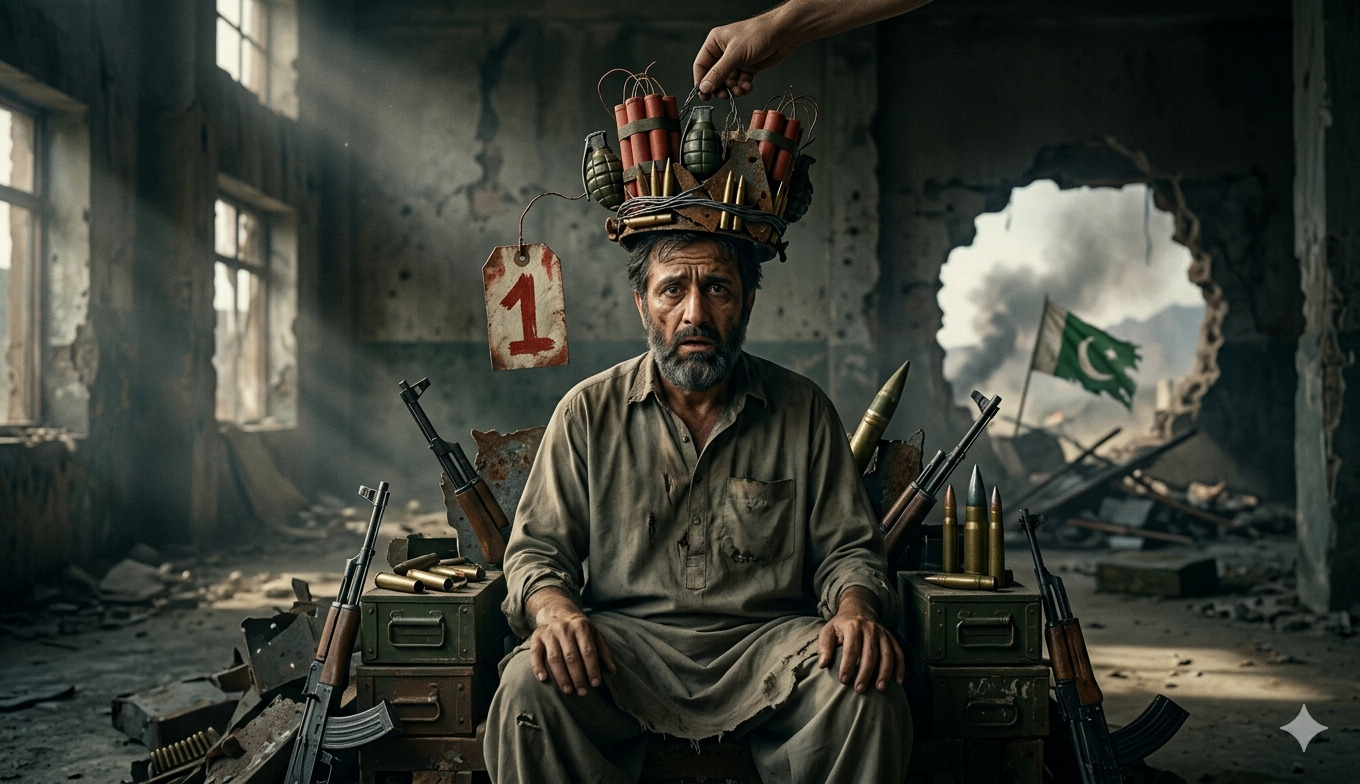
On March 20, the Institute for Economics and Peace released its Global Terrorism Index 2026, and the results were devastating, Pakistan is now officially the most terrorism-affected country in the world. 8.574 is the score. 1,139 people died. 1,045 incidents. 1,595 injuries. After two years at the top, Burkina Faso was overthrown by Pakistan, which now holds the top spot for the first time in the Index’s history.
The study, which is 97 pages long, is brutally plain. While global terrorist deaths plummeted 28% to 5,582 and attacks fell 22% to 2,944, with 81 nations improving, Pakistan went the opposite direction. This isn’t a coincidence. It is the result of extreme Islamist ideology, groups that the state once nurtured, and Afghan spillover.
How the Index is actually calculated?
The GTI isn’t just a body count contest. The number of terrorist incidents, fatalities, injuries, and hostages abducted are the four pillars of this weighted composite score. To account for the long term impact of trauma, the Index uses a five year weighted lag, current attacks hurt more, but older ones still lower the score. No single bloody year can fake a pattern according to the method (explained in Appendix B). With six times as many events as in 2020 and the biggest death toll since 2013, Pakistan’s 2025 spike was more than sufficient to take the top rank.
Pakistan: Host, sponsor and the victim of a disease it nurtures itself
The report doesn’t hold back. Pakistan saw the highest number of terrorist killings since 2013. TTP alone was responsible for 595 attacks and 637 fatalities, a 13% increase from the year before. The group, a Deobandi Islamist organisation founded in 2007, has close operational and theological ties to al-Qaeda. The UN Security Council observes that the TTP provides safe havens along the Afghan-Pakistan border while taking ideological guidance from al-Qaeda. There is a pattern when you include the BLA’s dramatic train hijacking that resulted in 442 hostages. These groups have been bolstered by cross-border militancy from Afghanistan, where the Taliban regained control in 2021. The Taliban’s return to power in Afghanistan and strained relations with its neighbours are directly linked in the report to Pakistan’s rise. These tensions evolved into an open conflict by February 2026, when Pakistan attacked Kabul and Kandahar with air strikes. To put it briefly, the jihad that Pakistan once supported as a tactical advantage has returned home.
Nonetheless, Islamabad insists on being the victim. There is a lot of irony. The Islamic State, JNIM (an al-Qaeda branch), TTP, and al-Shabaab are the four groups responsible for 70% of terrorist deaths worldwide, according to IEP data, yet Pakistan’s narrative is still narrowly centred.
Radical Islam as the common denominator
The pattern is obvious when you look at the top perpetrators. Al-Shabaab, JNIM (Jamaat Nusrat Al-Islam wal Muslimeen), and TTP are all based on radical or Salafi-jihadist beliefs that have their roots in al-Qaeda’s worldwide network. The same ideological void is exploited by Islamic State affiliates in the area. In Africa, the report frequently emphasises how terrorist groups profit from rhetoric about human rights abuse by state security forces, but in South Asia, the cause is evident: a poisonous combination of radical preaching, porous borders, and governmental tolerance.
Khyber Pakhtunkhwa and Pakistan’s Federally Administered Tribal Areas continue to serve as launchpads. The TTP’s increasing attacks for the fourth year in a row are a result of decades of ideological sowing, not an accident.
India: rising above regional chaos
India, on the other hand, came in at number 13 with a score of 6.428. Only 2% of all terrorist deaths worldwide occurred in the nation having approx 17.5% of world population, and deaths plummeted. India maintained a multi-year trend of diminishing terror influence. Border fortifications, intelligence sharing, and strong counterterrorism frameworks have produced outcomes.
According to the report’s distribution chart, 70% of deaths occur in Pakistan, Burkina Faso, Nigeria, and Niger. India hardly makes an impression. The tale of South Asia is unique to Pakistan, while sub Saharan Africa continues to be the new epicenter (more than half of all deaths worldwide). In the midst of Islamist terror in the subcontinent, India’s calm progress stands out like a lighthouse.
Pakistan favourite accusation: ‘India did it’
This is where the story takes a darkly humorous turn. Despite the fact that the IEP report makes no mention of Indian support, Pakistani officials have spent years and will continue to blame New Delhi for every explosion on their turf. Following a court explosion in Islamabad in November 2025, Prime Minister Shehbaz Sharif and Defence Minister Khawaja Asif made unfounded accusations against ‘Indian proxies.’
No Indian roles are mentioned. Rather, it details Afghan spillover, TTP and BLA attacks, and Pakistan’s own shortcomings in border management. While Islamabad yells about Indian proxies, the data subtly indicates that terrorist organisations were fostered in Pakistan and provided sanctuary in Afghanistan. Why doesn’t the most reputable terrorism index in the world take notice if India is really the puppet master?
Conclusion
Pakistan’s top position is not a badge of glory. It serves as a caution. The region suffers when cross-border fighting escalates into open warfare, when BLA seizes trains, and when TTP death tolls reach levels not seen since 2011. In contrast, India has gradually decreased its vulnerability through policy rather than advertising.
The problem of jihadists is not abstract. It has its roots in radical Islamist networks that Pakistan has either supported, tolerated, or engaged. The epicentre of terrorism in the subcontinent will stay in Pakistan, as shown by the 2026 Index, unless Islamabad addresses this internal ideological disease rather than shifting the responsibility across the border.
Last year, there was a decrease in terrorism worldwide. But there are still unresolved issues in the story of South Asia. The numbers don’t lie. The real question is whether Islamabad will finally listen?