India unlocks major milestone in nuclear power as Kalpakkam PFBR attains criticality: Read how it will help the nation to tap its vast Thorium reserves for long-term energy security
On 6th April, India took a major step in its 3-stage nuclear power programme after the Prototype Fast Breeder Reactor (PFBR) at Kalpakkam attained criticality. It marked the start of a sustained nuclear chain reaction. With this milestone, India has entered stage II of the nuclear programme that Dr Homi Bhabha had envisioned. It is being seen as a crucial step before the country moves towards thorium-based reactors in stage III. Breaking: India's Prototype Fast Breeder Reactor at Kalpakkam has achieved criticality, PM Modi announces.India enters stage-II of nuclear program.The 500 MWe PFBR, developed by BHAVINI and IGCAR positions India as 2nd nation after Russia to operate a commercial-scale FBR.… pic.twitter.com/WlmownNqtg— OpIndia.com (@OpIndia_com) April 7, 2026 Bharatiya Nabhikiya Vidyut Nigam Limited (BHAVINI) has designed, built and developed the reactor indigenously under the Department of Atomic Energy at Kalpakkam in Tamil Nadu. The reactor is capable of producing more fuel than it consumes, which is the key feature required for India’s long term nuclear strategy. PM Modi calls it a defining moment In a post on X, Prime Minister Narendra Modi described the achievement as a defining step in India’s civil nuclear journey. He said the indigenously designed and built PFBR at Kalpakkam has attained criticality, advancing the second stage of India’s nuclear programme. Today, India takes a defining step in its civil nuclear journey, advancing the second stage of its nuclear programme.The indigenously designed and built Prototype Fast Breeder Reactor at Kalpakkam has attained criticality.This advanced reactor, capable of producing more fuel…— Narendra Modi (@narendramodi) April 6, 2026 In his statement, PM Modi said that the advanced reactor can produce more fuel than it consumes. It shows the depth of the scientific and engineering capabilities of the country. He added that India is now moving towards harnessing vast thorium reserves in the third stage of the programme. #PFBRGoesCritical Marks India's entry into the second stage of the 3-Stage Indian Nuclear Power Programme envisioned by Dr. Homi Bhabha. PFBR enables efficient utilisation of available uranium resources while also unlocking the potential of India's vast thorium reserves. 2/2— DAE India (@DAEIndia) April 6, 2026 He added that this is a proud moment for the country and congratulated engineers and scientists involved in the project. What criticality means and why it matters In terms of nuclear energy, criticality means that the reactor has reached the point where it can sustain a nuclear fission reaction. At this point, the number of neutrons produced in the reactor is enough to keep the chain reaction going without external intervention. Though it does not mean the reactor has started generating electricity at full power, it is one of the most crucial milestones in commissioning any nuclear reactor. Once this stage is achieved, the reactor gradually moves towards higher power levels and eventual commercial operation. What makes the PFBR different Fast breeder reactors are fundamentally different from conventional nuclear reactors. In traditional reactors, uranium is the main fuel. On the other hand, fast breeder reactors use plutonium. They are designed to produce more fissile material than they consume. Flow Diagram of PFBR. Source:Modelling and simulation of inclined fuel transfer machine in prototype fast breeder reactor operator training simulator/reasearchgate/Image Enhanced using AI. The PFBR converts uranium-238 into plutonium-239 while generating energy. This unique capability allows the reactor to create additional fuel during operation. This is why fast breeder reactors are considered essential for countries like India that have limited uranium but large thorium reserves. Initially, the reactor will use uranium plutonium mixed oxide fuel surrounded by a blanket of uranium. This configuration allows breeding of additional fissile material. In future, thorium will be used in the blanket to generate uranium-233, which will be used in advanced heavy water reactors. Why stage II is necessary before stage III The nuclear power programme of India is structured into three stages. Each stage is dependent on the previous one. The first stage uses pressurised heavy water reactors running primarily on uranium. This stage produces plutonium as part of spent fuel. The second stage includes fast breeder reactors like the PFBR. It uses this plutonium to generate more fissile material. These reactors not only produce electricity but also create additional fuel, which is required in the next stage. The third stage focuses on thorium-based reactors. India has some of the world’s largest thorium reserves. However, thorium cannot be used directly to sustain a nuclear chain reaction. It has to first be converted into fissile uranium-233. This conversion is possible only using materials
On 6th April, India took a major step in its 3-stage nuclear power programme after the Prototype Fast Breeder Reactor (PFBR) at Kalpakkam attained criticality. It marked the start of a sustained nuclear chain reaction. With this milestone, India has entered stage II of the nuclear programme that Dr Homi Bhabha had envisioned. It is being seen as a crucial step before the country moves towards thorium-based reactors in stage III.
Breaking: India's Prototype Fast Breeder Reactor at Kalpakkam has achieved criticality, PM Modi announces.India enters stage-II of nuclear program.The 500 MWe PFBR, developed by BHAVINI and IGCAR positions India as 2nd nation after Russia to operate a commercial-scale FBR.… pic.twitter.com/WlmownNqtg— OpIndia.com (@OpIndia_com) April 7, 2026
Bharatiya Nabhikiya Vidyut Nigam Limited (BHAVINI) has designed, built and developed the reactor indigenously under the Department of Atomic Energy at Kalpakkam in Tamil Nadu. The reactor is capable of producing more fuel than it consumes, which is the key feature required for India’s long term nuclear strategy.
PM Modi calls it a defining moment
In a post on X, Prime Minister Narendra Modi described the achievement as a defining step in India’s civil nuclear journey. He said the indigenously designed and built PFBR at Kalpakkam has attained criticality, advancing the second stage of India’s nuclear programme.
Today, India takes a defining step in its civil nuclear journey, advancing the second stage of its nuclear programme.The indigenously designed and built Prototype Fast Breeder Reactor at Kalpakkam has attained criticality.This advanced reactor, capable of producing more fuel…— Narendra Modi (@narendramodi) April 6, 2026
In his statement, PM Modi said that the advanced reactor can produce more fuel than it consumes. It shows the depth of the scientific and engineering capabilities of the country. He added that India is now moving towards harnessing vast thorium reserves in the third stage of the programme.
#PFBRGoesCritical Marks India's entry into the second stage of the 3-Stage Indian Nuclear Power Programme envisioned by Dr. Homi Bhabha. PFBR enables efficient utilisation of available uranium resources while also unlocking the potential of India's vast thorium reserves. 2/2— DAE India (@DAEIndia) April 6, 2026
He added that this is a proud moment for the country and congratulated engineers and scientists involved in the project.
What criticality means and why it matters
In terms of nuclear energy, criticality means that the reactor has reached the point where it can sustain a nuclear fission reaction. At this point, the number of neutrons produced in the reactor is enough to keep the chain reaction going without external intervention.
Though it does not mean the reactor has started generating electricity at full power, it is one of the most crucial milestones in commissioning any nuclear reactor. Once this stage is achieved, the reactor gradually moves towards higher power levels and eventual commercial operation.
What makes the PFBR different
Fast breeder reactors are fundamentally different from conventional nuclear reactors. In traditional reactors, uranium is the main fuel. On the other hand, fast breeder reactors use plutonium. They are designed to produce more fissile material than they consume.
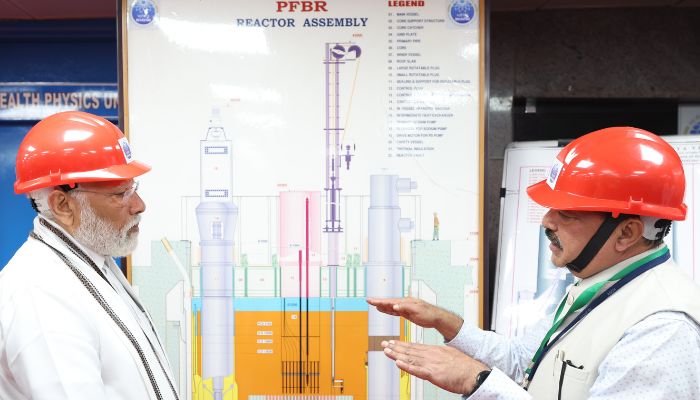
Flow Diagram of PFBR. Source:Modelling and simulation of inclined fuel transfer machine in prototype fast breeder reactor operator training simulator/reasearchgate/Image Enhanced using AI.
The PFBR converts uranium-238 into plutonium-239 while generating energy. This unique capability allows the reactor to create additional fuel during operation. This is why fast breeder reactors are considered essential for countries like India that have limited uranium but large thorium reserves.
Initially, the reactor will use uranium plutonium mixed oxide fuel surrounded by a blanket of uranium. This configuration allows breeding of additional fissile material. In future, thorium will be used in the blanket to generate uranium-233, which will be used in advanced heavy water reactors.
Why stage II is necessary before stage III
The nuclear power programme of India is structured into three stages. Each stage is dependent on the previous one. The first stage uses pressurised heavy water reactors running primarily on uranium. This stage produces plutonium as part of spent fuel.
The second stage includes fast breeder reactors like the PFBR. It uses this plutonium to generate more fissile material. These reactors not only produce electricity but also create additional fuel, which is required in the next stage.
The third stage focuses on thorium-based reactors. India has some of the world’s largest thorium reserves. However, thorium cannot be used directly to sustain a nuclear chain reaction. It has to first be converted into fissile uranium-233.
This conversion is possible only using materials produced in stage II. In simple terms, stage II creates the fuel that is required to unlock India’s thorium reserves. Without fast breeder reactors producing this fissile material, the thorium-based stage III cannot be implemented at scale.
Government earlier flagged first of a kind challenges
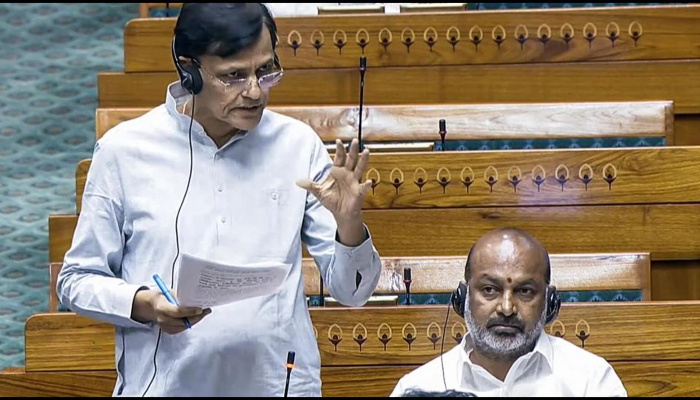
It has been over two decades since the PFBR project started. It involved complex engineering challenges. Earlier, while replying in Parliament, Atomic Energy Minister Jitendra Singh stated that delays in completion of the PFBR project were mainly due to first-of-a-kind technological issues that were faced during the integrated commissioning phase.
In a written reply to the Lok Sabha, he said these issues were being solved systematically in close coordination with designers. He also clarified that India is implementing the 3-stage nuclear programme envisioned by Dr Homi Bhabha.
According to the government’s response, the first stage comprising pressurised heavy water reactors has attained maturity. For realisation of the second stage, facilities such as the Fast Breeder Test Reactor were established. The 500 MWe Prototype Fast Breeder Reactor at Kalpakkam was described as being at an advanced stage of commissioning.
The third stage aimed at utilising India’s vast thorium reserves is currently under development.
A long-awaited milestone
PFBR construction began in 2004. The project involved some of the most complex engineering challenges undertaken by India’s atomic energy establishment. In August 2024, the Atomic Energy Regulatory Board granted permission for the reactor to move to the first approach to criticality stage, which included fuel loading and low power experiments. In March 2024, PM Modi had visited the site to witness “core loading” at the site.
Earlier today, witnessed the commencement of “core loading“ of India’s first and totally indegenous fast breeder reactor at Kalpakkam, which produces more fuel than is consumed. This will pave way for eventual utilisation of India’s vast thorium reserves and thus obviate the… pic.twitter.com/gsYSIClbp9— Narendra Modi (@narendramodi) March 4, 2024
As the reactor has now attained criticality, India has formally entered stage II of its 3-stage nuclear power programme. This stage is expected to demonstrate fast breeder technology and pave the way for thorium-based reactors in stage III.
The milestone is also seen as a strategic step towards long term energy security and expansion of nuclear power capacity. Fast breeder reactors like the PFBR are expected to reduce dependence on imported uranium and enable India to utilise its vast thorium reserves in the future.