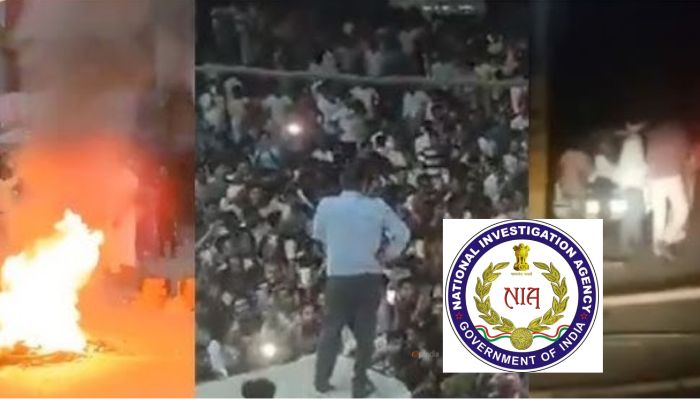
Women positioned at the front, provocative announcements from local mosque, switched off CCTV: What NIA’s preliminary inquiry report in Malda violence case reveals
Days after the Chief Election Commissioner CEC) Gyanesh Kumar entrusted the National Investigation Agency (NIA) with the investigation of the Malda violence case, wherein 7 judicial officers on SIR duty were gheraoed and harassed by a Muslim mob on 1st April, the probe agency has filed its preliminary inquiry as ordered by the Supreme Court. The NIA stated that the Malda incident was not a spontaneous agitation but a planned and coordinated mobilisation. NIA’s preliminary findings in the case indicate a simultaneous emergence of demonstration and road blockades across multiple locations, pointing to prior planning and strategic execution by an organised network rather than a ‘protest’ driven by organic anger over SIR. #WATCH | West Bengal | National Investigation Agency (NIA) team leaves from Block Development Officer's (BDO) office after conducting an investigation regarding the Malda violence incident"We will submit the report," an NIA official said https://t.co/i9sXRtDttI pic.twitter.com/mOljDaK6zg— ANI (@ANI) April 4, 2026 Local mosque gave calls to Muslims to gather outside the BDO office, where seven judicial officers were present: a 1500-strong mob assembled within minutes The NIA found that announcements were made in the Kaliachowk (also spelt, Kaliachak) area through e-rickshaws to gather a mob. Announcements were also made from a local mosque calling on Muslims to hit the streets and gherao the judicial officers, including women, at the Kaliachak-II BDO office. In no time, a Muslim mob as strong as 1500 gathered outside the BDO office. The mob surrounded the seven judicial officers on SIR duty and held them under siege for around 13 hours. It has also emerged that a female judicial officer was detained for nearly eight hours, indicating that the mob’s anarchic and violent actions were not confined to a single location, but that systematic obstructions were erected at various locations. Mob obstructed the police operation to rescue stuck judicial officers, and women were deliberately deployed at the forefront As if all those hours under siege were not horrible enough for the judicial officers, when the West Bengal Police finally woke up from its deliberate slumber and decided to rescue the stranded officers, the mob attacked the convoy of the rescued judicial officers. As they were being evacuated by the police and CAPF, their convoy was pelted with stones at several locations. One driver was seriously injured in the attack, causing the vehicle to overturn. This indicates that the attackers not only surrounded the area but also targeted the rescue operation. Muslim mobs have a tried-and-tested strategy of deploying women and children at the forefront as a shield. In the present case, the NIA further revealed that women were positioned at the forefront of the mob, while men caused a ruckus from behind. Notably, deploying women at the front serves three main purposes. First, the authorities would hesitate in taking strict measures to disperse them. Second, if the authorities go ahead with hard action like lathi-charge or forced dispersal, the Muslim mob would use it as an excuse to turn on their full-fledged Jihadi mode. Third, visuals of police forces cracking down on women ‘protestors’ flashed by media outlets would invoke sympathy, helping in shaping a favourable narrative. This playbook was seen during the anti-Hindu 2020 Delhi Riots, the Haldwani violence and many other such cases. CCTV cameras installed at the Kaliachak BDO office were found switched off The 72-hour long on-ground investigation by the NIA officials also revealed a startling fact, almost confirming that the mob attack on judicial officers in Malda was planned conspiracy to disrupt the judicial adjudication of the SIR process. The NIA inquiry states that 9 of the 16 CCTV cameras installed at the BDO office were found to be switched off, including those at the main entrance. Notably, of the 105 individuals named in the three primary FIRs, 24 have been arrested so far. Now, the NIA has sought the Supreme Court’s nod to investigate a full conspiracy angle. Supreme Court reprimanded Bengal administration, finds merit in conspiracy allegations On the 6th of April, the Supreme Court bench led by CJI Suryakant heard the petitions challenging the Special Intensive Revision (SIR) of West Bengal’s electoral rolls. The top court blasted the Director General of Police (DGP) and Chief Secretary of West Bengal for not answering the Chief Justice of the Calcutta High Court’s calls during the shocking event. Justice Kant slammed, “You are so busy that you cannot take the call of the Chief Justice of the High Court,” after which the Chief Secretary defended, “There was no call from any chief justice to me. I had come to Delhi for a meeting. From 2 pm to 4:30 pm, I was on a flight.” Justice Joymala Bagchi added, “It would have been very helpful if your number had been shared with the high
Days after the Chief Election Commissioner CEC) Gyanesh Kumar entrusted the National Investigation Agency (NIA) with the investigation of the Malda violence case, wherein 7 judicial officers on SIR duty were gheraoed and harassed by a Muslim mob on 1st April, the probe agency has filed its preliminary inquiry as ordered by the Supreme Court. The NIA stated that the Malda incident was not a spontaneous agitation but a planned and coordinated mobilisation.
NIA’s preliminary findings in the case indicate a simultaneous emergence of demonstration and road blockades across multiple locations, pointing to prior planning and strategic execution by an organised network rather than a ‘protest’ driven by organic anger over SIR.
#WATCH | West Bengal | National Investigation Agency (NIA) team leaves from Block Development Officer's (BDO) office after conducting an investigation regarding the Malda violence incident"We will submit the report," an NIA official said https://t.co/i9sXRtDttI pic.twitter.com/mOljDaK6zg— ANI (@ANI) April 4, 2026
Local mosque gave calls to Muslims to gather outside the BDO office, where seven judicial officers were present: a 1500-strong mob assembled within minutes
The NIA found that announcements were made in the Kaliachowk (also spelt, Kaliachak) area through e-rickshaws to gather a mob. Announcements were also made from a local mosque calling on Muslims to hit the streets and gherao the judicial officers, including women, at the Kaliachak-II BDO office.
In no time, a Muslim mob as strong as 1500 gathered outside the BDO office. The mob surrounded the seven judicial officers on SIR duty and held them under siege for around 13 hours.
It has also emerged that a female judicial officer was detained for nearly eight hours, indicating that the mob’s anarchic and violent actions were not confined to a single location, but that systematic obstructions were erected at various locations.
Mob obstructed the police operation to rescue stuck judicial officers, and women were deliberately deployed at the forefront
As if all those hours under siege were not horrible enough for the judicial officers, when the West Bengal Police finally woke up from its deliberate slumber and decided to rescue the stranded officers, the mob attacked the convoy of the rescued judicial officers. As they were being evacuated by the police and CAPF, their convoy was pelted with stones at several locations. One driver was seriously injured in the attack, causing the vehicle to overturn. This indicates that the attackers not only surrounded the area but also targeted the rescue operation.
Muslim mobs have a tried-and-tested strategy of deploying women and children at the forefront as a shield. In the present case, the NIA further revealed that women were positioned at the forefront of the mob, while men caused a ruckus from behind.
Notably, deploying women at the front serves three main purposes. First, the authorities would hesitate in taking strict measures to disperse them. Second, if the authorities go ahead with hard action like lathi-charge or forced dispersal, the Muslim mob would use it as an excuse to turn on their full-fledged Jihadi mode. Third, visuals of police forces cracking down on women ‘protestors’ flashed by media outlets would invoke sympathy, helping in shaping a favourable narrative. This playbook was seen during the anti-Hindu 2020 Delhi Riots, the Haldwani violence and many other such cases.
CCTV cameras installed at the Kaliachak BDO office were found switched off
The 72-hour long on-ground investigation by the NIA officials also revealed a startling fact, almost confirming that the mob attack on judicial officers in Malda was planned conspiracy to disrupt the judicial adjudication of the SIR process.
The NIA inquiry states that 9 of the 16 CCTV cameras installed at the BDO office were found to be switched off, including those at the main entrance.
Notably, of the 105 individuals named in the three primary FIRs, 24 have been arrested so far.
Now, the NIA has sought the Supreme Court’s nod to investigate a full conspiracy angle.
Supreme Court reprimanded Bengal administration, finds merit in conspiracy allegations
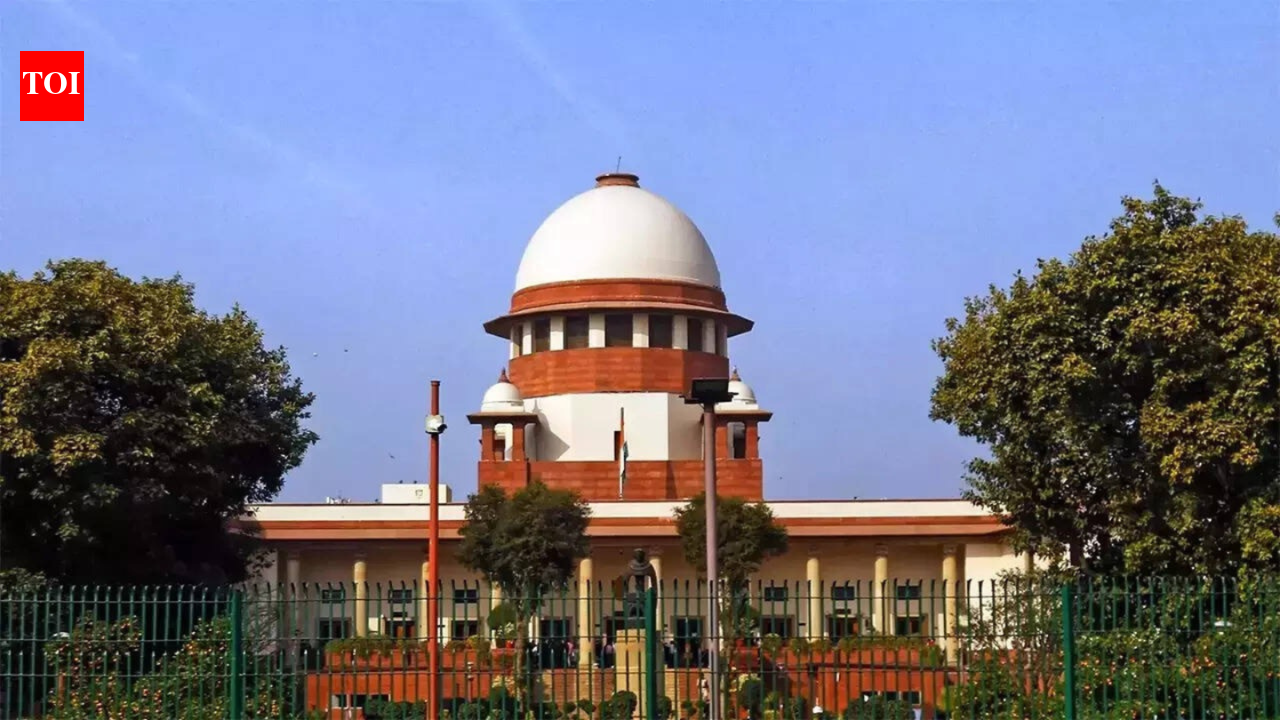
On the 6th of April, the Supreme Court bench led by CJI Suryakant heard the petitions challenging the Special Intensive Revision (SIR) of West Bengal’s electoral rolls.
The top court blasted the Director General of Police (DGP) and Chief Secretary of West Bengal for not answering the Chief Justice of the Calcutta High Court’s calls during the shocking event. Justice Kant slammed, “You are so busy that you cannot take the call of the Chief Justice of the High Court,” after which the Chief Secretary defended, “There was no call from any chief justice to me. I had come to Delhi for a meeting. From 2 pm to 4:30 pm, I was on a flight.”
Justice Joymala Bagchi added, “It would have been very helpful if your number had been shared with the high court chief justice,” and the senior officer replied, “It was given, but the number is a secure one.” However, the CJI retorted, “Please lower your security a bit so that ordinary minions like the Chief Justice of Calcutta HC can reach you. It is because of your and the police’s failure that the task was given to judicial officers. What kind of credibility is the West Bengal bureaucracy suffering? Please help in improving the image. You compel us.”
Justice Bagchi expressed, “That is why the Election Commission of India also could not be given any information.” Justice Kant remarked, “Even the Home Secretary was not reachable. The way these officials are being pampered. Please apologise before the Chief Justice and redeem what was done.” He then charged, “It was motivated, pre-planned and deeply instigating in nature. We also want to see this to the logical end.”
The apex court granted the NIA the liberty to register more FIRs “if the offence illustratively referred to in our order has involvement of other persons for different consideration.”
During the earlier hearing on 1st April, the Supreme Court noted that the incident was not routine but a “calculated and motivated move” to demoralise the judicial officers and to stop the ongoing process of adjudicating objections in the left-out cases. The court described the incident as a challenge to its authority since the on-duty judicial officers were an “extension of this Court”.
The court said that the attack was a “brazen attempt not only to browbeat judicial officers, but also amounts to a challenge to the authority of the Apex Court. This incident certainly cannot be construed to be a routine occurrence and, ex facie, appears to be a calculated, well-planned and deliberate act intended to demoralise judicial officers and obstruct the ongoing process of adjudication of objections in the remaining cases.”
Describing the Malda incident as an act of “criminal contempt”, the court had said that it “reflects a complete failure on the part of the civil and police administration, in so far as the law-and-order situation in Maldah District is concerned. The Bench also took note of the information provided that the judicial officers were deliberately deprived of even essentials like food and water.
The Supreme Court had also highlighted the failure on the part of the Chief Secretary, the Home Secretary, the Director General of Police, the Collector and the Superintendent of Police in taking effective measures to safely evacuate the gheraoed judicial officers despite receiving information.
Mob attack on judicial officers in Malda: The hours-long
A large mob held seven judicial officers hostage at the Block Development Officer (BDO) office in Kaliachak-II, a Muslim-dominated area. The officers, including three women, were deployed to verify documents of voters whose names were marked “under adjudication” during the Special Intensive Revision (SIR) exercise conducted by the Election Commission of India.
The frenzied mob held the judicial officers, along with a five-year-old child of one of the officers, hostage for about nine hours. The judicial officers were left stranded in the BDO office without access to food and water. The attack was linked to the deletion of the names of several infiltrators living in the area from supplementary voter lists released recently.
Following the collective efforts of the central forces and the police, the judicial officers were rescued past midnight, however, the mob did not calm down. As the judicial officers were being escorted, the mob tried to stop their vehicles by placing bamboo poles on the road and pelted stones and bricks at them. The so-called protestors also blocked the National Highway 12 (Kolkata-Siliguri National Highway) in Malda, disrupting connectivity between North and South Bengal. The seven judicial officers had even written to the Malda District Magistrate expressing concerns about their security.
OpIndia reported earlier how a local advocate, a former TMC leader, and presently a All India Majlis-e-Ittehadul Muslimeen (AIMIM) leader, Mofakkerul Islam was allegedly behind orchestrating violence in Malda. He delivered provocative speeches a night before the attack on 1st April. He raised Islamic war cry, ‘Nara-e-Takbeer, Allahu Akbar’ and the mob responded in an equally aggressive manner.