India Today, Laura Loomer and Rajdeep Sardesai: Was the Conclave confrontation a scripted spectacle?
When the India Today Group hosted the India Today Conclave 2026 this week, one particular name in the speaker lineup instantly set off a firestorm: Laura Loomer. The American commentator, closely associated with the political orbit of Donald Trump and the broader MAGA ecosystem, is hardly an unknown quantity. Loomer has built her reputation on incendiary rhetoric and provocation. What made her invitation particularly controversial, however, was not merely her politics but her long record of racist remarks targeting Indians and Indian-origin individuals. Once Loomer herself posted on X that she was heading to India to speak at the conclave, Indians quickly dug into her past posts. Screenshots began circulating widely. In those posts, Loomer had described Indians as “third-world invaders,” mocked India’s sanitation practices, and questioned the intellectual abilities of Indians. In another notorious episode, she launched a tirade against Indian-American technologist Sriram Krishnan after he was appointed Senior Policy Advisor for Artificial Intelligence at the White House, questioning why immigrants should occupy influential positions in the United States. She had also previously mocked the Indian heritage of Kamala Harris with a crude “curry” jibe that triggered widespread outrage. Beyond anti-India rhetoric, Loomer has also courted controversy for promoting conspiracy theories around the September 11 attacks and spreading misinformation during the COVID-19 pandemic. Even Republican Senator Thom Tillis once dismissed her as a “crazy conspiracy theorist.” Given this background, the immediate question that dominated social media was obvious: why would a leading Indian media platform invite someone who had repeatedly insulted India and Indians? The backlash was swift and intense. Social media users circulated screenshots of Loomer’s old posts mocking Indian sanitation practices, calling Indians “third-world invaders,” and ridiculing Indian immigrants as supposedly “high-skilled workers” from a country lacking basic infrastructure. Critics described the invitation as astonishing and self-defeating, arguing that providing a prestigious stage to someone with a documented history of anti-India rhetoric risked legitimising exactly the kind of hate speech Indian media houses frequently claim to oppose. But then came the twist. During the conclave session, senior journalist Rajdeep Sardesai confronted Loomer over her past remarks. He cited several of her controversial tweets and asked whether she regretted them. “Your remarks are brazenly racist and Islamophobic,” Rajdeep said during his interaction with Loomer. "Your remarks are brazenly racist and Islamaphopic": India Today's @sardesairajdeep hits out at Trump Loyalist @LauraLoomer over her comments on Kamala Harris, Indians & immigrants.#IndiaTodayConclave26 #LauraLoomer #KamalaHarris #US #India pic.twitter.com/OLps7Gkqpo— IndiaToday (@IndiaToday) March 14, 2026 Loomer responded by acknowledging that some of her earlier posts had indeed crossed the line. “I should not have said some of the things I wrote in the other tweets,” she said, adding that she apologised if her remarks had offended Indians. Loomer also dropped a bombshell, stating that it was Twitter that deleted some of her tweets on Indians, and she had no choice but to accept it. “She has CHANGED in the past 60 days.”Meanwhile Laura Loomer: Twitter deleted my anti India tweets, so I didn’t have a choice. Twitter locked my account so I had to delete all of them. https://t.co/GD9WjBCJgw pic.twitter.com/90KspoErSL— Mikku (@effucktivehumor) March 14, 2026 At the same time, she carefully held her ground on other issues. Loomer refused to apologise for her opposition to the H-1B visa programme, insisting that her job as an American activist was to defend American workers. She also tried to soften her stance by claiming she had no hatred toward Indians or Hindus and had spoken out against the persecution of Hindus by radical Islam. The exchange quickly went viral. Clips of Sardesai confronting Loomer flooded social media. A section of the online ecosystem cutting across ideological lines, from accounts sympathetic to the Indian National Congress to those who refer to themselves as non-Left, began celebrating the moment as a triumph of journalism. Sardesai was hailed as the journalist who “showed the courage” of “putting a racist in her place,” while Loomer’s partial apology was framed as a narrative victory. One needs to be polite with guests without being dishonest to truth as hosts see it. Thanks @sardesairajdeep for being upfront and in the face @LauraLoomer.— Vinod Sharma (@VinodSharmaView) March 14, 2026 BREAKING : Trump Loyalist Laura Loomer confronted by Indian Journalist Rajdeep Sardesai for her racist remarks against Indians and Islamophobia.She was about to cry, had no answers., This is the best video you will watch today Thank you Rajdeep for sho
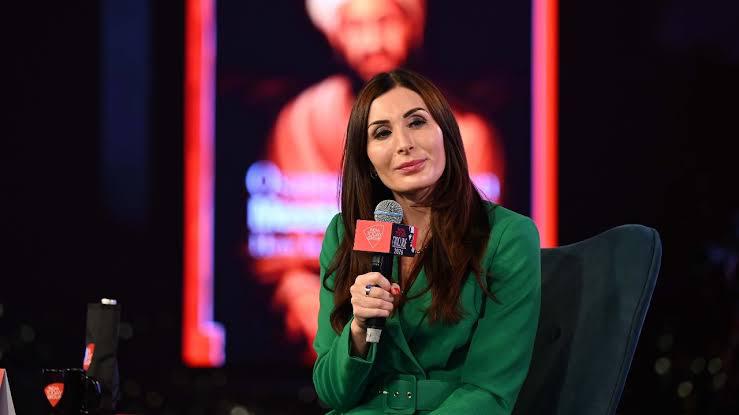
When the India Today Group hosted the India Today Conclave 2026 this week, one particular name in the speaker lineup instantly set off a firestorm: Laura Loomer.
The American commentator, closely associated with the political orbit of Donald Trump and the broader MAGA ecosystem, is hardly an unknown quantity. Loomer has built her reputation on incendiary rhetoric and provocation. What made her invitation particularly controversial, however, was not merely her politics but her long record of racist remarks targeting Indians and Indian-origin individuals.
Once Loomer herself posted on X that she was heading to India to speak at the conclave, Indians quickly dug into her past posts. Screenshots began circulating widely. In those posts, Loomer had described Indians as “third-world invaders,” mocked India’s sanitation practices, and questioned the intellectual abilities of Indians. In another notorious episode, she launched a tirade against Indian-American technologist Sriram Krishnan after he was appointed Senior Policy Advisor for Artificial Intelligence at the White House, questioning why immigrants should occupy influential positions in the United States.
She had also previously mocked the Indian heritage of Kamala Harris with a crude “curry” jibe that triggered widespread outrage. Beyond anti-India rhetoric, Loomer has also courted controversy for promoting conspiracy theories around the September 11 attacks and spreading misinformation during the COVID-19 pandemic. Even Republican Senator Thom Tillis once dismissed her as a “crazy conspiracy theorist.”
Given this background, the immediate question that dominated social media was obvious: why would a leading Indian media platform invite someone who had repeatedly insulted India and Indians?
The backlash was swift and intense. Social media users circulated screenshots of Loomer’s old posts mocking Indian sanitation practices, calling Indians “third-world invaders,” and ridiculing Indian immigrants as supposedly “high-skilled workers” from a country lacking basic infrastructure. Critics described the invitation as astonishing and self-defeating, arguing that providing a prestigious stage to someone with a documented history of anti-India rhetoric risked legitimising exactly the kind of hate speech Indian media houses frequently claim to oppose.
But then came the twist.
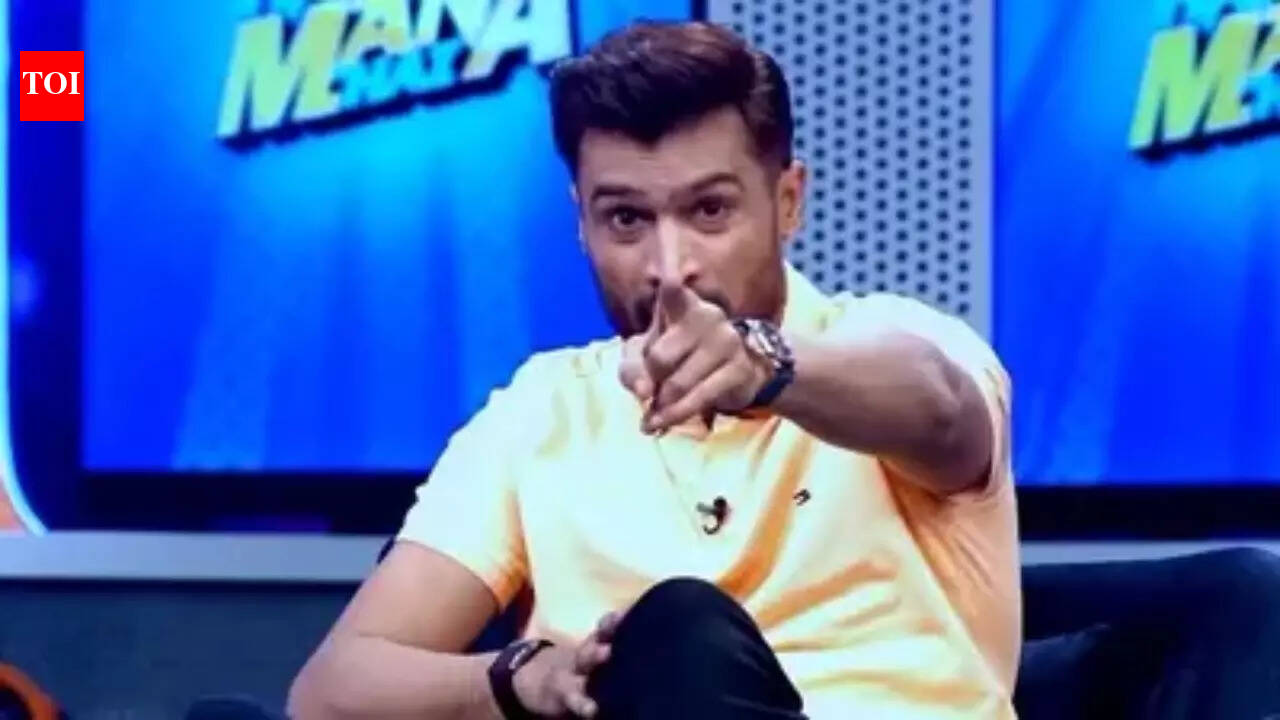
During the conclave session, senior journalist Rajdeep Sardesai confronted Loomer over her past remarks. He cited several of her controversial tweets and asked whether she regretted them. “Your remarks are brazenly racist and Islamophobic,” Rajdeep said during his interaction with Loomer.
"Your remarks are brazenly racist and Islamaphopic": India Today's @sardesairajdeep hits out at Trump Loyalist @LauraLoomer over her comments on Kamala Harris, Indians & immigrants.#IndiaTodayConclave26 #LauraLoomer #KamalaHarris #US #India pic.twitter.com/OLps7Gkqpo— IndiaToday (@IndiaToday) March 14, 2026
Loomer responded by acknowledging that some of her earlier posts had indeed crossed the line.
“I should not have said some of the things I wrote in the other tweets,” she said, adding that she apologised if her remarks had offended Indians. Loomer also dropped a bombshell, stating that it was Twitter that deleted some of her tweets on Indians, and she had no choice but to accept it.
“She has CHANGED in the past 60 days.”Meanwhile Laura Loomer: Twitter deleted my anti India tweets, so I didn’t have a choice. Twitter locked my account so I had to delete all of them. https://t.co/GD9WjBCJgw pic.twitter.com/90KspoErSL— Mikku (@effucktivehumor) March 14, 2026
At the same time, she carefully held her ground on other issues. Loomer refused to apologise for her opposition to the H-1B visa programme, insisting that her job as an American activist was to defend American workers. She also tried to soften her stance by claiming she had no hatred toward Indians or Hindus and had spoken out against the persecution of Hindus by radical Islam.
The exchange quickly went viral.
Clips of Sardesai confronting Loomer flooded social media. A section of the online ecosystem cutting across ideological lines, from accounts sympathetic to the Indian National Congress to those who refer to themselves as non-Left, began celebrating the moment as a triumph of journalism. Sardesai was hailed as the journalist who “showed the courage” of “putting a racist in her place,” while Loomer’s partial apology was framed as a narrative victory.
One needs to be polite with guests without being dishonest to truth as hosts see it. Thanks @sardesairajdeep for being upfront and in the face @LauraLoomer.— Vinod Sharma (@VinodSharmaView) March 14, 2026
BREAKING : Trump Loyalist Laura Loomer confronted by Indian Journalist Rajdeep Sardesai for her racist remarks against Indians and Islamophobia.She was about to cry, had no answers., This is the best video you will watch today Thank you Rajdeep for showing courage. pic.twitter.com/HGS12NnUBz— Roshan Rai (@RoshanKrRaii) March 14, 2026
There were others who “thanked” Rajdeep Sardesai for ‘confronting’ Laura Loomer for her disgusting remarks online.
And just like that, the focus shifted.
The central controversy had originally been about why Loomer was invited at all. Yet within hours, the conversation had moved to how effectively she had been confronted on stage.
Why Rajdeep Sardesai didn’t outrage when India Today invited Laura Loomer for Conclave
One aspect of the episode that raises even more questions is the role played by Rajdeep Sardesai himself.
If Sardesai was genuinely outraged by the vile remarks Loomer had made about India and Indians, one would have expected that outrage to surface well before the cameras began rolling at the conclave.
After all, Sardesai is among the most active journalists on social media. On X, he regularly runs the popular “stories that caught my eye” thread, often amplifying issues he believes deserve public scrutiny. He has rarely hesitated to criticise politicians, institutions, or public figures when he believes something crosses a line.
Which makes his silence in the days leading up to the conclave rather striking.
Once Loomer announced she was travelling to India to speak at the conclave organised by the India Today Group, the backlash was immediate. Screenshots of her past tweets mocking Indians and questioning their place in the United States flooded social media timelines.
Yet Sardesai raised no visible public objection during that phase.
This was precisely the moment when he could have expressed shock or disapproval. As a senior editorial face of the network, he could easily have posted on X, questioning why a media organisation would invite someone with such a track record of insulting Indians.
Instead, Sardesai appeared at the conclave itself and confronted Loomer on stage about those remarks. The exchange unfolded almost like a neatly packaged segment, with questions about the offensive tweets, Loomer acknowledging some of them were inappropriate, and a partial apology delivered before a live audience.
The moment quickly went viral.
But viewed in hindsight, the sequence has the feel of something less spontaneous and more choreographed. The absence of any prior public objection, followed by a perfectly timed on-stage confrontation, raises the possibility that the exchange was always meant to unfold in front of cameras rather than in the messy unpredictability of public debate.
Which brings us back to the larger question.
Because the sequence of events almost reads like a carefully structured script: invite a controversial figure with a record of offensive remarks, allow outrage to build once those remarks resurface, and then stage a dramatic confrontation at the event itself. The confrontation produces viral content, the guest offers a partial apology, and the host network is suddenly repositioned, not as the platform that legitimised the controversial voice, but as the one that held it accountable.
The narrative transforms.
How ‘India Today platforms an anti-India racist commentator’ story was transformed into ‘Look how India Today confronted her’
Instead of “Why did India Today invite someone who repeatedly insulted Indians?” the story becomes “Look how India Today confronted her.”
In effect, the controversy is neutralised through spectacle.
It is therefore difficult not to wonder whether the entire episode, from the invitation to the confrontation and the apology, functioned as a form of narrative damage control, perhaps even narrative laundering.
After all, the outcome appears to have served everyone involved.
Loomer walked away having publicly toned down some of her remarks and projecting a less hostile image toward India. Sardesai enjoyed widespread applause on social media for confronting her. And the India Today Group successfully pivoted the conversation away from the uncomfortable question that had sparked the controversy in the first place.
In the age of viral media spectacles, what looked like a spontaneous clash between a journalist and a controversial commentator may well have been something else entirely, a convenient drama that transformed a reputational crisis into a carefully choreographed moment of accountability.