India says NO to woke nonsense: Transgender Bill 2026 sets boundaries straight — definition of ‘transgender’ does not include the pronoun gang. Read details
In a significant legislative move, the Modi government has passed the Transgender Persons (Protection of Rights) Amendment Bill, 2026, marking a decisive shift in how India approaches gender identity under law. The government has framed the Bill as an effort to ensure that protections reach those who face discrimination due to biological realities, while also bringing long-needed administrative clarity. The legislation, which also introduces graded punishments based on the severity of harm, has been positioned as part of a broader commitment to bring marginalised communities into the mainstream while safeguarding their rights. At a time when much of the world is struggling with ever-expanding and often confusing definitions of gender identity, India has chosen a different path, one that has firmly, legally, and decisively said no to woke nonsense that has afflicted much of the Western world. With the introduction of the Transgender Persons (Protection of Rights) Amendment Bill, 2026, the Modi government has done something few governments are willing to do; it has drawn a clear line. In one fell swoop, it has put an end to the scourge of identity politics that is rapidly taking root in Indian society. The Transgender Bill 2026 is not just a legal amendment. It is a course correction, and a pre-emptive one at that. The earlier Transgender Persons Act of 2019 recognised a “right to self-perceived gender identity.” On paper, that sounded progressive. In practice, it opened the door to ambiguity, confusion, and administrative chaos. When identity becomes entirely subjective, law loses its ability to function. The 2026 Amendment fixes that. Put simply, the Bill has ended the monopoly of the pronoun gang, a group that believed it was entitled to identify itself with the gender of its choosing without having to comply with the scientific definition of gender. From “anything goes” to a clear definition The biggest change in the Bill is simple but significant: it defines who a transgender person is in clear, workable terms. Instead of leaving it open-ended, the law now limits the category to those who can be identified through socio-cultural or biological realities. This includes traditional transgender communities like hijra, kinner, aravani and jogta, as well as individuals with congenital variations in sex characteristics. It also includes victims of coercion or forced identity imposition. At the same time, the Bill makes one thing unambiguously clear: this law is not meant to cover every self-declared identity or fluid category That clarity is deliberate. Why didthe government tighten the definition? The reasoning behind this move is spelt out in the Bill itself. The government notes that the earlier “vague and broad definition” made it difficult to identify who actually needed protection and made the implementation of laws complicated. More importantly, it states that the law was always meant to protect a specific class of people who face real, structural discrimination, not an ever-expanding universe of identity claims. This is a crucial distinction. Welfare laws are not abstract moral statements; they are tools for targeted support. If the definition becomes too broad, the benefits meant for the most vulnerable get diluted. That is exactly what the government is trying to prevent. The most important line in the Bill that ends the pronoun gang’s stranglehold over identity politics Perhaps the most telling part of the Amendment lies in its Statement of Objects and Reasons: “It is therefore imperative to give a precise definition… such identification cannot be extended based on any acquirable characteristics or personal choice or claimed self-perceived identity of an individual.” This is the heart of the reform. It has effectively ended the loophole that the pronoun gang exploited to further identity politics and fuel confusion in policy and enforcement. In one sentence, the government has drawn a boundary between personal identity and legal identity. You may identify however you wish, but when it comes to law, benefits, and state recognition, there must be clear and verifiable criteria. What went wrong earlier The earlier framework, built around self-perception, created a situation where the category of “transgender” could expand endlessly. That may work in theory, but in practice, it creates serious problems. How do you administer welfare schemes? How do you issue official documents? How do you enforce laws where identity itself is fluid and unverifiable? The Bill itself acknowledges that such vagueness made several laws difficult to implement and created conflicts across legal systems. More importantly, it opened the door for misuse and dilution. When a category meant for a historically marginalised group becomes too broad, those who genuinely need support often end up losing out. The Amendment is an attempt to fix exactly t
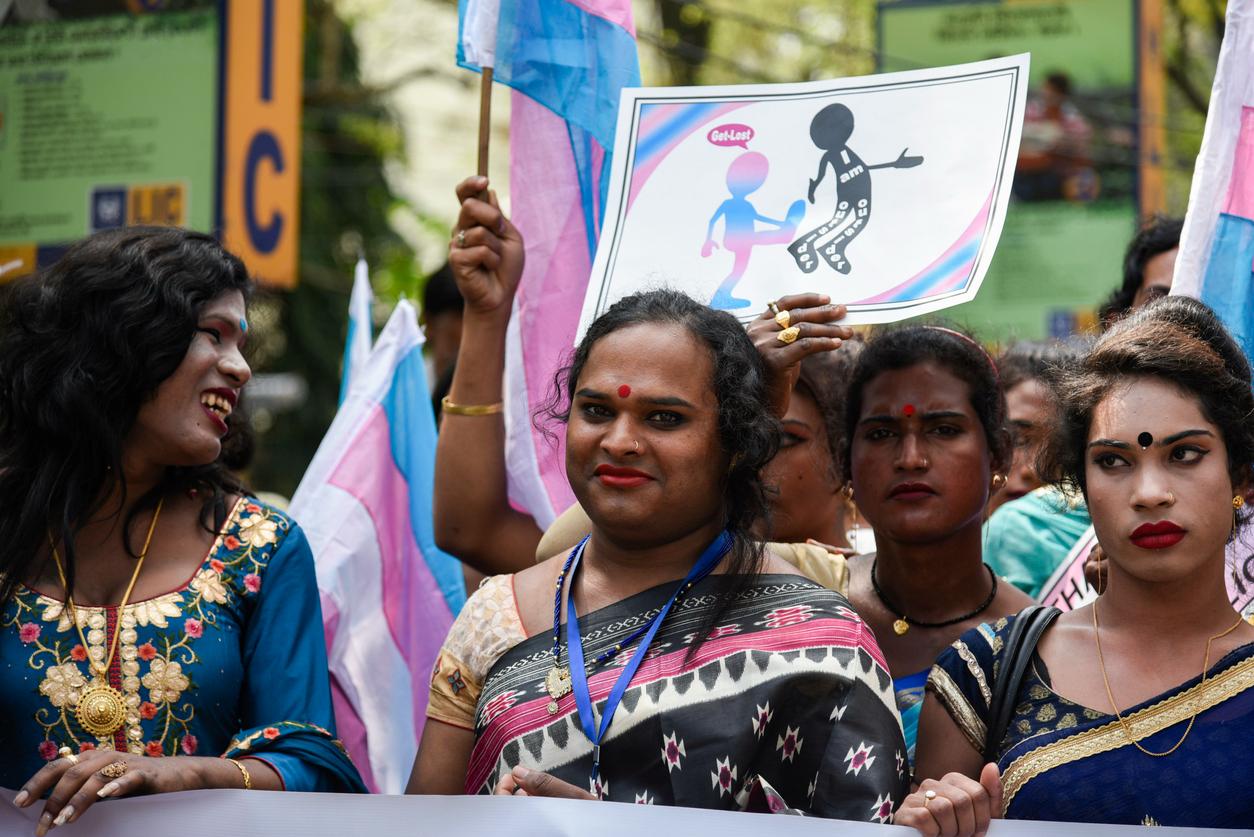
In a significant legislative move, the Modi government has passed the Transgender Persons (Protection of Rights) Amendment Bill, 2026, marking a decisive shift in how India approaches gender identity under law. The government has framed the Bill as an effort to ensure that protections reach those who face discrimination due to biological realities, while also bringing long-needed administrative clarity.
The legislation, which also introduces graded punishments based on the severity of harm, has been positioned as part of a broader commitment to bring marginalised communities into the mainstream while safeguarding their rights.
At a time when much of the world is struggling with ever-expanding and often confusing definitions of gender identity, India has chosen a different path, one that has firmly, legally, and decisively said no to woke nonsense that has afflicted much of the Western world.
With the introduction of the Transgender Persons (Protection of Rights) Amendment Bill, 2026, the Modi government has done something few governments are willing to do; it has drawn a clear line. In one fell swoop, it has put an end to the scourge of identity politics that is rapidly taking root in Indian society.
The Transgender Bill 2026 is not just a legal amendment. It is a course correction, and a pre-emptive one at that.
The earlier Transgender Persons Act of 2019 recognised a “right to self-perceived gender identity.” On paper, that sounded progressive. In practice, it opened the door to ambiguity, confusion, and administrative chaos. When identity becomes entirely subjective, law loses its ability to function.
The 2026 Amendment fixes that. Put simply, the Bill has ended the monopoly of the pronoun gang, a group that believed it was entitled to identify itself with the gender of its choosing without having to comply with the scientific definition of gender.
From “anything goes” to a clear definition
The biggest change in the Bill is simple but significant: it defines who a transgender person is in clear, workable terms.
Instead of leaving it open-ended, the law now limits the category to those who can be identified through socio-cultural or biological realities. This includes traditional transgender communities like hijra, kinner, aravani and jogta, as well as individuals with congenital variations in sex characteristics. It also includes victims of coercion or forced identity imposition.
At the same time, the Bill makes one thing unambiguously clear: this law is not meant to cover every self-declared identity or fluid category
That clarity is deliberate.
Why didthe government tighten the definition?
The reasoning behind this move is spelt out in the Bill itself. The government notes that the earlier “vague and broad definition” made it difficult to identify who actually needed protection and made the implementation of laws complicated.
More importantly, it states that the law was always meant to protect a specific class of people who face real, structural discrimination, not an ever-expanding universe of identity claims.
This is a crucial distinction.
Welfare laws are not abstract moral statements; they are tools for targeted support. If the definition becomes too broad, the benefits meant for the most vulnerable get diluted. That is exactly what the government is trying to prevent.
The most important line in the Bill that ends the pronoun gang’s stranglehold over identity politics
Perhaps the most telling part of the Amendment lies in its Statement of Objects and Reasons: “It is therefore imperative to give a precise definition… such identification cannot be extended based on any acquirable characteristics or personal choice or claimed self-perceived identity of an individual.”
This is the heart of the reform. It has effectively ended the loophole that the pronoun gang exploited to further identity politics and fuel confusion in policy and enforcement.
In one sentence, the government has drawn a boundary between personal identity and legal identity. You may identify however you wish, but when it comes to law, benefits, and state recognition, there must be clear and verifiable criteria.
What went wrong earlier
The earlier framework, built around self-perception, created a situation where the category of “transgender” could expand endlessly. That may work in theory, but in practice, it creates serious problems.
How do you administer welfare schemes? How do you issue official documents? How do you enforce laws where identity itself is fluid and unverifiable?
The Bill itself acknowledges that such vagueness made several laws difficult to implement and created conflicts across legal systems.
More importantly, it opened the door for misuse and dilution. When a category meant for a historically marginalised group becomes too broad, those who genuinely need support often end up losing out. The Amendment is an attempt to fix exactly that.
The world has already seen where this leads
If anyone believes these concerns are hypothetical, global developments tell a different story.
Take the case of J. K. Rowling. In the UK, she has repeatedly raised concerns about laws and policies that prioritise self-declared gender identity over biological reality. Under Scotland’s controversial hate crime law, even referring to a biological male as male risked being treated as a legal offence. Rowling openly challenged this, pointing out how such frameworks distort crime data, weaken women’s protections, and create absurd legal contradictions.
Her criticism wasn’t abstract; it was grounded in real consequences. Cases emerged where biological males identifying as women were placed in female spaces, including prisons, raising serious safety concerns.
Similarly, global sports bodies have been forced to confront the limits of identity-based frameworks. In March 2023, World Athletics banned transgender women who had undergone male puberty from competing in female categories at international events. The decision, as stated by its president Sebastian Coe, was driven by a simple principle: fairness.
The organisation made it clear that allowing athletes with male physiological advantages to compete in women’s categories would undermine the integrity of female sport. Even after testosterone suppression, scientific assessments showed a retained performance advantage. The conclusion was unavoidable: fair competition requires clear biological boundaries.
This was not an isolated move. World Aquatics had earlier imposed similar restrictions, with an overwhelming majority of member federations supporting the decision.
In other words, institutions across the world are slowly realising what happens when policy runs ahead of reality.
India chooses clarity before crisis
What makes India’s move significant is that it comes before such crises fully unfold domestically.
Instead of waiting for legal contradictions, policy breakdowns, or institutional conflicts, the government has acted preemptively. By tightening definitions now, it aims to prevent exactly the kind of confusion and conflict seen elsewhere.
This is not reactionary but anticipatory governance.
Stronger protection where it actually matters
While critics frame the Bill as restrictive, it actually strengthens protections in meaningful ways.
The amended law introduces strict punishments for forced mutilation, coercion into adopting a transgender identity, trafficking, and exploitation. In severe cases, especially involving children, penalties can extend to life imprisonment.
This shifts the focus from abstract identity debates to real-world harms where the law is most needed.
No more “just say it and become it” in law
Another major change is the recognition process itself. The earlier system leaned heavily on self-declaration. The new framework introduces verification, including the involvement of authorities and expert input where necessary.
This brings transgender identification in line with how the Indian state handles other legally significant categories, through documentation and verification, not just personal claims. Now, those who wish to identify themselves as any other gender other than their biological one will have to undergo verification, possibly in the form of medical tests or something along those lines, and get certified by competent authorities to get recognised as one.
Again, this is not about denial. It is about making the law workable and ensuring the system is not gamed by a few bad-faith actors.
Impact on schools and institutions
The implications of this Bill extend beyond courts and legal systems. It could reshape how schools and institutions approach gender identity.
In recent years, fluid identity concepts have increasingly entered educational spaces, often without a clear legal framework. Policies, counselling approaches, and curriculum discussions have sometimes reflected these trends.
The new law introduces a clear boundary. By defining what the state recognises, it ensures that institutional policies, especially in publicly governed spaces, are anchored in legal clarity, not shifting ideological trends. Discussion may continue, but policy must now align with law.
A necessary correction
The Transgender Bill 2026 is not about rolling back rights. It is about making the law clear, enforceable, and fair.
The 2019 Act laid the foundation. But it left too many grey areas. The 2026 Amendment closes those gaps. It ensures that protections reach those who truly need them, prevents misuse, and restores clarity to a complex area of law.
At its core, this Bill is about one simple idea that law cannot function without clear definitions. Around the world, institutions are grappling with the consequences of ignoring this principle. India, instead, has chosen to act early.
It has chosen clarity over confusion, structure over ambiguity, and governance over abstraction. That may not satisfy ideological purists. But it is how functioning legal systems are built.
And in that sense, the Transgender Bill 2026 is not just a reform; it is a statement that defines India’s stand on identity politics. And perhaps a direction for the world to follow.