How BJP elect its National President? Read about the election process, constitutional rules, the electoral college, and the past presidents
There is visible activity at the Bharatiya Janata Party headquarters in Delhi as the party gets ready to elect its next national president. Nominations for the post will be filed on 19th January, and the formal announcement is scheduled for 20th January. According to party sources, acting president Nitin Nabin is set to take over the post without a contest. Senior leaders, including Prime Minister Narendra Modi, Home Minister Amit Shah, Defence Minister Rajnath Singh, and outgoing president Jagat Prakash Nadda, are expected to propose his name. With no other challenger in sight, the outcome appears clear. Still, the process behind the BJP’s presidential election often raises questions about how the party functions internally and how democratic the system really is. An internal process, not a public election Unlike elections conducted by the Election Commission, the BJP’s national president is chosen entirely through an internal organisational process. The Election Commission of India has no role in it. The election is treated as a private matter of the party, similar to how an association or society elects its office-bearers. Though the BJP calls itself the world’s largest political party, with a claimed membership of over 180 million, ordinary workers and supporters do not vote directly for the national president. The election is routed through the party’s organisational structure, which the BJP considers its biggest strength. Elections start from the ground level The BJP constitution lays down a clear bottom-up system. Organisational elections begin at the booth or local level and move upward through village or urban centres, local committees, divisions, districts, states, and finally the national level. This entire cycle is known within the party as the “Sangathan Parva” and takes place once every six years. The current Sangathan Parva began in 2024–25 and has now reached its final stage. The process starts with a membership drive. Any Indian citizen above 18 years of age who accepts the party’s ideology of Integral Humanism and its principles can become a primary member. Membership is valid for six years and needs renewal. From this pool, active members are identified. To qualify as an active member, a person must have worked for the party for at least three years, donated Rs 100 to the party fund, taken part in party activities such as protests, and subscribed to the party’s publications. Only active members are allowed to vote in organisational elections or contest higher posts. How the Electoral College is formed The national president is elected under Article 19 of the BJP constitution by a special electoral college. This college includes members of the National Council and State Councils. National Council members are elected from states in numbers linked to Lok Sabha seats, along with representatives chosen by MPs. State Council members are elected from district units and also include representatives chosen by MLAs and MPs. This time, the electoral college has around 5,700 members. As per party rules, the national president can only be elected once organisational elections are completed in at least half of the states, which is around 19 states. That condition has now been met. Who can contest for the top post? The BJP constitution sets strict conditions for anyone who wants to become national president. A candidate must have been a primary member for at least 15 years and an active member for at least four terms, which usually means around 12 years of active organisational work. To file a nomination, the candidate needs the support of at least 20 members of the electoral college. These supporters must come from at least five different states where National Council elections have already been completed. The candidate must also give written consent to contest. Timeline for this election For the current election, the party released the electoral college list on 16th January. Nominations will be filed on 19th January between 2 pm and 4 pm, followed by scrutiny of papers the same day. Candidates can withdraw their names later in the evening. If more than one valid nomination remains, secret voting will take place on 20th January, and the result will be declared the same day. If only one candidate is left, that person is declared elected unopposed, which is what is expected this time. Why are BJP presidents chosen by consensus In the BJP’s 45-year history, there has never been a secret ballot for the post of national president. Every president so far has been elected by consensus. Party insiders say this is because of the BJP’s strong culture of internal agreement and coordination. The Rashtriya Swayamsevak Sangh does not find a mention in the BJP constitution, but it plays an informal and important role in this process. Senior RSS leaders, along with top BJP leaders, especially the Prime Minister and Home Minister, are believed to be closely
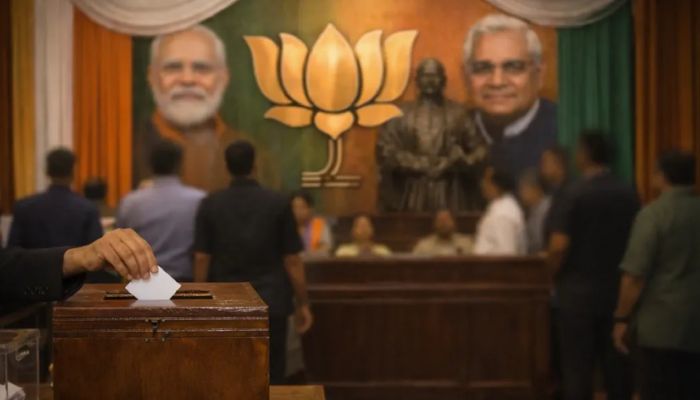

There is visible activity at the Bharatiya Janata Party headquarters in Delhi as the party gets ready to elect its next national president. Nominations for the post will be filed on 19th January, and the formal announcement is scheduled for 20th January. According to party sources, acting president Nitin Nabin is set to take over the post without a contest.
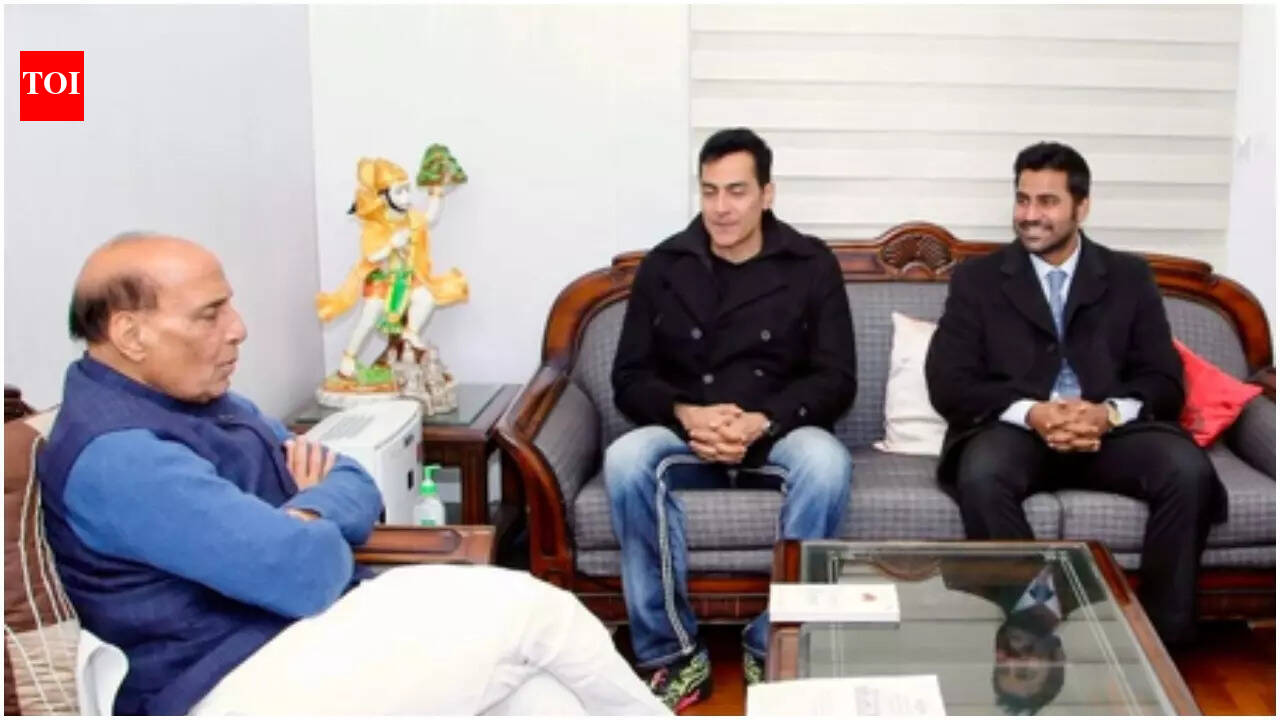
Senior leaders, including Prime Minister Narendra Modi, Home Minister Amit Shah, Defence Minister Rajnath Singh, and outgoing president Jagat Prakash Nadda, are expected to propose his name. With no other challenger in sight, the outcome appears clear. Still, the process behind the BJP’s presidential election often raises questions about how the party functions internally and how democratic the system really is.
An internal process, not a public election
Unlike elections conducted by the Election Commission, the BJP’s national president is chosen entirely through an internal organisational process. The Election Commission of India has no role in it. The election is treated as a private matter of the party, similar to how an association or society elects its office-bearers.
Though the BJP calls itself the world’s largest political party, with a claimed membership of over 180 million, ordinary workers and supporters do not vote directly for the national president. The election is routed through the party’s organisational structure, which the BJP considers its biggest strength.
Elections start from the ground level
The BJP constitution lays down a clear bottom-up system. Organisational elections begin at the booth or local level and move upward through village or urban centres, local committees, divisions, districts, states, and finally the national level. This entire cycle is known within the party as the “Sangathan Parva” and takes place once every six years. The current Sangathan Parva began in 2024–25 and has now reached its final stage.
The process starts with a membership drive. Any Indian citizen above 18 years of age who accepts the party’s ideology of Integral Humanism and its principles can become a primary member. Membership is valid for six years and needs renewal.
From this pool, active members are identified. To qualify as an active member, a person must have worked for the party for at least three years, donated Rs 100 to the party fund, taken part in party activities such as protests, and subscribed to the party’s publications. Only active members are allowed to vote in organisational elections or contest higher posts.
How the Electoral College is formed
The national president is elected under Article 19 of the BJP constitution by a special electoral college. This college includes members of the National Council and State Councils. National Council members are elected from states in numbers linked to Lok Sabha seats, along with representatives chosen by MPs. State Council members are elected from district units and also include representatives chosen by MLAs and MPs.
This time, the electoral college has around 5,700 members. As per party rules, the national president can only be elected once organisational elections are completed in at least half of the states, which is around 19 states. That condition has now been met.
Who can contest for the top post?
The BJP constitution sets strict conditions for anyone who wants to become national president. A candidate must have been a primary member for at least 15 years and an active member for at least four terms, which usually means around 12 years of active organisational work.
To file a nomination, the candidate needs the support of at least 20 members of the electoral college. These supporters must come from at least five different states where National Council elections have already been completed. The candidate must also give written consent to contest.
Timeline for this election
For the current election, the party released the electoral college list on 16th January. Nominations will be filed on 19th January between 2 pm and 4 pm, followed by scrutiny of papers the same day.
Candidates can withdraw their names later in the evening. If more than one valid nomination remains, secret voting will take place on 20th January, and the result will be declared the same day. If only one candidate is left, that person is declared elected unopposed, which is what is expected this time.
Why are BJP presidents chosen by consensus
In the BJP’s 45-year history, there has never been a secret ballot for the post of national president. Every president so far has been elected by consensus. Party insiders say this is because of the BJP’s strong culture of internal agreement and coordination.
The Rashtriya Swayamsevak Sangh does not find a mention in the BJP constitution, but it plays an informal and important role in this process. Senior RSS leaders, along with top BJP leaders, especially the Prime Minister and Home Minister, are believed to be closely involved in discussions before a name is finalised. The Organisation General Secretary, who traditionally comes from the RSS, also plays a key role.
This approach is seen as necessary because the national president is not just a symbolic figure. The president shapes the party’s organisational direction, oversees election strategy, and acts as a bridge between the party and the government. Any open fight for the post could weaken the organisation, something the BJP tries hard to avoid.
Tenure rules and recent extensions
Under Article 21 of the BJP constitution, a national president can serve two consecutive terms of three years each. After six years, a break is required. In practice, however, extensions have become common.
JP Nadda became president in January 2020. His original term ended in January 2023, but he was given extensions and continued through the 2024 Lok Sabha elections. With the current process, the party is finally set to move to a new president in 2026, with the announcement due on 20th January.
List of the BJP’s past presidents
Since its formation in 1980, the BJP has been led by several prominent figures.
- Atal Bihari Vajpayee (1980-1986) – A founding pillar of the party, he led the BJP’s evolution from its early days in the Jana Sangh as its first president
- Lal Krishna Advani (1986-1991) First time, during the Rath Yatra and Ram Mandir movement.
- Murli Manohar Joshi (1991-1993)
- Lal Krishna Advani (1993-1998) – Second term
- Kushabhau Thackeray (1998-2000)
- Bangaru Laxman (2000-2001)
- K. Jana Krishnamurthy (2001-2002)
- M. Venkaiah Naidu (2002-2004)
- Lal Krishna Advani (2004-2005) – Third term
- Rajnath Singh (2006-2009) – First term
- Nitin Gadkari (2009-2013)
- Rajnath Singh (2013-2014) – second term
- Amit Shah (2014-2020) – Longest and most effective tenure, in which the party reached 300+ seats.
- Jagat Prakash Nadda (2020-2026) – current, during whose tenure the 2024 Lok Sabha elections were fought.
Among them, Amit Shah’s tenure from 2014 to 2020 stands out as the longest and most electorally successful, during which the BJP crossed the 300-seat mark in the Lok Sabha. JP Nadda’s term covered the 2024 general elections and a period of organisational consolidation.
Discipline first, contest later?
The BJP’s method of choosing its national president highlights how centralised and disciplined the party is. Decisions are shaped at the top and smoothly carried through the organisation. This system has helped the party avoid internal battles and project unity.
At the same time, it also raises a larger question. As the party continues to grow, will it ever witness an open contest for its top organisational post? For now, the BJP remains firmly committed to its tradition of consensus, and the election of its next national president looks set to follow that well-worn path.