From raving over Pathaan’s bikini-clad ISI fantasy to slandering Dhurandhar’s brutal truth: Why The Wire can’t handle reality on screen
There are a few certainties in the Indian media. One of them is that The Wire will twist itself into pretzels to shield Pakistan’s image from any cinematic portrayal that isn’t infused with candlelight vigils and Aman Ki Asha ballads. Another is that if a movie happens to tell the truth about Pakistan-sponsored terror without couching it in Bollywood-style syncretic hugs, The Wire will be baying for its blood quicker than one can say “covert operation.” Enter Aditya Dhar’s Dhurandhar: a larger-than-life spy thriller that unapologetically merges fact and fiction, drawing from real covert missions, local gangs in Lyari in Karachi, crime syndicates tied to the ISI, and the horrors India has suffered through Pakistan’s policy of “bleeding India with a thousand cuts.” The film holds up a mirror to a State apparatus across the border whose existence revolves around jihad, proxy warfare, and terror networks, a mirror The Wire simply cannot stand to look into. So what does The Wire do? It rants. It sulks. It screams propaganda. In a spectacularly self-discrediting review titled “‘Dhurandhar’: Aditya Dhar’s Spy Saga Is as Subtle as a Troll,” The Wire’s Tatsam Mukherjee throws the kind of tantrum one might expect from a Pakistan foreign office spokesperson who has stumbled into a press screening of the film by mistake. Well, gone are the days when filmmakers had the ‘creative liberty’ to make movies to their liking. Today, as The Wire keeps fearmongering about shrinking space for dissent, filmmakers who don’t toe the left-wing agenda find themselves at the proverbial firing line of those very portals who don’t miss a second in trampling upon the rights of filmmakers and maligning their art as a “tool of political propaganda.” According to The Wire, the sheer act of exposing brutal Pakistani terrorism, the real, documented kind, is now “rage-bait,” “bloodlust,” “venom,” and even “recruitment.” If anything, Dhurandhar sins by being too honest. Apparently, filmmaking is only noble when it includes Bollywood superstars gyrating in bikinis, spouting lines about universal humanity while whitewashing ISI officers into misunderstood heartbreak victims. The Wire’s review standards are painfully predictable: if Pakistan is shown as the villain, that becomes “dangerous ultra-nationalism”; but if Pakistanis dance with Indian agents in scenic European locations, that suddenly becomes “capacious universalism.” Who knew moral compasses came with a Made-in-Lahore sticker? The Wire’s published fawning essays on spy fiction Pathaan When truth becomes “trolling” Let’s examine the specific “crimes” the film commits that hurt The Wire’s ideological bones. It portrays ISI officers invoking Islamic extremism. It dares to remind Indians of 26/11, with real transcripts. It exposes the Pakistan underworld–ISI–terror nexus. It acknowledges, correctly, that bureaucratic rot held India back before 2014, when national security was treated as an inconvenient responsibility. It shows Pakistan laughing while Mumbai burns. To The Wire, this is a knife being twisted into unsuspecting audiences. Perhaps because somewhere beneath their manufactured intellectual disgust, they know everything shown is true, and truth is lethal for propaganda. Their Orwellian prescription is now simple: even speaking the truth must be maligned as troll behaviour. Because if facts strengthen national resolve and weaken decades-long narrative manipulation, they suddenly become too dangerous for public consumption. Pakistan’s record of terrorism is considered “incitement,” but an ISI officer salsa dancing with Shah Rukh Khan in Pathaan is apparently “healing.” The contrast cannot be more revealing. The Wire and its hypocrisy: Pathaan edition Now contrast this hysteria with The Wire’s orgasmic meltdown over Pathaan in 2023. That movie told viewers before the opening credits rolled to leave logic, and possibly their self-awareness, at the door. It depicted an ISI agent in a bikini dancing with an Indian spy named after an Afghan ethnic tribe. It treated geopolitics like a subplot in a Valentine’s Day music video while crimes against humanity were reduced to motivational backstories. Another article gushing over Pathaan, which shows an Indian agent (SRK) romancing and dancing with bikini-clad ISI agent (Deepika Padukone) And yet, The Wire found deep philosophy in this circus. The absurdity was described as a feature, not a bug. The film was said to provide relief from the supposed Sturm und Drang of living in India under Modi. It was hailed as embracing the wider world with a smile. Another article even equated the film to Rahul Gandhi’s Bharat Jodo Yatra. According to The Wire, Pathaan exhibited a large-hearted universalism that transcended political divides. So showing the truth about Pakistan equals hate and bloodlust, but peddling unrealistic bonhomie and portraying ISI agents as glamorous models equals healing hearts and sol

There are a few certainties in the Indian media. One of them is that The Wire will twist itself into pretzels to shield Pakistan’s image from any cinematic portrayal that isn’t infused with candlelight vigils and Aman Ki Asha ballads. Another is that if a movie happens to tell the truth about Pakistan-sponsored terror without couching it in Bollywood-style syncretic hugs, The Wire will be baying for its blood quicker than one can say “covert operation.”
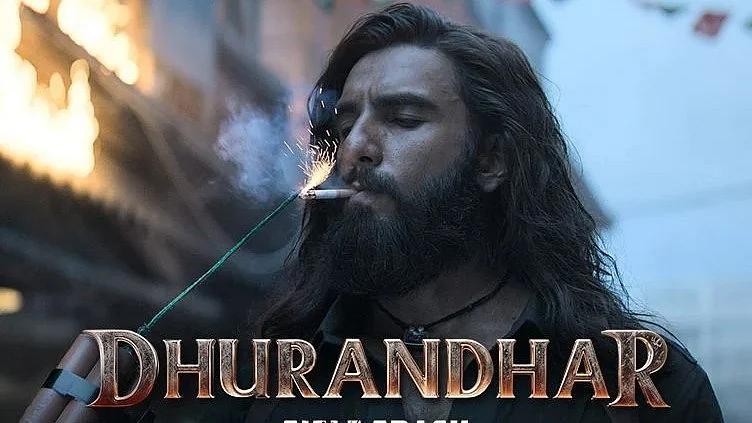
Enter Aditya Dhar’s Dhurandhar: a larger-than-life spy thriller that unapologetically merges fact and fiction, drawing from real covert missions, local gangs in Lyari in Karachi, crime syndicates tied to the ISI, and the horrors India has suffered through Pakistan’s policy of “bleeding India with a thousand cuts.” The film holds up a mirror to a State apparatus across the border whose existence revolves around jihad, proxy warfare, and terror networks, a mirror The Wire simply cannot stand to look into.
So what does The Wire do? It rants. It sulks. It screams propaganda. In a spectacularly self-discrediting review titled “‘Dhurandhar’: Aditya Dhar’s Spy Saga Is as Subtle as a Troll,” The Wire’s Tatsam Mukherjee throws the kind of tantrum one might expect from a Pakistan foreign office spokesperson who has stumbled into a press screening of the film by mistake.

Well, gone are the days when filmmakers had the ‘creative liberty’ to make movies to their liking. Today, as The Wire keeps fearmongering about shrinking space for dissent, filmmakers who don’t toe the left-wing agenda find themselves at the proverbial firing line of those very portals who don’t miss a second in trampling upon the rights of filmmakers and maligning their art as a “tool of political propaganda.”
According to The Wire, the sheer act of exposing brutal Pakistani terrorism, the real, documented kind, is now “rage-bait,” “bloodlust,” “venom,” and even “recruitment.” If anything, Dhurandhar sins by being too honest.
Apparently, filmmaking is only noble when it includes Bollywood superstars gyrating in bikinis, spouting lines about universal humanity while whitewashing ISI officers into misunderstood heartbreak victims. The Wire’s review standards are painfully predictable: if Pakistan is shown as the villain, that becomes “dangerous ultra-nationalism”; but if Pakistanis dance with Indian agents in scenic European locations, that suddenly becomes “capacious universalism.” Who knew moral compasses came with a Made-in-Lahore sticker?

When truth becomes “trolling”
Let’s examine the specific “crimes” the film commits that hurt The Wire’s ideological bones. It portrays ISI officers invoking Islamic extremism. It dares to remind Indians of 26/11, with real transcripts. It exposes the Pakistan underworld–ISI–terror nexus. It acknowledges, correctly, that bureaucratic rot held India back before 2014, when national security was treated as an inconvenient responsibility. It shows Pakistan laughing while Mumbai burns.
To The Wire, this is a knife being twisted into unsuspecting audiences. Perhaps because somewhere beneath their manufactured intellectual disgust, they know everything shown is true, and truth is lethal for propaganda. Their Orwellian prescription is now simple: even speaking the truth must be maligned as troll behaviour.
Because if facts strengthen national resolve and weaken decades-long narrative manipulation, they suddenly become too dangerous for public consumption. Pakistan’s record of terrorism is considered “incitement,” but an ISI officer salsa dancing with Shah Rukh Khan in Pathaan is apparently “healing.” The contrast cannot be more revealing.
The Wire and its hypocrisy: Pathaan edition
Now contrast this hysteria with The Wire’s orgasmic meltdown over Pathaan in 2023. That movie told viewers before the opening credits rolled to leave logic, and possibly their self-awareness, at the door. It depicted an ISI agent in a bikini dancing with an Indian spy named after an Afghan ethnic tribe. It treated geopolitics like a subplot in a Valentine’s Day music video while crimes against humanity were reduced to motivational backstories.

And yet, The Wire found deep philosophy in this circus. The absurdity was described as a feature, not a bug. The film was said to provide relief from the supposed Sturm und Drang of living in India under Modi. It was hailed as embracing the wider world with a smile. Another article even equated the film to Rahul Gandhi’s Bharat Jodo Yatra. According to The Wire, Pathaan exhibited a large-hearted universalism that transcended political divides.
So showing the truth about Pakistan equals hate and bloodlust, but peddling unrealistic bonhomie and portraying ISI agents as glamorous models equals healing hearts and solidarity. The inconsistency exposes a truth: ideological alignment, not cinematic merit, is the benchmark they review by.
Why Dhurandhar threatens The Wire’s manufactured reality
Dhurandhar is not a fairy tale. It does not adhere to Bollywood’s “friendship solves terrorism” rulebook. It doesn’t preach that we must forgive mass-murdering terrorists for the sake of good vibes. It shows Pakistan as a belligerent neighbour that has unleashed havoc through terror, because that is Pakistan’s reality.
It reveals the horrors inflicted upon Indian soldiers, like that endured by Captain Saurabh Kalia ahead of the Kargil war in 1999, when Pakistani army captured Captain Kalia and tortured him to death. Days later when his body was returned, they highlighted the brutality Captain Kalia had suffered at the hands of his Pakistani captors. But this is not problematic; depicting it on the large screen for public consumption becomes a problem for The Wire.
Most dangerously for The Wire, it punctures their favourite propaganda line, that Pakistan is simply reacting to Indian sins, that terrorism is a misunderstood geopolitical consequence, and that India should always keep turning the other cheek. For decades, this lie powered editorial careers in Lutyens Delhi. It created foreign fellowships and candlelight vigils, and moral superiority sermons.
A film like Dhurandhar destroys that mythology in minutes. That is why the review is so angry.
The real accusation: It helps nationalists convince people
In a revealing line, The Wire condemns the movie not for lacking craft but for influencing viewers. According to them, Dhurandhar doesn’t want to merely tell a story; it wants to recruit. But who exactly is being recruited? Ordinary Indians? And what treasonous ideology are they being recruited into? The radical belief that their country deserves to defend itself?
Horrifying, indeed.
The Wire wants Indians disconnected from national pride, military courage and geopolitical realism. It wants audiences to remain stuck in a fantasy world where hugging Pakistani spies heals global wounds, and terrorists can be redeemed through a flashback montage involving childhood trauma.
Aditya Dhar has committed two unforgivable sins in their eyes. He made patriotism cool again. And he made Pakistan irredeemable in the eyes of the audience using facts rather than fantasy.
The Wire recognises persuasion as power. Their monopoly over narrative persuasion is crumbling, and they are terrified.
Hypocrisy: The Wire’s only consistent ideology
Whenever a movie aligns with their worldview, even if it is irrational and physics-defying, they write long essays praising it as a cultural revolution. But the moment a film asserts India’s need for national security, or depicts Pakistan truthfully, or portrays Modi-era decisiveness as a historical shift, they scream “propaganda.”
There is no consistency other than the ideological one. The Wire does not review cinema, it reviews adherence to its ideology. Logic is optional. Consistency is unnecessary. Patriotism is sinful. Their editorial heart beats in sync with Rawalpindi.
When art exposes propaganda, propagandists cry “Propaganda!”
The Wire recoils like a vampire flashed with sunlight whenever Hindus are depicted as victims of Islamist terror, or when Pakistan’s state-sponsored barbarism is shown without euphemisms. These are narratives that contradict the carefully crafted equivalence they have built over decades; the false idea that India and Pakistan are morally identical.
For years, they fed India a fantasy that Pakistan is misunderstood and that terrorism is merely a reaction to injustice. Meanwhile, Parliament was attacked. Mumbai was burned. Soldiers were mutilated. Innocents were bombed in marketplaces and on trains. Kashmir Pandits were uprooted. But portraying any of this is now considered “hate.” The moral absurdity is breathtaking.
The Wire’s fear: A new cultural confidence
Dhurandhar is a powerful symbol of the collapse of their influence. Indian audiences today understand Pakistan’s reality. They no longer feel guilty about national pride. Cinema is shifting from apologetic narratives to geopolitical truth.
The Wire’s anger is an obituary for an ecosystem losing its hold over India’s cultural consciousness. This moment has nothing to do with cinema and everything to do with power. Institutions losing power panic. They lash out. They moralise. They hope the public still suffers from the amnesia they cultivated for years.
That time is over.
When facts frighten more than bad plots: The Wire’s disdain of ‘jingoist’ movies
A critical review of Dhurandhar would have been absolutely fair. But attacking its politics while celebrating Pathaan for abandoning politics entirely reveals breathtaking hypocrisy. This is ideological dishonesty dressed up as film criticism.
The Wire doesn’t hate Dhurandhar because it is flawed; they hate it because it is convincing. It questions narratives they spent decades manufacturing. It shows terrorists as terrorists, Pakistan as Pakistan, and India as India. It rebuilds memory where they worked tirelessly to induce forgetfulness.
If truth on screen is propaganda, then propaganda has finally become a public service.
Let The Wire scream. Let them issue intellectual fatwas. Let them defend bikini-clad ISI agents until the last anti-national brain cell collapses. The audience has spoken. They are choosing reality over hallucination.
Dhurandhar isn’t just a movie. It is a cultural correction, a cinematic reminder that India has endured enough lies, enough whitewashing, enough guilt-tripping. Indians are ready to storm into hostile houses and kill the last lie hiding inside.
That, more than anything, is what truly terrifies The Wire.
When filmmakers creatively blend fact with fiction to tell a compelling story grounded in reality, left-wing propagandists suddenly transform into hyperventilating gatekeepers of morality. This is what we saw after the release of ‘The Kashmir Files’, ‘The Kerala Story’, and more recently, ‘Baramulla’.
When a plot challenges their narrative, their game becomes predictable: nitpick, invent imaginary dangers, and scream “creeping jingoism!”, “propaganda!”, “rewriting history” from every rooftop. While doing so, they fail to explain how depicting truth as it is could be propaganda. How is portraying Justice Neelkanth Ganjoo, who was murdered in broad daylight in Kashmir, a masterpiece in propaganda artistry?
Were their sufferings a figment of Hindutva imagination? While the Left would like to declare it indeed is, they are far too weak to attempt such audacity. So they instead resort to the same old tropes: branding inconvenient truths as “hate speech,” “lazy”, or some of them lazily put it as “badly made propaganda movie.”
In doing so, they expose their own duplicity, where exposing religious extremism becomes “spreading communal poison,” while those who commit such barbarity receive a free cultural pass in the name of sensitivity and nuance. The filmmaker is attacked for exercising his creative liberty while the perpetrator is painted as a victim of a ‘Hindutva director’ wanting desperately to please the incumbent political leadership.
If showing Pakistan-sponsored terror or national security threats is automatically labelled propaganda, then audiences should never feel guilty for enjoying what these critics dismiss as jingoism, because perhaps patriotism simply rattles their echo chambers. And that is what truly unsettles these self-anointed critics at portals like The Wire: their desperation forces them to gush over the fantastical escapism of Pathaan, but the moment a film like Dhurandhar holds up the mirror of truth, their discomfort spills into disdain. The masses’ loving realism frightens them far more than bad plots ever will.
At this point, The Wire isn’t afraid of the roaring success of Dhurandhar. It is of the precedent that Aditya Dhar’s movie has set and what it augurs for future: movies shedding the Left’s intellectual dishonesty and showing the price Indians have paid and are still paying contending with implacable enemies, both festering within and lurking across the border.