Former Leicester MP and anti-India propagandist Claudia Webbe spreads lies again, claims ‘India was shut down in the world’s biggest strike’
In recent years, it has been observed that there has been a trend where failed politicians in the West have turned to Modi-baiting and attacking India, either to pander to certain electorates, to give their failing political careers a boost, or to side with ideological groups that survive on the back of anti-India narratives. Rather than participating in constructive global discourse, these individuals appear to take up on developments in India and offer one-sided or exaggerated reports, often without any grasp of the reality on the ground. The latest example of this is former Leicester MP Claudia Webbe, who recently took to X to offer her views on what she termed a “300 million” workers’ strike in India on Thursday, 12th February. In her post, she accused the Modi government of authoritarianism and alleged that the Western media’s silence on the matter amounted to complicity. What happened on 12th February On Thursday, 12th February, trade unions and farmer organisations called for a nationwide strike, or Bharat Bandh. Workers in coal, refineries, factories, banking, and transport sectors took part in the strike as a result of a call from central trade unions such as CITU, AITUC, AICCTU, and HMS. Farmer bodies such as the Samyukta Kisan Sabha (SKM) and the All India Agricultural Workers Union (AIAWA) also joined the strike. Demonstrations took place in various states, with protesters assembling at the district headquarters and villages to express their opposition to the interim India-US bilateral trade agreement and labour codes. Sharing a protest video on X sourced from People’s Dispatch and Webbe wrote: “300 million workers just shut down India. The largest strike in human history, and most of the Western media barely whispered it. That silence is complicity in Modi’s war on workers’ rights. India’s general strike is the future that the billionaires and ruling class fear most.” 300 million workers just shut down India.The largest strike in human history, and most of the Western media barely whispered it. That silence is complicity in Modi’s war on workers’ rights.India’s general strike is the future that the billionaires and ruling class fears most pic.twitter.com/5vh5eRrVfR— Claudia Webbe (@ClaudiaWebbe) February 13, 2026 In simple terms, Webbe was suggesting that India witnessed the biggest strike in history, that Western media deliberately ignored it to shield the Modi government, and that the protest represented a people’s uprising against corporate interests and authoritarian rule. The reality behind the “300 million” claim However, the claim of “300 million” participants is exaggerated. Such inflated numbers are often repeated by pro-anarchist groups, ideological publications, and political actors looking to project a sense of crisis. India has a population of over 1.4 billion people. In a country of this scale, even large mobilisations can happen without paralysing the nation. Calling every protest “unprecedented” or proof of systemic collapse is misleading. Apparently, 300 million (30 crore) workers in India went on strike and the country didn't come to a stand-still but a Brit sitting 1000's of kms away is telling the world she knows India more than the Indians. https://t.co/NDAaz5ERCz— Stop Hindu Hate Advocacy Network (SHHAN) (@HinduHate) February 14, 2026 Protests, even large ones, are not signs of democratic failure. They are part of democracy. India regularly witnesses demonstrations by trade unions, farmers, students and political groups. Government offices function, markets operate, and daily life continues in most parts of the country. To present a strike as evidence of authoritarian breakdown ignores how democratic systems actually work. The claim of Western Media “silence” Webbe’s accusation that Western media silence equals complicity is also questionable. Since Prime Minister Narendra Modi came to power, Western media outlets have often published strongly critical pieces about his government. From coverage of citizenship laws to economic reforms and even India’s handling of COVID-19, global outlets have rarely hesitated to question or criticise New Delhi. The Western media is known to single India out for negative coverage, even when the country adopts policies similar to those of other nations. This was especially visible during India’s COVID-19 lockdown. UK-based The Guardian ran a headline on 4th April, 2020, reading, “‘I just want to go home’: the desperate millions hit by Modi’s brutal lockdown.” The word “brutal” stood out. At the same time, when discussing lockdowns in the United States and Australia, the tone was noticeably different. An opinion piece urged then US President Donald Trump to impose a full shutdown to combat the pandemic. Regarding Australia, the paper matter-of-factly reported the shutdown as a necessary step. In the UK’s own case, the lockdown was described as a “necessary hardship.” The contrast was star

In recent years, it has been observed that there has been a trend where failed politicians in the West have turned to Modi-baiting and attacking India, either to pander to certain electorates, to give their failing political careers a boost, or to side with ideological groups that survive on the back of anti-India narratives. Rather than participating in constructive global discourse, these individuals appear to take up on developments in India and offer one-sided or exaggerated reports, often without any grasp of the reality on the ground.
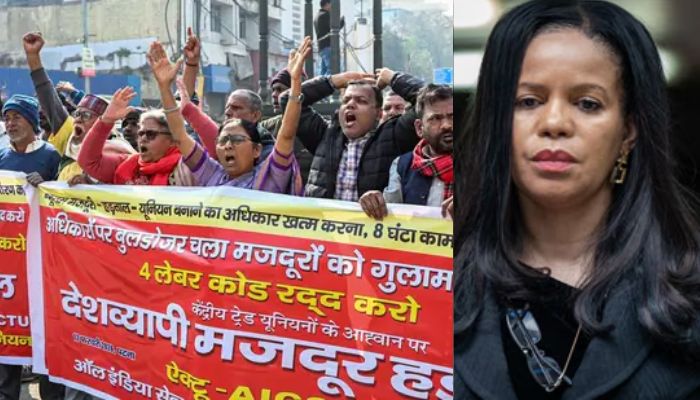
The latest example of this is former Leicester MP Claudia Webbe, who recently took to X to offer her views on what she termed a “300 million” workers’ strike in India on Thursday, 12th February. In her post, she accused the Modi government of authoritarianism and alleged that the Western media’s silence on the matter amounted to complicity.
What happened on 12th February
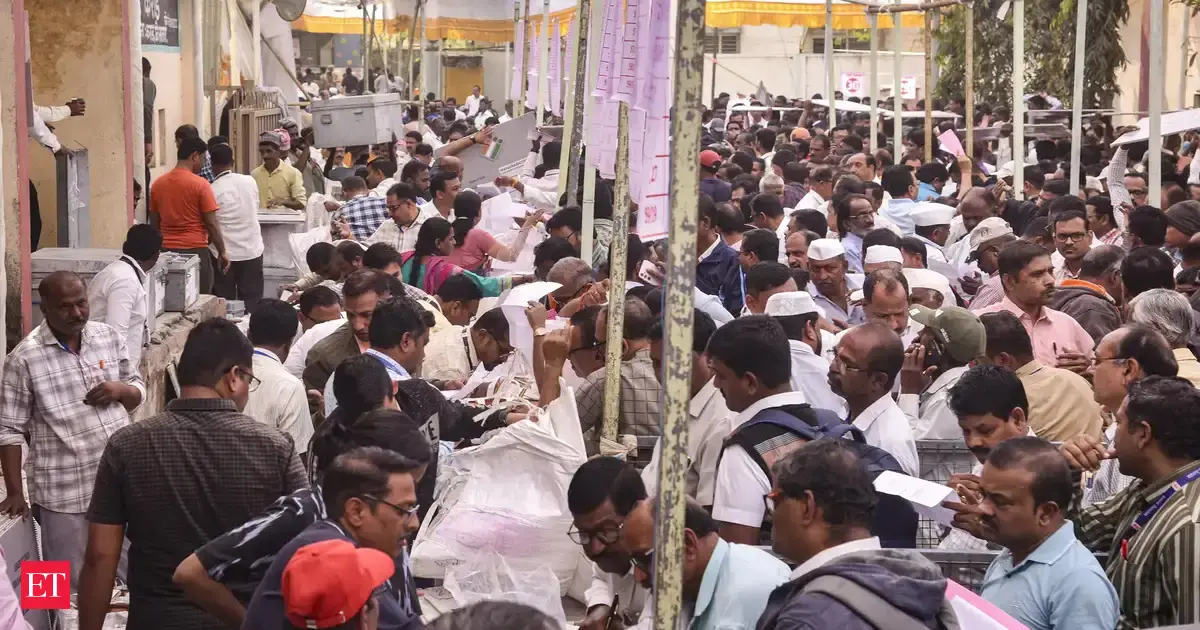
On Thursday, 12th February, trade unions and farmer organisations called for a nationwide strike, or Bharat Bandh. Workers in coal, refineries, factories, banking, and transport sectors took part in the strike as a result of a call from central trade unions such as CITU, AITUC, AICCTU, and HMS.
Farmer bodies such as the Samyukta Kisan Sabha (SKM) and the All India Agricultural Workers Union (AIAWA) also joined the strike. Demonstrations took place in various states, with protesters assembling at the district headquarters and villages to express their opposition to the interim India-US bilateral trade agreement and labour codes.
Sharing a protest video on X sourced from People’s Dispatch and Webbe wrote: “300 million workers just shut down India. The largest strike in human history, and most of the Western media barely whispered it. That silence is complicity in Modi’s war on workers’ rights. India’s general strike is the future that the billionaires and ruling class fear most.”
300 million workers just shut down India.
— Claudia Webbe (@ClaudiaWebbe) February 13, 2026
The largest strike in human history, and most of the Western media barely whispered it. That silence is complicity in Modi’s war on workers’ rights.
India’s general strike is the future that the billionaires and ruling class fears most pic.twitter.com/5vh5eRrVfR
In simple terms, Webbe was suggesting that India witnessed the biggest strike in history, that Western media deliberately ignored it to shield the Modi government, and that the protest represented a people’s uprising against corporate interests and authoritarian rule.
The reality behind the “300 million” claim
However, the claim of “300 million” participants is exaggerated. Such inflated numbers are often repeated by pro-anarchist groups, ideological publications, and political actors looking to project a sense of crisis. India has a population of over 1.4 billion people.
In a country of this scale, even large mobilisations can happen without paralysing the nation. Calling every protest “unprecedented” or proof of systemic collapse is misleading.
Apparently, 300 million (30 crore) workers in India went on strike and the country didn't come to a stand-still but a Brit sitting 1000's of kms away is telling the world she knows India more than the Indians. https://t.co/NDAaz5ERCz
— Stop Hindu Hate Advocacy Network (SHHAN) (@HinduHate) February 14, 2026
Protests, even large ones, are not signs of democratic failure. They are part of democracy. India regularly witnesses demonstrations by trade unions, farmers, students and political groups. Government offices function, markets operate, and daily life continues in most parts of the country. To present a strike as evidence of authoritarian breakdown ignores how democratic systems actually work.
The claim of Western Media “silence”
Webbe’s accusation that Western media silence equals complicity is also questionable. Since Prime Minister Narendra Modi came to power, Western media outlets have often published strongly critical pieces about his government. From coverage of citizenship laws to economic reforms and even India’s handling of COVID-19, global outlets have rarely hesitated to question or criticise New Delhi.
The Western media is known to single India out for negative coverage, even when the country adopts policies similar to those of other nations. This was especially visible during India’s COVID-19 lockdown. UK-based The Guardian ran a headline on 4th April, 2020, reading, “‘I just want to go home’: the desperate millions hit by Modi’s brutal lockdown.” The word “brutal” stood out.
At the same time, when discussing lockdowns in the United States and Australia, the tone was noticeably different. An opinion piece urged then US President Donald Trump to impose a full shutdown to combat the pandemic. Regarding Australia, the paper matter-of-factly reported the shutdown as a necessary step. In the UK’s own case, the lockdown was described as a “necessary hardship.”
The contrast was stark. While hardships in the UK were “necessary,” similar hardships in India were framed as “brutal.” The selective language suggested a motivated narrative. Despite facing the same global crisis, India was portrayed more negatively.
Given this history, the claim that Western media would ignore an opportunity to criticise the Modi government seems implausible. If there had been genuine nationwide paralysis, it would likely have been amplified widely.
Did the strike paralyse India?
Multiple reports from states across India suggested that normal life was largely unaffected. In Jharkhand, markets remained open and vehicles operated normally. In Chhattisgarh, while banks and some mining activities saw disruption, transport and shops continued as usual. In Tamil Nadu, rail and road services functioned despite protests. Even in Kerala, critics described the shutdown as limited in scope.
A mixed response was reported in Odisha, Kerala, Goa, Madhya Pradesh and Punjab. While union members staged demonstrations, there was no nationwide paralysis. Daily life in most cities and towns went on without major disruption.
If the strike had indeed shut down India in the way claimed, it would have dominated global headlines. The relative lack of dramatic coverage suggests that social media narratives may have amplified the scale beyond reality.
The billionaire rhetoric
Webbe’s closing line about “billionaires and the ruling class” fearing the strike reflects a familiar ideological trope. Demonising wealth creators and business leaders is a classic strand of communist rhetoric. While inequality debates are legitimate, framing economic reform as a battle between oppressed masses and evil billionaires simplifies complex policy discussions into emotional slogans.
India’s economic growth, infrastructure expansion and digital transformation over the past decade have involved partnerships between government and private enterprise. Painting this as a sinister alliance ignores the millions lifted out of poverty and the expansion of social welfare schemes.
Celebrity interventions and propaganda
This is not the first time global personalities have commented on Indian domestic matters. During the farm law protests of 2021, celebrities like Rihanna and Mia Khalifa tweeted in support of protesters.
why aren’t we talking about this?! #FarmersProtest https://t.co/obmIlXhK9S
— Rihanna (@rihanna) February 2, 2021
Their sudden interest in complex agricultural reforms raised eyebrows. Critics argued that such interventions were less about genuine concern for Indian farmers and more about amplifying a particular narrative internationally.
What in the human rights violations is going on?! They cut the internet around New Delhi?! #FarmersProtest pic.twitter.com/a5ml1P2ikU
— Mia K. (@miakhalifa) February 3, 2021
Eventually, the farm laws were repealed, but many economists maintain that reforms were necessary for long-term agricultural modernisation. The episode showed how international voices can sometimes amplify half-understood issues.
The India-US trade deal angle
Notably, the 12th February so-called protest was also majorly linked to concerns over the interim India-US trade framework. Some groups claimed that the agreement would harm Indian farmers by opening markets to American agricultural products.
However, opposition claims that India has already signed a deal reducing farm tariffs to zero are false. What exists is a framework for negotiations toward a broader Bilateral Trade Agreement. No final pact has been signed.
The joint statement mentions reducing or eliminating tariffs on select industrial goods and certain agricultural items like Dried Distillers’ Grains, red sorghum, tree nuts, processed fruits, soybean oil, wine and spirits. These are largely products India already imports to meet domestic demand gaps. Major staple crops such as rice and wheat are not part of the agreement.
India already imports significant agricultural goods, including edible oils and pulses, due to domestic shortages. In fact, India is the world’s largest producer and importer of pulses. Imports worth billions of dollars annually help maintain food security.
In return, the United States has reduced punitive tariffs on Indian goods and opened greater access for pharmaceuticals, gems, diamonds and other sectors. Claims that India has surrendered its agricultural sovereignty are misleading.
Conclusion
The larger picture shows how narratives can be shaped for political ends. Washed-up politicians abroad and ideological actors at home sometimes amplify exaggerated claims to paint India in a negative light. Protests are a part of democracy, not proof of collapse. Trade negotiations are complex, not conspiracies.
Ultimately, Communist Party members and affiliated groups against economic reforms follow a familiar pattern. Just as they resisted the farm laws, they now oppose trade agreements and labour reforms. Development, reform and global engagement often face ideological resistance, but portraying them as authoritarian assaults may say more about political agendas than about India’s reality.