Explained: How Iran’s Strait of Hormuz blockade and Qatar’s LNG halt could trigger an unprecedented global energy shock
The US-Israel war against the Mullah regime in Iran is having global implications. First, Iran blocked the Strait of Hormuz, and on 2nd March 2026, Qatar announced a full halt to the production of liquefied natural gas (LNG) and associated products. The decision came after Iranian drone strikes targeted an energy facility of Qatar’s state-owned energy giant, QatarEnergy, in the massive Ras Laffan Industrial City and a water tank at a power plant in Mesaieed Industrial City. While the world’s largest LNG producer confirmed that no casualties occurred in the Iranian strikes, the production of LNG and related products has been halted for “security reasons”. The Ras Laffan Industrial City is home to the world’s largest LNG export plant. QatarEnergy declared force majeure on its energy shipments. This is a legal clause excusing delivery failure due to extraordinary situations like drone attacks. The move will have serious implications as Ras Laffan alone accounts for the bulk of Qatar’s LNG output. “Due to military attacks on QatarEnergy’s operating facilities in Ras Laffan Industrial City and Mesaieed Industrial City in the State of Qatar, QatarEnergy has ceased production of liquefied natural gas (LNG) and associated products,” a statement issued by QatarEnergy reads. Global impact of Qatar halting LNG production Qatar supplies approximately 20% of the global LNG exports. With Qatar’s 82% clients based in Asia and a significant chunk in Europe, Qatar played a balancing role. Qatar supplies 42% of India’s LNG requirements. An indefinite discontinuation of LNG production and removal of this massive volume would essentially create an immediate global supply shock, further exacerbating the fragility of global energy security. If we look at the immediate market reaction, the European benchmark gas price (Dutch TTF) skyrocketed 46-54% in a single day. Similarly, Asian LNG spot prices surged 39%. Oil prices recorded a spike as high as 13% intraday. In Asia, Japan, China, India, Korea, Pakistan, and Bangladesh, among others, rely heavily on Qatari cargoes. Japan’s Minister of Economy, Trade and Industry, Akazawa Ryo Masa, has reportedly said that although Japan’s immediate supply is protected by stockpiles and spot-purchasing, Tokyo may seek to diversify its LNG imports. Meanwhile, Indian importers like GAIL and Petronet also face direct contract risks. If the situation persists for long, Asian LNG buyers will scramble for replacement cargoes, which would essentially mean not only higher prices but also open the risk of power plants and industries cutting output or switching fuels. Indian companies are reported to have reduced LNG supplies to industries after Qatar announced a production halt. Petronet has informed GAIL and other companies about reduced supplies. GAIL and Indian Oil Corporation (IOC) have informed customers about the gas supply cut, which ranges from 10% to 30%. Meanwhile, India may also turn to its trusted supplier and partner, Russia, for short-term LNG imports, much to America’s disappointment. For Europe, the situation only gets worse as its energy security was already exposed after the loss of the Russian gas pipeline in 2022. A dramatic surge in prices will raise household electricity bills and industrial costs. While the European Union’s gas coordination group will convene on 3rd March to discuss the overall impact of the escalating war in the Middle East, Europe’s storage is relatively healthy and since winters are also ending, it may not face an immediate crisis. Israel’s pursuit of eliminating the ‘existential threat’, America’s ‘regime change’ ambition, and Iran’s revenge collectively bleeding global energy markets None of this ends at just Asia and Europe; there will be ripple effects. While the US and Australia may witness higher prices and export opportunities, being among the top LNG exporters, they are reported to have limited spare capacity. The US has already grabbed the opportunity, with Venture Global, offering uncontracted cargoes to help “stabilise” the markets as Qatar turns the tap off. QatarEnergy halting LNG production only worsens a potential crisis triggered by Iran’s blocking of the Strait of Hormuz. The Strait’s blockade has already resulted in a surge in oil prices. The IRGC has threatened to attack any vessels, compounded by tanker strikes, insurance cancellations, and suspensions by major shipping lines like Maersk, which has effectively brought commercial traffic to a near standstill. A desperate and vengeful Iranian Mullah regime, in its pursuit to disrupt global energy supply and gain leverage, has choked off roughly 20% of the world’s seaborne oil and a significant share of LNG exports, including from Qatar. Appearing on Iranian state television, Iranian Brigadier General Ebrahim Jabari, the adviser to the IRGC commander, said, “The price of oil has reached $81/bbl, and the world is certainly waiting for it to re
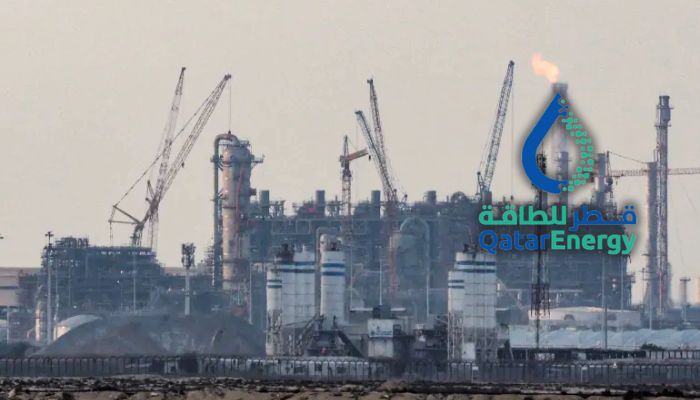
The US-Israel war against the Mullah regime in Iran is having global implications. First, Iran blocked the Strait of Hormuz, and on 2nd March 2026, Qatar announced a full halt to the production of liquefied natural gas (LNG) and associated products. The decision came after Iranian drone strikes targeted an energy facility of Qatar’s state-owned energy giant, QatarEnergy, in the massive Ras Laffan Industrial City and a water tank at a power plant in Mesaieed Industrial City.
While the world’s largest LNG producer confirmed that no casualties occurred in the Iranian strikes, the production of LNG and related products has been halted for “security reasons”. The Ras Laffan Industrial City is home to the world’s largest LNG export plant.
QatarEnergy declared force majeure on its energy shipments. This is a legal clause excusing delivery failure due to extraordinary situations like drone attacks. The move will have serious implications as Ras Laffan alone accounts for the bulk of Qatar’s LNG output.
“Due to military attacks on QatarEnergy’s operating facilities in Ras Laffan Industrial City and Mesaieed Industrial City in the State of Qatar, QatarEnergy has ceased production of liquefied natural gas (LNG) and associated products,” a statement issued by QatarEnergy reads.
Global impact of Qatar halting LNG production
Qatar supplies approximately 20% of the global LNG exports. With Qatar’s 82% clients based in Asia and a significant chunk in Europe, Qatar played a balancing role. Qatar supplies 42% of India’s LNG requirements. An indefinite discontinuation of LNG production and removal of this massive volume would essentially create an immediate global supply shock, further exacerbating the fragility of global energy security.
If we look at the immediate market reaction, the European benchmark gas price (Dutch TTF) skyrocketed 46-54% in a single day. Similarly, Asian LNG spot prices surged 39%. Oil prices recorded a spike as high as 13% intraday.
In Asia, Japan, China, India, Korea, Pakistan, and Bangladesh, among others, rely heavily on Qatari cargoes. Japan’s Minister of Economy, Trade and Industry, Akazawa Ryo Masa, has reportedly said that although Japan’s immediate supply is protected by stockpiles and spot-purchasing, Tokyo may seek to diversify its LNG imports.
Meanwhile, Indian importers like GAIL and Petronet also face direct contract risks. If the situation persists for long, Asian LNG buyers will scramble for replacement cargoes, which would essentially mean not only higher prices but also open the risk of power plants and industries cutting output or switching fuels.
Indian companies are reported to have reduced LNG supplies to industries after Qatar announced a production halt. Petronet has informed GAIL and other companies about reduced supplies. GAIL and Indian Oil Corporation (IOC) have informed customers about the gas supply cut, which ranges from 10% to 30%.
Meanwhile, India may also turn to its trusted supplier and partner, Russia, for short-term LNG imports, much to America’s disappointment.
For Europe, the situation only gets worse as its energy security was already exposed after the loss of the Russian gas pipeline in 2022. A dramatic surge in prices will raise household electricity bills and industrial costs. While the European Union’s gas coordination group will convene on 3rd March to discuss the overall impact of the escalating war in the Middle East, Europe’s storage is relatively healthy and since winters are also ending, it may not face an immediate crisis.
Israel’s pursuit of eliminating the ‘existential threat’, America’s ‘regime change’ ambition, and Iran’s revenge collectively bleeding global energy markets
None of this ends at just Asia and Europe; there will be ripple effects. While the US and Australia may witness higher prices and export opportunities, being among the top LNG exporters, they are reported to have limited spare capacity.
The US has already grabbed the opportunity, with Venture Global, offering uncontracted cargoes to help “stabilise” the markets as Qatar turns the tap off.
QatarEnergy halting LNG production only worsens a potential crisis triggered by Iran’s blocking of the Strait of Hormuz. The Strait’s blockade has already resulted in a surge in oil prices. The IRGC has threatened to attack any vessels, compounded by tanker strikes, insurance cancellations, and suspensions by major shipping lines like Maersk, which has effectively brought commercial traffic to a near standstill. A desperate and vengeful Iranian Mullah regime, in its pursuit to disrupt global energy supply and gain leverage, has choked off roughly 20% of the world’s seaborne oil and a significant share of LNG exports, including from Qatar.
Appearing on Iranian state television, Iranian Brigadier General Ebrahim Jabari, the adviser to the IRGC commander, said, “The price of oil has reached $81/bbl, and the world is certainly waiting for it to reach at least $200. The Strait of Hormuz is closed. Our heroes in the Islamic Revolutionary Guard Corps Navy and the Army will set fire to any ships that wish to pass through this strait.”
Various media reports also indicate that the blocking of the Strait of Hormuz has triggered energy price spikes, with oil rising toward or beyond $100 per barrel and the European gas benchmark jumping over 50%.
It must be recalled that the fresh wave of anti-regime protest in Iran had hyperinflation and consistent economic downslide as its immediate trigger. Now, an intransigent Iranian Mullah regime seems to be deliberately exporting the same crisis through the Strait of Hormuz blockade and Gulf energy strikes, ‘punishing’ its adversaries and the wider world with global energy supply disruptions, price spikes and inflation.
Besides Qatar’s halt on LNG production, and the Strait of Hormuz blockade, Saudi Aramco’s Ras Tanura refinery, Israeli gas fields, and Iraqi Kurdistan oil output are also seeing a precautionary shutdown amidst Iran’s retaliatory strikes. On 2nd March, an Iranian drone targeted Aramco’s refinery in Ras Tanura on Saudi Arabia’s east coast, triggering a fire.
In Iraqi Kurdistan, companies like DNO, Gulf Keystone Petroleum, Dana Gas and HKN Energy have halted their production as a precautionary measure. The companies used to export 200,000 barrels of oil per day (bpd) through pipeline to Turkey’s Ceyhan port in February this year.
In Israel, the Netanyahu government has directed Chevron to temporarily halt the giant Leviathan gas field. Israeli gas field shutdown has put its exports to Egypt to a standstill.
On 28th February, there were two explosions at Iran’s Kharg Island, which processes 90% of Iran’s crude exports. Although Iran is heavily sanctioned, the country is the third largest producer in the Organisation of the Petroleum Exporting Countries, pumping roughly 4.5% of global oil supplies. Iran’s output is about 3.3 million barrels per day of crude, in addition to 1.3 million bpd of condensate and other liquids.
The Middle East remains volatile, and even a short halt would inflict massive damage; the disruption extending to months would trigger a global energy crisis. Although other producers are stepping in, they cannot instantly replace 20% of the global supply. The return of normalcy in global energy supplies remains contingent on the return of normalcy in Iran and the Gulf countries.