Education Ministry notifies NCERT as Deemed University: Read what it means and how the organisation will change
The Union Ministry of Education has formally notified the National Council of Educational Research and Training (NCERT) as an institution deemed to be a university, enabling the apex school education body to offer its own degree programmes and conduct research for the first time. In a notification issued on 30 March 2026 under Section 3 of the University Grants Commission (UGC) Act, 1956, the ministry declared NCERT, along with its six constituent units, including the Regional Institutes of Education in Ajmer, Bhopal, Bhubaneswar, Mysuru and Shillong, and the Pandit Sunderlal Sharma Central Institute of Vocational Education in Bhopal, as a deemed university under a “distinct category”. The move came on the advice of the UGC, which approved the recommendations of an expert committee during its 595th meeting on 30 January 2026. Union Ministry of Education, on the advice of the UGC, hereby declares National Council of Educational Research and Training (NCERT) as an Institution deemed to be University under distinct category In a notification, the ministry says, "An online application was uploaded on… pic.twitter.com/ry15rgWChl— ANI (@ANI) April 3, 2026 The decision had been in the pipeline for nearly three years. Union Education Minister Dharmendra Pradhan first signalled the government’s intent in September 2023 during NCERT’s foundation day, stating that the status would help transform the organisation into a research-driven institution capable of greater global academic engagement. The process began with NCERT’s application on the UGC portal, followed by a Letter of Intent (LoI) issued by the Ministry in August 2023. NCERT then submitted its compliance report in November 2025 after fulfilling the conditions outlined in the Letter of Intent. An earlier proposal to designate NCERT as an “institution of national importance” was set aside in favour of this route. What the new status means Until now, NCERT’s primary mandate has been the development of school curricula, textbooks and teacher-training materials. The deemed-university status significantly expands this role. The 63-year-old council can now independently launch diploma, undergraduate, postgraduate, doctoral and specialised programmes in education and related fields. It will also be able to conduct research and award its own degrees, while retaining its core responsibilities in school education. The government notification directs the institution to “take appropriate steps to commence research programmes as well as doctoral and innovative academic programmes” in line with the National Education Policy (NEP) 2020. The “distinct category” tag recognises NCERT’s specialised national role, and grants it autonomy to design and run academic programmes while distinguishing it from conventional universities. A deemed-to-be-university is a specific category granted to institutions that demonstrate academic strength in a defined area. Such deemed universities enjoy full academic autonomy, and they can design courses, develop curricula, set admission criteria and fix fees. With this status, NCERT will be able to function as a full-fledged research university. It will be able to initiate in-house research programmes and formally enter higher education and doctoral training. However, its funding will be continued to be done by Department of School Education and Literacy under the Ministry of Education. This means its role as creator of school education framework will remain strong. This will also change the status of the Regional Institutes of Education (RIEs) in Ajmer, Bhopal, Bhubaneswar, Mysuru and Shillong, along with the Pandit Sunderlal Sharma Central Institute of Vocational Education in Bhopal. Until now, these institutes were affiliated with universities in their respective states, and therefore, they were governed by different universities. Now these institutions will come under NCERT deemed university. Regulatory oversight by the UGC However, the notification brings NCERT squarely under the UGC’s regulatory framework. All academic programmes must now conform to the norms and standards prescribed by the UGC and other statutory bodies. Any new courses, off-campus centres or offshore programmes can be started only with UGC approval and in line with its guidelines. The council is explicitly barred from engaging in commercial or profit-making activities. Several mandatory requirements will come into force as a result of this change. NCERT will have to initiate research programmes, doctoral studies and innovative academic offerings in emerging areas, in alignment with the National Education Policy (NEP) 2020. The institute and its programmes will have to obtain accreditation from the National Assessment and Accreditation Council (NAAC) and the National Board of Accreditation (NBA) respectively. It must participate in the National Institutional Ranking Framework (NIRF) on an annual basis. Moreover, an Academic B
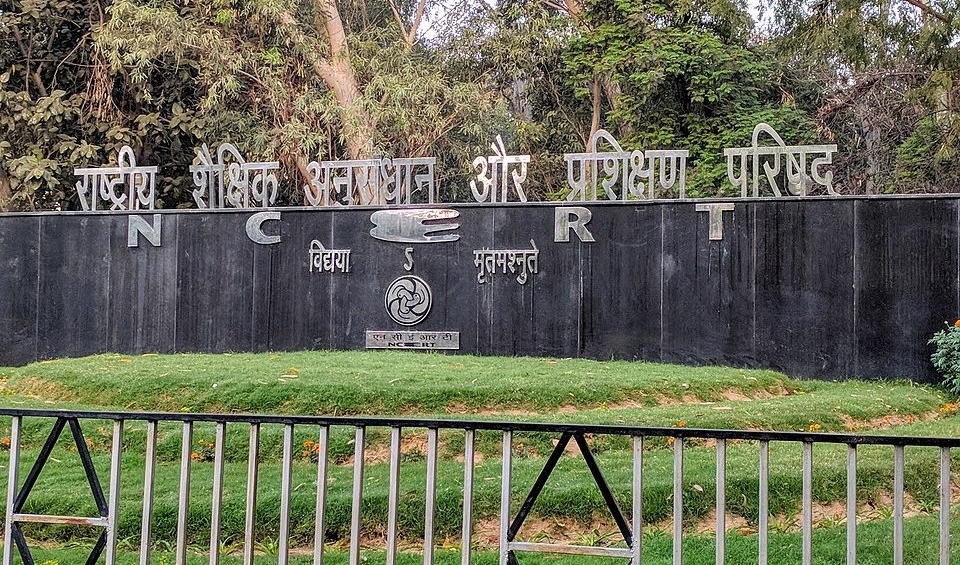
The Union Ministry of Education has formally notified the National Council of Educational Research and Training (NCERT) as an institution deemed to be a university, enabling the apex school education body to offer its own degree programmes and conduct research for the first time.
In a notification issued on 30 March 2026 under Section 3 of the University Grants Commission (UGC) Act, 1956, the ministry declared NCERT, along with its six constituent units, including the Regional Institutes of Education in Ajmer, Bhopal, Bhubaneswar, Mysuru and Shillong, and the Pandit Sunderlal Sharma Central Institute of Vocational Education in Bhopal, as a deemed university under a “distinct category”. The move came on the advice of the UGC, which approved the recommendations of an expert committee during its 595th meeting on 30 January 2026.
Union Ministry of Education, on the advice of the UGC, hereby declares National Council of Educational Research and Training (NCERT) as an Institution deemed to be University under distinct category In a notification, the ministry says, "An online application was uploaded on… pic.twitter.com/ry15rgWChl— ANI (@ANI) April 3, 2026
The decision had been in the pipeline for nearly three years. Union Education Minister Dharmendra Pradhan first signalled the government’s intent in September 2023 during NCERT’s foundation day, stating that the status would help transform the organisation into a research-driven institution capable of greater global academic engagement.
The process began with NCERT’s application on the UGC portal, followed by a Letter of Intent (LoI) issued by the Ministry in August 2023. NCERT then submitted its compliance report in November 2025 after fulfilling the conditions outlined in the Letter of Intent. An earlier proposal to designate NCERT as an “institution of national importance” was set aside in favour of this route.
What the new status means
Until now, NCERT’s primary mandate has been the development of school curricula, textbooks and teacher-training materials. The deemed-university status significantly expands this role. The 63-year-old council can now independently launch diploma, undergraduate, postgraduate, doctoral and specialised programmes in education and related fields.
It will also be able to conduct research and award its own degrees, while retaining its core responsibilities in school education. The government notification directs the institution to “take appropriate steps to commence research programmes as well as doctoral and innovative academic programmes” in line with the National Education Policy (NEP) 2020.
The “distinct category” tag recognises NCERT’s specialised national role, and grants it autonomy to design and run academic programmes while distinguishing it from conventional universities. A deemed-to-be-university is a specific category granted to institutions that demonstrate academic strength in a defined area. Such deemed universities enjoy full academic autonomy, and they can design courses, develop curricula, set admission criteria and fix fees.
With this status, NCERT will be able to function as a full-fledged research university. It will be able to initiate in-house research programmes and formally enter higher education and doctoral training. However, its funding will be continued to be done by Department of School Education and Literacy under the Ministry of Education. This means its role as creator of school education framework will remain strong.
This will also change the status of the Regional Institutes of Education (RIEs) in Ajmer, Bhopal, Bhubaneswar, Mysuru and Shillong, along with the Pandit Sunderlal Sharma Central Institute of Vocational Education in Bhopal. Until now, these institutes were affiliated with universities in their respective states, and therefore, they were governed by different universities. Now these institutions will come under NCERT deemed university.
Regulatory oversight by the UGC
However, the notification brings NCERT squarely under the UGC’s regulatory framework. All academic programmes must now conform to the norms and standards prescribed by the UGC and other statutory bodies. Any new courses, off-campus centres or offshore programmes can be started only with UGC approval and in line with its guidelines. The council is explicitly barred from engaging in commercial or profit-making activities.
Several mandatory requirements will come into force as a result of this change. NCERT will have to initiate research programmes, doctoral studies and innovative academic offerings in emerging areas, in alignment with the National Education Policy (NEP) 2020. The institute and its programmes will have to obtain accreditation from the National Assessment and Accreditation Council (NAAC) and the National Board of Accreditation (NBA) respectively.
It must participate in the National Institutional Ranking Framework (NIRF) on an annual basis. Moreover, an Academic Bank of Credits (ABC) system must be implemented, with student identities created and credit scores uploaded to digital lockers.
These steps will integrate NCERT more fully into India’s higher-education ecosystem while maintaining its distinct focus on school education. As per the notification, it will not engage or indulge in any activities that are of a commercial and profit making in nature.
Why did the government take this step
Officials say the move is designed to strengthen teacher education, promote educational research and innovation, and align NCERT more closely with the vision of NEP 2020. By evolving into a research-oriented body with degree-granting powers, NCERT is expected to bridge school-level education with advanced academic and global collaboration, ultimately improving the quality of curriculum development and pedagogical practices across the country.
The notification marks a structural shift for NCERT, positioning it as both the guardian of school education and a recognised player in higher education and research. Implementation will now proceed under the UGC’s oversight, with the council required to meet the stipulated conditions to realise the full potential of its new status.