Did Amit Shah order pellet firing on CJP protesters? Rahul Gandhi’s Lok Sabha charge falls apart against police records and ongoing probe
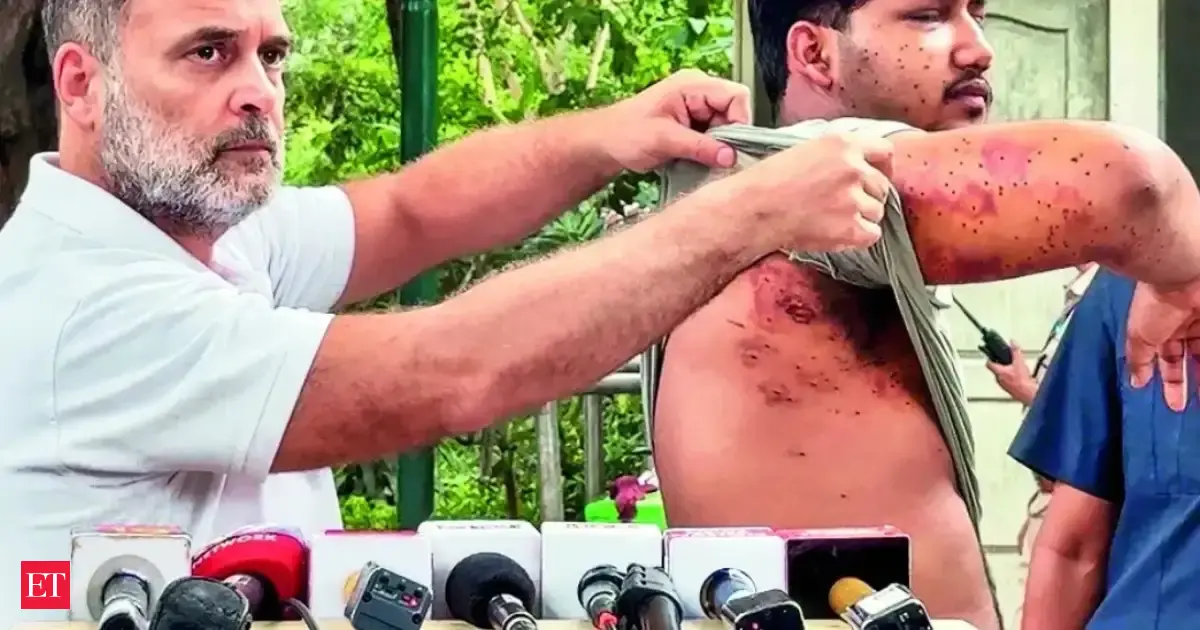
Congress leader Rahul Gandhi on Wednesday attempted to pin direct responsibility for the alleged use of pellet rounds during the July 20 Parliament march on Union Home Minister Amit Shah, telling the Lok Sabha that the Home Minister “authorised the shooting” of students. However, the claim is not supported either by India’s established policing hierarchy or by the material that has emerged from the ongoing investigations. Speaking in the Lok Sabha on July 29, Gandhi alleged, “Sir, the Home Minister authorised the shooting of our students, sir. He put… he put pellets into the blood of our students. He ordered the students of India to be shot.” #WATCH | Lok Sabha LoP Rahul Gandhi says, "I am very happy today to see that so-called Home Minister of this country does not have the courage to come and sit here. I saw his carcade and the HM sitting inside the car, looking, shaking. Why is the Home Minister not here today?… pic.twitter.com/krlPghdfnf— ANI (@ANI) July 29, 2026 The statement suggests that the Union Home Minister personally directed operational crowd-control measures during the protest. There is, however, no evidence in the public domain to support such an assertion. Home Minister does not direct field operations India’s law enforcement functions through a clearly defined chain of command. While the Union Home Minister oversees the Ministry of Home Affairs and broad internal security policy, operational decisions during protests are taken by officers deployed on the ground in accordance with established police procedures. Crowd-control measures, including the use of lathis, tear gas or other non-lethal equipment, are ordinarily authorised by officers commanding the deployment at the scene, with responsibility resting on field commanders rather than the political executive. During the July 20 violence, protesters pelted stones at security personnel, leaving several law enforcement officials injured. Faced with an escalating law-and-order situation, it fell upon the commanding officer on the ground to assess the threat and take operational decisions deemed necessary to protect his personnel and restore order. Consequently, attributing a tactical decision allegedly taken during a field deployment directly to the Union Home Minister bypasses the institutional hierarchy governing police operations. General diary entry points to field-level authorisation A general diary (GD) entry recorded at Parliament Street police station and first reported by Hindustan Times states that Rapid Action Force personnel informed police that certain crowd-control equipment, including two rounds of plastic pellets, was used during the July 20 protest on the orders of a Deputy Commissioner of Police attached to the deployment. The diary mentions the use of anti-riot gun ammunition, tear smoke grenades, ballistic cartridges and two plastic pellet rounds while dispersing the crowd. Importantly, the GD entry does not mention any direction from the Union Home Minister or any political authority. Officer named in diary disputes the allegation The matter has since become the subject of parallel inquiries by the Delhi Police and the Central Reserve Police Force (CRPF). According to officials cited in media reports, the Deputy Commissioner of Police named in the GD entry has informed senior officers that he was not present near the location where pellet rounds were allegedly fired. The officer reportedly stated that he was deployed near Patel Chowk and Gol Dak Khana, away from the Outer Circle and Jantar Mantar area where the alleged incident took place. He has also questioned the timing of the Rapid Action Force’s diary entry, noting that it was recorded nearly two days after the violence. Police officials have further indicated that multiple DCP-rank officers from different districts had been deployed with separate RAF teams in and around Connaught Place that day, making the precise chain of authorisation part of the ongoing investigation. Internal inquiry still underway Both the Delhi Police and the CRPF have initiated internal inquiries into the alleged use of plastic pellets. According to officials familiar with the probe, senior Delhi Police officers are examining deployment records, general diary entries, communication logs and authorisation documents to determine who, if anyone, approved the use of pellet rounds. Officials have also indicated that the authorisation available with police pertained to the use of lathis and tear smoke, while the question of pellet firing remains under investigation. Until these inquiries are completed, responsibility for the alleged use of plastic pellets remains undetermined. Political allegation runs ahead of facts Rahul Gandhi’s remarks in Parliament effectively attributed criminal intent and operational responsibility to the Union Home Minister despite the absence of any publicly available evidence linking Amit Shah to tacti
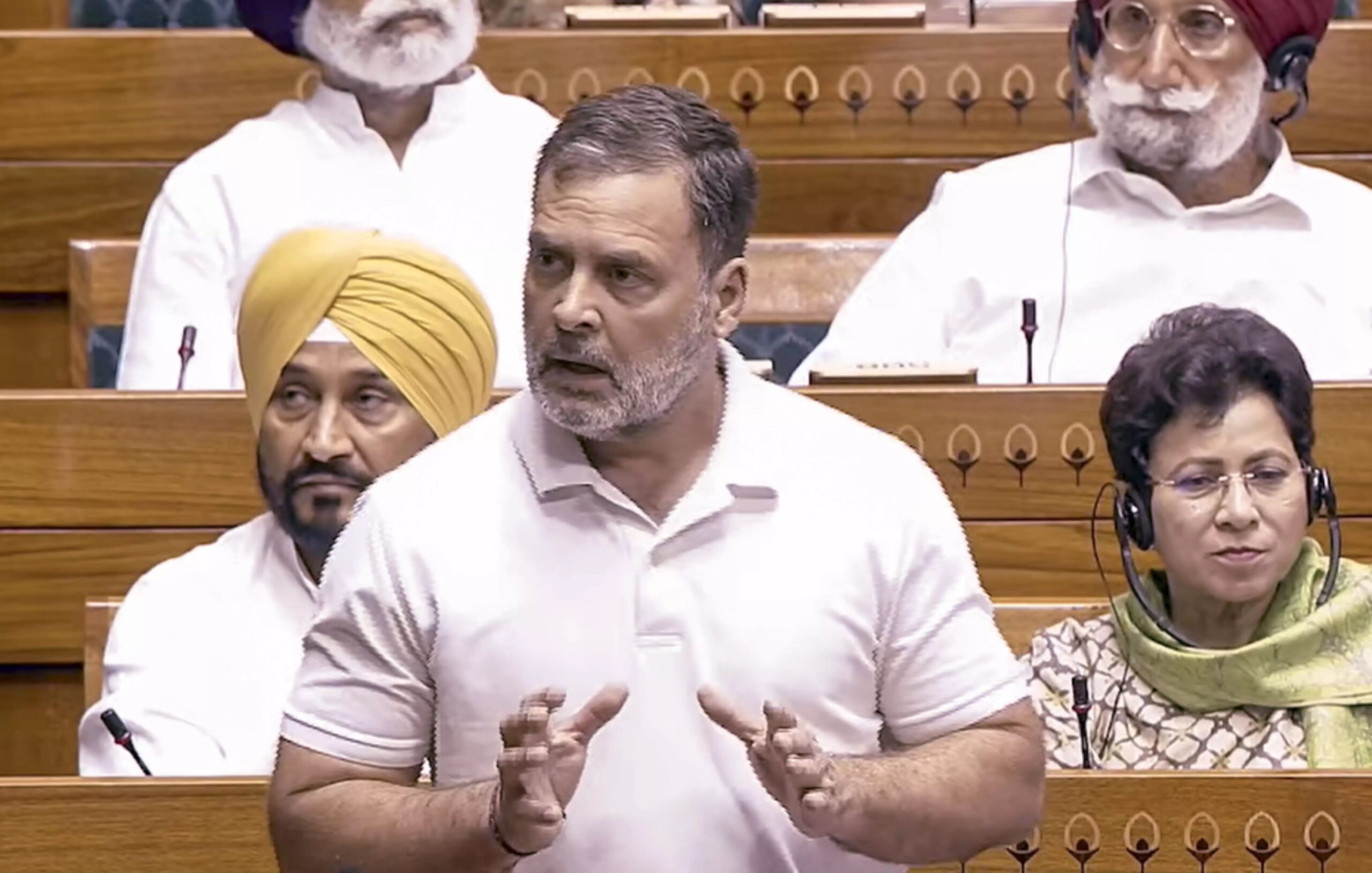
Congress leader Rahul Gandhi on Wednesday attempted to pin direct responsibility for the alleged use of pellet rounds during the July 20 Parliament march on Union Home Minister Amit Shah, telling the Lok Sabha that the Home Minister “authorised the shooting” of students. However, the claim is not supported either by India’s established policing hierarchy or by the material that has emerged from the ongoing investigations.
Speaking in the Lok Sabha on July 29, Gandhi alleged, “Sir, the Home Minister authorised the shooting of our students, sir. He put… he put pellets into the blood of our students. He ordered the students of India to be shot.”
#WATCH | Lok Sabha LoP Rahul Gandhi says, "I am very happy today to see that so-called Home Minister of this country does not have the courage to come and sit here. I saw his carcade and the HM sitting inside the car, looking, shaking. Why is the Home Minister not here today?… pic.twitter.com/krlPghdfnf— ANI (@ANI) July 29, 2026
The statement suggests that the Union Home Minister personally directed operational crowd-control measures during the protest. There is, however, no evidence in the public domain to support such an assertion.
Home Minister does not direct field operations
India’s law enforcement functions through a clearly defined chain of command. While the Union Home Minister oversees the Ministry of Home Affairs and broad internal security policy, operational decisions during protests are taken by officers deployed on the ground in accordance with established police procedures.
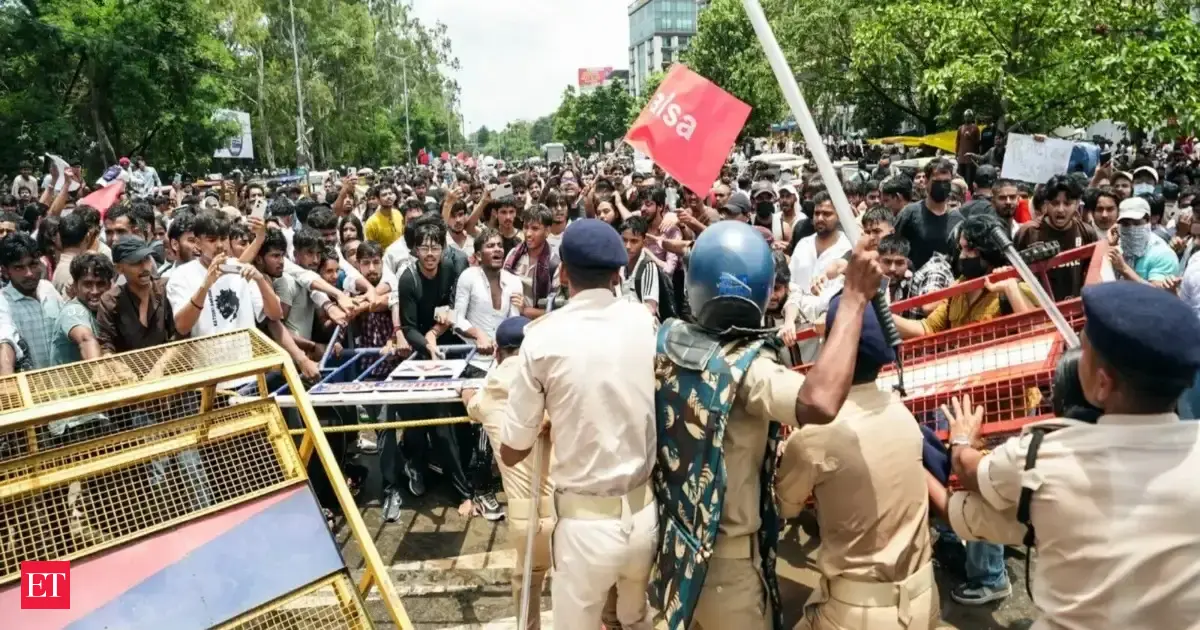
Crowd-control measures, including the use of lathis, tear gas or other non-lethal equipment, are ordinarily authorised by officers commanding the deployment at the scene, with responsibility resting on field commanders rather than the political executive. During the July 20 violence, protesters pelted stones at security personnel, leaving several law enforcement officials injured. Faced with an escalating law-and-order situation, it fell upon the commanding officer on the ground to assess the threat and take operational decisions deemed necessary to protect his personnel and restore order.
Consequently, attributing a tactical decision allegedly taken during a field deployment directly to the Union Home Minister bypasses the institutional hierarchy governing police operations.
General diary entry points to field-level authorisation
A general diary (GD) entry recorded at Parliament Street police station and first reported by Hindustan Times states that Rapid Action Force personnel informed police that certain crowd-control equipment, including two rounds of plastic pellets, was used during the July 20 protest on the orders of a Deputy Commissioner of Police attached to the deployment.
The diary mentions the use of anti-riot gun ammunition, tear smoke grenades, ballistic cartridges and two plastic pellet rounds while dispersing the crowd.
Importantly, the GD entry does not mention any direction from the Union Home Minister or any political authority.
Officer named in diary disputes the allegation
The matter has since become the subject of parallel inquiries by the Delhi Police and the Central Reserve Police Force (CRPF).
According to officials cited in media reports, the Deputy Commissioner of Police named in the GD entry has informed senior officers that he was not present near the location where pellet rounds were allegedly fired.
The officer reportedly stated that he was deployed near Patel Chowk and Gol Dak Khana, away from the Outer Circle and Jantar Mantar area where the alleged incident took place. He has also questioned the timing of the Rapid Action Force’s diary entry, noting that it was recorded nearly two days after the violence.
Police officials have further indicated that multiple DCP-rank officers from different districts had been deployed with separate RAF teams in and around Connaught Place that day, making the precise chain of authorisation part of the ongoing investigation.
Internal inquiry still underway
Both the Delhi Police and the CRPF have initiated internal inquiries into the alleged use of plastic pellets.
According to officials familiar with the probe, senior Delhi Police officers are examining deployment records, general diary entries, communication logs and authorisation documents to determine who, if anyone, approved the use of pellet rounds.
Officials have also indicated that the authorisation available with police pertained to the use of lathis and tear smoke, while the question of pellet firing remains under investigation.
Until these inquiries are completed, responsibility for the alleged use of plastic pellets remains undetermined.
Political allegation runs ahead of facts
Rahul Gandhi’s remarks in Parliament effectively attributed criminal intent and operational responsibility to the Union Home Minister despite the absence of any publicly available evidence linking Amit Shah to tactical decisions made during the protest.
The available records instead point to an ongoing effort by law enforcement agencies to establish which officers were present, what authorisations were issued, and whether standard operating procedures were followed.
Unless investigators establish otherwise, the assertion that Amit Shah “ordered the students of India to be shot” remains a political allegation rather than a conclusion supported by the evidence currently in the public domain.