Dear Congress and AIMIM, PM Modi’s Israel visit was for India–Israel relations, Iran–US conflict is not India’s business
West Asia is once again on the boil. Israel and the United States launched an attack on Iran on 28th February (local time), codenamed Operation ‘Operation Shield of Judah’. Explosions rock Tehran as the US and Israel launch “Operation Shield of Judah,” targeting Iran’s defence and nuclear infrastructure.Israel declares a state of emergency, Iran shuts airspace, and the region braces for retaliation.US President Trump posted an 8-minute video… pic.twitter.com/XHprerrWSF— OpIndia.com (@OpIndia_com) February 28, 2026 Following the missile attack, Iran retaliated and launched missiles towards Israel. It also hit several locations at US military bases in several countries including Bahrain, Qatar, UAE and others. Iran expands retaliation across the GulfMissiles launched toward US bases in Bahrain, Qatar & the UAE, with interceptions reported over Dubai and Abu Dhabi.Fifth Fleet HQ (Bahrain), Al Udeid (Qatar) and Al Dhafra (UAE) were among the targets as air defence systems were… pic.twitter.com/AjcJQgfIS1— OpIndia.com (@OpIndia_com) February 28, 2026 While the situation needs a serious diplomatic point of view from India’s perspective, opposition leaders in India have chosen to turn a complex geopolitical conflict into a domestic political weapon. Leaders from the Samajwadi Party, AIMIM and Congress lined up to insinuate that Prime Minister Narendra Modi’s visit to Israel was either ill-timed, morally suspect or strategically complicit. The insinuation is not just misplaced, but it reflects a troubling, and possibly deliberate, misunderstanding of India’s foreign policy priorities. India–Israel relations are about India’s national interest. The Iran–US confrontation is not India’s business to adjudicate, which opposition leaders seem to have failed to comprehend. What Akhilesh Yadav said, and why it misses the point Samajwadi Party leader Akhilesh Yadav was in Kannauj when the strikes began. Speaking to the media, he invoked the External Affairs Minister’s phrase “this is the new normal” to argue that wars will continue and societies will function, but that socialists have always been against war. He reiterated that war never brings good and that countries fight to humiliate each other. #WATCH | Kannauj: On Israel launching a preventative missile attack against Iran, Samajwadi Party Chief Akhilesh Yadav says, "As our foreign minister says, 'this is the new normal.' This is a new way of doing things. Wars will continue, the country will continue to function, and… pic.twitter.com/Ft4gzkxZmI— ANI (@ANI) February 28, 2026 While there is nothing controversial in saying that war is harmful, foreign policy is not built on moral abstractions alone. India does not control whether Israel and Iran fight. Nor can New Delhi impose peace in West Asia. The real question here is, should India freeze its diplomatic engagement with a key strategic partner every time that partner faces conflict? Notably, Israel is among India’s most critical defence partners. From missile systems and UAV technology to intelligence cooperation and agricultural innovations, India’s security architecture has deep Israeli inputs. The relationship predates this government but has been elevated to a strategic partnership under Prime Minister Narendra Modi. Furthermore, Israel has stood strong whenever India has faced conflict with hostile neighbours like Pakistan, something India cannot ignore while dictating its diplomatic stand. To reduce a high-level bilateral visit to an endorsement of war is to ignore decades of growing cooperation rooted in India’s own defence needs. Owaisi’s charge of ‘betrayal’ In Hyderabad, AIMIM chief Asaduddin Owaisi suggested that if Israel did not inform India about the strike, it deceived India. If it did inform India, then the Prime Minister should have cut short his visit. He further claimed that Israel used PM Modi’s visit to send a message that India stands with Israel against Iran. #WATCH | Hyderabad: On Iran-Israel conflict, AIMIM chief Asaduddin Owaisi says, "If the Prime Minister's aircraft was in the air and such an attack had taken place, who would have been responsible? The Prime Minister should tell the country whether Netanyahu had informed him that… pic.twitter.com/mE3Rl1KKuD— ANI (@ANI) February 28, 2026 This line of argument assumes that India is either a co-conspirator or a helpless pawn. Both assumptions are flawed. First, sovereign nations do not routinely share operational military decisions with even close partners unless there is direct coordination. India is not a party to the Israel–Iran hostilities. Expecting advance briefings on tactical strikes reflects either naivety or political theatre. Second, India’s engagement with Israel does not nullify its relations with Iran. India has invested in the Chabahar port, maintained energy ties and sustained diplomatic engagement with Tehran for years. Strategic autonomy means engaging multiple partner
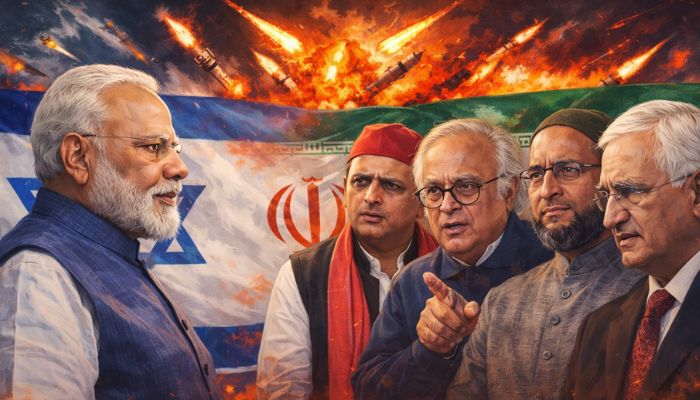
West Asia is once again on the boil. Israel and the United States launched an attack on Iran on 28th February (local time), codenamed Operation ‘Operation Shield of Judah’.
Explosions rock Tehran as the US and Israel launch “Operation Shield of Judah,” targeting Iran’s defence and nuclear infrastructure.Israel declares a state of emergency, Iran shuts airspace, and the region braces for retaliation.US President Trump posted an 8-minute video… pic.twitter.com/XHprerrWSF— OpIndia.com (@OpIndia_com) February 28, 2026
Following the missile attack, Iran retaliated and launched missiles towards Israel. It also hit several locations at US military bases in several countries including Bahrain, Qatar, UAE and others.
Iran expands retaliation across the GulfMissiles launched toward US bases in Bahrain, Qatar & the UAE, with interceptions reported over Dubai and Abu Dhabi.Fifth Fleet HQ (Bahrain), Al Udeid (Qatar) and Al Dhafra (UAE) were among the targets as air defence systems were… pic.twitter.com/AjcJQgfIS1— OpIndia.com (@OpIndia_com) February 28, 2026
While the situation needs a serious diplomatic point of view from India’s perspective, opposition leaders in India have chosen to turn a complex geopolitical conflict into a domestic political weapon. Leaders from the Samajwadi Party, AIMIM and Congress lined up to insinuate that Prime Minister Narendra Modi’s visit to Israel was either ill-timed, morally suspect or strategically complicit. The insinuation is not just misplaced, but it reflects a troubling, and possibly deliberate, misunderstanding of India’s foreign policy priorities.
India–Israel relations are about India’s national interest. The Iran–US confrontation is not India’s business to adjudicate, which opposition leaders seem to have failed to comprehend.
What Akhilesh Yadav said, and why it misses the point
Samajwadi Party leader Akhilesh Yadav was in Kannauj when the strikes began. Speaking to the media, he invoked the External Affairs Minister’s phrase “this is the new normal” to argue that wars will continue and societies will function, but that socialists have always been against war. He reiterated that war never brings good and that countries fight to humiliate each other.
#WATCH | Kannauj: On Israel launching a preventative missile attack against Iran, Samajwadi Party Chief Akhilesh Yadav says, "As our foreign minister says, 'this is the new normal.' This is a new way of doing things. Wars will continue, the country will continue to function, and… pic.twitter.com/Ft4gzkxZmI— ANI (@ANI) February 28, 2026
While there is nothing controversial in saying that war is harmful, foreign policy is not built on moral abstractions alone. India does not control whether Israel and Iran fight. Nor can New Delhi impose peace in West Asia. The real question here is, should India freeze its diplomatic engagement with a key strategic partner every time that partner faces conflict?
Notably, Israel is among India’s most critical defence partners. From missile systems and UAV technology to intelligence cooperation and agricultural innovations, India’s security architecture has deep Israeli inputs. The relationship predates this government but has been elevated to a strategic partnership under Prime Minister Narendra Modi. Furthermore, Israel has stood strong whenever India has faced conflict with hostile neighbours like Pakistan, something India cannot ignore while dictating its diplomatic stand.
To reduce a high-level bilateral visit to an endorsement of war is to ignore decades of growing cooperation rooted in India’s own defence needs.
Owaisi’s charge of ‘betrayal’
In Hyderabad, AIMIM chief Asaduddin Owaisi suggested that if Israel did not inform India about the strike, it deceived India. If it did inform India, then the Prime Minister should have cut short his visit. He further claimed that Israel used PM Modi’s visit to send a message that India stands with Israel against Iran.
#WATCH | Hyderabad: On Iran-Israel conflict, AIMIM chief Asaduddin Owaisi says, "If the Prime Minister's aircraft was in the air and such an attack had taken place, who would have been responsible? The Prime Minister should tell the country whether Netanyahu had informed him that… pic.twitter.com/mE3Rl1KKuD— ANI (@ANI) February 28, 2026
This line of argument assumes that India is either a co-conspirator or a helpless pawn. Both assumptions are flawed.
First, sovereign nations do not routinely share operational military decisions with even close partners unless there is direct coordination. India is not a party to the Israel–Iran hostilities. Expecting advance briefings on tactical strikes reflects either naivety or political theatre.
Second, India’s engagement with Israel does not nullify its relations with Iran. India has invested in the Chabahar port, maintained energy ties and sustained diplomatic engagement with Tehran for years. Strategic autonomy means engaging multiple partners without becoming an appendage of any.
#WATCH | Hyderabad: AIMIM chief Asaduddin Owaisi says, "10 million Indian citizens live in Gulf countries. What message will it send to the common citizens of those countries that Israel attacked Iran as soon as Prime Minister Modi's visit ended? Bahrain and Qatar were attacked,… pic.twitter.com/6AMKILvt2s— ANI (@ANI) February 28, 2026
Owaisi also invoked the presence of nearly ten million Indians in Gulf countries and warned of the “message” being sent. But India’s diaspora in the Gulf has thrived precisely because New Delhi maintains pragmatic relations across rival blocs. Suggesting that one visit will endanger millions is alarmist.
Jairam Ramesh and the charge of ‘moral cowardice’
Congress leader Jairam Ramesh went further, calling the visit shameful and accusing the Prime Minister of “moral cowardice” for standing with Israel. He linked the subsequent Israel–US assault on Iran to the timing of the visit, implying recklessness.
Two days after Mr. Modi celebrated his visit to Israel, Israel and the US have begun their joint assault on Iran. This was fully expected given their military build-up in the last few months. Mr. Modi nevertheless chose to go to Israel, where he displayed the highest moral…— Jairam Ramesh (@Jairam_Ramesh) February 28, 2026
This argument conflates chronology with causation. High-level visits are planned months in advance. The Israel–Iran shadow conflict has been escalating for years. To suggest that PM Modi’s presence emboldened Israel is to exaggerate India’s influence over the strategic calculations of Washington and Tel Aviv.
More importantly, diplomacy is not a morality play. India must engage partners based on its interests. Standing with Israel on issues like counter-terrorism or defence cooperation does not mean endorsing every military action it undertakes.
Salman Khurshid and the ‘where is our voice’ question
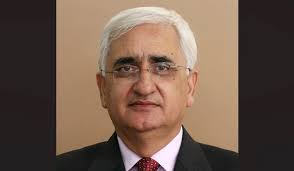
Former External Affairs Minister Salman Khurshid asked whether India is complicit or simply silent, and questioned why New Delhi is not speaking up to its friends. He drew parallels with Russia–Ukraine and suggested that India lacks the courage to tell the truth.
#WATCH | Delhi: On the Iran-Israel conflict, Former external affairs minister and Congress leader Salman Khurshid says, "Our party has very clearly said that this is a very difficult moment. We have friends across the globe… but unfortunately, we don't seem to be showing the… pic.twitter.com/twvZS3kKYs— ANI (@ANI) February 28, 2026
India’s approach in recent global crises has been consistent: call for restraint, protect national interests and avoid being dragged into bloc politics. That is not silence. It is strategic calibration.
Publicly berating one side may satisfy domestic audiences, but can close doors for back-channel diplomacy. India’s foreign policy establishment understands that influence is often exercised quietly.
Neutrality versus strategic autonomy
Much has been said about India’s “80-year legacy of neutrality”. In reality, India has evolved from Cold War non-alignment to strategic autonomy. Non-alignment meant not joining military blocs. Strategic autonomy means pursuing multiple partnerships simultaneously.
India can have robust defence ties with Israel, energy and connectivity ties with Iran, civilisational ties with the Gulf monarchies and growing engagement with the United States. None of these are mutually exclusive.
The opposition’s narrative frames the Israel visit as a departure from neutrality. In truth, it reflects a mature foreign policy that prioritises India’s security and economic interests over ideological signalling.
India’s stability in a turbulent neighbourhood
It is remarkable that amid aggravated hostilities in the Middle East, the US–Iran tensions, the Gaza–Israel war, the instability in Pakistan and Afghanistan, and the massive unrest in Bangladesh and Nepal that toppled governments, India has remained a peaceful, functional democracy far removed from the immediate worries of war.
Pakistan continues to grapple with political instability. Afghanistan is under Taliban rule. Bangladesh and Nepal have seen turbulence severe enough to destabilise governments.
Yet India has not descended into chaos. Its economy continues to function. Its democratic institutions operate. Elections are held, governments change peacefully at the state level, and the armed forces remain firmly under civilian control.
That stability is not accidental. It is the outcome of deliberate policy choices, firm internal security management, and a clear articulation of national interest under the Modi government. In a world where wars erupt with little warning, preserving peace at home while navigating external fault lines is an achievement.
The bottom line
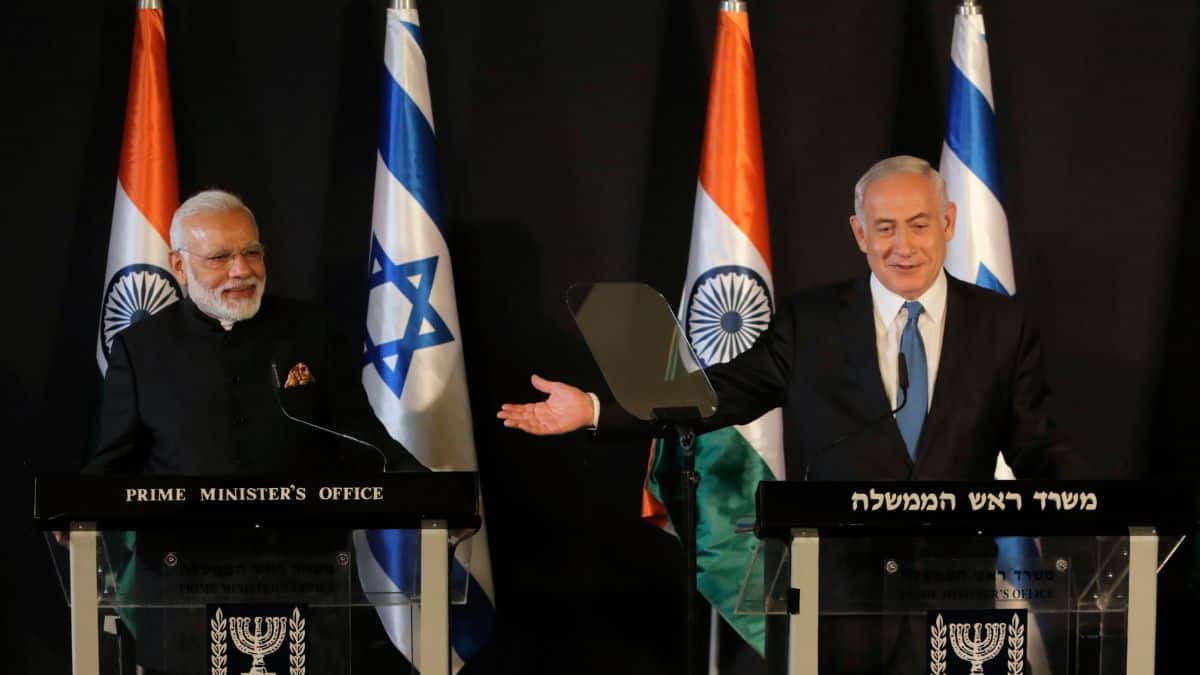
Prime Minister Modi’s Israel visit was about India–Israel relations, especially in defence and technology. It was not an endorsement of the Israel–US assault on Iran, nor was it a betrayal of neutrality.
Foreign policy cannot be reduced to partisan point scoring. India must engage major players in West Asia based on hard national interest. The Iran–US conflict, however tragic or consequential, is not India’s war to fight.
What should concern Indians more is not whether New Delhi cut short a visit, but whether India remains secure, stable and economically resilient in a volatile world. On that count, the record speaks louder than the rhetoric.