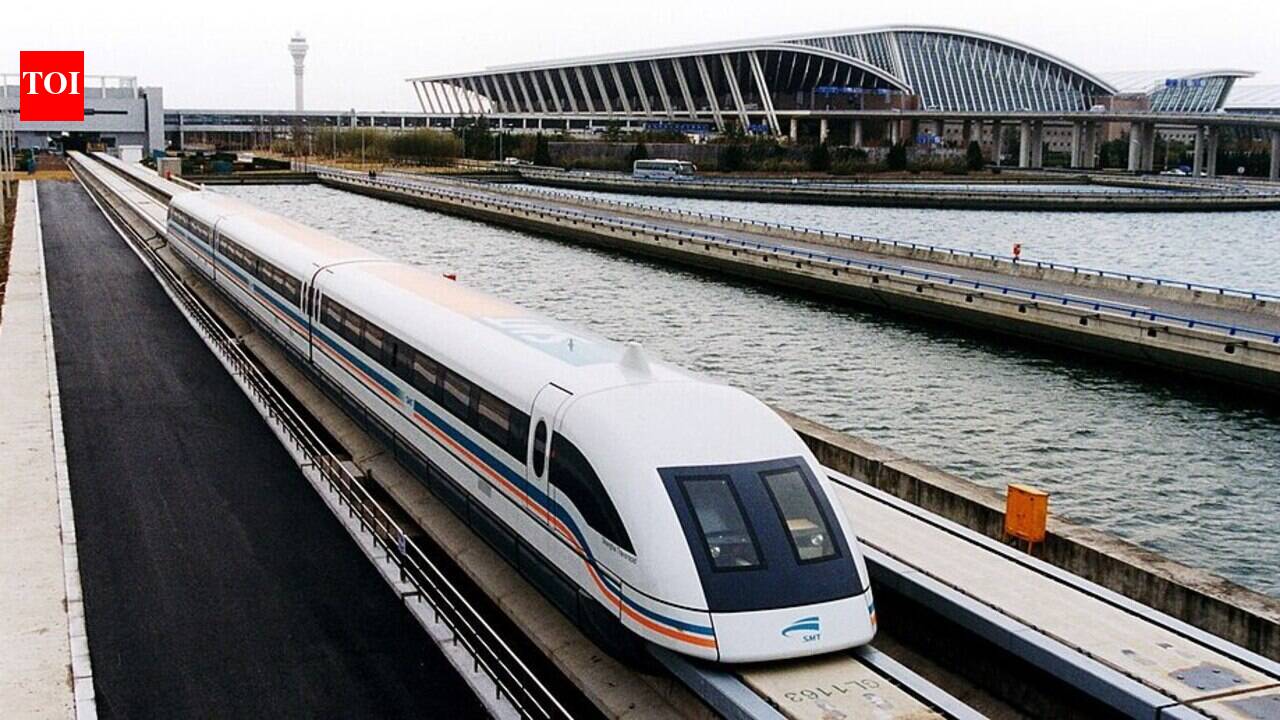
China unveiled a 600-km-per-hour maglev train prototype that uses magnetic levitation instead of wheel-to-rail contact, fast enough to cut a five-hour journey down to two and a half hours
China has developed a 600 km/h maglev train prototype for commercial use. This advanced technology uses magnetic levitation to achieve higher speeds and reduce travel times. The new maglev system could potentially halve journey durations on medium-distance routes. However, building dedicated infrastructure presents significant cost challenges for widespread deployment. Future investment will determine the extent of this groundbreaking transportation technology.
China has developed a 600 km/h maglev train prototype for commercial use. This advanced technology uses magnetic levitation to achieve higher speeds and reduce travel times. The new maglev system could potentially halve journey durations on medium-distance routes. However, building dedicated infrastructure presents significant cost challenges for widespread deployment. Future investment will determine the extent of this groundbreaking transportation technology.